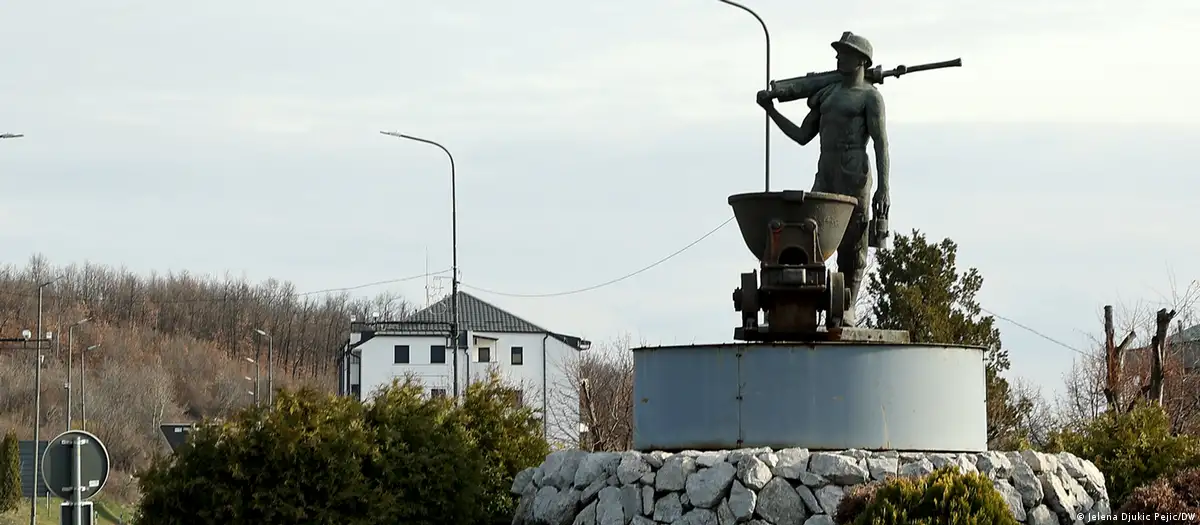
From the first roundabout at the entrance to Bor from the direction Zaječara, travelers are greeted by a miner's monument. It is a symbol of the city known above all for its copper mine.
Right behind the monument, the president of Serbia is smiling from the billboard Aleksandar Vučić and local politicians. That election list is number one in the upcoming local elections. And six more electoral lists are in the race for power in a city where there are more than 20 ethnic minorities.

Photo: Jelena Djukic Pejic/DWMonument to the miner at the entrance to Bor
About 5.000 Roma are among them. They live in all parts of the city, but the largest number of them are in the settlements on the edges of the mine tailings. They live there for three and a half years, forgotten by everyone - and then, before the elections, the promises begin.
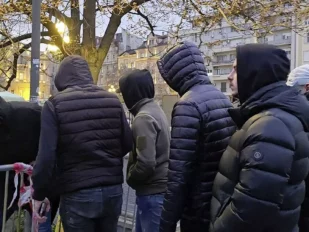
"They come, offer money, some two, three thousand... They say they are going to pave the streets, but look at these holes," two men tell us as they light a fire in the yard. They don't want to introduce themselves or take a photo - but they claim that there are people who get a hundred euros for the so-called "sure voice". Someone also gets firewood, they say.
The votes were collected by "Roma sheriffs"
And others in the settlement confirm this. They are happy to show where they live, how their roof is leaking, the ceiling is collapsing, the floor is missing. They show what they cook and eat, talk about how they are treated... They say they know the government is lying to them, but they have to live on something.
Photo: Jelena Djukic Pejic/DWŠašuvar Useinović says that the Roma in Serbia, and especially in Bor, serve as reliable votes in the elections
Šašuvar Useinović from the Center for Roma Human Rights says that Roma in Serbia, and especially in Bor, where they are additionally endangered due to mines, serve for safe votes in elections. Given that they mostly receive social assistance, Useinović claims that it is the Center for Social Work that is threatening them to cancel it. In addition, he says, there are also water cuts in the poorest settlement, "Brezovik", which is part of one of the mine tailings levels.
Useinović claims that the "Roma sheriffs", as he calls them, have already sold the Roma votes in advance. The authorities, allegedly, already know that they are getting 90 percent of the Roma votes. It has been like that for years, he says, adding that the current mayor is also a "Roma mayor". In the sense that he was elected by the votes of the Roma.
About 3.000 "new voters" in Bor?
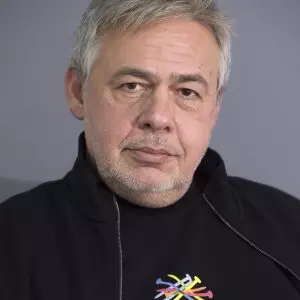
This is a "captured city", Dragan Marković tells DW. He is the first on the list "Four is our responsibility", which consists of his National Movement of Serbia, five party organizations, three associations of citizens and students.
"For a long time, and now officially since a few months ago, Bor was captured by members of the Serbian Progressive Party (SNS) - not only from Bor, but from all over Serbia," says Marković. He claims that employees of numerous public companies and institutions from Subotica, Novi Sad, Belgrade, Kragujevac and other cities have been staying in Bor since December.
"Everyone has now arrived in Bor and will probably vote. Some openly say that they have residence and will vote. They were registered seven or eight months ago just because of these elections," says Marković. He estimates that there are around 3.000 new voters.
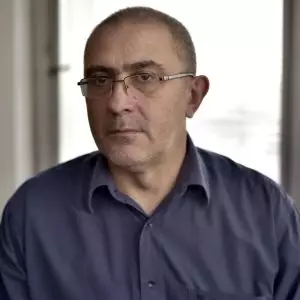
Photo: Jelena Djukic Pejic/DWDragan Marković estimates that there are around 3.000 new voters in Bor
"We are a city that must not fall - this is how SNS treats Bor, because Bor is their ATM. Money is withdrawn from here. This part of Serbia has been turned into a colony, and Bor has a budget of 13,8 billion. Does it seem to you that it has such a budget," Marković asks, adding that it is impossible that there are even 38.000 voters out of the 40.000 inhabitants that it officially has.
He also says that the government organizes retirement parties, organizes tourist visits, and distributes gifts - white goods, wood, money. Marković also talks about buying Roma votes, he also mentions the Center for Social Work.
Firewood is paid for with votes
Number 4 on the ballot in Bor is the "People in the Center" list. They are running for the first time and with an average age of 35, they are the youngest on the list. They have a candidate as well as controllers from the Roma population.
Photo: Jelena Djukic Pejic/DWDelivery of wood - Pine in March 2026.
It is from them, says the holder of the list, Srećko Zdravković, that they have information that "up to this moment, 970 people from the Roma population have been listed as wanting to sell themselves for votes. 6.000 dinars or something more is mentioned, and special coordinators have been delegated for them, who are specially and additionally paid for those people who will be collected", claims Zdravković.
This, he explains, is about five percent of certain Roma votes. The rest, he says, are "under the terror" of the Center for Social Work.
Photo: Jelena Djukic Pejic/DWHeadquarters of People in the Center
Zdravković, however, believes that Roma votes will not decide who will be the mayor. He says that he is more afraid of "new-Borani" - that is, those who have recently registered their residence in the city.
"This is something that scares us, because it is a direct violation of democracy and the electoral will of a city," warns Zdravković.
And right after talking with him, a truck with wood passes by us. The driver tries to get as close as possible to a yard. We ask because they are wood - they are not for sale, they answer. They only deliver wood to those who need it. Passers-by, however, comment: "Why wood? The currency is votes. That means they're promised votes."
New local communities, new "Informer-media"
On list number 6, "Hope for Bor", the Monarchists and the New DSS are gathered. They also have one Roma candidate. Zoran Andrejić from POKS did not participate in local politics for 23 years. He returned now that he is retired, because, he says, the situation is unbearable.
According to him, buying Roma votes is only one part of the problem. There are also newly formed local communities, where, as he says, he expects "serious robbery" - especially because of the new voters in Bor.
And there, he adds, is the newly formed media - "Borski Informer". Andrejić explains that, due to the new media law, individuals started buying regional televisions for their own needs: "They collect them like badges."
How will election day go?
SNS did not want to talk to DW journalists. We only received the following response from the current mayor of Bor: "I'm in a meeting, please write a message. Thank you for your understanding."
None of DW's interlocutors is sure who is the real opposition in Bor. And everyone is afraid of what the voting day, Sunday March 29, will look like. They emphasize this, because the SNS did not do well in the previous local elections, but then, after the post-election agreements, still formed a majority.
Šašuvar Useinović from the Center for Roma Human Rights says, however, that it is known what election day will look like: "They come to these settlements, grab them by the arm, squeeze them and take them to the bus. And from the bus to vote. That's the way it was until now, and it will be the same this time."
Source: Deutsche Welle (DW)
Real journalism costs money, and we will not be bought by tycoons and corporations. Support us with a one-time or monthly donation. The time for it is now!