In ancient times, playing for the national team was not only an honor and confirmation of top quality, but also an implicit reflection of patriotism. As some would say: "Like the country, like the national team". The attitude of the players towards the team and the obligations that come with playing for the national team is now an ancient and a thousand times told fairy tale. In the past, all of this was taken for granted - preparations that sometimes last for two and a half months, renouncing life outside of basketball, as well as the respect that follows from all of that. Today, in the era of social networks and the general state of society, this is a completely unthinkable thing.
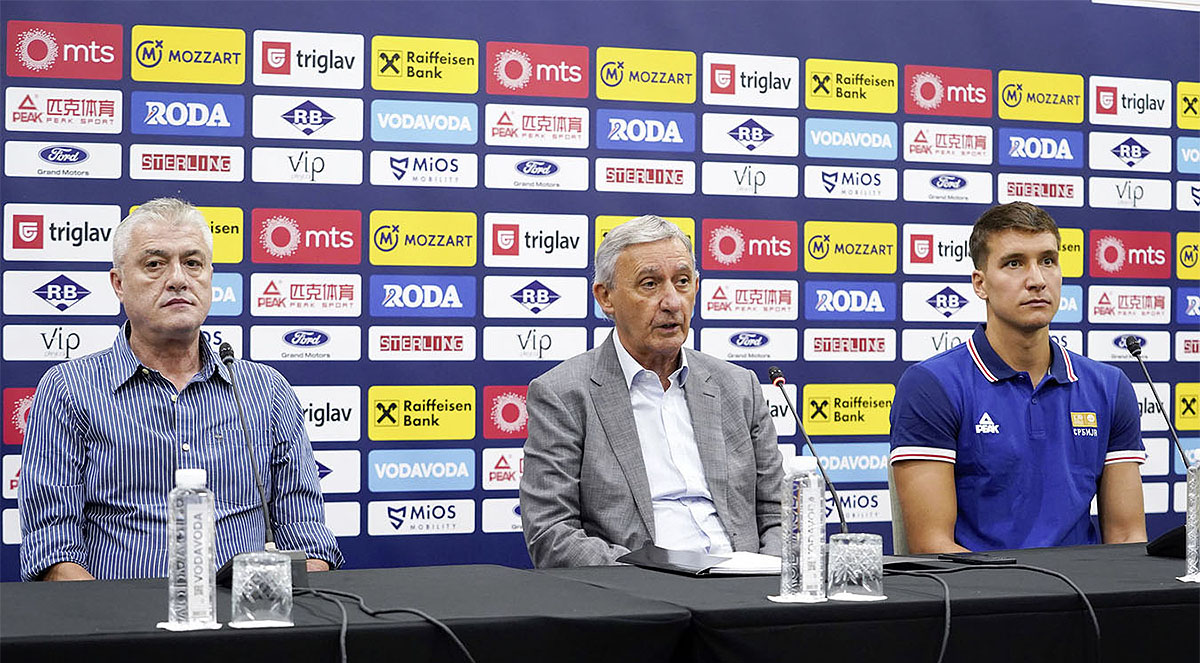
Svetislav Pešić, the selector of the Serbian national team and the last coach who became the world champion with the then-Serbia and Montenegro team, is a personality beyond the reach of today's "connoisseurs" of basketball. It was as if he elbowed his way through the structures of the Association and pushed away his opponents, who came from all sides wanting to lead the national team and take care of the future of basketball in Serbia. The truth is completely different - Pešić pledged his basketball knowledge in the desire to save what could be saved, and he experienced that in the old days he received scathing comments about incompetence and superiority.
No one stood out excessively in his desire to take over the national team. One Željko Obradović explained in 2005, after the disastrous European Championship, at the now legendary press conference in Belgrade, where the future of our basketball is headed. "There is too much egoism among the players. The relations between the players are very bad. There is nothing more sacred than the national team. They have to understand that. If during the year you agree to play for the national team, then when you come to the preparations, you have to adapt to the discipline that rules there, and not for everyone to adapt to you. Guys, you have your own private journalists and managers. It doesn't go on like that. We can't talk about gold. If this continues, the relationship between the players and the national team, we will never win a gold medal again." Then he permanently retired from the position of national team coach. This was all said at a time when the national team of Serbia and Montenegro was, at least in name, the best team in Europe. For many years, the Serbian national team has not been the best team in Europe.
Too much interference of managers and political workers in the creation of the team, the situation in society and, above all, the lack of young players who would be given a chance - this is the reality of basketball in Serbia. Now, Nikola Jokić as the best player in the world will solve all that only if he decides to play in this year's World Championship. Well, it's not that easy.
REPRESENTATION WITHOUT NIKOLA JOKIĆ
The Serbian national team has objectively never been worse. One player, no matter how dominant, will never be able to win medals on his own. The last time it was possible for Dirk Nowicki with the German team, precisely in Belgrade in 2005. The current Serbian team has a maximum of three top basketball players in its best composition. He hunches in all positions except the central one. Vasilije Micić, according to many the best playmaker in Europe, has never played even close to his qualities in the national team. This year, he's headed to the Oklahoma City Thunder NBA team and, as is usually the case, will skip the World Series in an attempt to prepare for a completely different kind of game. We simply don't have a player who can replace him. The average defenders of the Serbian team who will play in the place of the game organizer are not at the level required for the global competition.
Bogdan Bogdanović returns to the team after not playing due to injury at the European Championship. How much he was missing in that championship was best shown in the key moments when no one but Jokić was able to score points. The entire attacking game of our team will depend on his inspiration. He can't win medals on his own, but if there are times when one ball decides the winner, it's better with him than without him.
The lack of two top defenders - Nikola Kalinić and Vladimir Lučić - will be felt in the wing positions. Nikola Jović, Filip Petrushev and Aleksej Pokuševski, the young hope of Serbian basketball who plays for the Oklahoma City Thunders, should take on the burden of the game at the wing position. None of them objectively have the quality of play in defense as Kalinić and Lučić.
After the resignation of Nikola Jokić, Nikola Milutinov remained alone in the center position. Although an excellent player, without the support of the best in the world, he will not be able to match the best centers in the tournament in the battle under the basket.
BOGDAN BOGDANOVIĆ IB TEAM
After winning the NBA title, all that was left was for Nikola Jokić to confirm that he will participate in the World Basketball Championship and everything will be as it was before. The depth of the abyss in which the Serbian national team is located is not visible. One name doesn't change anything, even if it's the best basketball name in the world. As things stand now, Vasilije Micić, Nikola Kalinic and Vladimir Lučić are not going to the World Cup for various reasons, apart from Jokić. With Bogdan Bogdanović, who confirmed his participation in the championship, this is the Serbian A national team.
We are going to the World Cup with the B team. Are the Olympic Games that will be held next year in Paris the last chance of this generation to compete with the best teams in the world in the best composition, and in this way finally show how much of a "basketball country" we still are?
Any victory this "B team" achieves at the World Cup is a success. 32 national teams participate in the tournament, which are placed in eight groups of four teams. We are in a group with Puerto Rico, South Sudan and China. The two best teams from each of the eight groups will advance to the second part of the competition. In the continuation of the competition, the best 16 national teams are divided into four groups with four teams each. Two national teams from each of these subsequent groups continue the competition in the quarterfinals. Entering the quarterfinals would be a great success for our team, equal to winning a medal. Without the best players, we shouldn't have any ambitions to do much in this championship.
Next year, at the Olympic Games, the entire national team could count on a better result. Until then, we have to think about the state of basketball, society and most of all about what words and actions we address to our athletes. Patriotism and empty stories about some kind of basketball country are behind us. Players should not be put under unreasonable pressure and ridiculed if they have no desire to play for the national team. Maybe the solution is to ask them why it is no longer taken for granted that after hard seasons and often injured people play for the national team? Isn't it perhaps up to all of us, not just them? Is the country they play for safe for all of them in case of failure? Here, only successes are remembered, and mediocrity is despised. If we did as well in all parts of society as we do in sports, maybe we would become a better and more orderly country.
The World Cup in Indonesia, Japan and the Philippines will start on August 25 and will last until September 10. There is less than a year left until the start of the Olympic Games in Paris and a better team.