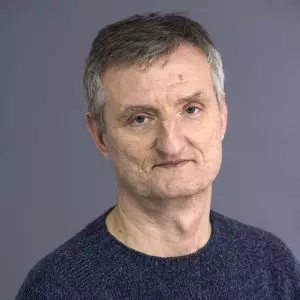
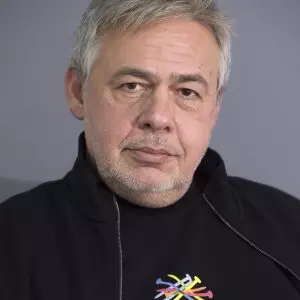
In 1971, I shot a film with Aleksandar Đorđević, according to Duško Radović's script How two fools loved each other, with Dragan Nikolić and Milena Dravić. They played a couple in love who are constantly interrupted by the third - Gidra Bojanić. We shot one scene at night, at the Observatory on Zvezdara. Milena and Dragan came to the filming and announced that they got married that day at noon in the Municipality of Vračar. We made a scene, then celebrated late into the night
Recently screened documentary series Spring in a Prague school the story, as its author Milan Nikodijević says, "is about a famous photograph and its author, about challenges and fears, about censorship and self-censorship in the turbulent time of the Prague Spring and the military intervention of the USSR in 1968 in the then Czechoslovakia". The author of this famous photos of the charred body of Jan Palah, a history student at Prague's Charles University, is Predrag Pega Popovic, the first graduate cinematographer in former Yugoslavia, professor, former dean and one of the founders of the Department of Camera at the Faculty of Dramatic Arts in Belgrade. As a student of the famous Prague film academy FAMU, Professor Popović witnessed the brutality with which Kremlin frost overcame the Prague Spring.
"The Russians entered Prague on August 21, 1968. We were on vacation and returned to Prague the following year, after the New Year and Christmas holidays. Jan Palach poured gasoline on himself and set himself on fire on January 16, 1969. It was the first public protest against the Soviet occupation of Czechoslovakia. Student protests followed at all faculties, including FAMU. With two colleagues, I went around the city and recorded everything I saw cinematically, at 'sixteen.' flare extinguished and immediately taken to the hospital", says Predrag Popović for Vreme.
"WEATHER" Jan Palah died three days later?
......
PREDRAG POPOVIC: It is. That January 19, 1969, the three of us entered the morgue, where the charred body of Jan Palah lay in one of the metal drawers. It was covered with the Czech flag.
We filmed with a camera. I was the only one with a camera and took a few shots.
For the next few days, Palah's body was exposed in the courtyard of Charles University. Columns of Czechs passed by the bier and paid their respects.
Did you keep the recordings??
No, we took them to FAMU and handed them over. I don't know if that film was ever developed. Recently, I tried to find the material that the three of us recorded in January 1969 in the Prague Cinematheque, but I was told that these recordings do not exist.
A few days after Palah's funeral, Milan Kundera and a journalist from the French "Pari Macha" came to my student room. Kundera was my professor, he taught me world literature.
"Only he can give you a photo of Jan Palah", said Kundera to journalist Iget Bodar.
I said the photo was in the camera, but I hadn't developed the film yet. They waited and left with a few photos of Jan Palah's charred face that I handed them. Considering that I was in my third year of studies, I asked that when they publish the photos, they do not sign the author.
They didn't sign you.?
They didn't. The photos were first published in "Pari Macu", and then in the Italian magazine "Epoka". Until the end of my studies, until 1971, I was afraid that the Czechoslovak police would not find out that I had filmed Jan Palah in the morgue. They would expel me from FAMU and Czechoslovakia.
Tito's Yugoslavia was freer?
It is. Goran Marković, Srđan Điđa Karanović and I came to Prague on the eve of the Prague Spring. The West was close, we could buy foreign literature, newspapers, watch television. It seemed to us then that what the Czechs intend or want to do in six months, we Yugoslavs could not do in twenty years. Especially since in Czechoslovak Russia they could not repeat the horror they inflicted on the Hungarians in 1956. I am talking, therefore, about the atmosphere during those few months of the Prague Spring.
On the other hand, when we arrived in Prague, we saw what repression and the police system meant. For example, we had to check in when we arrived in Czechoslovakia and check out when we left the country. That was not the case in Yugoslavia.
What else did you manage to record in Prague in 1969?. years?
Mostly all mass protests and gatherings. I remember that in January 1969 there was a world or European hockey championship and the Czechoslovaks beat the Russians. I can't describe the celebration at the Wenceslas Square! That night, 300.000 people took to the streets, which I also recorded on camera.
Of course, I also recorded the parade around Palah's coffin, and then his burial at the Olšan cemetery. Later, ugly things happened, digging up Palah's grave, checking...
I remember that in those days my mother sent me the front page of Politika, which featured me marked with a pencil.
"Pego, is that you?", she asked.
When it was found out that you took all the pictures?
Much later. I had already graduated, made some films.
How many feature films did you later make??
Twenty-six.
Did your professor Milan Kundera comment on the Soviet occupation of his country?
He did not talk about it in lectures. Kundera was a nice professor, he spoke a European language. Czech with a touch of European. In a technical sense, the Czechs had already translated all European concepts, all words, into their language. It helped us a lot later, because we understood the meaning of European expressions for certain film techniques.
You worked on Lordan Zafranović's first film?
Yes. Zafranović started filming his first feature film at the end of the summer of 1968. Given that we could not return to Prague due to the Soviet occupation of Czechoslovakia, we used the semester to record Lordan's "Sunday". The main role was played by Goran Marković.
When did you return to Yugoslavia??
Right after the studies. I studied for five years - basic studies, then master's. I graduated in 1971, and the following year I joined the army.
Did you come to Prague later??
I am. Sometime in January '72. Jat's plane crashed in Czechoslovakia. Only flight attendant Vesna Vulović survived the accident. I was in Prague when "Sveta" journalist Dragoš Stojanović called me, with whom I went the next morning to Srpska Moravice (then Czechoslovakia), where I filmed the scene of the accident, Vesna Vulović and the forester who saved her.
How did you decide to go to Prague to study??
I entered FAMU in 1966, because at that time there was no camera school in Yugoslavia. My school was here around the corner, in Beogradska Street: opposite the "Union" cinema, in the Belgrade Cinema Club, I completed a cameraman's course in 1957. The professors I learned from later mostly taught at the Belgrade Academy for Theatre, Film, Radio and Television.
Ko?
Cameraman Vladeta Lukić, film theorist Duško Stojanović, editor Marko Babac, director Kokan Rakonjac, cinematographer Aleksandar Petković... We are all from the same region, we "infected" each other with the film.
When did you "infected"?
Still in elementary school. I finished the first four grades in elementary school number eight - today's "Ribnikar", and continued in the Third Male Gymnasium. Two years later, there was a change in the system: the elementary school switched to an eight-year education, so instead of the second high school, I found myself in the sixth grade of the "Aleksa Šantić" elementary school. So I practically attended the first grade three times.
In the Fourteenth Belgrade High School, I organized screenings of feature films in the gymnasium.
After finishing high school, in order to show my parents that I can study something serious, I enrolled in electrical engineering. However, in the spring of 1966, in front of the faculty, I bumped into Goran Marković and Điđa Karanović, who had come from Prague on vacation. We knew each other from the Belgrade Cinema Club. They told me that there was a great camera department in Prague and that I should submit my documents to FAMU. So, together with Milenko Karanović, Đija's father, who founded the Yugoslav Cinematheque, I went to Prague in the summer of 1966 with a "boyfriend". Goran and Đidja took their exams in their first year, and I was told that I could come and take the entrance exam that fall. I already had works.
What works??
As an amateur, I started working with films in 1957 and in 66. already had 3-4 movies. Those awarded at amateur film festivals, I sent to Prague and was accepted. I shot them with a 16mm camera.
You had your camera.?
Yes, I got it from my father. As soon as I finished the course at the Cinema Club Belgrade, I really wanted to somehow get my hands on a Swiss "bolex" camera. In 1957, my father was on a business trip to America - he worked at the Chamber of Commerce - where he researched the organization of transport, the organization of road traffic, etc. During his stay in the USA, he visited a friend from before World War II, who helped him get a camera.
When did you start teaching camera at the Belgrade Faculty of Dramatic Arts??
The Academy of Theater Arts was founded in 1948 and was mainly related to the theater. In 1960, it became the Academy for Theatre, Film, Radio and Television, and my professor from the Belgrade Cinema Club, Vladeta Lukić, prepared actors for work in front of the camera. The camera chair was made later; I was still a Prague student in 1970, when Vladeta Lukić started teaching actors how to get to know the camera, and in the second year - lighting.
Shortly after completing my studies, in 1972 I started teaching the course "Color cinematography" at FDU. Along with Professor Lukić, I was one of the founders of the Department of Camera.
You also worked on television.?
I am. Part of us from the Belgrade Cinema Club started to cooperate with the newly founded Television Belgrade. It was in 1957. I started in the sports newsroom. I remember that in 1974 I used a film camera to film the bicycle race "Through Yugoslavia" - from Skopje through Belgrade, Sarajevo, Zagreb, Rijeka, Pula, Vršić and to the finish line in Ljubljana. I continued in the children's editorial office of Duško Radović, where I filmed a popular children's journal Pictures of the world and film reports with Zuk Džumhur, Miča Popović... In the meantime, I was offered by Television Belgrade to do reports for the best film show in Yugoslavia Screen on screen, edited by Zora Korać.
What were you doing??
Filming clips Dani i Sorting Saša Petrović, for example. I took the material to Zagreb, staying with Zora Korać. Zora soon arrived in Belgrade and started working on the formation of the Second Program of Television Belgrade, whose editorial office was located in the building opposite the fountain on the then Marx and Engels Square. There were offices on the first floor, Duško Radović's was always full: Matija Bećković, Dobrica Erić, Mihiz, Beli Ilić... Duško would be silent, they told their stories. Belgrade was really a cultural center in those years, the whole world came here.
Ko?
Here, I'll show you the shots... I photographed René Clair, Alfred Hitchcock, Jerome Robbins, the choreographer West Side Tales who came to Belgrade with the US Ballet. Later, in Dubrovnik, I filmed the stage set-up for Robins' performance at the Dubrovnik Summer Games. Yugoslavia was a big, serious country.
Shortly after Zora Korać came to Belgrade, I introduced my Prague colleagues - Điđa Karanović, later Goran Paskaljević and Goran Marković - to her. She helped us all.
Until then, documentaries were short, we "extended" them.
How much?
The advent of the sound camera made it possible to record both images and sound, so we started making 40-50 minute documentaries. So I made a film about Neda Arnerić, for example; or Youth is flying. - we photographed young people from all over Yugoslavia, from Lake Ohrid to Pula and Slovenia; Peter the King as Hamlet at the Dubrovnik Summer Games; Slobodan Schneider in the camp near Zadar; film festival in Pula... In 1971, I shot a film with Aleksandar Đorđević, according to Duško Radović's script How two fools loved each other, with Dragan Nikolić and Milena Dravić. They played a couple in love who are constantly interrupted by the third - Gidra Bojanić. We shot one scene at night, at the Observatory on Zvezdara. Milena and Dragan came to the filming and announced that they got married that day at noon in the Municipality of Vračar. We made a scene and celebrated late into the night.
photo: marija janković...
You also worked with Milena Dravić on Dušan Makavejev's filmMysteries of the organism?
That's right. Mak offered me to do a documentary with Aleksandar Petković The mystery of the organism. We were filming in America, but there was a misunderstanding between Mako and Petković; they broke up, so I took over the film and shot Milena Dravić, Ivica Vidović, Zoran Radmilović and Jagoda Kaloper. Filming was finished in 1970, and the very next day I went to Valjevo to join the army. In the meantime, Mak edited the film, and then informed me that it will be shown in Cannes in May, as part of the "Fifteen Days of Authors".
"It must be a copy," he told me.
The film was complex: documentary part, archival materials, feature part. It was necessary to make a quality copy for the Cannes Festival. Even though I was in the army, I had my passport with me. One Friday I sat in the "mini Morris", went to Munich, to the laboratory, where in two days I made a copy of the film, brought it to Belgrade and returned to Valjevo on Monday. The film passed the censorship.
What censorship??
In Belgrade, there was a Republic Commission for the Review of Films.
Who were the members??
Antonije Isaković, Milutin Čolić, Vladimir Stamenković and Arsen Diklić. Mainly, Mako's film passed the Yugoslav Film Review Commission and won the "Luis Buñuel" award in Cannes. However, it was banned on the eve of its premiere at the Film Festival in Pula.
Why?
Eh, why?! At that time, Yugoslavia was closer to the Russians than to the Americans. In "Mysteries of the Organism" you also had a staged scene from a feature film in which Stalin says that the first phase of communism is over; the next scene – an American artist making a phallus out of plastic. A phallus from the mold right after Stalin, you know…
Da, but how come the film passed the Belgrade censorship, that it was shown in Cannes, and then banned in Pula?
At that moment he somehow passed, it was impossible to go any further. In any case, since the film was a co-production with German "Telepool" from Munich, Novi Sad's "Neoplanta" lived off Mako's film, sold it around the world, and later based its production on the money earned by the film.
Mak went to France, he didn't record here anymore. He worked around the world, a Mysteries of the organism were, after decades spent in the "bunker", only shown for the first time at a FEST in the 1990s.
Dusan Makavejev, Zivojin Pavlovic, Aleksandar Saša Petrović, Mica Popovic, Želimir Žilnik belonged to the so-called. black wave in Yugoslav culture. After them came the generation of Vasha directors "Prague schools". What did they bring to Yugoslav cinema??
First of all, the European spirit, a different aesthetic. We all loved the French New Film and the Czech New Wave at that time. The atmosphere, aesthetics and spirit of Czech directors from the period of our studies became a kind of new poetics.
Which director are you with? "Prague schools" worked the most?
With Lordan Zafranović – Sunday i City wall work, during studies and two short feature films - Ave Maria or my first drunkenness i First waltz. I made a short film with Điđo Karanović Pharmacist, with Goran Marković just at the end - 2002 film Kordon. I started early, I shot a lot with other directors, so we kind of drifted apart.
Who was respected among your recording colleagues at that time??
Aleksandar Petković, Tomislav Pinter, Ivica Rajković from Zagreb, Karpo Aćimović Godina in Slovenia.
Yugoslavia was a big country, we worked where we wanted, without restrictions. I was lucky enough to shoot a lot when I was young, and quite successfully, so I got into some big films, big productions.
......
LikeSutjeskeStipe Delić?
Yes, but also Republic of Užice, p 13. July. However, I collaborated the most with Dragan Kresoja - every fifth film of mine.
Sutjeska I filmed myself while I was in the army. Nikola Popović, the director of the film, called me and told me that he watched two short documentaries that I made with Lordan and which were awarded at the Belgrade Documentary and Short Film Festival. I soon joined the team in Žabljak, as the third cameraman. Pinter was first, Vjenceslav Orešković was second, and I was third. In the meantime, Orešković received an offer to work on a series in Zagreb Beggars and sons, so I was left alone for two cameras.
I got the opportunity to work on a wide screen, with perfect technique, to follow and film the main characters - Richard Barton, Ljuba Tadić, Bata Živojinović, Milena Dravić. I spoke English well, it was easy for me to follow Barton. I remember that while he was waiting to shoot the scene - and he was playing Tito - he was reading Diary of a revolutionary Trotsky. Later he went to Mexico and played Trotsky. Returned in the early spring of 1972 to shoot a few scenes for Sutjeska.
IRepublic of UžiceZika Mitrovic is, you say, was a big production?
It is. Assistant directors were Goran Marković, Dejan Karaklajić and Dragomir Zupanc, soldiers like me in Sadness. The young Marko Nikolić, Aljoša Vučković, and Mile Rupčić also came from the army. Duško Petričić made a poster for Republic of Užice, my wife propaganda material. And with 13. in July it was similar, also a big team. We started with two directors - Baj Šaranović and Milo Đukanović; Pinter and I were filming. However, it was already clear during the tour of the field that it would not work - if Milo said that he would work this way, Bajo would immediately have another idea. And vice versa. The gourd burst not long after we started filming - Đukanović and Pinter left, Bajo and I stayed and pushed the film to the end. Nikola Popović was the producer of this film as well.
Mirko Kovač and Bora Pekić wrote the script.
In creation 13. July a large number of important people participated. Oscar winner Dušan Vukotić sat in the Film Council, as well as Nenad Bućin, a politician from Kotor. Everything was taken care of.
Because of your passion for the work you did, you were willing to risk a lot. Photo from the morgue, desertion from the army because of the Maccabees...
He can't do without passion. And without connection with the team. And the film has to be pushed to the end, you know. We worked differently, recorded in a different way, obtained a different quality compared to the work of electronics.
What other quality??
The big difference in quality was contributed by the concentration of hard-working people in the team - from the director, actors, microman, to the pharmacist. Everything was concentrated on the realization of the frame, on what the cameraman registers on the film strip. A latent image was being created, which means that you don't have that image, you don't see it. We would take the picture to the laboratory, develop it there; a working copy would arrive after 3-4 days, but you had to work further, to guarantee that what you recorded was good. That's why I say that the concentration of all of us on making the picture gave a different impression and the quality of both the work and the film.
......
You learned that at FAMU.?
FAMU gave me the necessary knowledge, taught me how to master all the secret techniques and ensure continuity of image quality. I learned that, depending on the genre, I define the style of the film. I also shot comedies, but in each film you have a different orientation and work plan.
How would someone who knows the film, who knows the camera could recognize your photos, what do you think?
Perhaps by the precision, by the light setting, the perspective, by the atmosphere that is created within the frame. And according to the camera that is free. Maybe that. I loved the precision in the realization of each frame, with an accent on what is important in the presentation of the acting, in the movement of the camera, and in what is important in the dramaturgy of the film - light, atmosphere and camera movement.
You loved the actors you worked with?
I loved them all, really. And highly valued them, believing that their work was more difficult. Repeating doubles is always awkward, but I was often forced to ask them to do so.
You are missing a camera.?
Of course. If the Department of Camera at FDU started 55 years ago and if every year five students graduated from that group, you can now see how many cameramen there are. There were much fewer of us, and we had an incomparably larger market, greater opportunities. Finally, we had Yugoslavia, we could have done much more.
What did your father give you?craft, as Arsen Dedic says?
A large number of quality films that have been watched and are still being watched.
Yugoslav film, and Serbian film within Yugoslavia, is highly valued. It was and is still doing well at world festivals. I made good films with good directors, good actors, with film crews of European rank. Today, I say, a lot has changed, things are done differently. And many work a lot. I am…
What is happening in the country and the world, what is in the newspapers and how to pass the time?
Every Wednesday at noon In between arrives by email. It's a pretty solid newsletter, so sign up!
Why is there nothing else between the overcome regime and the changes? What does the regime mean when it says it is defending Serbia? Why is the Student Movement indomitable? Who has the knowledge and real experience, and who leads without a day of work experience outside of politics? And why students win
Elections 2026: From student revolt to decision at the polls
After almost two years of protests, hundreds of kilometers walked, arrests, persecution and unprecedented social mobilization, Serbia is holding elections that could mark the end of a political era. Sociologist Marija Babović tells "Vreme" that the hope for change has not been so great since October 5, 2000, but she also warns of the danger that, if changes are not made, the country will face an even tougher authoritarian regime.
Interview: Tihomir Stanić, actor on the Student list
Their only weapon now is the media they control: like, we don't have an agenda, which is not true; as, we will betray the national interest, which is not true. One of their arguments is that we are afraid to go to the debate with Vučić. They do not understand that it is their punishment. This is a punishment for Aleksandar Vučić, who for 14 years conducted exclusively a monologue. For fourteen years he did not allow anyone any kind of dialogue, and now he would like to be rewarded or pardoned with the opportunity to talk to us. Well, he won't be able to. What he sowed is now reaping
These elections are not elections about Serbia's membership in the European Union, Kosovo and Metohija, gay marriage, tax policy or any other single political issue. Although parties on the fringes of political power try to impose these themes, at the heart of the upcoming political election is a much simpler dilemma: change or preserve the existing order. For more than a year now, surveys have shown that this is the primary dilemma on the ballot
In the RS, 19.800 people registered for the elections in Serbia, who will be able to vote at 28 polling stations. It remains unknown how many of them will cross the Drina on October 25 and vote in Serbia. In any case, I do not believe that the voters from Republika Srpska are the ones who will decide the winner of the elections in Serbia. Realistically, the voters from Republika Srpska can influence a little, but it seems that they are symbolically very important to both Vučić and the opposition.
There is, literally, no difference between the one who claims it is day in the middle of the night, or the one who claims to be a giraffe, from the claims we read on billboards: that Vučić is working to unify Serbs and that Serbia is doing better and better day by day.
The pre-election arrests due to the alleged "overthrow of the state" testify to the regime's panic. The bad news for them is - they can't arrest the whole people who decided to defend themselves from progressive beatings and election theft
The ring that tightens around Ćaciland Student list is getting narrower. Because there are more and more spoiled people who see the false prophet for what he is: a street obscener who is fighting Serbia
The archive of the weekly Vreme includes all our digital editions, since the very beginning of our work. All issues can be downloaded in PDF format, by purchasing the digital edition, or you can read all available texts from the selected issue.