The mine arrived at their doorstep. Slaviša Karabašević, 59 years old from Brezonik, Bor, and his longtime friend, ten years older Đorđe Anđelić from nearby Oštrelje, are not giving up the fight for clean air. They were born here and know well what the Bor mine is. They suffer the consequences of mining since they know about themselves. After all, they are slowly giving up on tilling the soil in the poisoned area. After the expansion of the mine, life on their grandfather's land, they claim, became unbearable.

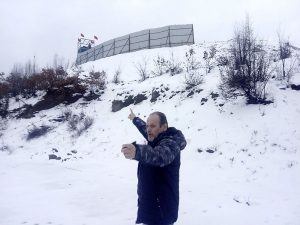
photo: private archiveTHE STRUGGLE FOR A CLEAN ENVIRONMENT: Resident Slaviša Karabašević,...
Slaviša Karabašević says that "life in Brezonik is impossible", that in recent years they have been clinging to the dust. "There are gas workers around them. We are always in the gas chamber because of the rose of winds that disperses the smelter smoke and a huge amount of dust. The noise is unbearable. Blasting in the pit has not stopped for the last three years. Mining ventilation shafts spring up like mushrooms after the rain.”
If this continues, he says, there is no way for them to survive. "We are forced to fight for a humane eviction or to organize the evacuation ourselves. They care only about profit and reckless exploitation of mineral wealth. When they leave in a couple of decades, no one will be able to survive in these areas. It will remain a landscape of the moon where not even peanuts can be grown."
THE SOLUTION IS A SPATIAL PLAN
He saw that, unlike Jadro, they had missed the opportunity to defend their territory. "We did not react in time. We secretly hoped that Ziđin would respect the green mine program, that he would take care of ecology. That didn't happen."
The settlement of Brezonik is an urban local community that was created in the area of the old Bor village, Karabašević reminds. It is several hundred meters away from the mine. The biggest problem, he says, is pit exploitation and tailings disposal.
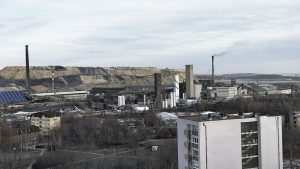
photo: private archive...a panorama of the Bor mine...
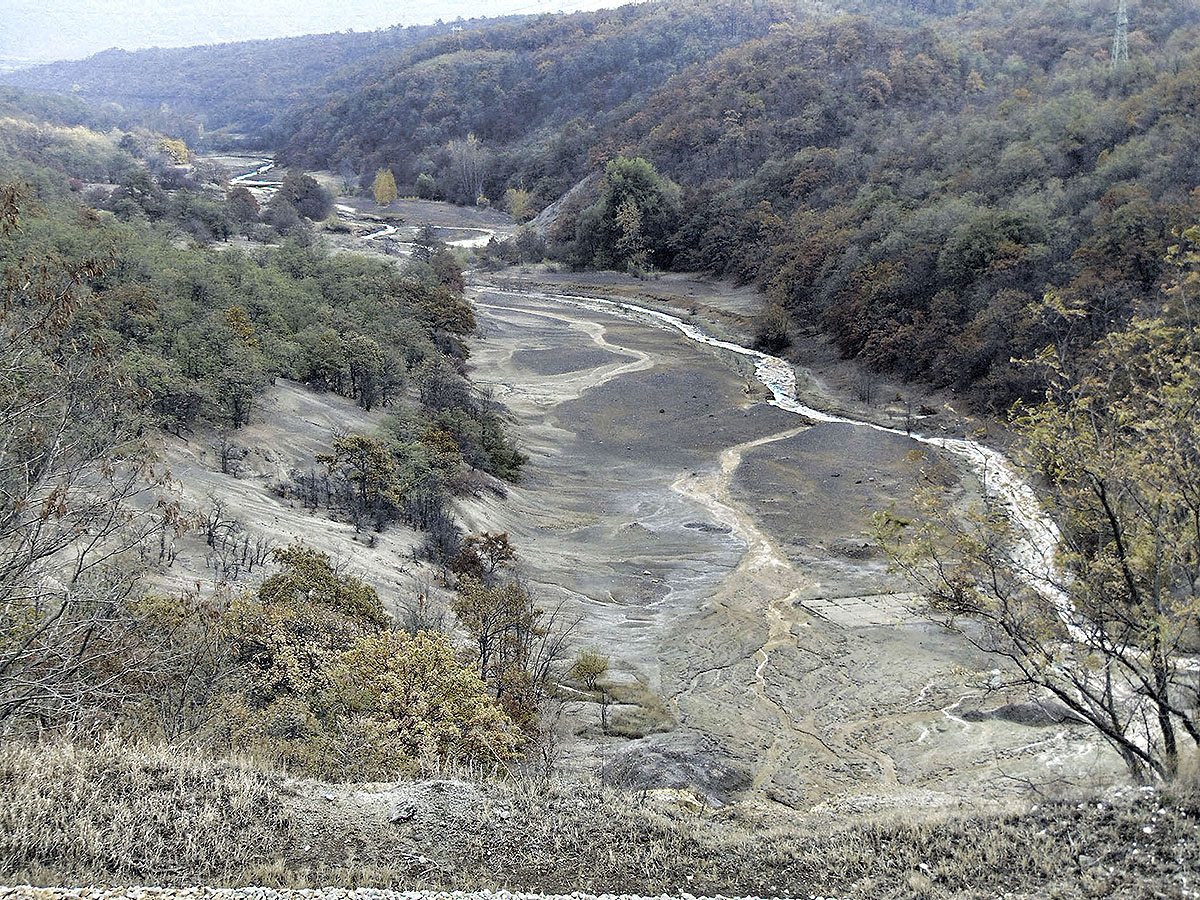
A fifteen-minute drive from the center of Bor, on a relatively good road, leads to the village of Oštrelj. The landscape is dominated by the sight of mining tailings, waste water and polluted soil. Our host, Đorđe Anđelić, retired mechanical engineer, longtime employee of FOID (formerly part of RTB Bora) is waiting for us there. Currently, he is active in the Committee for Ecology at the Council of the Ministry of Health of Oštrelj. He sees the solution in adopting a spatial plan for special purposes.
"The whole village is in the pollution zone, it is directly exposed to dust. We constantly inhale it, and it is full of toxic substances. People die en masse from cancer", this is how life in his village is described by Đorđe Anđelić, who even at the threshold of his eighth decade does not give up the fight for the survival of the population in this area.
"Not a month goes by that I don't hear that someone died of cancer. Recently, a member of the Council of the Ministry of Health passed away, and before that, his neighbor. Both from cancer. The village has long been threatened. This dust has been poisoning us for years. We point out problems all the time and everything ends with promises", Anđelić is dissatisfied.
He asks: "If all the land is already earmarked for mining, where will we live?" What should we leave to the heirs? We have come to a situation where we are asking ourselves to move from here. An adequate answer was requested at the assembly of citizens. There is no solution for now. This is not only about the village of Oštrelj, but also the neighboring Bučje, Slatina. Krivelj was written off earlier, as was Brezonik. We feel like a threatened community, because these are all Vlach villages."
At the inter-village working group, they demanded "that a certain country be exempted from investigative rights". Anđelić notes that there are "several plots right on the border with Ziđina. It turned out that the land is also owned by a Chinese company. All the appeals that have been sent to them so far have remained a dead letter."
Air pollution in Bor by sulfur dioxide is 88,7 percent less compared to the parameters in the period from January to July 2021, announced the company Serbia Ziđin Koper, stating that it has invested 30 million dollars to improve the air quality in that city. Thus, from August to December 2021, the average concentration of sulfur dioxide was only 14,8 percent, which is below the highest permissible limit value of SO2 in the air. As stated, in relation to the average concentration in 2020, this is a decrease of 91,5 percent.
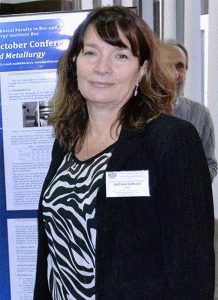
photo: private archive…and Prof. Snežana Šerbula
Commenting on this announcement, Ziđina, full professor and head of the Department of Environmental Protection at the Technical Faculty in Bor, prof. Dr. Snežana Šerbula confirmed for "Vreme" that, after the introduction of "flash smelting" technology, there is an evident reduction of sulfur dioxide in the air, but that the Borans still breathe extremely dangerous air. "Since 2015, sulfur dioxide has been around the permitted limits at all measuring points, except for the city park. However, when it comes to suspended, floating PM particles, whose chemical composition indicates an increased content of carcinogenic substances such as arsenic, cadmium and lead, their concentration usually exceeds the permitted limits", explains Dr. Šerbula.
She reminds that small PM particles are the most dangerous because they go directly to the lungs. They contain what is in the ore, and it contains almost the entire periodic system of elements. If you melt such ore in the smelter, which is located in the very center of the city, then you have enormous amounts of arsenic in the air. It even went up to 90 times over the allowed values on an annual basis. During 2021, according to Dr. Sherbula, the concentration of arsenic exceeded the permitted limits several times. She says that "this element was considered the most famous poison even in the Middle Ages. More recently, it has been used to poison mice. According to modern health and environmental standards, the limit value for arsenic is six nanograms per cubic meter of air. Its concentration in the air above Bor was always above the permitted values. This has been the case since the beginning of the operation of measuring stations and the performance of chemical analyzes of suspended particles in Bor."
LIFE IS 10 YEARS SHORTER
Snezana Šerbula points out that Serbia is the first in Europe in terms of mortality from air pollution, and Bor has always been a black spot on the map of Serbia. This was shown by the "Batuta" study, for the period 2015-2018, including scientific analyzes in the preparation of which Dr. Šerbula participated. The study, which was conducted according to the standards of the World Health Organization, has meanwhile been temporarily hidden from the public eye.
"The study confirmed that life expectancy in Bor is 10 years shorter. At that time, 80.000 tons of cathode copper were produced annually in Bor. After the arrival of the Chinese, it is planned to expand production by as much as 250 percent, i.e. to about 200.000 tons. If you increase production by two and a half times with enormous pollution, does that mean that life expectancy in Bor will be shortened by 25 years?" asks the professor and says that she cannot keep quiet about it because her children also live in Bor. "The most serious diseases have become more frequent. Air pollution alone does not affect melanoma. All other types of cancer are caused by air pollution. People in Bor work for a salary of 80 or 100 thousand dinars and they don't want to listen to this. They put their finger on the forehead only when the disease knocks on the door. That is the greatest irony of our life here.”
The professor warns that Bor will become a mining colony. "The hydrogeology of the soil is not even taken into account here. If this continues, we will run out of drinking water, there won't be any for people or animals. Plants won't grow on that soil either. It's all about profit here."
Toplica Marjanović, a longtime employee of the Bor smelter, initiator of numerous initiatives on the topic of ecology and former expert associate of the UN Environment Agency (UNEP), believes that "Bor is at a turning point. He is now facing a new development cycle. And everything depends on the people from Bor, but also on the national institutions - will it be a new sustainable development cycle or will everything turn into a circus."
He warns that pollution from Bor could threaten the ecology of neighboring countries because, as he explains, pollution can easily be transferred over long distances. "There is a danger that this area will be degraded to a much greater extent and that this pollution, through water and air, will spread even to Romania and Bulgaria, EU member states. The wind easily blows the dust, and the polluted water goes to Timok. It is a border river between Serbia and Bulgaria. The Timok flows into the Danube, and the Danube is a border river with Romania."
However, Toplica Marjanović believes that a solution still exists. "It is the state that has to take matters into its own hands, above all to respect its laws. Also, the consumption of non-renewable natural resources is at work here. It has to be limited. Sustainable production is possible here, but with the application of the most modern standards in environmental protection. And not only that. At the same time, the processing industry should be developed because copper is increasingly used in the construction, automotive and electronic industries."
He reminds that "Serbia Ziđin Koper is not a foreign company. It is a company of the state of Serbia, which has its own strategic partner. The state of Serbia must implement the laws that it has passed itself. On the other hand, it should manage that company so that it does not allow excessive emissions and environmental pollution."
According to the data of the Republic Institute of Statistics, in December of last year the average salary in Bor was 89.053 dinars and was higher than the national average by more than 14.000 dinars. It is followed by Majdanpek, where an average of 81.870 dinars was earned. In these two mining towns, around 2000 young people got jobs in Ziđin in the last three years, so the company currently employs 6028 workers.
This kind of information probably does not leave anyone in Serbia indifferent. Well, if you might decide to build a working or professional career in Bor, go ahead. There is both work and money here. The air is not very clean, but that's why the salary is higher than the average in the Republic. Whatever, decide for yourself!