
img
White City, 10°C

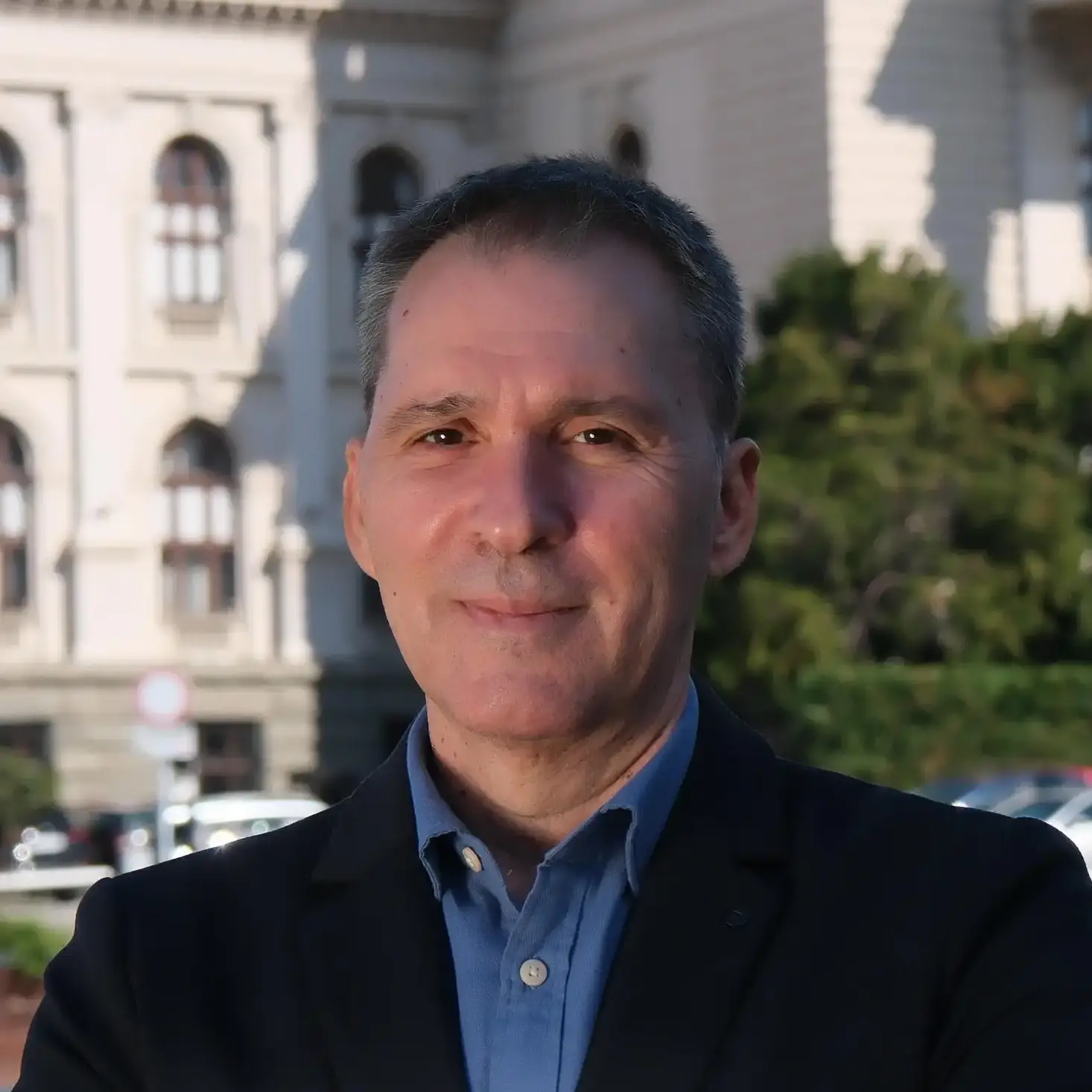
Igor Božić

Igor Božić is a journalist and editor with more than 30 years of experience in television journalism. He was the director of the N1 Serbia program, the director of the news program of RTV Vojvodina and an editor at B92 television. During his career, he edited news programs and developed newsrooms. He is the recipient of the Südosteuropa-Gesellschaft Solidarity Award for 2026. Since September 2026, he has been writing for the weekly "Vreme".

Interview: Spasoje Vulević, former commander of the Special Anti-Terrorist Unit

The police must go through a serious reform and lustration

"The instructions of the commanders were to prepare for the defense of the institutions at all costs", says Spasoje Vulevic for "Vreme", who states that around 4000 policemen were engaged on election night. He talks about how a conflict with citizens was avoided, what he heard over the police radio on March 15, and why he refused to take SAJ to the roadblocks. He warns that the mistake must not be repeated after October 5 and that without serious lustration there is no police reform

Comment

Country

The citizens of Serbia have pronounced a political verdict. Violence, persecution, abuses, embezzled money must be decided by freed institutions based on the law

Elections 2026: From student revolt to decision at the polls

The thorny path to change

After almost two years of protests, hundreds of kilometers walked, arrests, persecution and unprecedented social mobilization, Serbia is holding elections that could mark the end of a political era. Sociologist Marija Babović tells "Vreme" that the hope for change has not been so great since October 5, 2000, but she also warns of the danger that, if changes are not made, the country will face an even tougher authoritarian regime.

Elections 2026 (II)

What awaits us after October 25

The student victory opens the question of handing over the government, the SNS victory the question of accepting the results, and the contested outcome a new phase of the political crisis. Bojan Pajtić and Dragan Popović talk for "Vreme" about what could happen after the closing of the polling stations, but also why the change starts before the formation of the new government

Election campaign and political violence

Real victims and Vučić's acting

The former president of Serbia entered the election campaign with almost all levers of political and institutional power. At the same time, his opponents become thugs, terrorists, foreign mercenaries and a threat to the state, while the government presents itself as a party that only defends itself. From Bežaniska kosa and Futoška pijaca to Belgrade Arena, the same reversal of roles opens up a more dangerous question than who started the individual incident: what happens when a political opponent ceases to be a competitor in elections and becomes an enemy from which Serbia must be defended

October 5, 2000.

Election 2026: 26 years after the Fifth of October

Aleksandar Vučić's nightmare

The government prefers to remember the Fifth of October for the burning of the Parliament. But that day began eleven days earlier, in the elections that Slobodan Milošević lost. Ahead of the vote on October 25, Žarko Korać and Ivan Marović talk for "Vreme" about two different oppositions, vote control and the possibility that an uncertain result will open a new dispute about electoral will

Election '26: From Russia with love

Pre-election third eye

Branimir Nestorović (pictured) claimed that he was received in Moscow "at the highest level" and that he was given the task of gathering pro-Russian forces. The source of "Vremena" says that he did not reach the top of the Kremlin, but that the lobbyists of Alexander Vulin opened his contacts. Now he leads the pro-Russian coalition with the People's Party

Nestorović

"Time" investigates

The movement "We - the power of the people" does not participate in the elections: Who did Nestorovic meet with in Moscow?

The movement "We - the power of the people" does not participate in the elections. And the plan was completely different, for Branimir Nestorović to gather all the pro-Russian parties in Serbia. What did that have to do with Vulin and did the doctor who was famous for mocking the corona virus reach the Kremlin? "Vreme" writes about it in the new issue

Student list and campaign

Serbia has never been more beautiful

The column that started from the Rectorate reached the headquarters of the Republic Election Commission. In front of the entrance, the students played a round with trumpeters. An unusual atmosphere for teaching the electoral list: no coercion, classic political speeches and learned party choreography. It looked more like a spontaneous celebration than the start of an official election procedure. The boxes were then picked up by student representatives from all universities in Serbia. Next to them was a model of the Belgrade Pobednik, who also held a box with signatures. Signatures no longer looked like a dead letter on paper. The people who wore them said that they carried the hope of the whole of Serbia before them

Interview: Aleksandar Čupić

The truth doesn't wave confetti.

Our politicians are not professional, but chronic politicians. Let's offer them an educational program in the Assembly. It may sound childish, but if the people on this list show what they're here for and watch what they say, I'm not sure reality TV can win

2026 Elections

Campaign behind the cordon

From public festivities under tents and conversations in the villages, through party violence in Užice and the abandonment of Novi Sad, to the police-isolated National Theater in Niš, Aleksandar Vučić enters the elections before everyone else, with all the resources of the state, but for the first time also with the awareness that he can lose

Topic of issue I

Living hostages of a dead general

How the individual guilt of Ratko Mladić was turned into an alleged defense of the entire nation and why Serbia still does not want to get rid of that burden. It was the individualization of guilt that offered Serbia a way out. The verdict did not attribute Mladic's crimes to the Serbs. She named the man, his command responsibility and the crimes for which he was convicted. The political and media elites chose the opposite: to hide behind the people and present the judgment of one general as the judgment of all. Because if Mladić is left alone, the issue of ideology, propaganda, war profiteers and the system that produced and protected him must be opened.

Culture of memory: 26 years since the assassination of the former president of the Presidency of Serbia

Ivan Stambolić's sneaker

The kidnapping of Ivan Stambolic in the middle of the day in Košutnjak was also a message to all those who opposed the regime. If the authorities decide to make you disappear, there will be no witnesses, no clues, no investigation. There won't even be news that you're gone. The court's conclusion also speaks of how much the state was turned into a means of private survival in power: the members of the JSO and the leaders of the Department of State Security did not act as an independent criminal group, but used the state apparatus of force to preserve the political power of one man.

Media image of Serbia

Why are we bothering him so much?

While it was not announced in mid-June that Dragan Šolak had been removed from operational functions by the decision of BC Partners, it seemed that everything was as usual in United Group. It is an open question - is this an introduction to the sale of media and if so, to whom are they sold? Will the editorial policy be free? We are still waiting for those simple answers from BC Partners