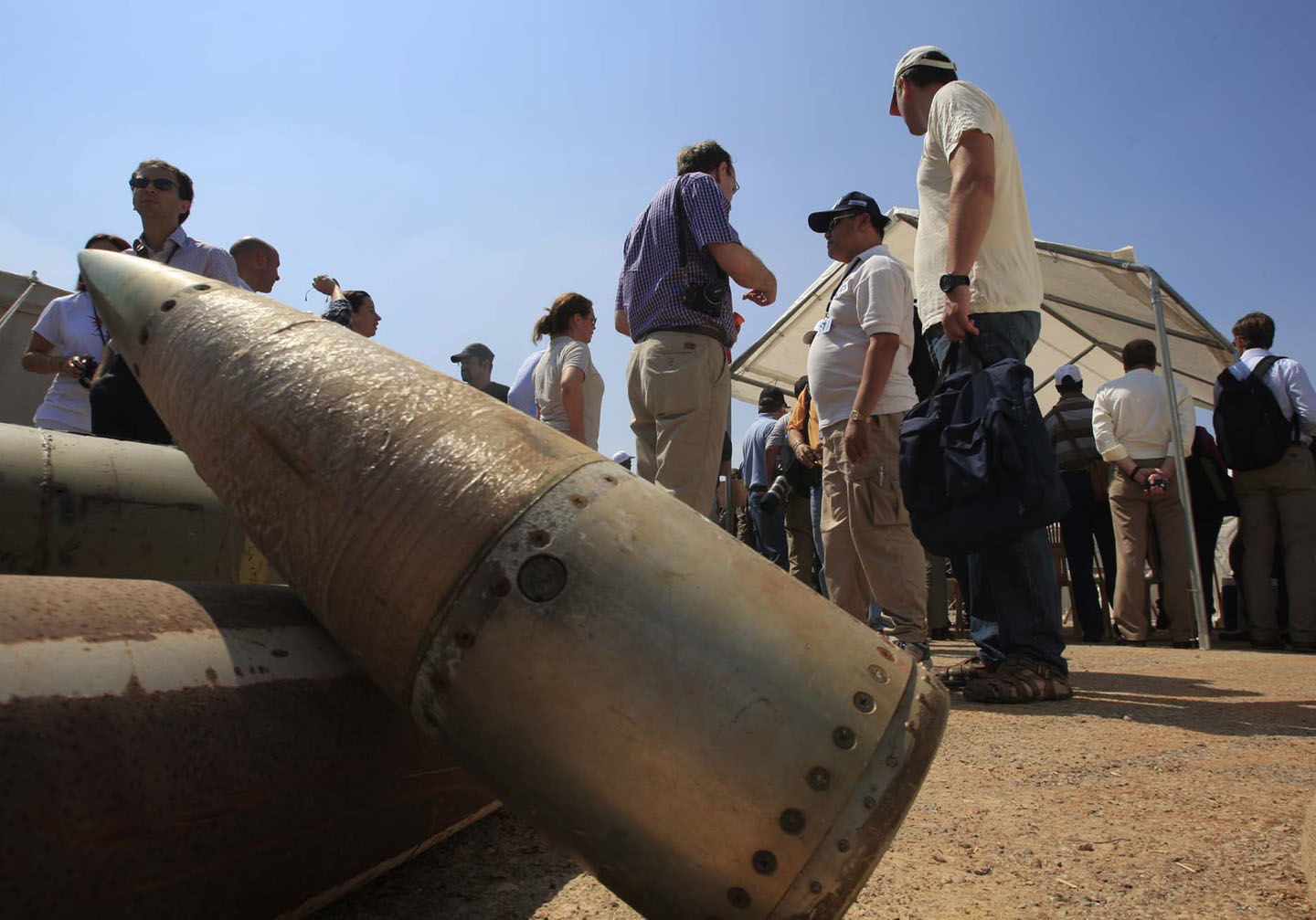
The controversial decision of the United States of America to send cluster munitions to Ukraine caused numerous negative reactions.
It is a difficult decision, said US President Joe Biden, adding that it was made because Ukraine is running out of ammunition.
Numerous allies did not side with the US this time, and Amnesty International condemns this move.
In an interview with CNN, Biden said he had discussed the decision, which was part of an $800 million military aid package, with allies. He also said that it took some time to convince him to do it, but that he did so because the Ukrainians were running out of ammunition.
Allies against
Several US allies have expressed concern over Washington's decision to supply Ukraine with cluster bombs, including the UK, Canada, New Zealand and Spain.
Asked about his position on the US decision, British Prime Minister Rishi Sunak said the UK is one of 123 countries that have signed the Convention on Cluster Munitions, which bans the production or use of the weapon and discourages its use.
His comments came ahead of a meeting with President Biden, who is due to arrive in the UK on Sunday, ahead of a NATO summit in Lithuania.
Chris Hipkins, the prime minister of New Zealand, one of the countries that pushed for the convention, went further than Sunak, saying that such weapons "potentially cause enormous harm to innocent people and can have a long-lasting effect."
Spanish Defense Minister Margarita Robles told reporters that her country has a "firm commitment" that certain weapons and bombs cannot be sent to Ukraine.
The Canadian government has said it is particularly concerned about the potential impact of the bombs, which sometimes lie unexploded for years, on children.
Canada also stated that it was against the use of cluster bombs and remained in full compliance with the Convention on Cluster Munitions.
Who has understanding?
The USA, Ukraine and Russia did not sign the convention, and cluster bombs were used during the war, writes the BBC.
Meanwhile, Germany, a signatory to the agreement, said that while it would not provide such weapons to Ukraine, it understood the American position.
"We are sure that our American friends did not take the decision to supply such ammunition lightly," German government spokesman Steffen Hebstreit told reporters in Berlin.
Ukrainian Defense Minister Alexei Reznikov assured that cluster bombs would only be used to break through enemy defense lines and not in urban areas.
The spokesman of the Russian Ministry of Defense described this move as an "act of desperation" and "evidence of impotence in the face of the failure of the Ukrainian "counter-offensive".
Russian Foreign Ministry spokeswoman Maria Zakharova also said Ukraine's assurances that it would use cluster munitions responsibly "have no value."
The decision was quickly criticized by human rights groups, with Amnesty International stating that cluster munitions pose a "serious threat to civilian lives, even long after the conflict has ended".
Cluster bombs are banned in more than 100 countries because of the danger they pose to civilians. They usually drop many smaller bombs that can be deadly over a wide area.
Unexploded bombs can remain on the ground for years and then detonate indiscriminately.
Small bombs from cluster missiles are colored, colorful, which attracts children who explode in their faces when they are picked up from the ground.
During the NATO aggression against the FRY, cluster bombs were also used. 23 of them were killed and 58 civilians were injured in three months. There were also victims of cluster bombs after the bombing.
The convention, which was signed in 2008 and entered into force in 2010, prohibits the use, transfer and storage of weapons that can be dropped from aircraft or fired from artillery.
BG/RTS
Read daily news, analysis, commentary and interviews at www.vreme.com