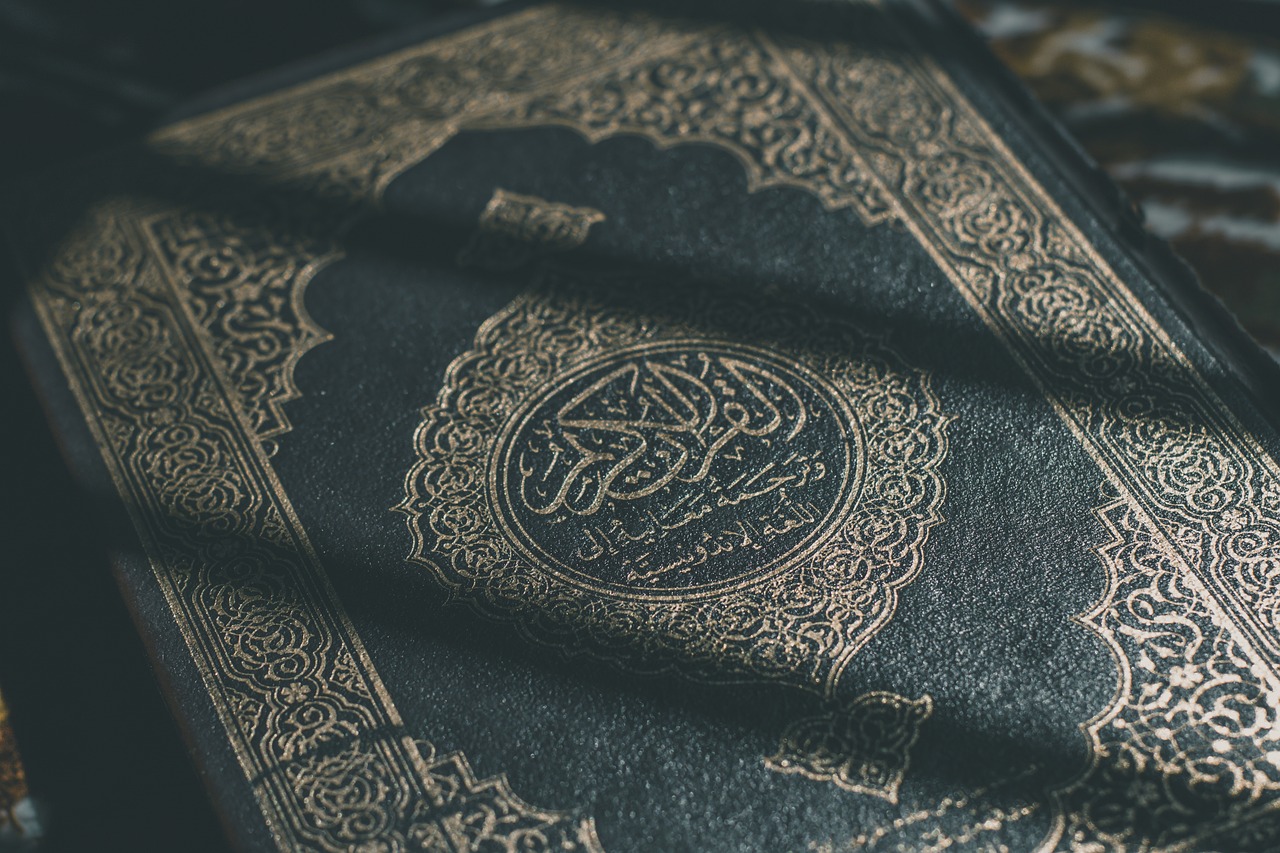
The Danish parliament has passed a law banning the burning of copies of the Koran in public places. The adoption comes after protests in some Muslim-majority countries over the desecration of Islam's holy book raised security concerns in Denmark.
In the period from July 21 to October 24 this year, 483 burnings of books or flags were recorded in Denmark, according to data from the national police.
Violation of the new law will be punishable by a fine or up to two years in prison.
Critics of the law argue that any restriction on criticizing religion, including burning the Koran, undermines hard-won liberal freedoms.
"History will judge us harshly for that, and with good reason." It all boils down to whether we set the limit on freedom of speech or whether it was dictated from outside," said Inger Stojberg, a leader from the anti-immigrant Danish Democrats, who opposed the ban.
The Danish government argues that the new rules will have only a marginal impact on free speech and that criticizing religion in other ways is still legal.
Sweden is also considering options to legislate desecration of the Koran, but is taking a different approach than Denmark, and is examining whether police should take national security into account when deciding on applications to hold public protests.
Why is the Koran burned in Sweden and Denmark?
Koran burnings are becoming a growing problem for Denmark and Sweden.
Tobias Ecold, a researcher at the Norwegian Institute of International Relations, told Deutsche Welle that in those countries there is "somehow a tradition" of critical, or in these cases even disparaging, statements about other religions, especially Islam.
He reminds that there were such actions last year, which were carried out by extreme right-wing and right-wing populists.
"Both countries have a broad and far-reaching concept of freedom of thought," Ecold explains, adding that this is why such actions are carried out there. Other countries are more restrictive. Such actions could be qualified there as "incitement of the people". The Swedish Constitution, however, explicitly states that criticism of religion is permitted. Besides, in Sweden, there is not a single judgment so far that would qualify the burning of the Koran or some other holy book as "incitement of the people".
In 2005, a scandal broke out in Denmark with caricatures of Muhammad that were published in the most widely circulated Danish daily "Jilandsposten". This caused protests by Muslims around the world.
"Swedes and Danes - both in society and in politics - insist on this comprehensive freedom of thought and have great resistance to restricting it in any way," explains Ecold, whose research field is the foreign and security policy of the Scandinavian countries.
BG/Free Europe/Deutsche Welle
Read daily news, analysis, commentary and interviews at www.vreme.com