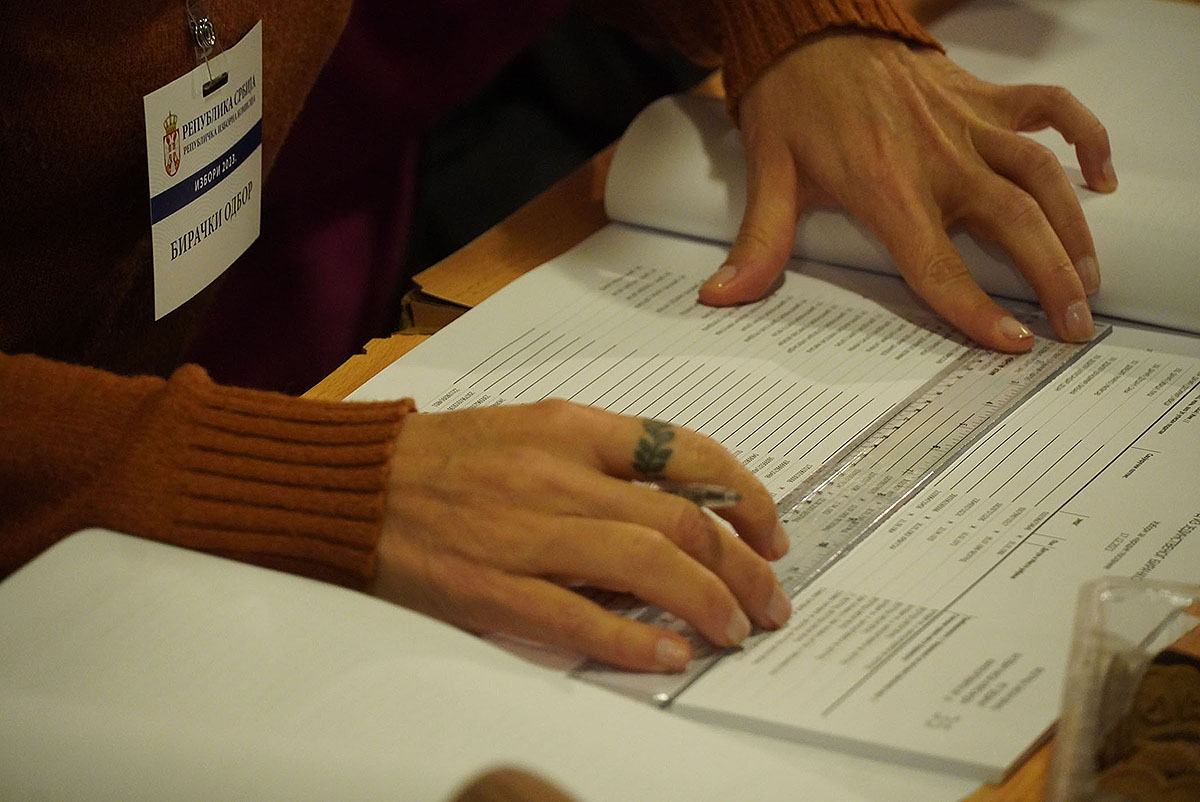
Number of voters with Kosova increased by more than 20.000 between the two election cycles in Serbia, according to the research published today Radio Free Europe (RSE). They point to other irregularities as well electoral roll.
New voters
In the parliamentary elections in Serbia at the end of 2023, 94.161 voters from Kosovo had the right to vote, and now there are 115.856 of them on the voter list.
Changes in the voter list in the weeks before the extraordinary parliamentary elections scheduled for October 25, could be monitored in the publicly available database of the Ministry of State Administration and Local Self-Government. RSE saw that in the past three weeks alone, the number of voters in Kosovo increased by more than a thousand.

Photo: Vladimir Šporčić/TanjugThe elections are scheduled for October 25
According to Ognjen Rašu, who was elected to the Commission for the Review of the Electoral Roll as a representative of the opposition, this does not mean that the number of people with Serbian documents living in Kosovo has increased. Rasuo explained that there was a change in the way these voters were registered - they were registered at the polling stations in Serbia, but now that is no longer the case.
"However, residence is limited in time to two years. And the moment those two years passed, whoever did not extend their residence, they (the Ministry) decided to delete them by place of residence and return them to the list by place of residence, which was in Kosovo," he says.
Repetition of names on the voter list
In the register of voters from Kosovo, RSE found multiple entries of names, misspellings and incomplete data on voters.
Photo: AP Photo/Visar KryeziuElections in Kosovo in previous years
For example, at one polling station, 349 names were entered multiple times - with the same first name, last name and parents' name. Of these, 329 were entered twice, 11 three times, seven four times, and two names as many as five times. The same names are repeated in different polling stations in Kosovo.
The revision of the electoral roll was among the key recommendations of the ODIHR to improve electoral conditions.
The authorities claim that the recommendations have been followed, but the ODIHR in the report indicates, however, expresses concern. As one of the reasons, they cite an unusually large number of people enrolled in certain municipalities and at certain addresses.
The authorities in Serbia, however, claim that the electoral roll is "accurate" and "the most up-to-date so far".
The Ministries of Internal Affairs and State Administration - in charge of personal data of citizens and maintaining voter records, did not respond to RSE's questions about voters from Kosovo until the publication of the text.
Election time! And someone has to report to you independently. That's why it's in October annual subscriptionthe digital edition of "Vremena" even 2.500 dinars cheaper. Choose now!