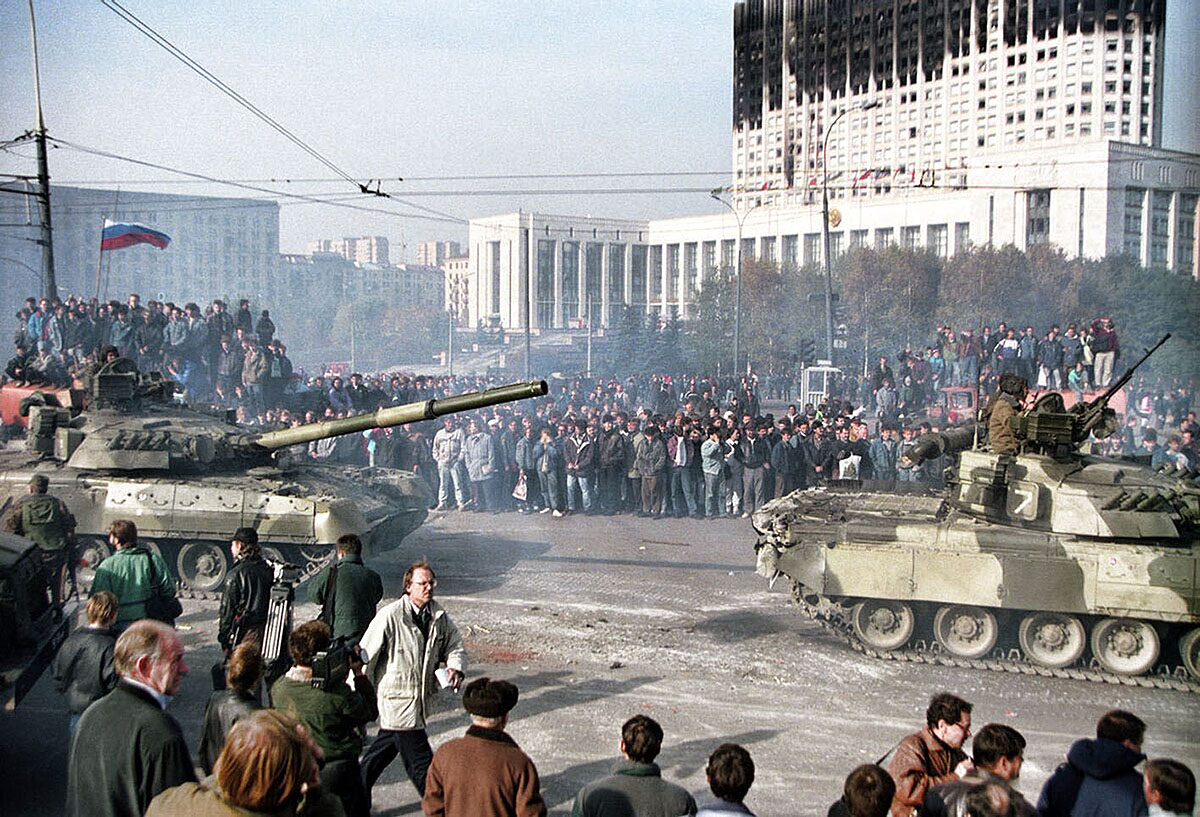
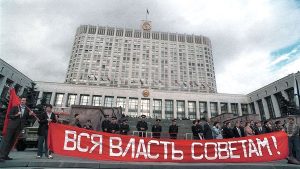
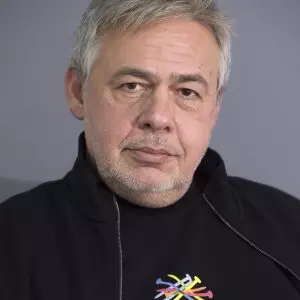
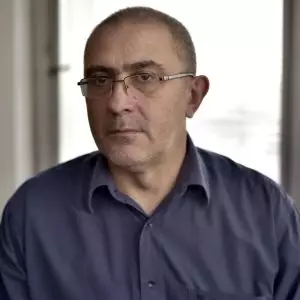
On October 4, 1993, six tanks of the Taman Division fired 12 shells at the upper floors of the White House (House of Soviets) in Moscow. The first shell hit the meeting hall, the second hit the office of Ruslan Khasbulatov, President of the Supreme Soviet, the third hit the office of the Vice President of the Russian Federation, Alexander Rutkoy. How did Russian President Boris Yeltsin come to such a confrontation with the Supreme Soviet?
The elections for 1059 members of the Congress of People's Deputies of the Russian Soviet Federative Socialist Republic (RSFSR) of March 4 and 18, 1990 are described by "Nezavisimaja Gazeta" as the freest since the October Revolution. Although people from the "second set" were elected to that parliament, since the most influential people were sent to the federal level, that Russian transitional Duma had greater legitimacy and was more colorful than the Congress of People's Deputies of the USSR, which was elected on March 26, 1989, after being plenum of the Central Committee of the CPSUSR were included in the electoral quota, and the independent candidates were previously verified by the district election commissions dominated by activists of the CPSUSR.
SOVEREIGNTY PARADE
Such a Congress of People's Deputies of the RSFSR elected 252 deputies of the Supreme Soviet of the RSFSR. On May 29, 1990, on the third attempt, Boris Yeltsin was elected president of that body with the powers of the head of state, with a difference of only three votes. A month later, at the XXVIII (last) Congress of the CPSU on July 12, 1990, Boris Yeltsin criticized its General Secretary Mikhail Gorbachev and announced his resignation from the party.
At that time, Gorbachev's glasnost and perestroika twisted into a parade of sovereignty and a galloping ideological, social, economic and state crisis of the USSR. When Yeltsin was elected president of Russia on June 12, 1991, defeating Gorbachev's candidate Rishkov with 57,3:16,8 percent of the vote, the candidate of the parliamentary faction "Communists for Democracy" Alexander Rutskoi, "Afghan", war hero, was elected as vice president. shot down twice and captured and traded for some American spy. The president of the parliament is economist Ruslan Khasbulatov.
With fresh electoral legitimacy and the support of demonstrators in Moscow, that newly chosen team opposes the putsch against Gorbachev on August 21, 1991, which sometimes looks like a spectacle: Yeltsin climbs onto a tank in front of the White House, or Alexander Rutskoy with 20 OMON special forces flies to Foros, from where brings in the humiliated Gorbachev, whose authority Yeltsin did not seek to defend, but buried.
In the following weeks, Mikhail Gorbachev makes the last attempts to preserve the unified economic space and market of the USSR, so among other things he appoints Grigory Yavlinsky as the head of the Working Group that prepared the "Agreement on Economic Cooperation between the Republics of the USSR". It was initialed on October 18, 1991 in Alma-Ata by representatives of 10 republics, but not by Yeltsin - he then says that Russia alone will be able to enter the market faster. By the way, on November 1, 1991, the Supreme Soviet of the RSFSR authorized Yeltsin to personally lead the government of the RSFSR for a period of 13 months in order to implement the necessary reforms.
ABOUT 500 DAYS IN 600 SECONDS
Yeltsin's reformists asked for "500 days" to implement the reform, but at the session of the High Council, the deputies shouted that only "600 seconds" should be left for negotiations with them. The author of "shock therapy" Yegor Gaidar, Prime Minister and Minister of Finance in Prime Minister Viktor Chernomydin's government, repeatedly said that critics do not say how to carry out the reform. Those who gathered around the Hasbulats and Ruckoys, when asked "how", gave a general answer: "Not like Gaidar!"
Anatolij Sidorov, vice-president of the Academy of Natural Sciences, writes in an article in the "Nezavisimaya Gazeta" newspaper that it is obvious that Russia, freeing itself from the planning system, pushed the economy in the other direction - into chaos. Russian society is going through an existential crisis: l992. 185.000 fewer people were born than died. Valery Sisoyev, chairman of the Committee for Physical Education of the Russian Federation, warned that only 20 percent of recruits met the health requirements for military service and that mortality in middle life had increased.
On January 2, 1992, Boris Yeltsin liberalized prices by decree, inflation is galloping in Russia. The medicine almost kills the patient.
On Lubyanka, near the demolished Dzerzhinsky monument, a hundreds of meters long column of street vendors with several items in hand: chocolate, coat, liquor, spices, a yellow puppy with sad eyes, boots, roses, shampoo. One advertisement near the Kuznetsky Bridge, near the Savoie Hotel, where a coffee costs 4,5 marks (a fifth of the Russian wage), is a poster-advertisement for cigarettes that plastically portrays the current Russian fever. A pretty girl hands a thick-lipped officer with a cardboard filter in hand a hell of a cigarette. The poster reads: "Try 'Vest'!" (Text of your columnist: "Sell the News", "Time" 132, May 1993).
Yeltsin also ignored the criticism of his vice-president Ruckoy, who accused Yeltsin's associates, the military leadership, including Minister Pavel Grachev, of corruption, and some officers of using military vehicles for smuggling from Germany. He also said that the army from Poland and Germany was brought to the bare ice and that some officers worked at night as taxi drivers and loaders to feed their families. He also said: "Boris Nikolajevic, there are 15 CIA spies in the government..."
In this context, it should be borne in mind that after the Białowieża Forest agreement on December 8, 1991 and the resignation of Mikhail Gorbachev on December 25, 1991, the USSR was finally liquidated, the inertia of the state's disintegration also affected the Russian Federation. Tatarstan refused to pay taxes to the federal budget, Chechnya no longer recognized Russia's sovereignty on its territory...
YELTSIN'S DECREE
The conflict between Yeltsin and the parliament in 1993 resembles an action movie: on March 20, Yeltsin announced that he was introducing presidential power; On March 23, the Constitutional Court ruled against it. On Khasbulat's proposal, the Congress debates the "impeachment" against Yeltsin from March 26 to 30, fails to remove him, but stipulates that in the referendum Yeltsin must receive the support of more than half of the total number of voters in order to remain in power.
On April 25, 1993, that referendum gave the so-called "yes, yes - no, no" result. Yeltsin was trusted by 58,67 percent of voters, 53 percent supported the government's social and economic policy, but less than half (49 percent) of voters were in favor of early general elections and only 30 percent were in favor of new parliamentary elections. Interpreting the referendum as a verification of his own legitimacy, Yeltsin signed Decree No. 21 on September 1993, 1400. XNUMX "On gradual constitutional reform in the Russian Federation", which terminated all legislative, administrative and control functions of the parliament, which he described as "headquarters of non-constructive opposition" and an obstacle to economic reforms.
An hour after Yeltsin's televised address, the chairman of the Supreme Soviet, Ruslan Khasbulatov, in a speech at the White House, described Yeltsin's dissolution of parliament as a coup d'état. On the same day, at 22.00:XNUMX p.m., at an emergency session of the Presidium of the Supreme Soviet, the resolution "On the immediate termination of the powers of the President of the Russian Federation BN Yeltsin" was adopted.
The Constitutional Court, chaired by Valery Zorkin, ruled the same evening that decree 1400 violates the Constitution in twelve points. Based on that, the White House deprives Yeltsin of his presidential powers and entrusts them to Vice President Alexander Rutkoy.
Yeltsin ignored those decisions and Valery Zorkin eventually resigned and stated: "The Constitutional Court has no army!"
The political dispute turned into an open confrontation.
DEFENDERS OF THE WHITE HOUSE
By order of the government, on September 23 at 22.00:XNUMX p.m., telephone connections, electricity and water were turned off in the White House. He was already fenced off with barbed wire and surrounded by a ring of policemen and the internal army.
The defense front, concentrated as if in confusion in and around the White House, was made up of a politically and socially motley group of people. There were leftist forces inclined to direct action led by journalist Viktor Anpilov; Dniester detachment of the unrecognized Transnistrian Moldavian Republic; organization of the Union of Officers; members of the neo-Nazi "Russian National Unity" led by Alexander Barkasov. There were various radical nationalists and ex-soldiers, Cossacks, supporters of Sergei Baburin, a not very influential politician who was a nationalist, a monarchist and, later in August 2023, gave a speech at the opening of a monument to Stalin...
When asked how he assesses the role of the Communist Party of the Russian Federation and Zyuganov in view of the idea that the Communists protected the White House in those days, Khasbulatov answered many years later: "My assessment: zero. It is known that Zyuganov called his supporters to completely disperse and not go out (on the street)... Rutskoy said that the union leaders also went to pick up the miners (shakhor) and disappeared. Most of the defenders of the House of Soviets were unarmed, and some of them were given weapons that belonged to the Security Department of the Parliament and had been in the White House since the August coup of 1991.
On September 29, President Yeltsin and Prime Minister Chernomyrdin demanded that Khasbulatov and Rutskoy withdraw their men and surrender their weapons by October 4. In the Monastery of St. Daniel on October 1, with the mediation of Patriarch Alexy II, negotiations began between representatives of the governments of Russia and Moscow and the Supreme Soviet on the gradual elimination of the confrontation. No compromise was reached. Although the electricity was turned on, and the water was turned on in the White House, where a mass of people were barricaded.
YOU'RE ATTACKING TV OSTANKINO
At the rally of supporters of the Supreme Soviet on Smolensk Square in Moscow, which began on October 2 at 13.00:XNUMX p.m., there was a clash between demonstrators and the police. When the participants of the rally, having broken through the cordon and police obstacles, headed towards the White House, Aleksandar Rutskoi called them from the balcony to occupy the Moscow City Hall and Ostankino television so that the representatives of the Supreme Soviet could address the citizens of Russia.
The assault on Ostankino was led by retired general Albert Makashov, whom Rutskoy, having received presidential powers from the Supreme Soviet, declared as the deputy minister of the military. This is the general who demanded from Marshal Yazov to arrest Gorbachev, and Gorbachev replied: "Do you want to make Pinochet out of me? That will not pass!” He will become a member of parliament even when everything is over, but he will be followed by accusations of anti-Semitism and inciting national hatred.
The mayor's office on Stari Arbat was occupied by the protesters quickly and without casualties until 17:19.00 p.m. Around 19.40:22.00, the attack on the Ostankino television center, which was protected by members of the OMON special unit, began. At XNUMX:XNUMX p.m., all TV channels stopped broadcasting, but after a short break, at XNUMX:XNUMX p.m., on another channel from a backup studio, an announcement about Boris Yeltsin's decree on the introduction of a state of emergency in Moscow was broadcast.

photo: time archiveTHE DEFENSE AND THE LAST DAYS OF THE FIRST FREELY ELECTED ASSEMBLY OF RUSSIA SINCE 1917: The White House
Clashes continued throughout the evening and night. Various weapons were used, from grenade launchers among the demonstrators to snipers among the special forces, as Ruckoy later claimed. 46 people were killed, Makashov ordered a retreat from the vicinity of Ostankino to the White House, around which a mass of people gathered. A tent city was set up nearby and barricades erected.
On the night of October 4, 1993, President Boris Yeltsin issued an order to storm the White House. Yeltsin's loyal Taman and Kantemirov Divisions, the 119th Parachute Regiment, the Tula Airborne Division, the Dzerzhinsky Internal Army Division and the OMON Special Purpose Detachment, special forces of the then General Security Administration of Russia, were engaged.
Early in the morning, the OMON special forces were taken to a meeting room in the Kremlin where deathly silence reigned, and the officers sat stony-faced. Yeltsin entered and asked: "Are you ready to carry out the order?" Everyone remembered the events in Vilnius in January 1991, when that unit was sent to Lithuania to unblock the building of the television center in an assault with empty cartridges, so everyone disowned them, and Gorbachev declared that he knew nothing about this operation.
"We started grumbling. We didn't want to get involved in the political struggle..." FSB Colonel Vitaly Deminkin told "Moscow Komsomolets" on October 4, 2023.
The operation to clean the White House began on October 4 at 7.30:XNUMX am. Shots were fired in all directions from large-caliber weapons. Participants in the conflict also died from ricochets
onlookers spectators who crowded the rooftops and vantage points to watch the firing. Around 10.00:XNUMX, tanks started shelling the White House building, from which black smoke was rising.
VLADIMIR ILJIĆ HELD THE LAST SESSION OF THE PARLIAMENT
When the special forces approached the entrance to the White House, the Cossack in a prone position immediately lowered his rifle next to him. Not far from the entrance to the building lay a dead guy. Between the third and fourth floor, on the stairs, they met teenagers aged 14-15. Some teacher from the suburbs brought the whole class to Moscow to defend the White House, and if a shot had been fired inside the building, everyone would have perished. There were also women, technical employees...
On the upper floors, an unarmed special forces officer was persuading veterans from the Union of Russian Officers not to oppose them because they would enter anyway and there would be dead on both sides. "They asked if we were going to shoot." We assured them: 'No way!'”
Accompanied by General Viktor Pavlovich Baranikov, the special forces went up to the 5th floor, to the office where Rutskoi was, then Khasbulatov approached. The special officer, who introduced himself as Lieutenant Colonel Vladimir, was asked his last name. He said, "Let's stick to the name." General Baranjikov mentioned the "specificity of the work of the special services".
When, after the negotiations, the decision was made to hand over the White House, they wrote that "Lieutenant Colonel Vladimir held the last session of the Supreme Soviet".
After 25 years, his name was revealed: Vladimir Ilyich. Kelehsayev, not Ulyanov...
Around 13.00:19.30 p.m., the defenders of the White House began to leave with their hands raised, and the wounded began to be carried out. By 1700:XNUMX p.m., XNUMX deputies, defenders of the White House, members of the armed forces and journalists were escorted out of the White House under the guard of Alfa special forces. Among those arrested were Aleksandar Rutskoi, Ruslan Khasbulatov, who looked distressed. Albert Makashov held on tight and, according to investigators, fell asleep in the chair before the first page of the protocol was filled out.
According to the later conclusions of the State Duma Commission, from September 21 to October 5, 1993, at least 157 people died, including about 30 members of the army and the Ministry of Internal Affairs. About 400 more people were wounded or injured. Most of them are civilians.
"
SOON YOU WILL BE HANGED BY ALL OF YOU COMMUNICATIONS! "
A local policeman came to Anastasia Lotareva's apartment on October 5. Without taking off his shoes, he entered the nine-meter room. His gaze rested on Anastasia, then on her father, a retired officer, then on her mother. And it was as if he was gliding past two men sitting on his parents' sofa, one with a bandaged head, who were impossible not to notice in that small room. Behind the wall, the neighbor Aunt Dusja shouted triumphantly, with a joy that seemed unrelated to everyday neighborly conflicts: "Soon all of you will
communiqués hang!” The policeman only said to her father: "Sasha, a few words."
On the staircase, the policeman smoked for a long time in silence. The father asked, "So?"
"Now I'm going to slow this down, but you understand that we don't deal with them. If they call someone else, I won't do anything, I'll just help the riot police break down your door. Take them away! Electric them or whatever!”
Anastasia's dad nodded.
He gave two officers from Transnistria winter jackets even though it was not cold - so that they could hide the bandages on their heads on the train...
"I hope you can rest now. I know it was difficult for you, but you did everything exactly as you should and I congratulate you on the way you handled the situation," said Bill Clinton in a telephone conversation with Yeltsin on October 5, 1993, according to the transcript of their telephone conversation from which the Americans declassified. By the decrees of October 7, 1993, the President of the Russian Federation took over all functions of the Parliament and abolished the Constitutional Court.
Two months after the tank shelling of the parliament on December 12, 1993, elections were held for a new State Duma and a referendum confirmed the new constitution, which introduced a presidential system in Russia, which is now most strongly criticized by some of those who supported its establishment, ignoring the constitutional, historical and other circumstances.
BLACK MARBLE OF MEMORY
After "Black October", all those arrested were amnestied, including Ruckoj, Khasbulatov and General Makašov. The White House building was transferred to the jurisdiction of the Russian government. The American architect Charles Jenks proposed that during the restoration the charred parts of the facade should be marked by covering them with black granite, but the Russian authorities rejected this proposal - almost no one had the desire to remember the confrontation of 1993.
And in an interview with "Pravda" in 2010, when asked how he assessed the events of September 1993, Khasbulatov answered with a counter-question: "Imagine that they shot at you, that they took you away, threw you in prison, fired you from your job, kicked you out of power, how would you you rated? Yeltsin committed a terrible crime by shooting at the parliament..."
Khasbulatov then studied economics, headed the department of world economy at the Russian University of Economics "GV Plekhanov". He presented his view of the events of 1993 and their consequences in books with characteristic titles: "The Great Russian Tragedy", "Idols and Idol Worshipers: The Collapse of Libertarianism", "The Criminal Regime: Yeltsin's 'Liberal Tyranny'".
"I said that the neoliberal monetary model is inappropriate and will lead to disaster... Now America and Europe are abandoning this model. Everyone curses neoliberals and monetarists. But I, as a professional economist who has been dealing with the Western economy all my life, saw it immediately...", Khasbulatov said in 2010.
And to the assessments of the winning side that the defeat of Ruckoy and Khasbulatov prevented a civil war, Khasbulatov answered in an interview with the Petrograd newspaper "Argumenti i fakti": "How did they manage to avoid a civil war, if a civil war started in Chechnya a year later?"
He was no longer involved in politics, but he submitted an initiative for the establishment of peace in Chechnya. In October 1996, his brother was kidnapped, tortured and kept in a hole for three months. They demanded a high ransom, which Professor Khasbulatov had been paying off to creditors for years. When he went to Chechnya to look for his brother, he was often stopped by armored personnel carriers and combat vehicles left behind by the fleeing Russian army. "Ruslan, you are looking for a brother", they tell me, "you need to organize a gang for that." I'll give you the gear at half price…”
WHO REMEMBERS THE PAST?,
HIS EYES FALL OUT
In 1996, Aleksandar Ruckoy became the governor of the Kursk region, receiving almost 80 percent of the votes in the elections. Once at the Nizhnegorod fair, he saw Yeltsin and Nemtsov standing nearby and tried to get around them somehow, but Nemtsov noticed him.
"Aleksandr Vladimirovich, come to us! It's not good to leave like that."
When he approached them, Yeltsin was the first to extend his hand, saying: "Whoever remembers the old man, his eyes fell out!"
A little later, Rutskoi received a letter from the head of state's office, whose signature he knew very well: "Unfortunately, it turned out that you, Alexander Vladimirovich, were right about how this will all end..." And in conclusion: "If you can, forgive me..”
"When Yeltsin died, I went to the Cathedral of Christ the Savior to say goodbye to him, I laid flowers. I am Orthodox. For many, it was a shock...", Ruckoj said later.
At the birthday party of a mutual friend, Aleksandar Ruckoy and General Pavel Grachev found themselves in the same room, who, after an escape, chose the moment, approached his wife Irina and asked her to "bring them together": "You know Ruckoy, he's angry, he's going to hit me in the face... "
When he approached, he said: "Sanja, forgive me, I bet on the wrong person."
"Pasha, how 'ku-ku' you were and you stayed like that - what reliance on someone, we lost the country...", Ruckoj answered him. "Let's open the Forbes list of Russian billionaires and read their biographies. As a rule, they are blackmailers, swindlers and thieves... Will you find a deserving person there? Alas…”
Rutskoy did not want to come to terms with the fact that, under the command of his wartime friend from Afghanistan and a classmate from the General Staff Academy, he was shot at by the army he was trying to defend at the time.
Anastasija, while preparing her doctorate on the conflict near the White House, spoke with Oleg Razin, a high-ranking, career officer, "Afghanistan" who speaks with great respect about Alexander Rutskoi in those events.
He answered briefly: "We received an order, I carried it out."
When asked about his personal human attitude towards the October events, he said: "In the center of Moscow, the elected president of Russia shot at the elected parliament of Russia - how should I evaluate that?"
"Excuse me, but did you shoot yourself?" wondered the young aspirant.
"I personally did not shoot at anyone. Let's finish", concluded Raza's conversation.
Lotarova, who is now a special correspondent for the Russian service of the BBC, found on the website of the veterans' association a photo of a soldier without one pair of trousers and recognized Oleg Razin in it. She called him when she got his phone: "You probably don't remember, but 15 years ago we met, you gave me an interview for my dissertation, which I didn't defend..."
He interrupted her: "I remember you well. Please don't ever call me again…”