The conditions for the formation of the Army of the Republika Srpska (VRS) can be seen in the context of the general conditions that prevailed in the late eighties and early nineties of the twentieth century on the territory of the former Yugoslavia. Strong secessionist elements and a kind of overwhelming desire to break up the then state, but also the system on which it rested, was supported by several foreign factors, so that all the social conditions for both the breakup and the armed conflicts that followed it were met.
The strong homogenization of national forces, which led to the creation of armed formations that were practically spawned from individual political parties on the territory of the former Yugoslavia, did not escape Bosnia and Herzegovina (BiH). It started with the "Patriotic League", whose first brigade was founded in 1991, through the "Croatian Defense Forces", the Territorial Defense of BiH, which grew into the Army of BiH, to the Croatian Defense Council, which was an "outpost" of the Croatian Army in parts of BiH controlled by Croats . During 1991, Serbian political parties and other organizations believed in the state, the system and the Yugoslav People's Army (JNA) and only in early 1992 did the Bosnian Serb political leadership form the Serbian Republic of Bosnia and Herzegovina - when the armed conflict began that would last until the end of 1995.
During the first four months of 1992, events in Bosnia and Herzegovina changed very quickly. Representatives of the Muslim and Croat people in a kind of coalition work intensively on the complete independence of Bosnia and Herzegovina, while the representatives of the Serbian people see "salvation" in any kind of constitutional-legal ties with Serbia. Only Croats and Muslims participate in the referendum on the future of BiH, and only Serbs participate in the "Serbian" plebiscite.

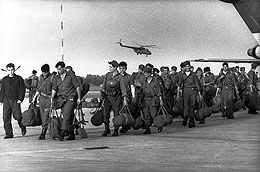
JNA withdrawal
Inter-national armed conflicts are intensifying and international mediators ensure the signing of the Plan for Bosnia and Herzegovina, better known as the "Kutiljer Plan". The representative of the Muslim people withdrew his signature the very next day, and after his return from Lisbon, a massacre of the JNA column took place in Dobrovoljačka Street in Sarajevo, in the presence of UN forces. Instead of the previous decision according to which the JNA forces should remain in Bosnia and Herzegovina for the next five years, the new one begins a complete withdrawal. Under these conditions, the Army of the Serbian Republic of Bosnia and Herzegovina was formed.
ESTABLISHMENT: The National Assembly of the Republika Srpska BiH at its session in Banja Luka on May 12, 1992 makes a decision on the formation of the Army of the Republika Srpska BiH (VRS). The glory was also determined - Vidovdan, and Ratko Mladić was appointed as the commander of the Main Staff.
The political leadership of the Bosnian Serbs at the time assessed that the army was created according to the will of the people, the dissolution of all paramilitary formations and the functioning of the army on "systemic moral foundations" were demanded. The war effort is being tried, quite unsuccessfully, to distribute it to all segments of society; attempts to oppose war profiteering did not have much success in the beginning.
The cadre of the VRS consisted mostly of officers of the former JNA originating from the territory of Bosnia and Herzegovina, with a smaller part of reserve members mostly in lower tactical positions, at most up to the level of the commander of the light brigade of the land army. A very large wartime army - about 185.000 men in the war - was led by slightly more than 3000 pre-war active duty officers and non-commissioned officers. After the war, none of them found themselves in any significant position. Several people who were deputies in the National Assembly of the Republika Srpska (RS) are more the exception than the rule.
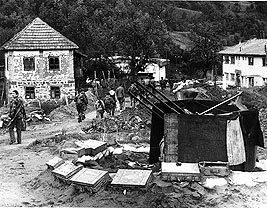
PICTURES FROM THE PAST: The village of Rudnik
HISTORICAL LESSONS: The first lessons that pupils in elementary schools in the RS have about the last war are found in the textbook on knowledge of society for the fifth grade, and somewhat more widely in the history textbook for the ninth grade of elementary school. In the fifth topic, the lesson "Disintegration of the SFRY" deals with the disintegration that is a consequence of "peoples in certain republics showing a desire to separate from the SFRY". The war in Bosnia and Herzegovina is said to have started in 1992 and ended in November 1995. About 100.000 people died and a significantly larger number had to flee. According to the Dayton Agreement, two entities were created in Bosnia and Herzegovina, the Republika Srpska and the Federation of Bosnia and Herzegovina.
In the history textbook for the ninth grade of elementary school, topics dealing with the war of the 1990s and the disintegration of the SFRY are included in the lessons "The Collapse of Socialism in the USSR and Europe" and "The Disintegration of Socialist Yugoslavia".
Historians who also deal with textbooks generally agree that the period after 1990 should not be covered at all, but should wait for a new time.
HAG I THE SECOND THE COURTS: Out of a total of 163 persons indicted before the ICTY in The Hague, 53 persons are members of the VRS. Except for the three defendants, all others are imprisoned, some have been convicted and some are awaiting trial. Among the accused are the wartime president of the RS, the commander of the Main Staff of the VRS and his three assistants, the head of the operational teaching body and three corps commanders. In addition, the courts in BiH allegedly have 16.000 indictments ready in their drawers.
VRS officers and non-commissioned officers who are not suspected or accused are mostly on the sidelines. All the systems on them "exercise rigor" regarding pensions and housing issues, up to the point of limiting the possibility of any employment. The National Assembly of the RS remembered only in December 2007 to pass a law on the pension rights of former officers and non-commissioned officers of the VRS. The beginning of the application of that law is not even in sight for now.
The RS Army went from about 185.000 in wartime to 3981 officers and soldiers in 2004, before its disbandment and absorption into the Armed Forces of Bosnia and Herzegovina. The division into species and genera was inherited from the former JNA (without the navy). The VRS was organized into six corps of the ground army, the air force and the Air Force. The corps were territorially determined: First and Second Krajina, East Bosnia, Drina, Sarajevo-Romania and Herzegovina Corps. The VRS had 44 battalion/division units and 106 regiment/brigade units, and by the end of 1994, one independent division. For the needs of certain combat activities, temporary formations were formed as tactical and operational groups.
The main staff of the VRS acted through the sectors for operational headquarters, intelligence security, organizational mobilization affairs, along with the sectors for background, morale, religious and legal affairs and the administration for Air Force and Air Defense, i.e. finance and development. The principle of operation of all commands from the General Headquarters to the commands of brigades and independent battalions was based on the principles of operation of commands and headquarters in war. The decisions of the commanders at all levels were inviolable and this ensured the functioning of all combat and non-combat activities of the VRS. At the time of the NATO air strikes in late August and early September 1995, when the communication system was paralyzed, leadership and command did not suffer because of it.
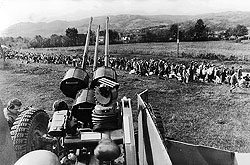
GLORIOUS WARFARE: Kotor town, October 1992.
HERITAGE: The VRS inherited the equipment from the former JNA. In total, there were slightly more than 300 tanks, of which 73 M-84s, 257 armored fighting vehicles, 1650 rocket and tube artillery, 660 recoilless, 760 POVR launchers, 22 combat aircraft, 14 combat helicopters and 18 light aircraft. There were no major procurements of military equipment and weapons, mainly ammunition for the light weapons of the army units was procured.
The VRS retained the classic professional-recruit combination of personnel with a small number of civilians, who were renamed to the category of "army workers". Military service was reduced from one year to three months. The conscription obligation was abolished after the incident in which the new contingent changed its position on the defense of Bosnia and Herzegovina to the defense of the RS; shortly afterwards, the VRS was also abolished.
In the Center of Military Schools in Banja Luka, members of the land army were trained for lower officer and non-commissioned officer duties; they received their higher education and training in military schools and academies of the FR Yugoslavia.
During the war and the post-war existence, the VRS was provided with a decent level of nutrition, personal hygiene and basic clothing and footwear. Indirectly, this is evidenced by the fact that during the existence of the VRS, not a single epidemic broke out in it. The standard of professional members of the VRS is a completely different issue, and irregular salaries and the absence of any housing policy clearly show the attitude of the political elites towards the army.
The participation of women in the VRS is negligible, with the exception of the rear services and in the administration of commands from the brigade level up.
The rank system was inherited from the JNA, from military ranks (corporal, corporal and junior sergeant), through non-commissioned officers (from sergeant to ensign first class) and officers (from second lieutenant to colonel), to general...
The military budget of the VRS was often subject to manipulation and reached up to 80 million marks, but the political authorities tried to exert influence on the army through penury.
PRE I AFTER KRAJA: Towards the very end of its existence, the VRS participated in several peacekeeping missions, of which the one in Eritrea was highly rated by the UN as successful. The VRS did not have the opportunity to become a member of international associations, but it participated at a high level in the implementation of the Vienna Agreement on Confidence Building and Stabilization in Bosnia and Herzegovina and the Florence Agreement on Subregional Arms Control.
Founded on May 12, 1992, in the war until November 21, 1995 of the Dayton Agreement, the VRS was abolished on December 1, 2004, when the process of transferring all powers to the Armed Forces of Bosnia and Herzegovina was completed.
A kind of conclusion can be the assessment that the VRS was created at a certain moment in the territory of Bosnia and Herzegovina, in which social and inter-ethnic conflicts reached a very high intensity, the result of which was the creation of armies that fought each other according to the principle of "all against all".
From what is left of the VRS in the Armed Forces of Bosnia and Herzegovina is the Third Infantry Regiment (Republika Srpska). The activity of this unit is reduced to the management of the museum of the regiment; financial fund control; preparation, research and cultivation of regimental history; publishes newsletters; preserves the cultural and historical heritage of the regiment; gives instructions on holding special ceremonies, customs, clothing and behavior of the regiment, and leads officers', non-commissioned officers' and soldiers' clubs. According to the BiH Defense Law, the regimental commander has an exclusively honorary position and has no operational or administrative powers.
About the "New Army of the Former Yugoslavia" project
Za ninth class
The destabilization of socialism in the SFRY began with the VIII Congress of the Union of Communists of Yugoslavia in 1964, and continued with the events in Kosovo in the seventies and eighties, that is, in Croatia in 1967-1971. "Maspok" in Croatia was not destroyed, and its members actively participated in the destruction of the SFRY. The peak of the crisis begins with the adoption of the SFRY Constitution in 1974.
The political and economic crisis in the SFRY reached its peak at the 14th congress of the Union of Communists of Yugoslavia (SKJ), on January 20, 1990, when two concepts of the development of the Party and the state were opposed: confederal, advocated by Slovenia and Croatia, and federal, for which were advocated by Serbia and Montenegro. The delegation of Slovenia left the Congress, which meant the end of SKJ. Germany was the first, followed by Austria, Hungary and the Vatican and other members of the European Community, to support Slovenia and Croatia. The foreign political circumstances in South-Eastern Europe also favor this. The disintegration of the Warsaw Pact favored the disintegration of the SFRY. A real media war was waged against Yugoslavia. The first multi-party elections in SFRY were held in November 1990. (...) According to the new (Croatian) Constitution, Serbs remained a national minority in Croatia without political rights. A Serbian autonomous region was declared in the Dalmatian part. (...) National parties won the 1991 elections in Bosnia and Herzegovina: the Democratic Action Party, the Serbian Democratic Party and the Croatian Democratic Union. In Serbia, the reformed Socialist Party led by Slobodan Milošević won the elections, and in Montenegro, the Socialist Party led by Momir Bulatović. After the elections held, the assemblies of Slovenia, Croatia, Bosnia and Herzegovina and Macedonia made a decision to secede from the SFRY and declared independent states, which broke up the SFRY and collapsed socialism in Yugoslavia as well.
Former
As for the fate of former members of the JNA, the majority continued to work in the VRS in conditions of marked material and financial scarcity. The VRS had officers and NCOs who were not Serbs, in positions up to the head of department at the corps level. Regardless of their nationality, they were given the epithet "Communist", which the newly-minted rulers selflessly used, regardless of the level in the hierarchy at which the individual was.
Participation in the war was calculated in double duration for all members of the VRS, but that's where all rights end. As of this year, monetary compensation is expected in a symbolic amount - slightly more than 100 convertible marks - but only for fighters of the first category, those who fought from the first day to the last. In the previous few years, a small number of decorated fighters received compensation of the order of a few hundred convertible marks, depending on the type of decoration. Professional soldiers had the opportunity to acquire the citizenship of Yugoslavia and Serbia, and they mostly used it - but this opportunity did not exist for the vast majority of fighters, members of the reserve.
Tenancy rights were solved, in a symbolic number, for war invalids, while no attention was paid to veterans in this matter. Almost all professional soldiers who owned an apartment in the territory of the Federation of Bosnia and Herzegovina or Croatia have enormous problems in returning their property, and some have not done so even to this day.
From the wartime army, which numbered around 180.000 soldiers, through staged and very short demobilization - carried out until the end of 1995 and half of 1996 - the VRS reduced its numbers in the first post-war years to around 20.000 members. At the same time, there was also a change in the organizational formation structure, so that the VRS was reduced from five to three corps. The main headquarters was renamed the General Headquarters with headquarters in Bijeljina. Due to the large number of GŠ units located in a relatively small garrison together with the command and a significant part of the units of the Third Corps, Bijeljina and its garrison were overcrowded with members of the VRS; soldiers are housed in tents. In the following years, the number of soldiers was reduced to about 10.000, and with the abolition of the obligation to serve in the military, to approximately 6000-7000.
Military waste
In the post-war period, the VRS actually did not have significant special purpose units. The corps had reconnaissance and sabotage companies that grew into detachments. These companies could not respond to their purpose due to their low staffing and equipment. Military police battalions, at peace of the rank of a reinforced company, had relatively well-equipped and trained platoons.
The equipment and weapons of the VRS were on paper numerous and relatively modern compared to their neighbors, but due to great wear and tear during the war, insufficient care, lack of training and the absence of any maintenance and overhaul - almost unusable. The fire support artillery was virtually impossible to use because only half of the guns had their towing vehicles in working condition, and the ordnance replenishment ranged from half to one battle kit, 6 to 10 times below the necessary reserves.
In the process of procuring military equipment of all kinds, the Republic Directorate, which was part of the Ministry of Defense, was in charge - but nothing was procured apart from ammunition.
Date
The Day of the Army of the Republika Srpska (VRS) is May 12, when (in 1992) the National Assembly passed a decision on its formation, then under the name of the Army of the Republika Srpska of Bosnia and Herzegovina, and General Ratko Mladić was appointed as the commander of the Main Staff. On the same date, a decision was made on the formation of the Presidency of the Serbian Republic of Bosnia and Herzegovina.
The political leaders said what the vast majority of the Serbian people in BiH thought and felt - that it was high time, because before that the FR Yugoslavia made a decision to withdraw the JNA from the territory of BiH, the Army of BiH and the Croatian Defense Council (HVO) were formed. , began a series of attacks on Serbs throughout the territory of Bosnia and Herzegovina, with the participation of the Croatian army. The then political top of the Serbs in Bosnia and Herzegovina assessed that the army was created according to the wishes of the people.
Keys
There are about 10.000 professional military personnel serving in the Armed Forces of Bosnia and Herzegovina, of which 7000 are in the territory of the Federation and 3000 in the territory of the RS.
Of the total number of members of the Armed Forces of Bosnia and Herzegovina, officers make up 20 percent, non-commissioned officers 30 percent, and soldiers 50 percent in the professional and reserve composition.
The law on service also provides for a reserve composition consisting of reserve soldiers, non-commissioned officers, officers and generals. The number balance of the reserve should be 5000. The reserve has not yet started. Currently, there is a noticeable lack of professional soldiers.
In the reform of the OSBiH national representation should correspond to the 1991 census: Muslims (Bosniaks) 45,9; Serbs 33,6; Croats 19,8 and others 0,7 percent. The representation of any constituent nation in the units of the Armed Forces of Bosnia and Herzegovina must not be less than 10 percent of the total numerical strength of the unit.
OSBiH consists of three infantry, a tactical support brigade and an aviation and anti-aircraft defense brigade. The official languages are Serbian, Bosnian and Croatian, and the Cyrillic and Latin scripts.
Specialists
The Military Intelligence Battalion is part of the Tactical Support Brigade in the barracks in Butile - Sarajevo, as well as the Military Police Battalion, while each of the three existing brigades has one reconnaissance company.
Suspicions i ranks
Key figures in the Ministry of Defense and the Armed Forces of Bosnia and Herzegovina are mostly personnel from the JNA, starting with the Minister of Defense Selmo Cikotić and the Chief of the Joint Staff Sifet Podžić. There are also a lot of officers of the former JNA in the subordinate commands, as well as most of the members of the former VRS.
There are still high-ranking officers in the Armed Forces of Bosnia and Herzegovina who, during the war, commanded units that committed war crimes and who were therefore suspected, but for different reasons - lobbying and political games in which the international community took part - even today. perform the highest military and civilian functions. This is also the case with the Minister of Defense of BiH, Selmo Cikotić, who, back in 2004, during the check for promotion to the rank of general, was not selected because he was being prosecuted for war crimes against the Croats in Bugojno. SFOR even suggested that he be immediately dismissed from active military service. Despite the law that dictates that a military person cannot be appointed to the position of Minister of Defense or Deputy Minister for a period of three years after the end of professional service in the Armed Forces, the position was kept and preserved for Cikotić. In addition, both the Minister of Defense and the Chief of the Joint Staff are Muslims (Bosniaks), which is not in accordance with the agreed "national key".
General Sifet Podžić, now commander of the Joint Staff of the Armed Forces of Bosnia and Herzegovina, did not pass the SFOR check on the same check and for the same reasons in 2004. At the time of the conflict, he commanded the unit that secured the Presidency building in Sarajevo, where the Serbs of Sarajevo and one number of prisoners from Dobrovoljačka Street tortured and ill-treated.
In lower positions in the Armed Forces of BiH there are also people suspected of being involved in war crimes during the war in BiH: an example is Brigadier Zdenko Andabak, commander of the Center for Combat Simulations in Zalužani, suspected of crimes against Serbs in Livno.
On the other hand, Serb officers in positions in the BiH Armed Forces are not suspected of such acts. This is evidenced by the fact that promotion to the rank of general in the spring of 2004 out of 19 candidates from the Armed Forces of Bosnia and Herzegovina was not allowed for 11. Of the "Serbian contingent" with a total of six candidates, Cvjetko Savić did not pass the check due to SFOR's assessment that he obstructed the investigation into the crimes in Srebrenica. . Among the "deposed" were 6 out of 9 proposed Muslims and all four Croats - the Bosniak candidates were suspected of war crimes, and the Croats lost their promotion due to their support for the autonomy of the Croats in Bosnia and Herzegovina in 2001.
Colorful schooling i benefits
Croat officers were educated mainly in Croatian military schools, Serbs in Serbia and Bosniaks in Pakistan, Turkey, Saudi Arabia, with accelerated further education at the Faculty of Political Sciences and the Faculty of Security in Sarajevo.
According to the Law on service in the Armed Forces of Bosnia and Herzegovina, military insured persons have an increase in length of service, so that 12 months of service are counted as 16 months of insurance length of service. For generals, 12 months of effective service is counted as 18 months of insurance service. A military insured person has the right to an old-age pension from the age of 55 and at least 30 years of pensionable service, i.e. 40 years of completed service, regardless of age. A professional military person becomes eligible for early retirement when he reaches the age of 45 with at least 20 years of service.
Arms i equipment Armed Forces of Bosnia and Herzegovina
In accordance with the agreement on subregional arms control, the permitted amount of weapons in BiH are: 410 tanks, 340 infantry fighting vehicles, 1500 artillery tubes (caliber 75 mm and larger), 62 combat aircraft and 21 combat helicopters. According to the decision of the BiH Ministry of Defense from 2006, the basic type of rifle of the OSBiH will be the American M16A1 caliber 5,56×45 mm, the M-60 and M-84 machine guns caliber 7,62 mm and the Croatian "Ero" 9 mm machine gun. The basic type of tank will be the American M60A3 with a 105 mm caliber gun and the "Yugoslav" M-84 with a 125 mm caliber gun; the armored personnel carrier is an American-made M113. It was decided to keep the D-30J 122 mm howitzer as well as the APRA-40 122 mm self-propelled multi-barrel rocket launcher. For now, the exact number of weapons by type for deployment to the units of the Armed Forces of Bosnia and Herzegovina is not known: the material formation is under construction and will probably come into force by the end of this year.
BiH sells and destroys M70 7,62 mm rifles and introduces M16A1, which as a donation of 40.000 pieces arrived in BiH through the American company MPRI. There is also the problem that there is more ammunition for the M70 rifle than is needed, while ammunition for the M16 must be purchased or mastered in its production.
Pred by the court
Sefer Halilovic he leaves the JNA with the rank of major in 1991 and joins the "Patriotic League", a Bosniak formation that had its own political and military wing and which, according to Halilović, then numbered several hundred thousand soldiers (data obtained from Jovan Divjak, although he himself doubts in these statements by Halilović). He was removed from the post of Chief of the General Staff in 1993, after a conflict with Alija Izetbegović, and was transferred to the Herzegovina battlefield as the commander of the "Neretva 93" operation. During that period, "Grabovica" takes place, the case for which Halilović will answer before the court in The Hague in 2001. He was accused of command responsibility, because he did not prevent the murder of 33 civilians of Croatian nationality in Grabovica and 29 civilians in Uzdol. The trial lasted from January 31 to August 31, 2005. According to the judgment of the Trial Chamber, he was acquitted.
Rasim A fraction, commander of the ABiH since 1993. Voluntarily surrendered to the Hague Tribunal in 2005. He was accused of command responsibility for the murder, cruel treatment and rape of civilians of Croatian and Serbian nationality in central Bosnia in 1993-1994. He pleaded not guilty and was temporarily released. The trial began in 2007; Delic was temporarily released again in December, but after his meeting with Haris Silajdzic, the Prosecutor's Office demanded that this right be revoked and that Delic be returned to Scheveningen. The Government of the Federation of BiH gave additional guarantees for his temporary release.
Enver Hadzihasanovic, a member of the JNA, has been in the ABiH since 1992, where he was the commander of the III Corps, later promoted to the rank of brigadier general. He retired in 2000 with the rank of major general. He has been in The Hague since 2001, charged with command responsibility for failure to prevent murder and cruel treatment in central Bosnia in 1993-1994. He was sentenced to five years in prison in 2006.
Amir Kubura left the JNA in 1992 with the rank of captain. As one of the commanders within the 7th Mountain Muslim Brigade of the III Corps, he participated in the battles against the HVO in central Bosnia in 1993–1994. He was transferred to The Hague in 2001, and in 2006 he was sentenced to two and a half years in prison for command responsibility for looting public and private property.
mehmed Alagic, also a member of the former JNA, director of the School for Reserve Officers in Banja Luka. He left the JNA in 1991 with the rank of second lieutenant. He met the end of the war with the rank of brigadier general as commander of the 7th Corps of the ABiH. A member of the SDA party, he performs the duties of the mayor of the municipality of Sanski Most. In April 2001, the Cantonal Court in Bihać sentenced him to four years in prison for abuse of office. Before the court in The Hague, he was accused of a number of criminal offenses under command responsibility. He died on March 7, 2003.
S. D.
The accused, convicted, unavailable
53 persons from the RS were indicted before the Hague Tribunal. Four are awaiting trial, nine have been forwarded to the BiH court, five are waiting to be transferred to serve their sentences, five have died, four have served their sentences, three are on the run, 13 are serving their sentences, nine are currently on trial.
Vojska
The Army of Bosnia and Herzegovina was formed at the beginning of the war and its basis was the then Territorial Defense (TO). At the very beginning, on April 8, 1992, the Presidency of Bosnia and Herzegovina headed by Alija Izetbegović made a decision to abolish the Republican Headquarters of Territorial Defense, which until then had functioned as part of the JNA, with the intention of reorganizing those headquarters. The head of the TO at the time, Hasan Efendić, and Jovan Divjak, the head of the TO in Sarajevo who was later promoted to the deputy commander of the ABiH, sent a letter to all the headquarters of the TO in BiH with a request to decide whether they would accept this reorganization and join the new command.
Of all the headquarters, 73 of them accepted the new structure - mostly in those parts of BiH where the majority population was Bosniak and Croat. Jovan Divjak recalls that rifles and pistols were offered "on credit". Another sign that something was brewing was the "banana rocket" affair from 1991, when rockets were transported from Sarajevo in military trucks, presented in the papers as bananas.
"Already in 1992-1993. it started to be rumored around town that Caco is taking civilians to dig trenches, who simply don't return from those actions," says Vildana Selimbegović, editor of "Dani" magazine. The abduction and killing of civilians of non-Bosniak nationality received its epilogue through the "Kazan" case - named after the Trebevic area where civilians were taken and killed - before the court in Sarajevo, which in 1996 sentenced 14 soldiers of the 10th Mountain Brigade. The case is also being investigated by the Hague Tribunal. At the head of the action "Trebević 2" were the commander of the Army Rasim Delić and the then Minister of the Interior Bakir Alispahić. The whole action practically came down to a showdown with Cac and Ćel, and it ended with around 250 arrested members of both brigades and more than ten dead members of the MUP, military police and the 10th Mountain Brigade.
Since 1992, the Seventh Muslim Brigade has been formed in central Bosnia within the III Corps of the ABiH, composed mostly of volunteers from foreign (Islamic) countries. The largest number of indictments against ABiH officers in The Hague refers to command responsibility and failure to prevent crimes committed by members of units within the III Corps.
SD