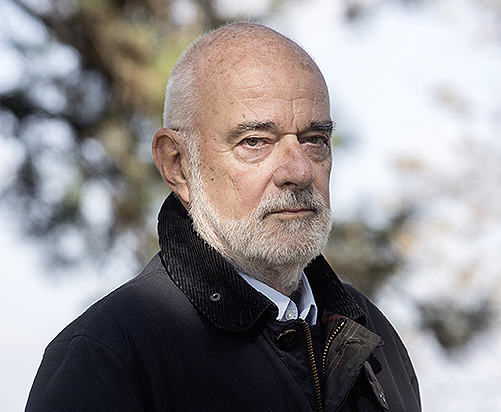
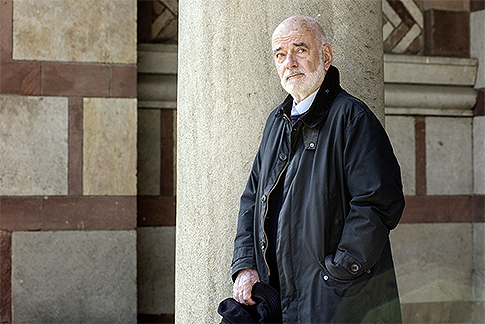
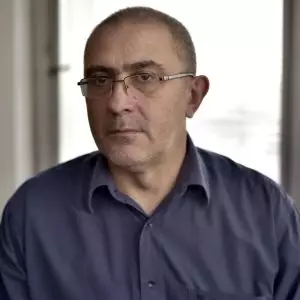
About the demonstrations on March 9, actually the first protests against the regime of Slobodan Milošević (still within the framework of the dying SFRY), which were suppressed by water cannons, tear gas and tanks on the streets of Belgrade, their importance in the thirty-year search for democracy in Serbia, about missed opportunities, about Zoran Đinđić and Vojislav Kostunica, Boris Tadić, Dragan Đilas and Vuk Jeremic, the Holy See, the new Serbian Patriarch, Serbo-Croatian relations and the symbols of Vučić's state, but also some new protests, boycotts and elections, Vladeta Janković speaks for "Vreme" in an email interview. Retired professor of the Faculty of Philology, politician and diplomat (ambassador of the FRY and SC in Great Britain and ambassador of Serbia in the Vatican), one of the founders of the Democratic Party of Serbia in 1992, before that active in the formation of the Democratic Party, Janković left DSS in 2014 after Vojislav Koštunica left the party after the election defeat that year.
"I belong to the generation that participated in the first real rebellion against the regime in June 1968, and March 9, 1991 could be considered primarily as an enlightenment regarding the true, vicious nature of Milošević's rule, which in the previous few years was perceived by many as an awakening of Serbian self-awareness and protection of national interests. Today it is clear to me that the March 9 rebellion, authentic and fierce as it was, was simply too late. If it had happened two or even just one year earlier, the war and all the tragedies of the nineties could have been prevented. If the democratic opposition had collected itself and organized, for example, when the Berlin Wall fell, the communist single-mindedness would have come to an end in our country, Milosevic could have been reined in, and the Yugoslav crisis could have been resolved much more painlessly. There was also the possibility of an agreement on the division of jurisdiction, on autonomy for autochthonous minorities, and perhaps some loose confederation, which would be accepted overnight into the European Union, only to one day peacefully break up like, for example, Czechoslovakia... We should, if we're right, to say that such a solution was already unacceptable to Croatia and Slovenia, but it was still possible to find at least a temporary compromise, especially since such an exit would be supported by the great powers. It should also be remembered that March 9, as a preventive measure for war, was too late because, with the intervention of Yugoslav military aviation against Croatian helicopters, the war had practically already begun. Be that as it may, all this is, of course, today just an afterthought and whining over spilled milk, while thirty years ago all of us at Trg Republike felt as if the hour of truth had come, we were full of energy and optimism," says Professor Janković in commemorating March 1991, XNUMX.
"WEATHER": What today means that day? And to whom? Is there a culture of remembering 9. March 1991?
VLADETA JANKOVIĆ: I remember him because of the very strong crowd and the immense crowd that covered Trg Republike and all the surrounding streets. The leaders of the opposition at that time were in the Majestic Hotel, where they chaotically agreed on tactics, the sequence of performances and the reaction to the police action that was known to follow. I remember that, apart from Vuk Drašković, who was undoubtedly the leading figure, Dragoljub Mićunović, Zoran Đinđić, Kosta Čavoški, Ivan Đurić, Borislav Pekić, Borislav Mihiz, Slobodan Rakitić, Milan Komnenić and many more party and non-party opposition members were there. while the additional crowd was created by journalists, some kind of strange security and all kinds of curious people. I remember that at one point, after the speeches had already been made and the fierce action of the police with all the tear gas, snorts and tanks, during a break, a man ran into the hotel lobby with a machine gun removed from the police tank. I also remember that Vida Ognjenović, the manager at the time, let the protesters into the National Theater building, from whose balcony speeches were given, of which Mihiz's speech about "breaking the monster tree of unfreedom" remained in my memory, as well as Drašković's call for an assault. The police were ruthless, and many of the protesters were fearless. I still remember that sometime in the afternoon we escorted the opposition MPs to the Assembly building in Kralja Milan. Near the intersection near "London", at the place where a young protester (high school graduate Branivoj Milinović, ed. Nov.) was killed, I saw a large trail of blood, and the unreal evening scene of tanks spread across the square and deserted streets was equally deeply etched in my memory. .
These are some of the fragments of personal memory, and I'm not sure I know much about collective culture. For the leaders and participants, many of whom are no longer alive, it is one thing, and for the younger ones, who know about the event from stories and photos, another. The ninth of March also remained as a kind of example of how such things are done, and more or less violent demonstrations against the regime will be repeated several times during the last three decades, with good prospects for new repetitions, with, I like to believe, more complete and lasting the outcome.
Children born during the demonstrations in Belgrade in 1991. today they are 30 years old. How would you tell those 9-year-olds what the XNUMXth was?. Mart?
Partially successful, as it was said a long time ago, the people's breath. Part of the request was fulfilled, the police minister was replaced, the opposition got Studio B and B92, and a parliamentary survey committee was established. The days around the Terazija fountain that followed were full of energy, you will remember that morning when the crowd dispersed in front of the most respected academics who came to support the protesters and address them, and the opposition began to mean something in the parliament. If that experience teaches us anything, it is that the so-called "the street" and how it can achieve something in the fight for democracy and justice whenever the government is forgotten so much that the gift exceeds the measure. Three-month demonstrations in 1996-97. it will essentially be a continuation of March Ninth, with October 2000th 12 finally – even if the achievement took a mere 1968 years – to achieve what the early attempts did not. And always - it was and will be a necessary occasion, sometimes not particularly significant at first glance. In June 1996, it all started with an incident in the student canteen in New Belgrade. On the 97th of March, the trigger was a stupid TV Dnevnik, 15-XNUMX. arrogance in an attempt to cover up theft in local elections, and on October XNUMXth, a brazen request for a second round of the lost elections. Vučić learned that lesson better than the Sociology of Sports (in which he has a clear ten), which can be seen by how he stops in time as soon as he smells the danger of the "street". This was the case in July of last year, when within XNUMX minutes he withdrew the decision to close the student dormitories, or more recently, when the liquidation of the student polyclinics was abandoned. Something similar happened after Balasevic's death, when the fearless president became silent as a mouse because he remembered his statement about "cheap fukara", after which a condolence parade could inflame the genuinely grieving people on the streets.
Why none of the actors of those demonstrations, from the opposition scene of Serbia, today it represents nothing in the political sense?
It is a biological inevitability, as it were, that among the living, they are already at a very serious age, when engaging in politics, in fact, is no longer even decent. There are also those who (and it is not difficult to recognize them) succumbed to temptations and today they occasionally drag themselves around the public scene in the tatters of their former glory and influence. But it is worse than anything that the spirit of those against whom the freedom-loving people rose up on March 9 still lives. Their immediate heirs and students, having surpassed their role models in their abominations, rule Serbia today.
Parties in the formation of which you participated, DS and DSS, which even had the halo of state-forming parties, they were completely erased from the political scene?
Those are two different cases. Đinđić was on his way to make the DS an effective mechanism, but in his pragmatism within the party and the government he also relied on some very problematic people, perhaps with the intention of getting rid of them when they perform certain tasks necessary to consolidate power, which, as we know, ended tragically. He did not leave behind successors better than Zoran Živković or Čeda Jovanović, while Mićunović was deprived of real influence much earlier, and otherwise, despite his personal integrity and good intentions, he was never able to make a really energetic political move, inside or outside the party. . DS experienced a great rise under Tadić, but then it became clear what bad material most of his immediate surroundings are made of. The old founding members were partly marginalized and partly disinterested or oversaturated. I still believe that there was room for cooperation between the two democratic parties in the period after the Fifth of October, if only some unhealthily ambitious, some greedy, and some directly controlled people and women from the services had not inserted themselves (or were inserted) into their heads. If the cohabitation I'm talking about was possible, it was confirmed, for example, during the early negotiations on Kosovo or when the Constitution was being adopted, and a good example could be the cooperation on specific issues between Samardžić and Kojen, or the late Nikitović and Miki Rakić. Tadić, otherwise a clean man to some extent intoxicated by power, later began to rush from mistake to mistake, succumbed to the pressure to suppress the DSS at every step, resurrected the SPS, completely antagonized the "other Serbia" (which cost him "white papers "), he grossly underestimated the radicals, ranted too much (and without cover) in front of Angela Merkel, so that in the end he unnecessarily shortened his mandate and lost the elections. After that, everything went from bad to worse in DS. Many were spoiled by the authorities, some did not understand that they should blow the whistle and fasten their belts, and almost all of them were greedy for positions, privileges and money, and were prone to self-estimation. I think that today's situation is extremely deplorable, that Lečić and those behind him should face the truth, and that Lutovac needs more capable collaborators if fresh bread is to be brought to Serbia's political table from the dough that many good people have mixed. in the Belgrade Youth Center on February 3, 1990, around noon.
When it comes to DSS, I will remind you that from 2008 until 2014 it was systematically undermined and that it simply stumbled under heavy blows from the country and abroad, mostly because of its steadfastness on the issue of Kosovo, as well as because of its resistance to joining the EU. Regarding today's DSS, I ask for your understanding that I will stand by my decision not to talk about it.
Are you in contact with Vojislav Koštunica?? Do you think he retired prematurely??
We talk on the phone quite often, sometimes we have lunch together. It was always important to me that in talking to him, I pass my own thoughts and reactions through some kind of filter of intellectual composure, sound judgment and broad awareness. When Koštunica retired, he was exactly 70 years old, which under some normal circumstances would be a perfectly acceptable age for engaging in serious politics, but two and a half decades of wrestling in our political mire takes many times more from a person. Really dedicated and only interested in the common good politicians in Serbia (and how many of them are there?) should, in my opinion, have preferential work experience, something like miners or ballerinas. But, speaking seriously, I think that Koštunica acted consistently with himself - that is to say, he took responsibility for the electoral failure, and that he had a lot of disappointments, starting with those regarding the correctness of intentions and the impartiality of Europe to those regarding the loyalty of a number of associates . At the same time, he stoically endured venomous attacks and insults in public for a long time. The incredible popularity of probably 90 percent of the support that he enjoyed right after October 5 must be the reason why so many people hated him so passionately and bitterly. He left with dignity, without building a church with his image as the founder and without a wine cellar in his parents' home, and for seven years he did not say a word in public. He spent long enough in politics to leave behind a valid mark. Between 2003 and 2008, we had not only stable economic growth of 5-6%, but also a free press, fair elections, a policy of military neutrality was adopted and a Constitution was adopted that is still in force. It could happen that the period when Kostunica was in a position to really decide on something one day, when it is said sine ira and studio, will be rated as one of the best in the history of Serbia.
Do you see?, somewhere, new political energy that can oppose the regime of Aleksandar Vučić?
Not at the moment, which doesn't mean she won't try when we least expect it. I believe that the only real potential is hidden in the ranks of the opposition, which boycotted the elections and which would have to deprive itself of the services of those who failed it by falling into Vučić's trap of the three percent census, and from whom there will always be more harm than good. I will add that perhaps an exception should be made with some who went to the elections with a heavy heart and under objective pressure, such as Zelenović or Stamatović. Contrary to the usual whining about the weaknesses of the opposition, I think it should be borne in mind that never before have the regime's pressures been so vicious and reckless, that the conditions for mere survival are desperate in every respect, and yet something is happening. It's good that from the second plan, personalities who show promise with their actions and performances, such as Tepićka, Aleksić or Ponoš, are starting to be profiled. If this means anything, it is my belief that at the very least Đilas and Jeremic (whom the regime's propaganda is butchering like no one else before) must find a common language, that the candidates for president and mayor must have unified support and that as many as possible should be sent to the negotiations on election conditions a smaller group of professional, personally disinterested people, who do not have mortgages, but have long fuses. You should also be prepared for a new boycott because, if nothing else, today's appearance of the Assembly is the best confirmation of how effective this weapon is.
Why rebellion no longer resides in the university? How is it that the additional exam period is more important to students than the fate of the society in which they have to live and work?
That is the price of the nine-year rule of Vučić, which by its very nature suppresses everything idealistic in man. Let's not lie, students have always asked for additional exam dates, but never before have there been so many of them who see their future only outside the borders of their homeland. We should have no illusions about the quality of many professors either, because the Vucic education system consciously favored second-rate conformists and lowered the criteria for promotion. That is why, for the sake of example, today it is necessary to move heaven and earth in order to cancel the stolen doctorate of Siniša Malog or to remove thieves from leadership positions at the Faculty of Philology, and that is why it is possible that Danica Popović will be treated to what her inferior colleagues at the Faculty of Economics are doing to her. It is naive to deceive oneself that all this has no consequences for the students' morale - they simply have no one to fight for anymore and, as a result, they neglect the public interest for the sake of the private one. But the situation in education is no better than the situation in the judiciary, health care or state administration, where incompetent careerists have squeezed out people of quality and value, so they desperately cling to undeservedly won positions. In general, it seems to me that few people in our time are aware of the depth and far-reaching tectonic social disruption caused by Vučić's rule. In my opinion, it is the basic and most serious disease of today's Serbia, for which it will be difficult to find a cure even when one day there is a change of government.
Do you expect that Patriarch Porphyry would, as a man of ecumenism, sincerely dedicated Serbian-Croatian relations, someone who declared that Croatia became his second homeland, could relax the position of the SPC that the pope can only go to Serbia via Jasenovac? Is a slightly different attitude towards the Holy See possible??
The election of the patriarch has attracted quite extraordinary attention these days, and it must be said, truth be told, that it took place under rather unusual circumstances. The outcome, I think, is such that the democratic, that is to say anti-regime, public should not be dissatisfied. The new patriarch is very young for that position, which means that he is closer to understanding the modern world, he is a man of thorough education, fully aware of the circumstances in the Church and society, he successfully establishes contacts, he is proven enterprising and efficient, and his first statements give an additional reason for optimism. I remember him from the time when he had just become the abbot of the Kovilj monastery and I remember the poor condition he found that place in, and recently I became convinced that the monastery was not only reborn but also successfully fulfills its true Christian duty by helping the seriously disadvantaged. According to all that is known, the new patriarch has shown himself well as a metropolitan in Zagreb, and my impression is that behind his mild exterior and quiet words hides the firmness needed to resist the political pressures that Vučić and Selaković will inevitably exert, especially when will be breaking around Kosovo. As for the Pope's visit, it was not and is not likely in the foreseeable future, even if it came "through Jasenovac": the majority of the public would have a hard time bearing it, and Vučić is wary of such situations like live fire. Otherwise, relations with the Holy See as a whole are not bad, not only because of the Vatican's refusal to recognize Kosovo and because of the delay in Stepinac's canonization, and our commitment to Moscow, in the dispute with the Ecumenical Patriarchate, makes us an even more necessary grain in the Vatican's foreign policy rosary.
Is there a possibility that in the future, the Catholic Church in Croatia and the SPC might understand each other better?
As things stood while I was still in a position to follow them closely, as ambassador to the Holy See, that relationship largely depends on the extent to which the more extreme circles in the Croatian Church are ready and able to turn a deaf ear to the Vatican's suggestions that the relationship according to SPC, be more measured.
Patriarch Porphyry is about the film Dara from Jasenovac He said "that it is very important to get out of oblivion" but also that at the same time the film "not be a reason for bad memory". How do you interpret that statement of his??
It is a reasonable and well-considered position. The patriarch has enough direct knowledge of the situation in Croatia, and his proclaimed commitment is in favor of tolerance. This certainly applies to inter-church relations, but to an even greater extent to the inter-ethnic relations of Serbs and Croats in the time ahead. Otherwise, I think it would be great if the patriarch realizes his hinted intention to restore the disturbed unity within our Serbian Orthodox Church. This work is not at all simple, but if it is successfully completed, it would mean a great deal and on a far wider scale than the church.
Aleksandar Vučić said that he is proud of that film, "as he is proud of the Church of St. Sava, monument to Stefan Nemanja, Boulevard of heroes from Košar... " We also assume the return of military service, Belgrade on water... Do these projects look to you like an attempt to build a new symbol, Vučić's state?
I haven't seen the film and it wouldn't be fair to comment on it, but from the circumstances under which it was filmed, screened and received, it's clear that it's a state project - which by definition is a big minus. If you add to that the opinions of experts that plagiarism is common, the reservations only deepen. (And by the way, it's a wonder how much this regime likes thievery: they're not satisfied with public procurement, commissions and embezzlement, but brazenly reach for spiritual values, from diplomas and doctorates to "Hit-Tweet" type television shows.) And honestly, I will admit that phenomena, events and personalities that Aleksandar Vučić is proud of often cause a kind of mixture of contempt and disgust in me personally.
Perhaps the idea is to compensate for the collapse of Kosovo's politics?
The idea is that these, as you call them, symbols are compensation for many other things. It is tragic that for the majority of citizens of Serbia with the right to vote, insanely expensive apartments in a freak of Belgrade on the water can be compensation for the fact that they cannot get justice in court, that prices are rising, that imported agricultural products make their work worthless, that the air who inhale poison or that their children do not have toilets in their schools. The fact that in half a semester, without attending classes, Vučić received three 10s and one 9 at the university, that he is not afraid of assassins and the corona virus, that he knows how to shout, and that as an "ordinary man" he makes chardonnays in his father's wine cellar, is not and can be no compensation for anything to anyone who is at all sanctified. In our country, however, where the population, instead of being urban or rural, in terms of mentality has become suburban in the worst sense, where almost a million people do not even have primary school and where the main sources of information are RTS and Pink, with their parliamentary broadcasts and on the same) Cooperative - something like that is possible.
However, the Kosovo issue is something completely different and the possible recognition of Kosovo as a state would shake everything that Vučić's propaganda has been building so successfully for years. The government is well aware of that, and that's why, in my opinion, there will be no formal recognition. I remain convinced that the "frozen conflict" will last, and that pressures, perhaps in the form of Western sanctions, will be inevitable. But it is certain that Vučić will lose the support of the West, which brought him to power and, unfortunately for us, has kept him in power for so long, in the very foreseeable future, and then he will start to hum, first softly and then louder, some other tones that will, I like to believe, wake up Serbia and open its eyes.
A year ago, it seemed that the corona crisis would shake the Vučić regime. It's like the opposite is happening? Is it premature to say that the government has achieved a result in the procurement of vaccines and the implementation of vaccination so far, with which it can comfortably go to the elections??
All of us who predicted that the corona would shake Vučić, it turned out, were wrong. Moreover, the crisis gave him an opportunity for new acting exhibitions and bragging rights. Regardless of the various stupidities and insolence of the Crisis Staff, the procurement of vaccines and the organization of vaccinations are carried out quite properly. However, when the trouble is over (and it must be, hopefully before the election), people will, with relief, feel a natural need to somehow cash in on sacrifices and fears, which should have an impact on voting.
Is Vučić's foreign policy?, swinging to all four corners of the world, even if the procurement of vaccines was to the benefit of the citizens of Serbia?
The way I see it, the procurement of vaccines has nothing to do with foreign policy as much as with money and hunting in the murky waters of international trade and barter, where Vučić has always excelled. And when it comes to the good of the citizens, tell me, please, which citizen of Serbia will not be beaming when, as announced, a plane full of life-saving ointments will touch down on the Surčin airstrip on the birthday of the Ordinary Man these days?