It was burning in the sky above the Greek city of Kavala on Saturday evening July 16; a fireball over the Greek coast east of Thessaloniki marked the death of eight crew members of the "Antonov" transport plane. And the explosion after this accident reverberated all the way to Belgrade and the office of the Minister of Defense Dr. Nebojsa Stefanović. Namely, the news about the crash of the plane that had left the airport in Niš earlier that evening to, it will be known later, Amman and on to Bangladesh spread through the portal and television.
It quickly became known that it was a plane that was transporting "some weapons" and by morning, several theories were formed on social networks about who it was and why Serbia was exporting weapons, who was exporting on its behalf, where those weapons were actually going and how this is reflected in the country's foreign policy orientation.
The quick reaction of the Minister of Military Stefanović was unusual. He scheduled a media conference on Sunday morning to explain what happened so that the people would understand. He did not succeed, and after his address to the public, suspicions about everything that preceded the fall of the "Antons" in Greece were further strengthened.
OFFICIAL VERSION

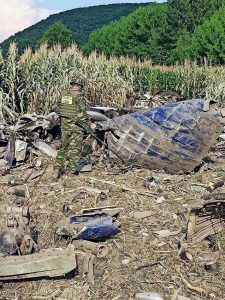
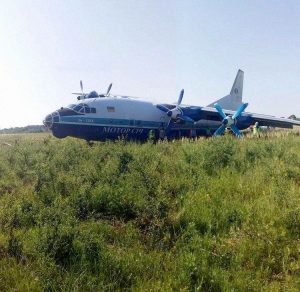
photo: civil protection of Greece and ap photoA Greek deminer at the crash site of a Ukrainian plane carrying mines from Serbia
The news regarding the arms trade from Serbia coincided with the news from Croatia as the public learned on Sunday morning what happened on Friday. And that is that Aleksandar Vučić, in his capacity as a private person, did not receive permission from the Croatian authorities to visit the Memorial Center of the Jasenovac concentration camp. This is how the media conflict between these two stories began. So what is more important? The departure of the Serbian president to Jasenovac in the capacity of a citizen or another scandal connected with the Serbian dedicated industry?
All those who are in the technical government and would like to remain in the new one, with or without Ana Brnabić, expressed their opinion about Jasenovac. However, only Stefanović and, in one sentence, Vučić spoke about the accident in Greece at his press conference on Monday, July 18. For the two of them, there is no dilemma and "no talk": it is about the previously agreed delivery of school weapons to Bangladesh, done in accordance with all the regulations and procedures of the State of Serbia in that area. Stefanović said that there is nothing in dispute - it is known who the end customer is, how the goods were supposed to be delivered and who is the intermediary in that business who, of course, has attached all the necessary documentation.
The official version reads: 11,5 tons of school weapons, mines filled with phosphorus, were on their way to Bangladesh according to a previously established agreement, by a plane of the Ukrainian carrier type "Antonov", which after a probable ignition of the engine in the airspace above the Aegean Sea in Greece, crashed not far from from Kavala. It is an unfortunate incident and a tragedy for the families of the plane's crew, but it is good that the plane fell in an uninhabited area and that no one was hurt in Greece.
Whether that was the case, at least as far as the malfunction and crash in Greece is concerned, will be known when the Greek authorities conclude the investigation launched immediately after the crash on Saturday. As investigators sift through the ashes and see what the black box from the plane can tell them, Greece has sent a protest to Serbia for not being notified in time about the weapons in the Ukrainian plane that crashed near Kavala in northern Greece on Saturday night.
CASE "ANTONOV"
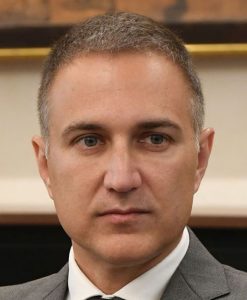
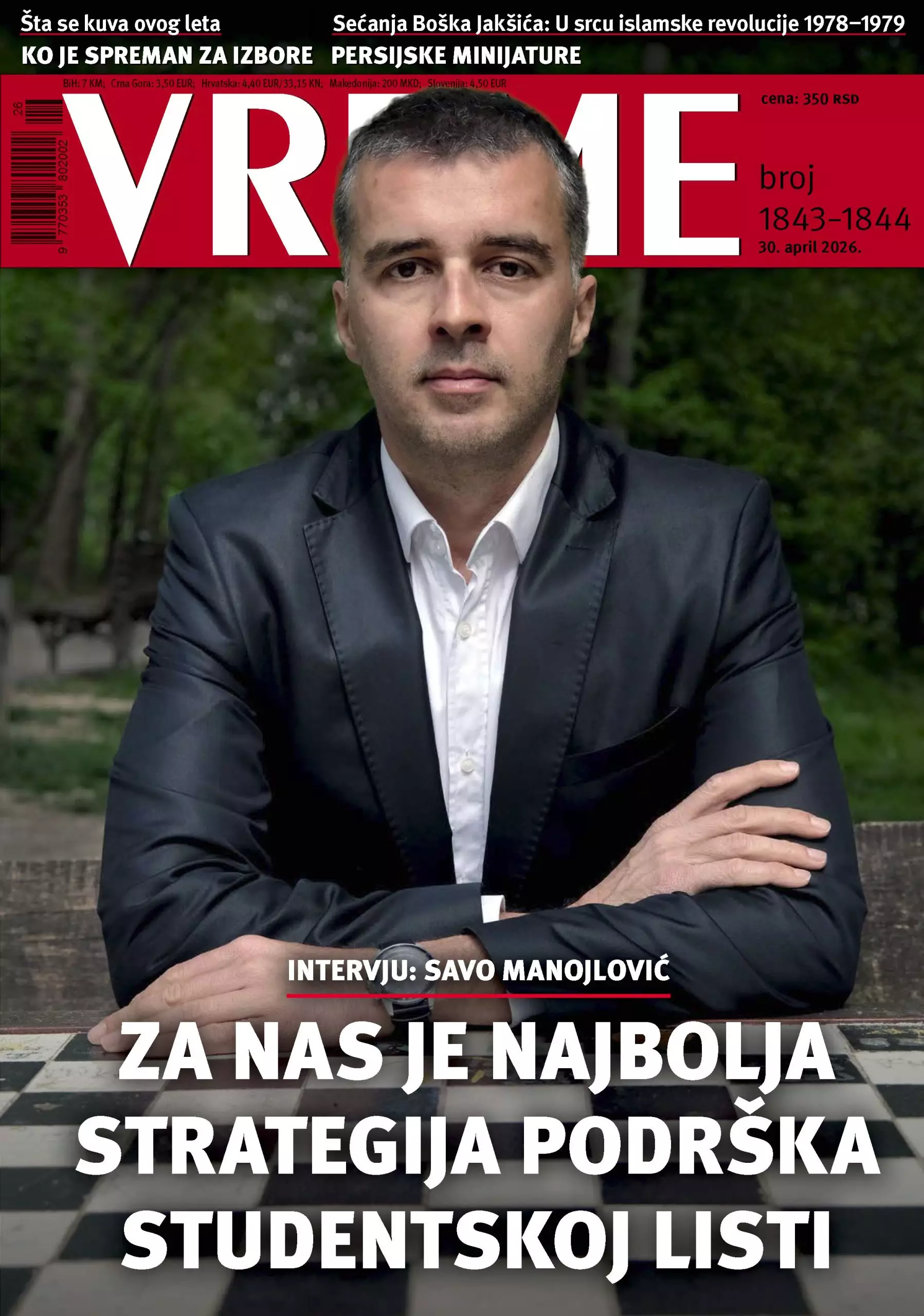
photo: tanjug / mo i vsNebojsa Stefanovic
In the meantime, the crash of this plane raised several topics in Serbia: who was transporting the cargo, for whom, who is the middleman in the business, which company it is, with whom it is connected and, finally, whether Nebojša Stefanović can be trusted when he talks about the arms trade, bearing in mind the "Krušik" affair, in which he was involved up to his neck together with his late father, Branko.
So, the story of how weapons are traded from Serbia has been re-opened, what is the status of arms dealers, and what is the status of state arms sales agents? Plus, was there really any school or real weapons on the plane that should have ended up somewhere else instead of Bangladesh. There have been many such cases in the past.
In addition to these questions, a debate was started about what kind of "Antonov" type airplanes are they when they break down every now and then? And is it too risky to use them at all for this kind of work, bearing in mind that they are fifty years old and belong to Ukrainian companies that now have nowhere to properly overhaul them. Also, whether such an accident could have been prevented in advance by proper preparation for the flight of this aircraft.
When it comes to the type of aircraft, Petar Vojinović, editor of the Tango Six portal specialized in aviation topics, explained both in his articles and in public appearances that these planes are used because they are the cheapest. They are more or less smaller, but they also fly around the countries of the European Union - they are suitable for the transport of various goods, not only weapons (for which airplanes are least used). However, Vojnović also says that on June 27, there was an "incendiary" situation with other "antons" when the citizens of Belgrade sent the media images of a large plane flying low and from which large amounts of black smoke were coming out.
That "Antonov" that scared the citizens of Belgrade (who remember the fall of the Russian "Ilyushin" in 1996, also with the products of the dedicated industry) fell on July 2 near the airport in Uzgor, Ukraine - fortunately without tragic consequences. Some sources say that the accident happened because that airport is small for such a large plane, and that it was transporting unmanned aerial vehicles of the "flagship" type for the Ukrainian army.
So, two "Anton's" Ukrainian transport companies had an "incident" in two weeks. That fact alone further reinforced the impression that this is a much bigger story than the accident on the Nis-Amman flight.
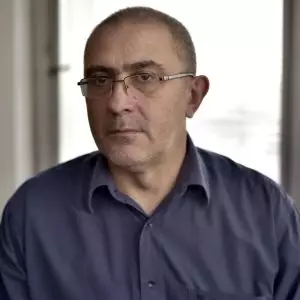
VELIRA D.O.O. AND SLOBODAN TEŠIĆ
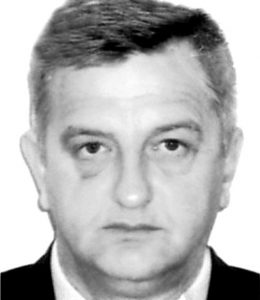
06-23Slobodan Tesic
The "Antonov" that took off from Nis had a "tumultuous" week behind it: on the specialized internet platform "Flytradar" it can be seen that it flew all over the Mediterranean and the European Union before landing in Nis to pick up cargo and continue towards Jordan . The goods were prepared by the company Velir d.o.o., until this case was completely unknown to the Serbian public, even to the part that follows the topic of arms trade. And if three years ago the whole autumn of Serbia was "shaken" by the "Krušik" affair, which was revealed to the public by Aleksandar Obradović from Valjevo, then the crash of the plane that took off from Niš had to be given more space in the public eye. Namely, it was during the "Krušik" affair that the degree of corruption and abuse that exists in this area was seen.
Journalists easily "found" what Velir is: a half-hour search on the Internet shows that it is a newly formed company, created in the middle of the "Krušik" affair in the fall of 2019 and immediately after the US Department of Finance imposed additional sanctions on persons and companies associated with Slobodan Tešić, the most famous private arms dealer from Serbia.
This entrepreneur spent decades building his business empire around the world and traces of his trading can be found in almost every place in the world that has been at war for the last 25 years. He was on the "black list" of the United Nations for ten years due to illegal arms trade, and he was "removed" from that list by the new government in Serbia after 2012. It is believed that this was done because he was considered a financier of SNS, but Tešić successfully hid his tracks from the general public for decades and never appeared in public.
Back to Velir. In just two years, this company under the management of two younger directors and owners has gained an enviable reputation, and few have heard of them in the world of arms dealers. They achieved large turnovers in this business in a short time (tens of millions of euros) and successfully export to the United States of America as well.
The relationship between Velir and Tešić is indirect, but the institution of the "silent/disguised partner" is not unknown in the world - both among business people and among those who investigate their affairs. The assumption is that Tešić - since he was put on the US blacklist - created a new system of companies and related firms that ensured his normal business, and that he is formally nowhere in the system of ownership and management.
photo: twitter @UW_ObserverOBSOLETE AND WITHOUT SERVICING POSSIBILITY: Ukrainian Antonov 12
Another portal specialized in arms trade, "Armswatch", announced that Tešić had also opened a company in the federal state of Florida. This seems very strange considering that he is "targeted" by American investigators and is under sanctions - the American authorities in that case would be able to confiscate and freeze all his assets on their soil.
However, the source of "Vremena" says that it is possible that Tešić, through his lawyers, somehow settled with the American side and that he had "something to offer them" that helps American foreign policy. Sanctions are a tool of foreign policy, so if Tešić had something to give, perhaps he was enabled to continue to deal with his basic business - the controversial arms trade.
The company Velir itself issued a statement after the accident in which it says that everything was done properly and that their job was to deliver the goods to Niš; that's what they did and they regret the loss of human lives. What they didn't answer was why they chose to fly the goods to Bangladesh - if it was school grenades, why wouldn't the less valuable cargo go by ship as usual? Second - why was a Ukrainian company chosen with ancient planes that have nowhere to overhaul and how come they are not responsible for the transportation of the goods they sell?
In addition, it would be useful if they or Minister Stefanović published the documents related to this case in order to remove all doubts as to whether school landmines were really quickly transported to Bangladesh for training or whether it was an urgent delivery of real weapons to some army on some battlefield.
ARREST DUE TO FILM FROM NIŠ AIRPORT
As in some earlier cases which are "sensitive" and which were estimated to be able to harm the regime in Belgrade, the government adheres to the motto "silence is golden". In parallel with these described cases, a video also appeared on the Internet from the airport in Niš, published by the portal Srbin.info, showing the loading of Serbian-made military vehicles into transport planes. Because of that video, the police arrested the owner of this portal, Dejan Zlatanović, but it remained almost unnoticed by the general public.
Without an answer to these doubts, the imagination will work in the following direction: Serbia is covertly sending weapons to Ukraine for the needs of the Ukrainian army, with American approval, but for opportune political reasons it does not want to announce this publicly because, as in other situations, it likes to keep the so-called . "neutral position" - whatever that means. In the weeks ahead, it will become clear whether this was just one unfortunate and quickly forgotten case or an indication of something new in Serbian politics.