About 700 meters from Anne Frank's house in Amsterdam and about 600 meters from the Tulip Museum, there is the Orthodox Church of St. Nicholas of Myrliki. The priest in charge is an Englishman who converted from the Anglican faith to Orthodoxy during his studies in Oxford. The church is under the canonical jurisdiction of the Russian Orthodox Church (RPC), Orthodox people of various nationalities came to it. But if you tried to go there for a service this week, you'd be met with closed doors. Why?
In early March, four priests there asked Patriarch Kirill of the Russian Orthodox Church to plead for an immediate end to Russia's attack on Ukraine. Then they decided not to mention the first man of the RPC at the liturgy. A few days ago, a request was submitted for an official dismissal from the Russian Orthodox Church, and they asked the competent metropolitan of the Ecumenical Patriarchate to be admitted to his diocese. Their request is being considered.
During that time, the church will be closed due to, as it says on their website, the threats they persistently receive, but also because "in an extremely tense situation, it was impossible to create a prayer atmosphere". It is heard that a certain number of believers moved from there to the church that is part of the SPC.
Although it is only one parish, which we would hardly ever hear of if they had not decided to change their jurisdiction, and even in that they are not pioneers, especially when it comes to changing their jurisdiction on the Moscow-Constantinople line, it is an illustrative example of an earthquake which is shaking Orthodox Christianity. What started at the end of 2018 is being accelerated by the tragic events in Ukraine.
UNTILTING THE UNTILTING

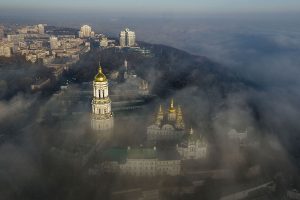
photo: ap photo…Kiev Pechersk Lavra
Analyzing the Ukrainian reality in the post-Soviet years, there are not a few who will say that the country was divided on (too) many grounds, but they somehow managed to find unity. Except when it comes to - Donetsk and Luhansk regions and the religious situation.
In the roughest terms, when it comes to the Orthodox, during the 20th century there were several attempts by Ukrainians to get an autocephalous church that is not connected to the Moscow Patriarchate. At the beginning of the nineties, the non-canonical Ukrainian Orthodox Church of the Kyiv Patriarchate was created (1992), and of course the canonical Ukrainian Orthodox Church of the Moscow Patriarchate (UPC MP) continued to exist on the territory of the country. There was also another non-canonical church - the Ukrainian Autocephalous Orthodox Church (the situation somewhat resembled the one in North Macedonia today, with the fact that the canonical Church, under the jurisdiction of Moscow, had an incomparably better status, in every sense, than the Orthodox Ohrid Archbishopric of the Serbian Orthodox Church in North Macedonia).
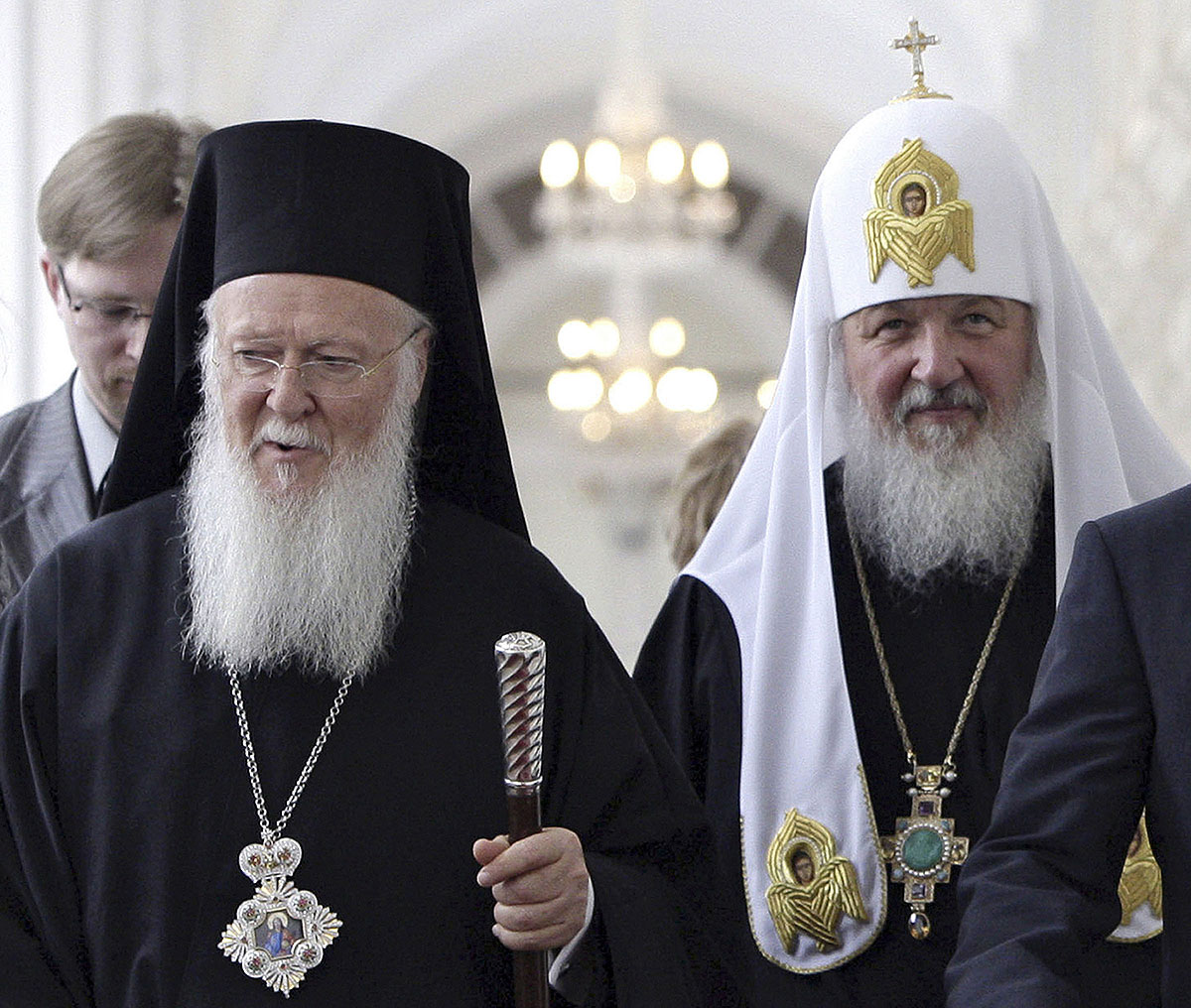
At the end of 2018, to the surprise of a good part of the Orthodox world, the Ecumenical Patriarch Bartholomew, at the request of the then Ukrainian president Petro Poroshenko, granted autocephaly to the Orthodox believers in Ukraine, without even asking the RPC, which was, canonically speaking, a questionable move to say the least. The Tomos, the decree on autocephaly, arrived at the beginning of January 2019 and thus the Orthodox Church of Ukraine (PCU) was born. It is headed by Metropolitan Epiphanius. Thousands of pages could certainly be written about the historical and canonical reasons invoked by both, as well as geopolitical interests, national passions and personal vanities on all sides.
However, from that moment on, there was something new in Ukraine, that is, something that was previously reserved only for the diaspora - two Churches, each of which has a confirmed canonical status at least from the works of the other Orthodox (because, founded three years ago, the Orthodox Church of Ukraine was not recognized of all Orthodox churches). It's just as complicated as it sounds.
What is happening now, while the war is raging?
WHOSE BELL IS RINGING?
Three Churches were directly affected by the conflict - the RPC, the Ukrainian Orthodox Church of the Moscow Patriarchate and the Orthodox Church of Ukraine. Metropolitan Epiphanius (PCU), of course, strongly condemned the Russian aggression against his country, comparing Vladimir Putin to Adolf Hitler.
Patriarch Kirill called for peace in a neutral tone, his silence in the first weeks and speeches a day or two before the start of the war can be seen as support for Putin, especially if one takes into account that during all the previous years the relations between the Church and the State have been more than good. and the relations between the patriarch and the president are more than close. While Ukrainian cities are being destroyed, Patriarch Kirill, in one of the first Sunday sermons, spoke about the perverted West and the moral integrity of the Orthodox, which must be defended. On April 3, Reuters reported that Patriarch Kirill told the soldiers present at the Sunday liturgy: "We absolutely do not aspire to war, nor to do anything that would harm others, but throughout history we have been brought up to love our homeland." We will be ready to protect it, because only the Russians can defend their country."
Metropolitan Hilarion Alfeev, the president of the Department for External Church Relations of the Moscow Patriarchate, has hardly uttered a word since the beginning of the war. The theological faculty of the University of Friborg, where he taught, suspended Metropolitan Hilarion because of that "thunderous silence", that is, because he did not publicly condemn the Russian invasion of Ukraine.
There is something theatrical in the fact that Metropolitan Hilarion, one of the most important people of the Russian Orthodox Church, otherwise very present in the public until then, said only a few words about Ukraine - indirectly, on the occasion of the meeting between Pope Francis and Patriarch Kirill, and the second time in a show in which and is otherwise a regular guest. He then mentioned how the RPC helps refugees, and after that the viewers asked him, for example, whether they should use the Protestant translation of the Bible or whether it is in the spirit of Orthodoxy to receive public praise and awards for their charities. As if everything is as it should be.
However, it is certainly the most difficult today to be in the shoes of Metropolitan UPC MP Onufrije, who already stated in the first days: "A disaster has happened. Unfortunately, Russia launched a military operation against Ukraine. (...) I invite you, first of all, to strengthen your penitential prayer for Ukraine, for our army and our people, I ask you to forget mutual disagreements and misunderstandings and unite in love for God and our Motherland. Defending the sovereignty and integrity of Ukraine, we appeal to the President of Russia and ask him to immediately end the fratricidal war. (…) Such a war is not justified by God or people."
This cleric of the Russian Orthodox Church today helps the Ukrainian people and the Ukrainian army while, according to reports, every day a large number of believers, parishes and monasteries transfer to the Orthodox Church of Ukraine (that is, the one to which Constantinople gave autocephaly). According to the only survey available so far conducted during the war, conducted by Ukrainian sociologists ("Sociological Group Rating"), more than half of the believers of the UPC MP would like to sever ties with the Russian Orthodox Church. The results differ significantly depending on the part of the country where the research was conducted. By the way, on the website of the UPC MP there are photos of theology students who, for example, prepare food for Ukrainian soldiers or bring them aid.
During that time, in the last days of March, Oksana Savchuk, a member of the Verkhovna Rada of Ukraine, submitted to this body the Bill "On the banning of the Moscow Patriarchate on the territory of Ukraine". The Bill states (according to the English translation): "In order to protect the national security, sovereignty and territorial integrity of Ukraine, prevent collaboration, stop the incitement of inter-religious hatred and the destabilization of the religious environment in Ukraine, the Supreme Labor of Ukraine should adopt this law." Among other things, it calls for a ban on all activities of the RPC or UPC MP; all property should be nationalized within 48 hours; communities, monasteries, theological schools that are under the Ukrainian Orthodox Church of the Moscow Patriarchate should change their jurisdiction within two weeks, and those who fail to do so will be closed and their property will be confiscated. It is requested that the most famous monasteries and churches of UPC MP become the property of the state, and the less significant ones be given to local communities. Finally, the security forces of Ukraine will "verify information about anti-Ukrainian and anti-state activities or collaboration with the Russian aggressor and, if proven, the perpetrators will be prosecuted."
Although there will probably be enough sense, even in these terrible times of war, not to pass the law because it would bring about an even worse flare-up in the years to come, it reflects the mood towards the RPC, and towards the UPC MP, which is now in power.
THE DIVISIONS NEVER END
There are voices from some post-Soviet republics, such as the Metropolitan of Vilnius and Lithuania, where they also demand the severing of ties with the Republic of Poland, i.e. autocephaly. Also, the Orthodox Church of Ukraine is getting more and more support.
The line of division between the Orthodox churches is getting sharper. Most see it as a division between the Slavic and Greek churches. Some superficially try to portray it as a division between conservatives and liberals, between East and West. In theory, if one were to analyze the speeches, some of which come from scientific circles, it would be a rich treasury of discursive worldviews and unquestionable stereotype systems.
Patriarch Bartholomew, as reported by the portal orthodox times.on, speaking at the end of last year about the giving of tomos to Ukrainian believers in 2019, but also about the history of church relations in general, stated: "We Christianized the Russians, not to mention that we also civilized them." On the other hand, while people in Ukraine are dying and children are dying, Patriarch Kirill talks about the dangers of the gay parade, about the perverted West that is to blame for everything.
In every Church there are many voices, it is not a chorus of like-minded people on all issues, which was demonstrated by the example of the appeal of several hundred priests and deacons of the Russian Orthodox Church who, expressing their deep opposition to the war, wrote, among other things: "A terrible judgment awaits every man. No earthly authority, no doctors, no guards will protect from this judgment. Concerned for the salvation of every person who considers himself a child of the Russian Orthodox Church, we do not want him to appear at this judgment, carrying the heavy burden of his mother's curses. (…) We mourn the trials that our brothers and sisters in Ukraine were undeservedly subjected to. We remind you that every human life is a priceless and unique gift from God, and that is why we want all soldiers - both Russian and Ukrainian - to return to their homes and families safe and sound. We bitterly think about the abyss that our children and grandchildren in Russia and Ukraine will have to overcome in order to start socializing, respecting and loving each other again."
In the aforementioned sociological survey, 42 percent of the respondents believe that Russians and Ukrainians will never have friendly relations again, 22 percent believe that this will be possible 20, 30 years after the war, 18 percent estimate that it can happen in ten years, while only 12 percent of respondents believe that this is possible in the next few years.
WHAT WILL HAPPEN TO THE CHURCH??
The pain of the intertwining of the national and the religious has not been healed, on the contrary. It is boiling all over Europe, the diaspora already has experience in this.
At the Council of Constantinople in 1872, ethnophiletism was declared a heretical teaching. That "snake poison for the Church" was also criticized at the Pan-Orthodox Council in Crete in 2016, and at the same time as overlapping the church organization with national borders and as a danger that Christian identity is based primarily on national affiliation. That Assembly in Crete which several Orthodox churches did not even attend. Former fissures that appeared at that Parliament, today look like chasms.