With the exception of Bosnia and Herzegovina, Macedonia and Montenegro, the other countries that border Serbia are members of NATO. At the same time, military contingents from Alliance member countries are present in BiH and Kosovo, and Macedonia and Montenegro express their unequivocal intention to join the North Atlantic Treaty Organization as soon as possible. Even though Serbia has declared military neutrality, the debate about whether or not to join NATO is still ongoing in the country. While the government dismisses these discussions as raising issues that are not on the agenda in the foreseeable future, opposition parties believe that Serbia should not join the Alliance both because of the intervention in FR Yugoslavia in 1999 and because of its role in the declaration of Kosovo's independence. In this context, there is no shortage of calling out the ruling coalition for introducing the country to NATO through the "small door", as well as demands that the citizens must decide on such a move in a referendum.
In the often overheated public debate, colored by emotions from the recent past, it is forgotten that the relations between Serbia, that is, Yugoslavia and NATO were never simple and unequivocal, and that they constantly changed over time. The biggest upswings always happened when both sides knew how to recognize and use mutual interests, and the downfalls when those interests were neglected. The beginning of the relationship between Yugoslavia and NATO could hardly have had a more difficult start; their development in the early fifties was simply unimaginable just a few years earlier.
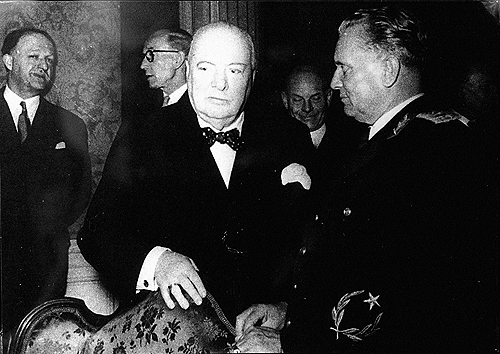
INSTABILITY FACTOR: "From Šćećin on the Baltic to Trieste on the Adriatic, the Iron Curtain descended on the Continent. Behind this line are the capitals of the old states of Central and Eastern Europe: Warsaw, Berlin, Prague, Vienna, Budapest, Belgrade, Bucharest and Sofia. All these famous cities and the peoples around them are in what I must call the Soviet sphere and all are subject, in one way or another, not only to Soviet oppression but also to the very great and, in many cases, growing control of Moscow." These are the sentences. Prime Minister of Great Britain during the Second World War, Winston Churchill, from the famous speech he gave on March 5, 1946 at Westminster College in the American city of Fulton, which, for many, marks the beginning of the Cold War.
Unlike their counterparts in Eastern Europe, the Yugoslav communists did not come to power on a Red Army tank. As the undisputed victors in the Second World War, confident and euphoric, they believed that they were just at the beginning of their revolutionary mission. Head of state, party and supreme commander Josip Broz Tito, his generals and ministers - in today's terms - were one of the main sources of instability in Europe.
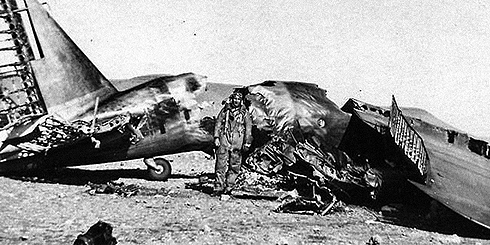
In the west, in the Trieste hinterland and Istria, since May 1945, a tense situation has been going on between the Yugoslav Army (JA) on the one hand and the armies of Italy, Great Britain and the United States of America on the other. After eight thousand people died in the battles to liberate Trieste, the Partisans withdrew from the city under pressure from the Western Allies in June 1945. Then the disputed territory was divided into two occupation zones: Zone A included Pula, Trieste, Tržič and Gorica, as well as the eastern parts of Beneška of Slovenia and the Canal Valley, while the remaining part of Istria and the Slovenian territory formed Zone B under the Military Administration of the Yugoslav Army. Neither Rome nor Belgrade were satisfied with this division. Various incidents kept breaking out between the Allies and JA. The biggest one happened in August 1946. Until then, American transport planes constantly flew over Yugoslav territory in Slovenia from bases in Italy and Austria, ignoring the protests from Belgrade. Frustrated, Tito ordered the planes to be called to land, and if they refused, to be shot down. The first attack by Yugoslavian fighter planes was carried out on August 9, 1946: after being well riddled, the American "DC-3" made a forced landing at the military airport near Ljubljana. The second attack followed ten days later, and this time the "Dakota" was shot down not far from Bled. Washington then strongly threatened Belgrade. At the peace conference in Paris, the Soviet delegation - although enthusiastic about the shooting down of two American planes - warned Yugoslavia not to shoot down the third under any circumstances. Thus, in the end, Tito had to declare that there would be no shooting down of planes in the future. Nevertheless, the Americans stopped the unreported overflight of Yugoslavia.
The Yugoslav communists did not rest in the south either. Since March 1946, a civil war has been going on in Greece. On one side was the Communist Party of Greece, and on the other were the troops of the right-wing government in Athens. Moscow respected the agreement of CPSU General Secretary Josif Vissarionovich Dzhugashvili Stalin and Churchill, according to which Greece was in the British sphere of influence. However, Tito did not pay attention to this division of spheres of interest. The fighters of the Democratic Army of Greece, founded by the KPG, were supplied from Yugoslavia, and its commander, General Markos Vafiadis, operated from his headquarters in Macedonia.
Between the national leaderships of Yugoslavia, Albania and Bulgaria - further - on the initiative and under the domination of Belgrade, negotiations on the formation of the Balkan federation were underway. Stalin did not have a strong opinion on this idea. On the one hand, the united Balkans under firm communist rule suited him. Again, in the second, Stalin was aware that Tito would thus become the most powerful communist leader after him, and that the already strained Soviet relations with the West would be on the verge of breaking. Because Washington and London were clear. From their perspective, the Balkan Federation directly threatened Greece, Turkey and Italy, that is, the entire Eastern Mediterranean.
In addition to all of the above, the Yugoslav communists were also the most fanatical and the most enthusiastic in Europe. The targets of their "comrade criticism" were colleagues in power in Eastern and Central Europe, but also in Italy and France, due to insufficient revolutionaryness, opportunism and right-wing deviations.
Because of all this, it was clear why Yugoslavia and Tito were labeled as Soviet "satellite number one" for Washington, London and other Western capitals and, as such, a great challenge for security in Europe. The American chargé d'affaires in Belgrade, John Cabot, wrote in a letter in 1947:
"Belgrade is the hardest place I've ever been and I have to admit that staying here depresses me." However, here I see small shadows on the monolithic block that I may be able to exploit and I will do everything in my power to achieve this. At the moment, the 'Jugos' are running a charming campaign of harassing, humiliating and intimidating the Embassy by arresting local staff and harassing diplomats. Oh God, give me the patience to bear this!”
It seemed that the relations between Yugoslavia and NATO, which would be founded on April 4, 1949, could be anything but good.
BETWEEN EAST AND WEST: Europe came out of the Second World War bloodied, destroyed and divided. The forced alliance between the USSR and the USA and Great Britain, between socialism and capitalism, was over. In the east - in the part of Germany under Soviet occupation, in Poland, Czechoslovakia, Hungary, Romania and Bulgaria - the Red Army, sometimes faster and sometimes slower, put the local communists in power. In the West - in Norway, Denmark, the part of Germany occupied by the Western Allies, the Netherlands, Belgium, Luxembourg, France, Italy and Greece - parliamentary democracy was restored. In 1944, Stalin told Milovan Đilas, a member of the Politburo of the KPJ, that the social order in a particular state would depend on the army that entered it. It wasn't long before two ideological camps emerged in Europe, the West and the East.
The Soviet Union did not reduce its troops in Eastern and Central Europe. Despite twenty-seven million dead in the Second World War, the USSR had incomparably the most powerful conventional army in the world and an extremely developed war industry. That power, its installation of communist regimes in Eastern Europe, and powerful communist parties in France and Italy that traditional political forces saw as Soviet "Trojan horses", caused fear in the West. The key question of security in the Western European capitals was: will Stalin use tanks to export the revolution?
In response to the ideological, political and military challenge from the East, Belgium, France, Luxembourg, the Netherlands and Great Britain concluded the Brussels Agreement on Collective Security on March 17, 1948. Aware of their weakness in relation to the Soviet Union, these countries immediately began negotiations with the United States of America and Canada to create a strong military alliance. The negotiations, which included Denmark, Iceland, Italy and Portugal, ended on April 4, 1949, with the signing of the North Atlantic Treaty in Washington, that is, the formation of the North Atlantic Treaty Organization (The North Atlantic Treaty Organization, NATO). The members of this alliance accepted the obligation of mutual defense in case of military aggression against any member state.
While the West was uniting, the first cracks began to appear in the East. Despite the rhetoric, Stalin did not export the world revolution, but strengthened the geopolitical position of the Soviet Union and its strategic interests. His entire policy in the post-war years was subordinated to it. Tito acted in the same way. Although they never questioned Moscow's primacy, Yugoslav communists put the interests of their own country first. As war winners, they felt that they owed nothing in particular to the Soviet Union. By their actions, they often put Stalin in front of a fait accompli and, in general, took little care of his interests. Finally, in the midst of the crisis caused by the Soviet blockade of West Berlin and a kind of coup d'état by the Czechoslovak communists, Stalin had enough: both Tito's policy around Trieste and Istria, and helping General Marcos and his fighters in Greece, and the Balkan federation and everything else. The long-simmering conflict between the Kremlin and the White House became more and more open in 1948. In the spring of that year, the American ambassador in Belgrade, Quendish Cannon, began to wonder why Tito was meeting with him more and more often.
VIDOVDAN 1948: Stalin excommunicated Tito and the Communist Party of Yugoslavia from the communist community. The world learned what it was about on June 28, 1948, when the famous Informburo Resolution was published. In its eight chapters, the leadership of the CPJ is accused of pursuing a hostile policy towards the USSR, of being composed of "spies and foreign mercenaries", of moving towards bourgeois goals, etc. At the very end of the Resolution, healthy forces in the party were invited to take matters into their own hands and replace the current leadership.
Stalin calculated that this would be enough to court Tito, Aleksandar Ranković, Edvard Kardelj, Milovan Đilas and other leading Yugoslav communists. He underestimated, however, their self-defense instinct. In a Stalinist way, they dealt with real and potential supporters of the Informburo Resolution, but also with every other possible opposition - without distinction. For all those "enemies of all colors" there was only one way. He led to the concentration camp on Goli Otok.
A much greater danger for Tito and his comrades than the supporters of the Informburo was the economic situation in the country. Impoverished and devastated in the Second World War, Yugoslavia based its reconstruction and modernization on cooperation with the Soviet Union and Eastern European countries. After the Resolution of the Informburo, Belgrade found itself on a blank slate. On the one hand, the Soviet Union and its satellites canceled all credit agreements, economic agreements and already approved financial aid. On the other, Yugoslavia was not included in the Marshall Plan (American aid to the reconstruction of post-war Europe; named after Secretary of State for Foreign Affairs George Marshall), and economic ties with the West were almost symbolic. And it was immediately apparent that a problem never comes alone. The ink on the Informburo Resolution has not even dried yet, and the Western Allies have announced their intention to annex Zones A and B to Italy. Around Trieste and Istria, weapons and trenches were dug again. In conflict with East and West and without any support in the world at that time, it seemed that the fall of Tito was a matter of days, a few months at most.
SATELLITE NUMBER 1: The American ambassador in Belgrade, Quendish Cannon, wrote at the end of 1947 that Yugoslavia was "the most loyal and dedicated Soviet collaborator and the blade of dynamic and expansionist communism." At first, Washington was suspicious of the breakup between Belgrade and Moscow. Harry Truman's administration was at first suspicious of the whole conflict, then there was skepticism as to whether Tito could maintain control over domestic politics, and when it turned out that he could, the question arose as to why the communists in Yugoslavia would be supported at all? This is all the more so since in 1949, in order to prove that they were still following the path of Marxism-Leninism, they started forced agricultural collectivization.
However, real politics prevailed over ideology. In its analysis of the "Trend of Yugoslav-Soviet Relations", the CIA took the position "that Tito's defiance heralded the first crack in the Soviet empire." Then the highly influential diplomat in the State Department, George Cannon, who headed the Policy Planning Team, advised supporting the Yugoslav communists: thus encouraging other Eastern European regimes to oppose the Soviet Union, Tito became "a symbol of difference in the communist world ", and all those who follow his example are made aware that they can count on the help of the USA. However, Cannon stressed that support for the Yugoslav leader must not be conspicuous under any circumstances. If that were to happen, he claimed, Tito's position could be seriously threatened, and perhaps even lead to Soviet military intervention in Yugoslavia.
And Belgrade very quickly realized that it had to make a sharp turn in its foreign policy. Taking advantage of the declaration of the Central Committee of the Communist Party of Greece in support of the Informburo Resolution, the Yugoslav communists canceled the aid to their Democratic Army and left it to a rapid collapse. The USA, which financed and equipped the army of the government in Athens, showed Tito that they knew how to appreciate his move: American aid in food and industrial equipment, such as a modern steel rolling mill, began to arrive in Yugoslavia, as well as money from loans that approved by the World Bank. If Belgrade maintains a "loyal and cooperative attitude", the further flow of money and other aid will continue, George Kenan assured the Yugoslav ambassador to the United Nations, Aleš Bebler.
THE EMPIRE STRIKES BACK: Although American support for Tito was supposed to encourage communist regimes in Eastern and Central Europe to take courses as independent as possible from the Soviet Union, in practice the opposite happened. Stalin left nothing to chance. And he used the Yugoslav apostasy to remove all real and possible "Titoists" in large purges in all satellite countries, and to consolidate Soviet domination.
Nevertheless, the importance of Yugoslavia and Tito in the West has not declined - on the contrary. Since 1949, the United States of America has been joined by the Soviet Union in possessing nuclear weapons. It seemed that the pendulum of military power had shifted to the East (see documents in the box), and that in the event of a new war, all Western countries except Great Britain could be overrun. For this reason, in the beginning of the fifties, Yugoslavia gained exceptional importance within the strategic plans of NATO. Western military planners believed that without Yugoslavia on their side it was not possible to maintain Italy, Austria, Greece and Turkey against the Soviet Union. However, if the Yugoslav Army were to firmly hold the gates of Ljubljana, with the full help of NATO allies, the prospects for the West would be quite different.
At the same time, Belgrade also feared the military power of the Soviet Union. The Korean War, which in the beginning was successfully fought by North Korea and Stalin, was experienced in Yugoslavia as an indication of what could follow. There was a large concentration of Soviet troops on its borders: territorial disputes with neighbors, especially Bulgaria and Albania, Stalin could use at any moment as a reason for war. The constant movements of Soviet troops in Bulgaria, Romania and Hungary brought additional nervousness both in Belgrade and in the West.
So, the mutual interest was clear. General Vladimir Velebit, one of Tito's most important diplomats, was in the USA at the beginning of 1951 as the head of a delegation that negotiated loans with the World Bank for a whole series of economic projects. In the shadow of this activity, Velebit met secretly with Truman's foreign affairs adviser, Averell Harriman, CIA Deputy Director Frederick Reinhardt, and other US officials. At those meetings, the possibility of Yugoslavia receiving free American military aid was explored. Velebit immediately conveyed the positive signals from Washington to Belgrade. At the session of the Politburo of the Central Committee of the KPJ, it was decided to compile a list of the necessary military material, and to travel to Washington for the Chief of the General Staff, General Koča Popović.
General Popović and the Yugoslav ambassador to the USA, Vladimir Popović, met with representatives of the Truman administration in mid-May 1951. They said that they expected to discuss the military-political situation in the Balkans, the level of threat to Yugoslavia and the modalities of American aid. Agreements on the delivery of certain contingents of weapons proceeded smoothly. However, it got stuck on broader political issues. Harriman told Popovic that Washington could not have the same attitude towards Yugoslavia as towards Great Britain or France, which are members of NATO. Ambassador Popović explained that joining the Alliance would undermine security in the region and that the fact that Yugoslavia did not join any bloc contributes to peace in the world. With all the understanding of that position, Hariman told the Yugoslav negotiators that the American concept of defense in Europe is based on a system of collective security, and that for military reasons there would have to be some form of collective agreement.
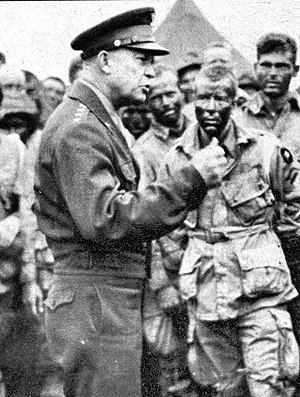
On his return to Yugoslavia, on June 10, 1951, General Popović met secretly in Paris with the then commander of NATO, General Dwight Eisenhower. Despite the Trieste crisis, they easily agreed to transfer a significant amount of military equipment and weapons from Italy to Serbia. And then Eisenhower asked a key question: would the Yugoslav Army, which was organized on communist principles, fight side by side against the Soviet system with the Western capitalist system? Koča Popović replied that Yugoslavia broke off relations with the Soviet Union because of its imperialism and that in the event of aggression, Yugoslav soldiers would fight together with the soldiers of NATO countries. Such an answer pleased the future American president, as well as the then Truman administration. This was all the more so before Eisenhower compared the defense of Western Europe to a bottle whose neck was in the English Channel, and whose walls ran along the Baltic and the Mediterranean Sea and were under the control of NATO: in the north Norway and Denmark, and in the south Italy, Greece, Turkey and , as it seemed then, Yugoslavia. Since the above was the official American strategic concept, Washington lifted the embargo on arms deliveries to Yugoslavia on February 2, 1951, and Truman approved aid to Yugoslavia based on the Mutual Defense Assistance Act.
Great Britain and France, the most important American allies in NATO, were not enthusiastic about the American strategy of supporting Yugoslavia because of its communist regime. Nevertheless, at the First Tripartite Conference in London in mid-June 1951, Washington's position prevailed. These three countries have pledged that the USA will participate in the overall aid program for Yugoslavia with sixty-five percent, Great Britain with twenty-three percent, and France with twelve percent. All these negotiations were put to an end by the Agreement on Military Assistance between the governments of the Federal People's Republic of Yugoslavia and the United States of America, which was signed in Belgrade on November 14, 1951.
BETTER A PACT THAN WAR: With the accession of Greece and Turkey in 1952, NATO significantly strengthened its position in southern Europe. Although Yugoslavia remained outside the Alliance, its strategic planners believed that it should be given firm security guarantees and thus separate it even more from the Soviet Union and bring it closer to the West. This kind of calculation suited Tito as well. He was looking for a way for Yugoslavia to be included in the Western defense system, but also to preserve its foreign policy and military independence. During 1952, there were frequent meetings between American and Yugoslavian generals, where topics related to the delivery of weapons from the West, but also broader strategic and security concepts, were discussed. During 1953, with the active participation of NATO, negotiations began between Yugoslavia, Greece and Turkey on the creation of a defense alliance. On the basis of the Treaty of Friendship, which these three countries concluded in February 1953 and which provided for the coordination of military commands, in 1954 the Treaty of Alliance, Political Cooperation and Mutual Assistance was signed, termed for twenty years, called the Balkan Pact. At the same time, the Trieste crisis ended: Yugoslavia received Zone B, and Italy Zone A. On the basis of all this - although it did not join NATO - Yugoslavia found itself in the Alliance's system of collective security in the early XNUMXs.
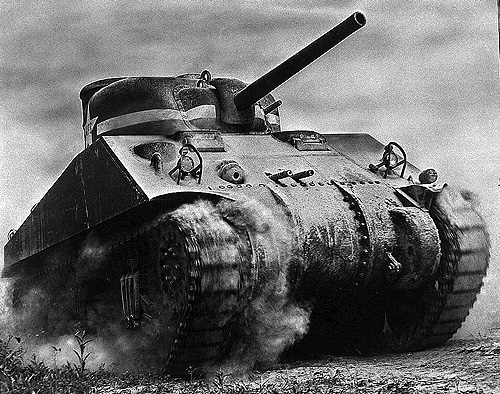
Until 1957, as long as the program lasted, Yugoslavia received aid from the USA, Great Britain and France in a total value estimated at some fifteen billion dollars. It included, among other things, the delivery of two hundred tanks (they were to be deployed for the defense of the Ljubljana Gate), jet planes, radars, helicopters, but also the training of pilots and other military personnel in the USA, as well as the significant strengthening of industrial and technological capacities. The importance of this aid was greater than the amount of weapons and financial resources received. In this way, Yugoslavia provided psychological and diplomatic support, overcame the isolation it was in, and got the opportunity to be up to date with modern technologies and, in general, all important trends in development in the West. That these were all deterrent elements that Stalin had to take into account, no need to waste words.
And then, at the end of the 1950s, there was another turning point between Yugoslavia and NATO.
COS(KNG) (51) 322 LIMITED AVAILABILITY
May 31, 1951
COMMITTEE OF THE CHIEF OF THE GENERAL STAFF
SHORT-TERM DEFENSE OF EUROPE
Secretary's note
At the meeting1 held on May 21, 1951, the Chiefs of General Staff of NATO members approved the attached Report2 on the short-term defense of Europe as a basis for further planning. A copy of the Report was forwarded to the British General Staff Mission in Washington for the use of United Kingdom Planners in discussions with United States Planners.
(sr) RN Jubank
MINISTRY OF DEFENSE
May 31, 1951
INTRODUCTION
CONSIDERATION PERIOD
1. Our consideration of the Short Term Defense of Europe covers the period from July 1951 to July 1952
OUTBREAK OF WAR
2. Considers1 that the war could break out as a consequence of deliberate Russian aggression, or as a response to the West's reaction to some move by Russia. In the first case, which is unlikely to happen during 1951, Russia would mobilize and deploy its troops. It is estimated that this would take a minimum of two months, and that it could not be done without the Western powers knowing about it. A warning about such preparations could be expected 7 to 30 days before their completion.
3. In the second case, Russia could take certain actions using currently deployed forces, without prior mobilization. In such conditions, late or no warning can be expected.
RUSSIAN INTENTIONS
4. The Russians must rightly view the United Kingdom as a serious potential threat to themselves, not only as a forward base for Anglo-American forces but also as a vanguard of the rest of Europe and the resistance to communism. Russian operations in Western Europe, excluding Italy and the Scandinavian countries, would have as their ultimate goal the occupation of the United Kingdom. Initially, Russia would attempt an air offensive against the UK with the aim of destroying Allied ground forces, and overrun Europe.
CURRENT PLANS FOR THE DEFENSE OF WESTERN EUROPE
5. The general concept of operations of the Short-Term Defense of Western Europe, as envisioned in the Short-Term Regional Plans for Western Europe2, is based on the assessment of the Rhine and the Ijssel as obstacles, in agreement with other Regional Plans for Europe.
6. The goal for the central forces is the concentration of Western European forces for the defense of the Rhine, supported by actions to slow down the Russian advance further east. Bases in the United Kingdom would be used to conduct strategic airstrikes against Russia.
EFFECTIVENESS OF CURRENT PLANS
7. Western Union rating It is obvious from the assessment3 presented at the meeting of the Chiefs of General Staff of the Western Union on June 20, 1950, that the success of the Rhine Strategy, as stated above, was not possible given the forces available during 1950. A successful Rhine strategy remained unfeasible during 1951 and the first half of 1952 because, despite the increase, available forces were inadequate. In an extension, we list the relative numbers of Russian and NATO forces under the command of SHAPE (Supreme Headquarters Allied Powers, Europe) as planned for the period under consideration.
8. COMPARISON OF LAND FORCES
(a) Unplanned attack Russia could begin armed operations in Western Europe with an initial force of 24 ground forces divisions, currently deployed in East Germany and Poland, and could rapidly increase these forces to 75 to 90 divisions. To meet a surprise attack, the planned NATO forces available1 in the Western European area would number:
(i) mid 1950s – – – – – – – – – – approximately 14-15 divisions
(ii) mid 1951 – – – – – – – – – – approximately 21-22 divisions
Further increase in numbers would be slow and in numbers far below the Russian forces.
(b) Planned attack In the case of a deliberate increase in forces before the outbreak of war, the Russians could launch a campaign in Western Europe with an initial force of 50-60 divisions, with an increase as in the previous case to 75-90 divisions. Assuming a warning was received between 7 and 30 days in advance, the Allied forces available1 to respond to this attack would be:
(i) mid 1950s – – – – – – – – – – approximately 17-22 divisions
(ii) mid 1951 – – – – – – – – – – approximately 32-37 divisions
Further increase in numbers would be slow and to a figure far below the Russian forces.
9. COMPARISON OF AIR FORCES
(a) Russia possesses a significantly greater force in tactical air forces than the combined tactical air forces of NATO members. The Russian leadership would have approximately 4400 aircraft available, with about 1300 in reserve, to support the ground campaign against Western Europe, and to participate in the initial air strikes against the United Kingdom.
(b) NATO tactical air forces in Western Europe are difficult to estimate, as they are based on national estimates, which may not be fully engaged. They may number a minimum of 1200 by the mid-1950s, although this figure would be higher if the US contribution increased. This figure does not include Fighter Command in the United Kingdom. Although Russian long-range aviation is superior in total numbers to NATO's strategic aviation, NATO has a significantly larger number of medium bombers, and a certain number of heavy bombers, the only ones in the world. The scale of a strategic air strike that NATO could launch against Russia is therefore far greater than that country could launch in response.
Russian air defense during the day is technically very inferior compared to the same NATO countries, but due to the time that the attacker's aircraft would have to spend over enemy territory, in practice it could be approximately effective. During the night, it is obvious that the air defense is inactive, except for anti-aircraft artillery that would be used for barrage fire in defense of sensitive positions.
10. COMPARISON OF NAVAL FORCES
NATO's naval forces are so much stronger than Russia's that they will not be able, for many years to come, to disrupt control of significant sea lines of communication. Russia's submarine fleet is strong compared to NATO's anti-submarine forces, and Russia's minelaying potential is higher compared to NATO's mine clearance resources.
11. Conclusion NATO members will obviously not have enough strength to prevent Western Europe, with the exception of the United Kingdom, from being overrun.
POLITICAL IMPLICATIONS OF THE RHINE STRATEGY
12. Although the successful implementation of the Rhine Strategy in terms of the short-term defense of Western Europe is militarily impractical, due to the overall lack of forces, we must accept that it must be implemented for political reasons. It is obvious that any plan for the defense of Western Europe, which is not based on the Rhine strategy, will in no way contribute to the security of the majority of NATO members, and thus may lead to the collapse of that organization.
STRATEGY REQUIREMENTS
13. Given that the Rhine strategy cannot be successful for the period under consideration, there are certain advantages to be gained from holding a stronghold which would enable a later counter-offensive and, if possible, assist the defense of the United Kingdom.
14. Apart from purely strategic importance, a foothold in Europe is of enormous importance for maintaining hope and the spirit of resistance.
INTENT OF THE DOCUMENT
15. The purpose of this document is to determine whether a foothold or footholds could be established in Europe in conjunction with the Rhine Strategy during the period July 1951 to July 1952
(Pages up to point 30 are missing)
30. Besides holding the southern stronghold, it will be necessary to ensure that Spain is not surrendered to the enemy in order to preserve the lines of sea communication with Italy.
SUMMARY OF CONCLUSIONS
31. WE CONCLUDE THAT:
(a) Unless the use of atomic weapons, tactical or strategic, turns the tide of events in our favor so that we can keep the Russians on the Rhine, maintaining a foothold in Europe is important for the following reasons:
(i) It will enable an eventual counter-offensive
(ii) It will help the defense of Great Britain to some extent
(iii) It will strengthen the morale of Europeans by maintaining hope and a strong will to resist.
The only possible stronghold is Italian-Austrian.
(b) Since the short-term success of the Rhine Strategy is debatable, additional plans must be prepared in order to:
(i) the successful and prolonged defense of the Italo-Austrian stronghold, taking into account the following:
(A) The defense of this stronghold is not directly correlated with the security of bases in Great Britain, but contributes to the security of Allied naval communications.
(B) Successful defense will require overcoming an initial shortfall of approximately three divisions and nearly 500 aircraft. This can be achieved by enhancing the Italian potential through the use of aircraft carriers or direct reinforcements. Given the possible increase in the Russian air threat, an allied reinforcement of 500 aircraft would most likely be among the first requests.
(C) It is essential that the Allies retain control of the Straits of Gibraltar.
(ii) the defense of Spain against the enemy. Spain cannot fulfill the general requirements of a stronghold, except to contribute to the security of the Allied lines of communication, both in the Atlantic and in the Mediterranean. The Mediterranean lines of communication through the Straits of Gibraltar are particularly essential to our strategy in the Middle East in the first six months of the war, and essential to the defense of the Italian-Austrian stronghold, however such defense is carried out. Spanish forces are not capable of stopping Russian attacks along the entire Spanish border. In order to increase their effectiveness, certain steps must be taken.
(The rest of the document is missing)
JP (52)108(FINAL)
November 27, 1952
JOINT PLANNING GROUP
FOR THE CHIEF OF THE GENERAL STAFF COMMITTEE
The Fairfax Plan
Planning Working Group Report
The Fairfax Plan is the successor to the Sycamore Plan, and the texts of the two plans differ mainly in small details. The Fairfax Plan is NATO's short-term action plan in the event of a possible attack by the USSR and strategic guidelines for the further conduct of the war. It contains details about: which territories are important for the defense of Western Europe, which non-NATO countries can expect cooperation, which neutrality, and which will side with the USSR. The plan refers to the first 6 months of a possible war. It also contains assumptions about Soviet land and air strategies, as well as the overall war strategy of the USSR.
Countries expected to side with the USSR: Poland, East Germany, Czechoslovakia, Hungary, Romania, Bulgaria, Albania, China, North Korea, Vietnam
The anti-Soviet bloc is divided into:
NATO countries: Great Britain, USA, Canada, France, Benelux countries, Italy, Norway, Denmark, Iceland, Portugal, Greece, Turkey
other countries: Australia, New Zealand, South Africa, Ceylon, French colonies outside the NATO area, the Philippines, Japan and Chiang Kai Shek's China.
The original reads: Nationalist China.
In a special point 6, the eventual position of Yugoslavia in the event of war with the USSR is considered. Point 6 reads:
In the case of Soviet aggression in Europe, it is likely that Yugoslavia, even if it were not the target of Soviet attacks, would be ready to participate in actions against the Soviet bloc, for its own reasons.
The neutral countries are: Persia, Sweden, Switzerland, Republic of Ireland, Finland, Afghanistan, Burma, Siam, Indonesia and Spain.
However, it was noted in the plan that neutral countries would probably resist if the USSR attacked them, especially if NATO promised them support.