The first idea of building a subway appeared in the twenties and thirties of the last century, because the tram system was at the limit of its capacity at certain sections and intersections, as written on the website of JKP Belgrade Metro and Train. Almost three decades later, due to the sudden increase in the population, in 1958, the architect Nikola Dobrović proposed the construction of the first metro line that would go along the route Kalemegdan - Terazije - Slavija - Čubura. After that, the study of the Belgrade Metro was published in 1968, based on the General Urban Plan from 1950.
Then, in 1972, a new General Urban Plan appeared, which predicted the development of Belgrade into a city of two million people, as well as traffic solutions that would make that development harmonious. The backbone of the city's transport system would then be the metro and the regional metro.
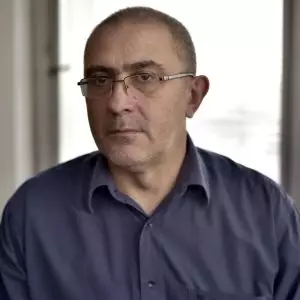
"I started working in 1976. And my first meeting regarding the metro was around February 20, 1976," says traffic engineer and international traffic consultant Gradimir Stefanović, then an associate in the team of the urban planning institute. "A somewhat more organized movement for the subway began in 2009," Stefanović states and adds that the development directions defined at that time were logical and adequate. When the government changed in 2012 and 2013, a new, changed conception of the metro came.
He explains, however, that both the then and current conceptions emphasized the future development of the city.
"That's politics. Belgrade is neither the first nor the last, but many cities, such as London or Paris, developed by first trying to satisfy existing pressing problems", explains our interlocutor.
In the meantime, we even remember that the ballerina Aya Jung distributed tickets for the (non-existent) metro as part of the SNS campaign, the colors of the metro were chosen, the routes were changed, the city was developing, the completion dates of the works were postponed many times, there was also a protest on Makiško polje... So the year 2024 came, and there is still no subway.
WE FILL AND FILL...
According to the latest announcements by the President of Serbia, Aleksandar Vučić, the first line of the Belgrade metro (Železnik - Mirjevo) should be completed in 2028, while the EXPO will be built in parallel, for example, announced for 2027, and a new deadline for the second line on the Mirjevo route - Depo Bežania is the year 2030.
The construction of the depot on Makiško polje, which was seen as the main place for maintaining all metro components, began in November 2021. According to Sinisa Mali, it covers an area of 72 hectares. "(In that area) extensive filling and preparation of the terrain is being done", said Mali in September 2023, during the signing of the Contractual Agreement for the design and construction of the Makis Depot, the value of which, according to the Ministry's announcement, is 200 million euros.
Is it too much space? Gradimir Stefanović says that the size of the depot is at least three times larger than, say, the standard depot in Vienna on line three.
"If you look at the methodology and how the number of vehicles was determined, then you can see that the company 'Ežis' was very gallant in its study. She proved that 285 sets are needed, and because of those 285 sets, a certain area is also needed", says Stefanović and jokingly adds: "There's that song Captain Koča is traveling - we have Makish, Makish is filled and filled and we will use up all the gravel. We engaged all the barges to transport them so that Makish could be filled". And we are a year and a half late in that filling.
It should be added that there was a lot of criticism because Makish is a water source, so does it have to be built on the water source?
DISPLACED STATIONS
Also, the problem of the first route that will be built on the Železnik - Mirijevo route is that, according to the interlocutor of "Vremen", it does not include the stops it should. Zoran Bukvić, coordinator of the traffic group Ne davimo Beograd, believes that the plan and the direction of the first route should be changed, i.e. stations where it will pass.
Gradimir Stefanović states that we have a route that is the result of many compromises, and that is why the, in his opinion, basic thing has not been done - we have not even reached Prokop: "It is a terrible penalty - you are building rail systems, but you have not connected the railway and the metro ".
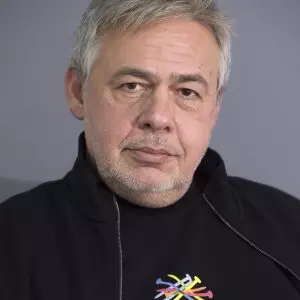
Zoran Bukvić points out that, if the plan had not been changed from 2011 until now, the metro line would have already existed, and that the current calculations in favor of investors and not the development of the city are wrong and dangerous. He further cites the example of the Clinical Center, which has several thousand employees, several thousand students, and patients. "For example, someone comes from Serbia to be treated in Belgrade. It would be logical that if he comes by train, as soon as he arrives at the train station, he has the possibility to take the metro to the Clinical Center", says Bukvić and adds that not only the citizens of Belgrade benefit from the metro, but also the whole of Serbia. More precisely, that it should be so.
"The priority should be changed - that the metro line from Ustanička to Zemun should be the first. "Decades ago, it was set as a priority line, but it was moved because of Belgrade on the water," points out Zoran Bukvić.
CITY CENTER WHERE THE AUTHORITIES WANT
Due to the desire to transfer the center of Belgrade to Belgrade on the water, the subway lines intersect in Belgrade on the water and not at Trg republike, where it was initially planned to be the hub, explains Bukvić.
"As a user, you need to go to the theater, the cinema, to the university, to complete some administrative matters. You need all those facilities that are mostly in the traditional center of Belgrade, i.e. stationed along Republic Square, King Aleksandar Boulevard... And suddenly, because someone decided to invest in Belgrade on the water or in the Port of Belgrade, that line turns and finds some excuses are made", notes Z. Bukvić.
Stefanović also adds that because of the desire to make Belgrade on the water the center of the city, someone decided to cross two new metro lines on Sava Square. "In all earlier studies, the subway crossed the Sava bridge. The only thing is that I don't see that anyone suggested that there be a consultation of the expert public, that stage was skipped."
He explains that, when you start from Sava Square and reach the Republic Square point, somewhere around "Staklenac" a station is planned at a depth of 40 meters. "The square is 40 meters above and now a building is being built because people need to be lifted up. They spend time in that climbing. Imagine a 40-meter building, divide it by three, that's a building with more than 10 floors", Stefanović points out and goes on to say that when planning it is preferable that the depth does not go more than 15 or 20 meters.
SIX BILLION EUROS, SO IT'S NOT A PROBLEM
According to Bukvić, this metro proposal, which the current city government has proposed, is at least twice as expensive as what was previously proposed, because this is a heavy metro and has to go underground.
"The fact that it crosses in Belgrade on water and that it has to go under the Sava makes its price double. The previous metro proposal was more towards a light rail system, and the light rail system, when the metro goes above ground to a good extent, is on pillars", adds our interlocutor.
Gradimir Stefanović says that every time abroad, working on metros around the world, he was asked what could be done to rationalize and reduce costs, to space stations or to have one less station.
"But here in Serbia from the metro, where I don't have any contacts, no one asked me - what do you think how to reduce costs, so that it is not six but four billion euros or not four but three billion euros", Stefanović points out and adds if everything went in the form of the rich version because someone said - six billion euros, it's not a problem.
"If it's not a problem, then send the children to be treated, and not to treat them by SMS," concluded Stefanović.
Finally, when asked what the people of Belgrade should hope for when it comes to the metro, Gradimir Stefanović says that hope dies last and that everyone says that the metro has never been closer and that everyone is right, the only thing is that the metro never really arrived.
"As an expert, I don't hold out much hope. I had a manager who used a nice saying: 'I'd like to be disproved'. And I would like them to deny me and say you didn't know anything", concludes Stefanović, who, by the way, has worked on more than 20 subways in the world.