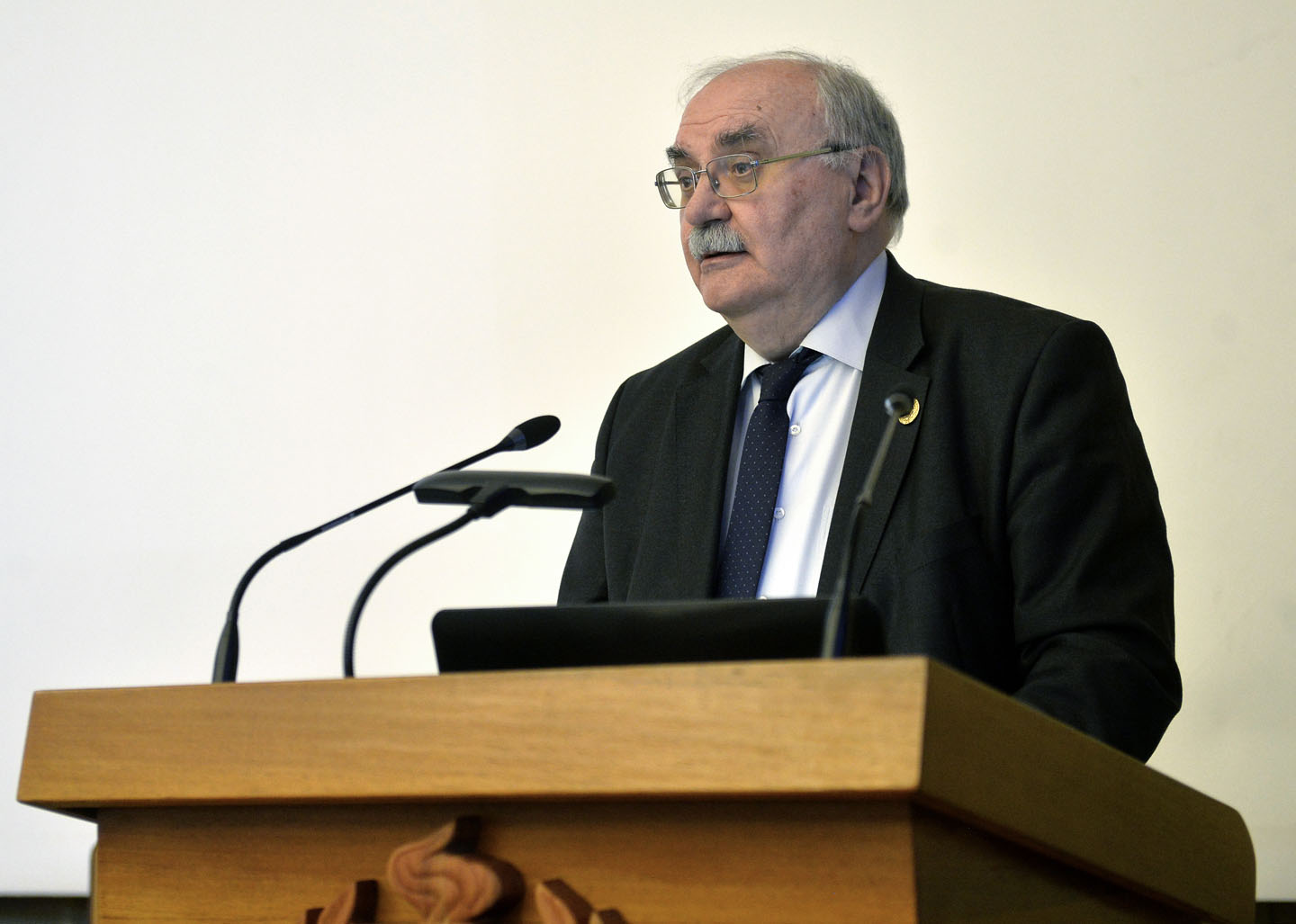
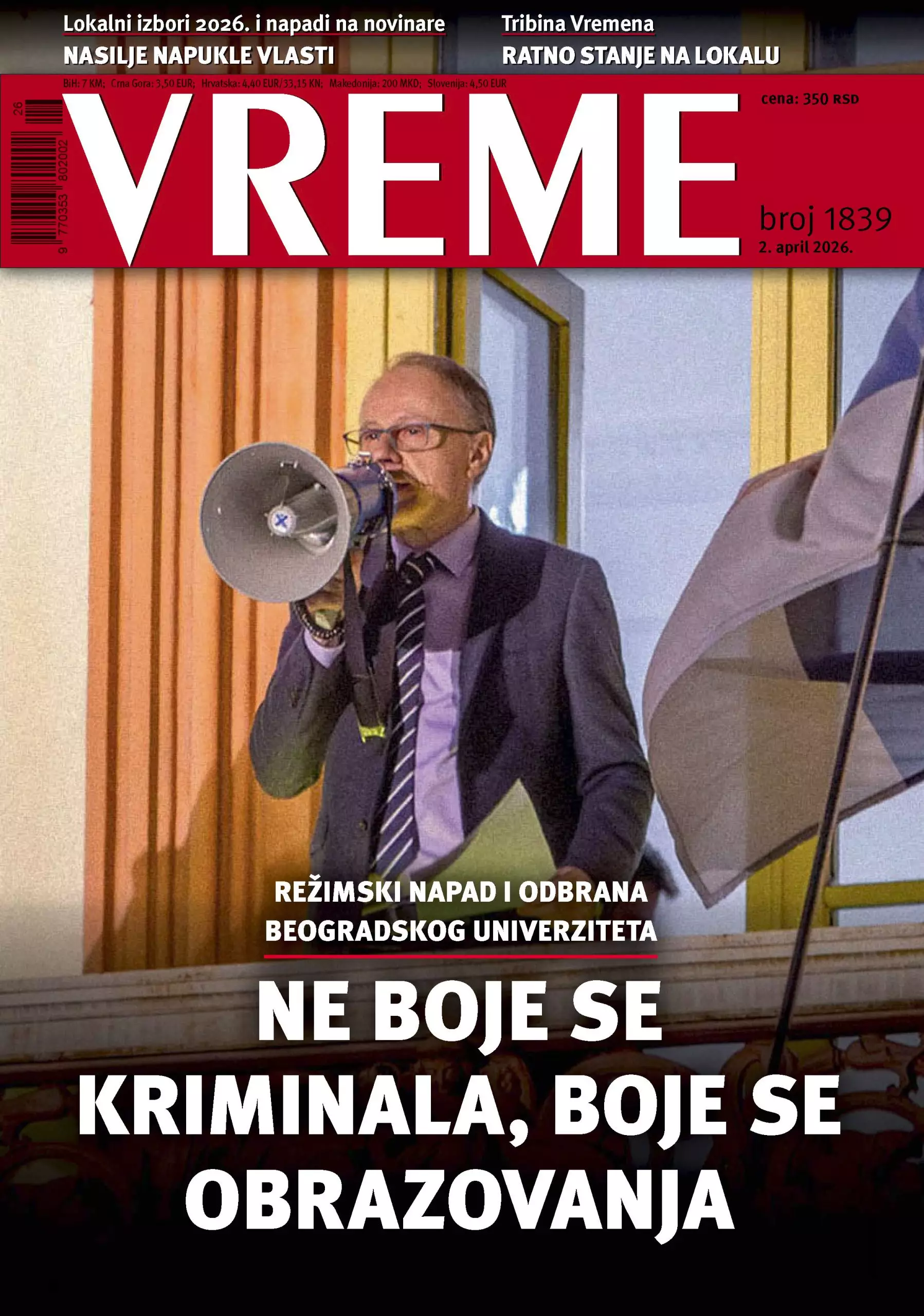
The new president of SANI, Zoran Knežević, after being elected, said that he is ready for dedicated work, he thanked both those who voted for him and those who did not, as well as his colleagues with whom he will lead the Academy in the next four years "in the spirit trust and respect".
"It will not be easy and simple, because times are difficult and complex." We will need patience and wisdom to bring our Academy to a peaceful harbor", said the new president of SANU, and that he will be ready to support all constructive suggestions and will do everything in his power to fulfill his promises and ensure the continuity of the Academy. with the tradition it inherits.
Knežević also said that there are always a number of social and political problems in Serbian society, that the Academy "is not a political party to deal with them on a daily basis", but that it has its own voice and can give advice and opinions and thus help solutions are found.
Zoran Popović was elected vice-president of SANA from among the members of the Department of Mathematics, Physics and Geo-Sciences, the Department of Chemical and Biological Sciences, the Department of Technical Sciences and the Department of Medical Sciences.
Miodrag Marković was elected vice-president from among the members of the Department of Language and Literature, the Department of Social Sciences, the Department of Historical Sciences and the Department of Fine and Musical Arts.
The new secretary general of SANU is Nebojsa Lalić.
Asteroid "2300" Knežević"
Zoran Knežević graduated in astronomy from the Faculty of Science and Mathematics in Belgrade in 1972, received his master's degree in 1976, and received his doctorate in 1989.
He is considered in the world to be one of the best connoisseurs of small bodies in space, and at the suggestion of Italian astronomers, the asteroid "3900 Knežević" was named after him. broadcast by RTS.
His work is related to the Astronomical Observatory in Belgrade, where he held a number of prominent positions over the years, and from 2002 to 2014 he was its director. He was the secretary of the committee for celestial mechanics of the International Astronomical Union, which is the highest position held by one of our scientists in the international community of astronomers.
"At least we all have the sky in common," Dr. Knežević told "Vreme" in 2007, explaining how our astronomers use a large telescope in Bulgaria for a few evenings every few months, and use the resources of the European Union in the Canary Islands and the Chilean Andes.
From 1936 to 1956, Belgrade astronomers discovered as many as 43 small bodies in the solar system in an astonishing series of observational successes. The series was opened by astronomer Pero Đurković, who discovered an asteroid in Belgium in 1564 and named it Serbia. He was the first to see a total of five asteroids, among which they were named Milanković and Zvezdara, and one also bears the name of his son Dejan.
On the other hand, in the same year 1936, the astronomer Milorad Protić started the Service for observing minor planets and the Sun at the Astronomical Observatory. During twenty years, he discovered as many as 33 asteroids, many of which have local names: 1507 Belgrade, 1550 Tito, 1554 Yugoslavia, 1675 Simonida, 2244 Tesla and 2348 Mišković. Among them is body 1724, which Protić named after his grandson Vladimir.
In 1980, Zoran Knežević participated in the discovery of four small celestial bodies, and in 1991, Italian astronomers named the asteroid number 3900 after him.
MN/FoNet/RTS
Read daily news, analysis, commentary and interviews at www.vreme.com