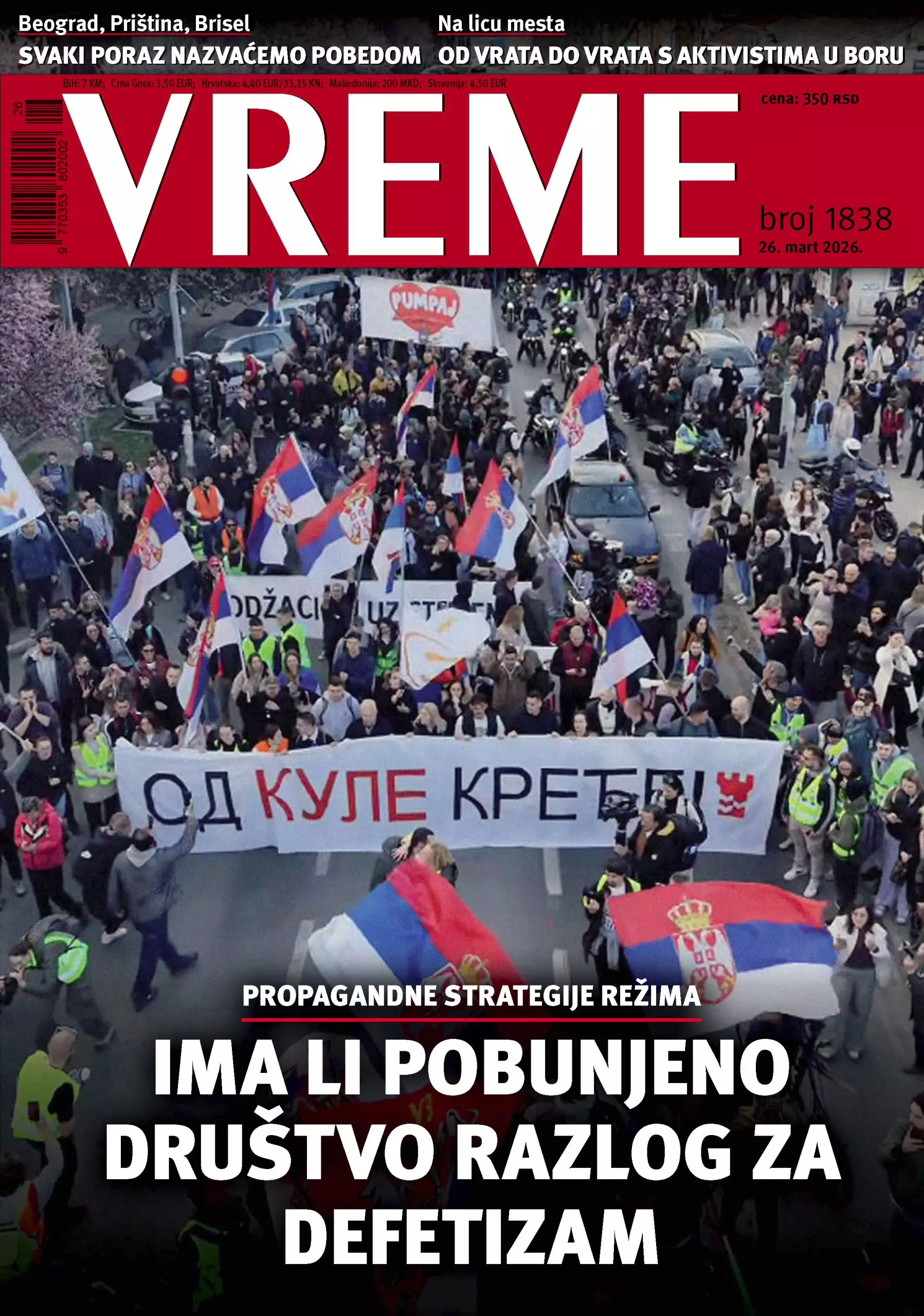
President of the Serbian Radical Party Vojislav Seselj on Sunday, he gave the Serbian authorities a deadline of 72 hours to "clear the Ustasha from the center of Zemun", referring to the citizens who had built barricades in that part of Belgrade, announcing that if the authorities did not do so, they would "call Chetniks "to do that."
"They have been blocking the center of Zemun for several days. In Zemun, those bandits are marking the borders of the NDH, they are Ustashas and serve the Ustashas openly, but we Zemun citizens are fed up. Here, I am giving the police until Wednesday, three days, or I will call Zemun Chetniks to do it together," Seselj said.
This is just one of a series of his statements, since in recent days Seselj has been appearing daily on television with a national frequency, with which he is trying to influence not his student, the President of Serbia, Aleksandar Vučić.
Creating the "Ćaciland Plus" atmosphere
Political analyst Dragomir Anđelković tells "Vreme" that Seselj's announcement is a "marketing venture and the creation of a 'Ćaciland plus' atmosphere".
He points out that Vučić does not trust the state authorities, the Serbian Army and the police, and that is why he created "Ćaciland" as "a kind of platform around which his raiders could gather".
"These are not party loyalists, but mercenaries who should gather in case the great leader feels threatened. We saw those paramilitary formations on March 15, and we heard from people like Čedomir Jovanović that they were also in state institutions that day," Anđelković says.
He emphasizes that Vučić needs to cover it up, "so that it is not revealed that it is paramilitary formations, but his supporters".
"Vučić realized that the protests and blockades are threatening him and that it is not enough that he defended himself at one point, but he is thinking about how to go on the offensive. He cannot hire those alleged 'Students who want to learn', who do not exist, and present them as a factor that will now deal with the real students and the people at the protests. That is why he is bringing Vojislav Šešelj back into the game, who has the image of a man who was involved in the darkest things of the nineties and who allegedly has paramilitary formations, in order to be a new mask, a mask for aggressiveness," Anđelković says.
"Seselj does not have any Chetniks"
He says that the fact that Seselj says that his Chetniks will deal with the citizens at the roadblocks is irrelevant, "because Seselj doesn't have any Chetniks."
"No one stayed with Seselj, especially not those who are radically nationally oriented, because those people see that Vučić and Seselj are committing high treason, since they gave Kosovo. He does not have any Chetniks, but there is only a story from the nineties that he has them. That rhetoric should be used so that Vučić's criminals, from various teams who receive a lot of money, disguise themselves as some kind of fake Chetniks at the right moment and try to act aggressively against the citizens," Anđelković says.
He indicates that it is a new screen.
"Just as 'Ćaciland' was the number one cover for ripping off the Presidency, Parliament and the square in between, now Vučić is creating a new cover, number two, for active offensive action against opponents," Anđelković says.
When the thief shouts: "Hold the thief!"
Asked whether Vučić and Šešelj talk so intensively about the Ustaše because they don't know anything else to talk about, Anđelković answers in the negative.
He points out that both Vučić and Šešelj know how to talk about other things, but now it's about two things.
"First, a thief persuades another to hide his thievery. Vučić, with the help of Šešelj, committed constitutional high treason, because according to the Constitution, what he did with Kosovo is high treason. So, if Ustasha has become a synonym for someone who works extremely against national interests, then it is Vučić, Šešelj and everyone else who helps them. The second thing is that part of Vučić's remaining voters are Serbs expelled from Croatia, who went through a tragedy and who somehow managed their lives, and the regime presents itself as if it helped them. Now there is an atmosphere among those people that someone will come to expel them. This story about the alleged Independent State of Croatia, where more than 70 percent of Serbs live today, should only serve to intimidate people that someone will expel them if Vučić falls.