As of Wednesday, March 24, 1999 at 20 p.m., our country is at war. At that time, NATO planes carried out the first attack on FR Yugoslavia, chroniclers say, the first attack on a sovereign country since the founding of this organization. The news about the attack on Yugoslavia was announced by NATO Secretary General Javier Solana, apparently, at the moment when the bombs had already started falling. Namely, about fifteen minutes before 20:30 p.m. near Pristina, a series of strong detonations was heard at intervals of about XNUMX seconds coming from the direction east of this city.
After the explosions, the electricity went out. The city was completely deserted, and sporadic shooting from automatic weapons could be heard in the streets. The correspondent of "Beta" reported that from some parts of Pristina, the action of anti-aircraft artillery can be seen in the vicinity of the Slatina airport. After the explosions, sirens rang out in the city, and an ambulance passed through the city center, which went in the direction of the Pristina hospital. The police are patrolling Pristina. The attack on Pristina was obviously expected. Around 18.50:XNUMX p.m., the sirens in Pristina sounded three times in short time intervals. Serbian sources in Pristina close to the government said that it was another exercise.

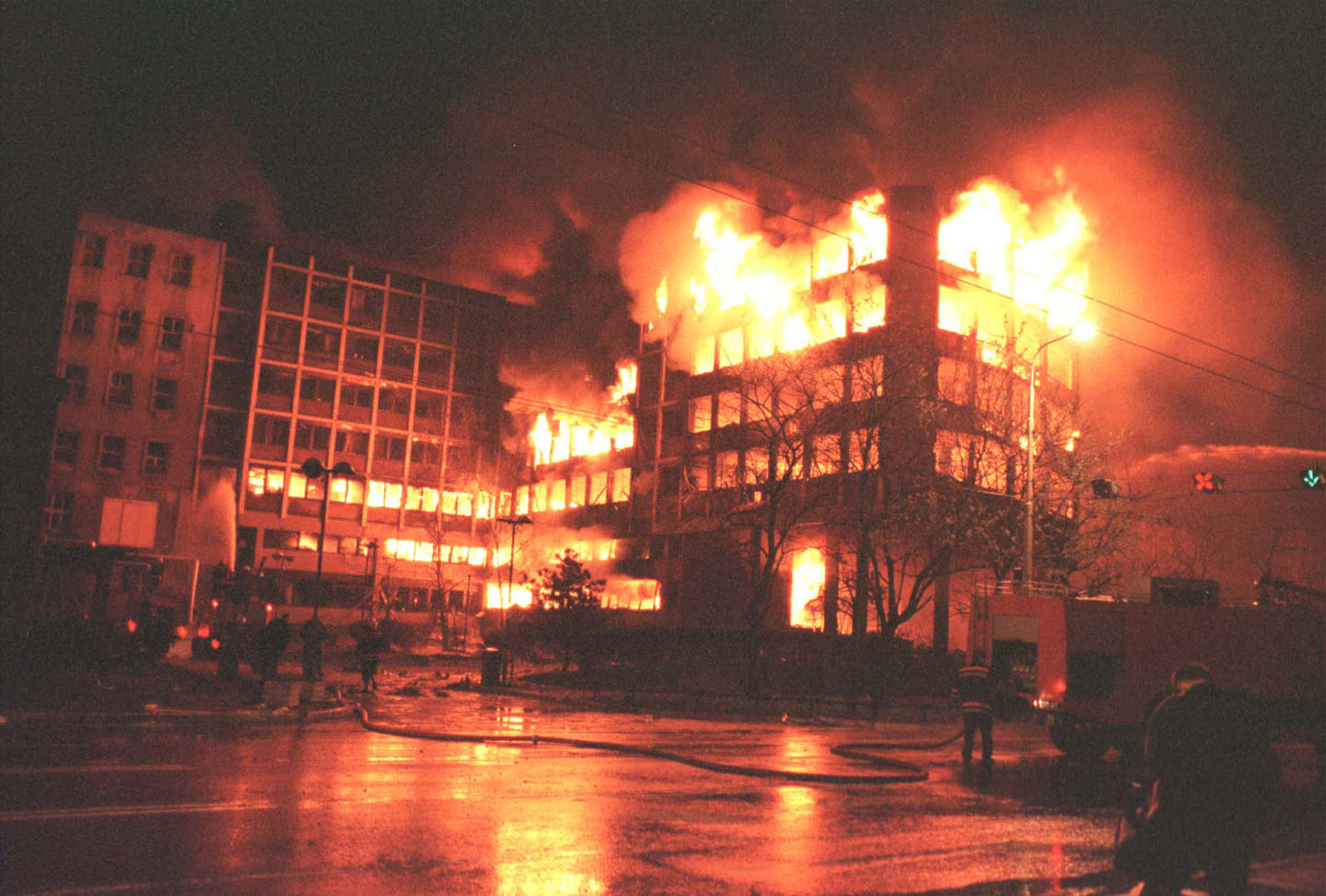
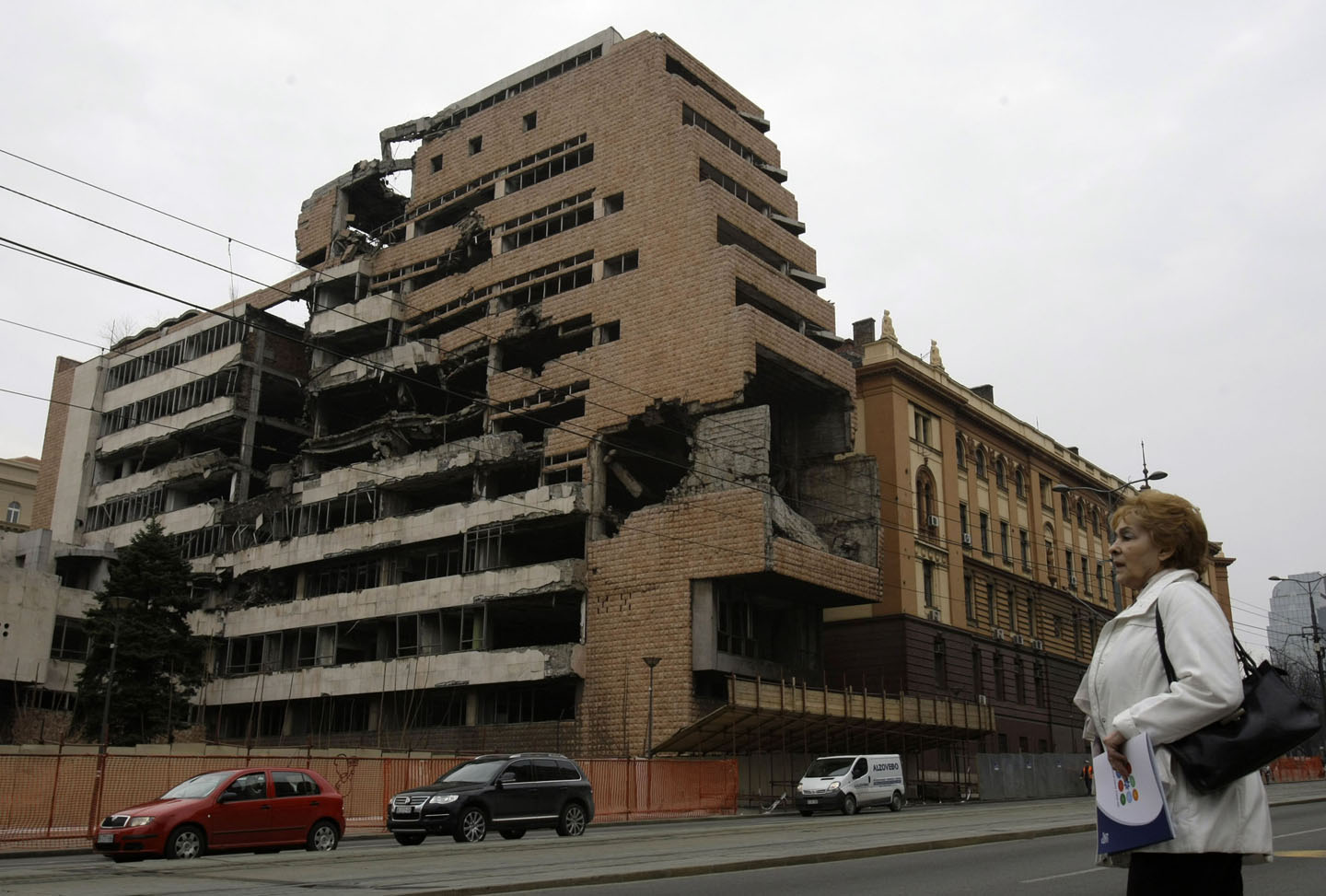
BOMBARDING OF RTSRTS buildings / Photo: Tanjug/Archive/ Vladimir Dimitrijević
Before that, the commander of the Third Army of the Yugoslav Army (VJ), lieutenant-general Nebojša Pavković, stated that the danger of an attack by NATO forces from the airspace is real, that the members of that army are ready to survive NATO airstrikes and to repair the consequences of such attacks, that they "have a clear task to defend the integrity of Serbia and the FRY, to deal with the remaining Shiptarian terrorist forces in Kosovo and Metohija and to prevent any penetration of NATO forces into that area." We will do it", stated Pavković.
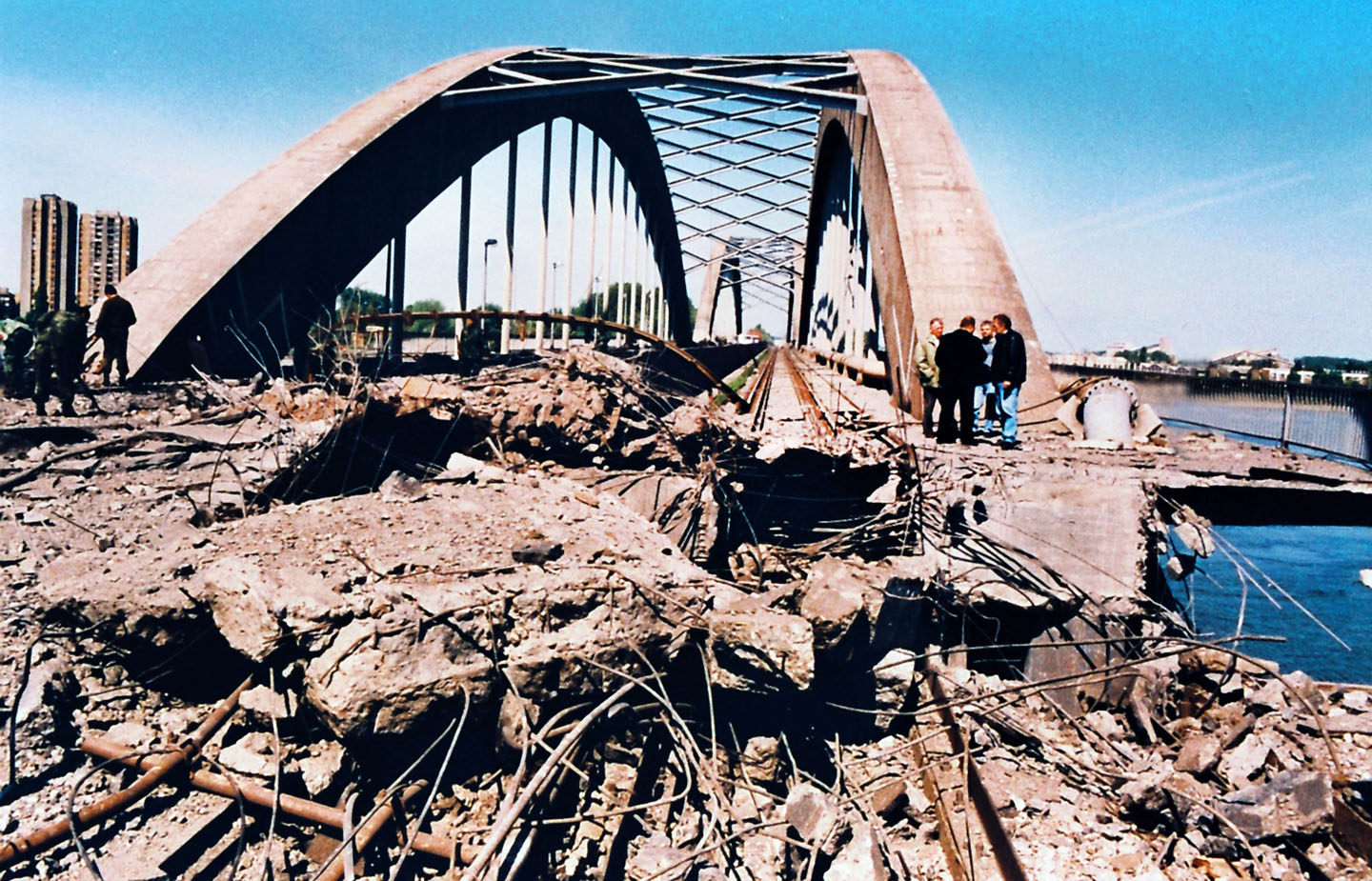
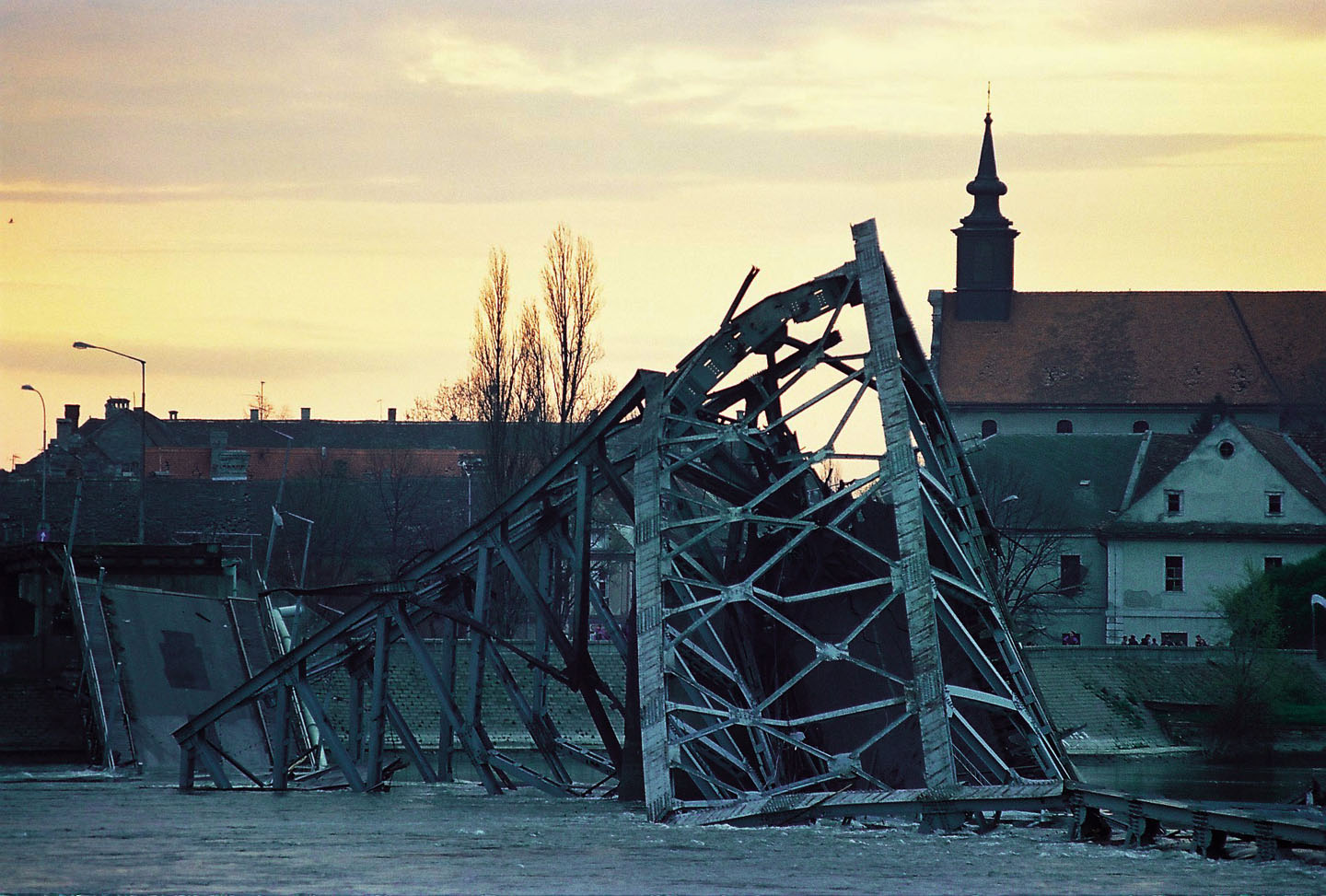
THE ZEZELE BRIDGE WAS DESTROYEDŽeželjev most in Novi Sad / Photo: Tanjug/Archive/Yugoslav Pap
According to the announcement of the General Staff of the Army of Yugoslavia, 10 were killed and 38 wounded in the attacks of aviation and NATO cruise missiles on Yugoslavia during the first night, while one soldier is missing. A Yugoslav federal minister told CNN that at least ten civilians were killed. "In several mass strikes by NATO - USA, Great Britain, France, Canada, Italy, Germany, and Spain fighter jets and cruise missiles, in the aggression against FR Yugoslavia during the night of March 24-25, 1999, the units, formations and military facilities on the entire territory of our country", the statement of the General Staff states, specifying that more than 50 military facilities were targeted, including industrial facilities of purpose-built production: the factory "UTVA" in Pancevo, Air Force Base "Moma Stanojlović" and company "Milan Blagojević" in Lučani. NATO forces attacked military targets in Montenegro - the Golubovci airport near Podgorica, a military facility near Danilovgrad and installations on the Luštica peninsula.
TARGETS IN MONTENEGRO: In Danilovgrad, as reported by our correspondent from Podgorica, the cadets of the secondary police school are located just a few hundred meters from the affected barracks. Some news reports that something was also targeted, perhaps the radar on Mavrijan hill near Ulcinj. The Golubovci civilian airport near Podgorica is closed, but one testimony says that the NATO attack began at the moment when the JAT plane brought passengers from Belgrade. The description is dramatic, the plane is on the runway, the doors open in pitch darkness, something is burning in the military part of the airport, while the passengers are evacuated literally crawling.
The citizens of Podgorica watched from the top of the solitaire a column of smoke rising high, and while the heavy roar of the plane was heard, the young men gathered in front of the buildings "greeted" him with "Clinton, we're fucking your mother!" In London during the German bombings, there was a phenomenon they called "top ruf society" that marked cold-blooded defiance of danger.
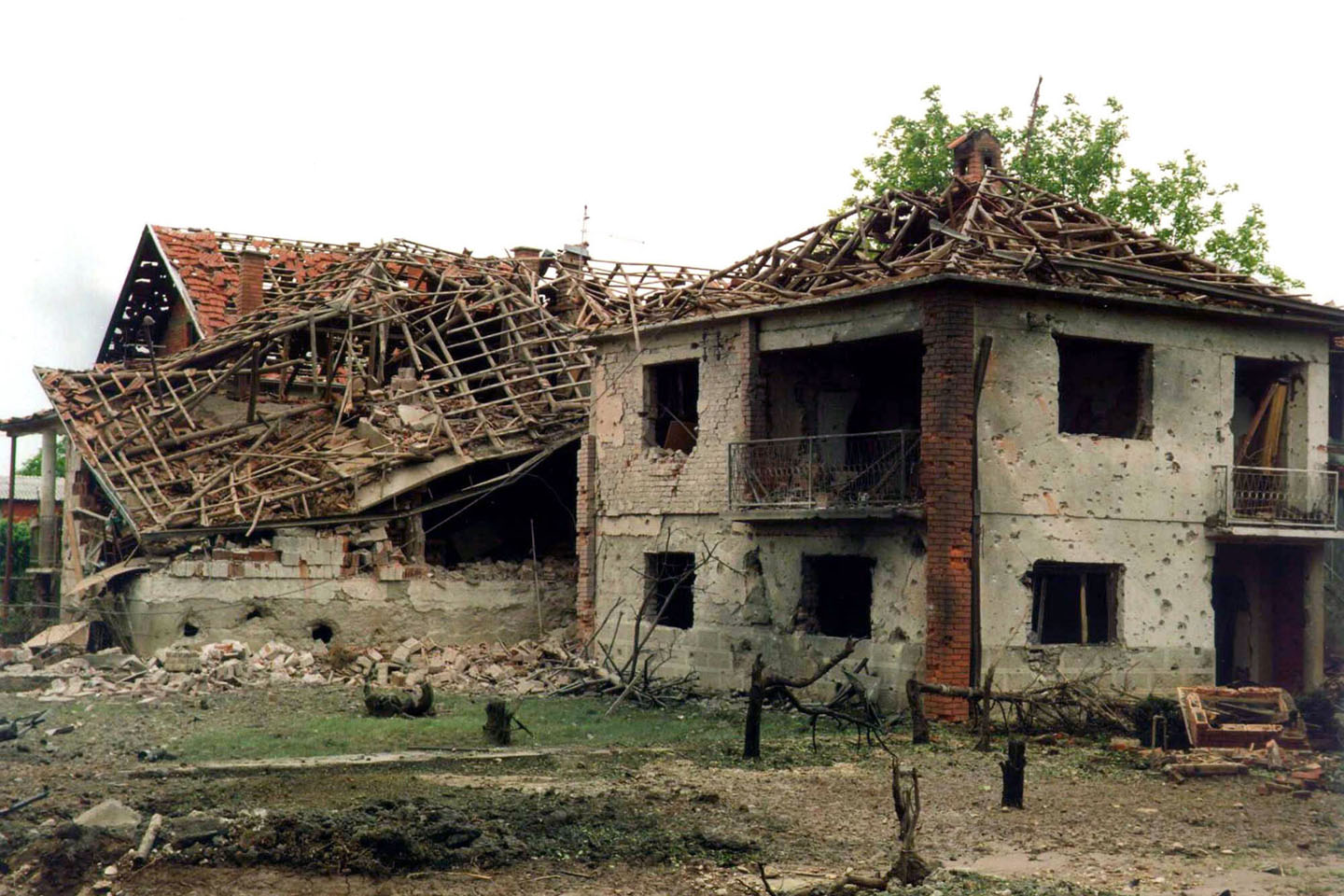
TARGETS IN SERBIA: On the first night, NATO also attacked targets in Belgrade, Batajnica, Rakovica and Žarkovo. The same evening, the "Lola-Utva" aircraft factory in Pancevo was hit. Radio Pancevo reported that a fire broke out in three places in the factory hall. From Belgrade, the orange glow of the fire could be seen in the sky towards Pančevo. One house even fifty meters away from the explosion site was hit by some huge shrapnel or something else, the roof and concrete slab was broken, but no one was hurt. The explosion was also heard in Mladenovac, from the direction where the Vrbica barracks of the Yugoslav Army is located, from where the flames can be seen.
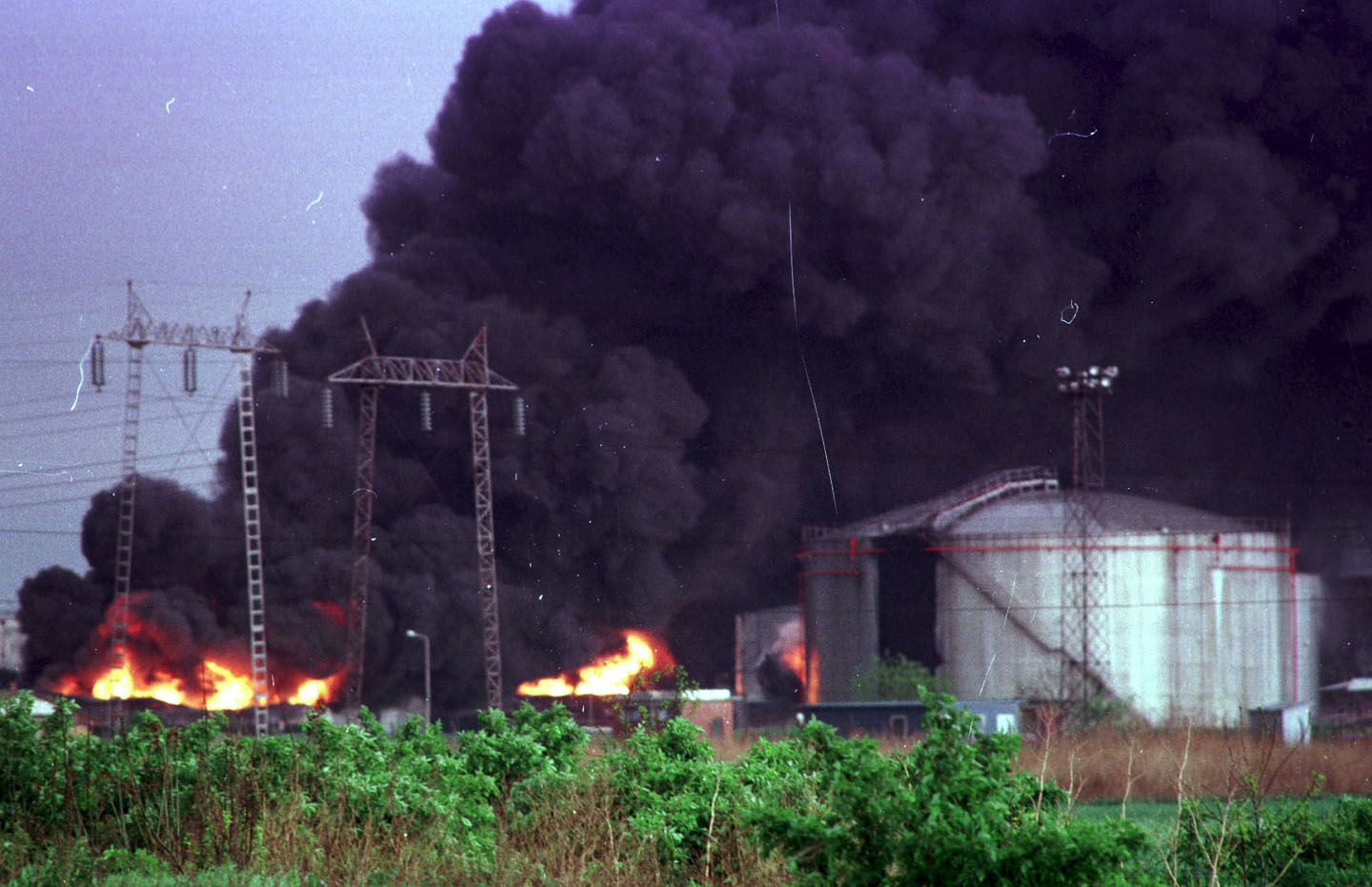
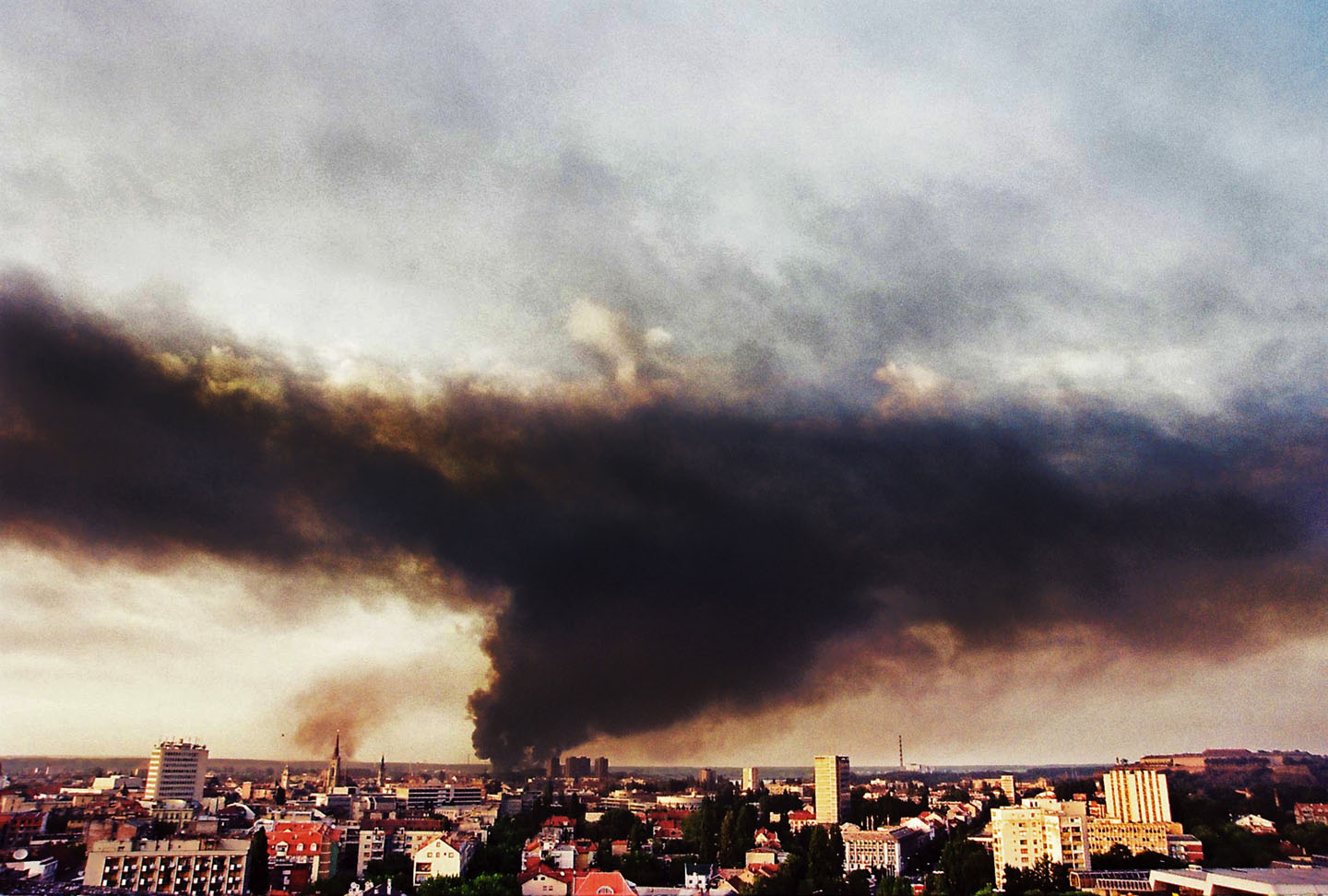
Tanjug / Archive / Vladimir DimitrijevićOil refinery in Pancevo / Photo: Tanjug/Archive/Vladimir Dimitrijević
The explosion was also heard in the region of Ralje. Three missiles hit the training center for members of the Ministry of Internal Affairs of Serbia, northwest of the center of Novi Sad. That center is located in the immediate vicinity of the "Tehnogas" company, and as reported by RTS, there were no victims, but considerable material damage was caused. After those explosions, several more detonations were heard in the area of Novi Sad.
"DECISIVE ACTION": Who knows where the cynically named "Decisive Action" was carried out over Serbia and Montenegro that night. In the evenings, Radio Belgrade reported that enemy aviation in the first attack targeted targets in Pristina, Kuršumlija, Užice, Danilovgrad, Novi Sad, Pančevo and Podgorica. Kraljevo TV reported that a small projectile exploded near the runway of Lađevci airport, but there were no casualties. Kragujevac was bombed on several occasions, and the attacks continued on Thursday. Ten explosions were heard in Kuršumlija on the first night, four or five of which were located from the direction of the barracks, which is surrounded by civilian settlements. In Kuršumlija, according to "Beta" news, the barracks, which is located about one kilometer from the city center, were targeted.
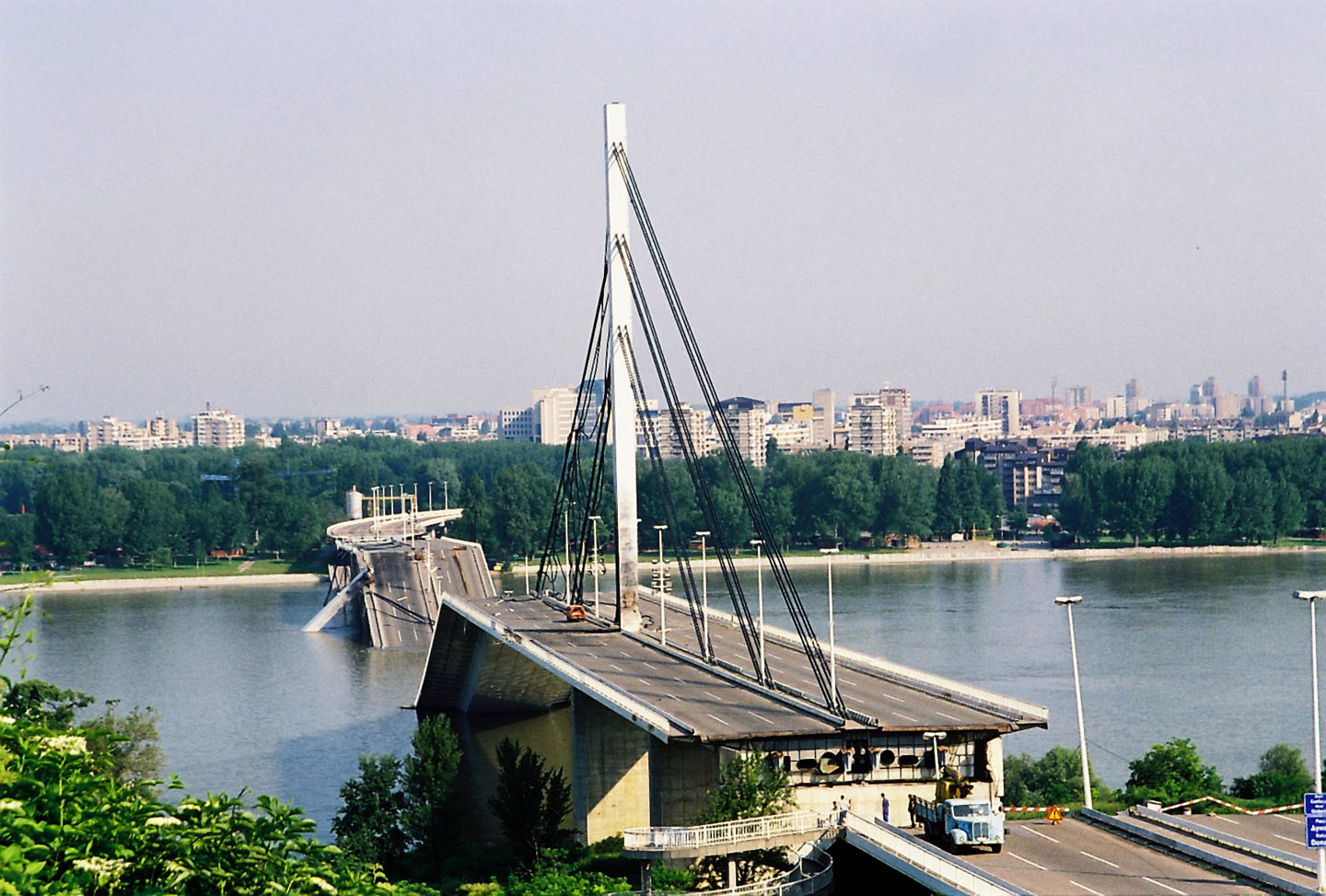
FREEDOM BRIDGE DESTROYEDBridge of Freedom in Novi Sad / Photo: Tanjug/Archive/Jaroslav Pap
After the information about NATO's aggression, state television began broadcasting the film "Kozara" with the theme of popular resistance from the Second World War. On Thursday morning, the General Staff informs the public that the actions of the Yugoslav Army were in accordance with our maximum capabilities and that two enemy planes and several cruise missiles were shot down in an unequal aerial battle.
THE BATTLE IN THE SKY: The news of Italian television and German ARD about one or two downed NATO planes was confirmed in some agencies and denied in others. However, the interventionist command announced on Thursday morning that all NATO aircraft returned to the base on Thursday morning at 5:45, and General Wesley Clark responded that NATO forces destroyed two Yugoslav MIGs.
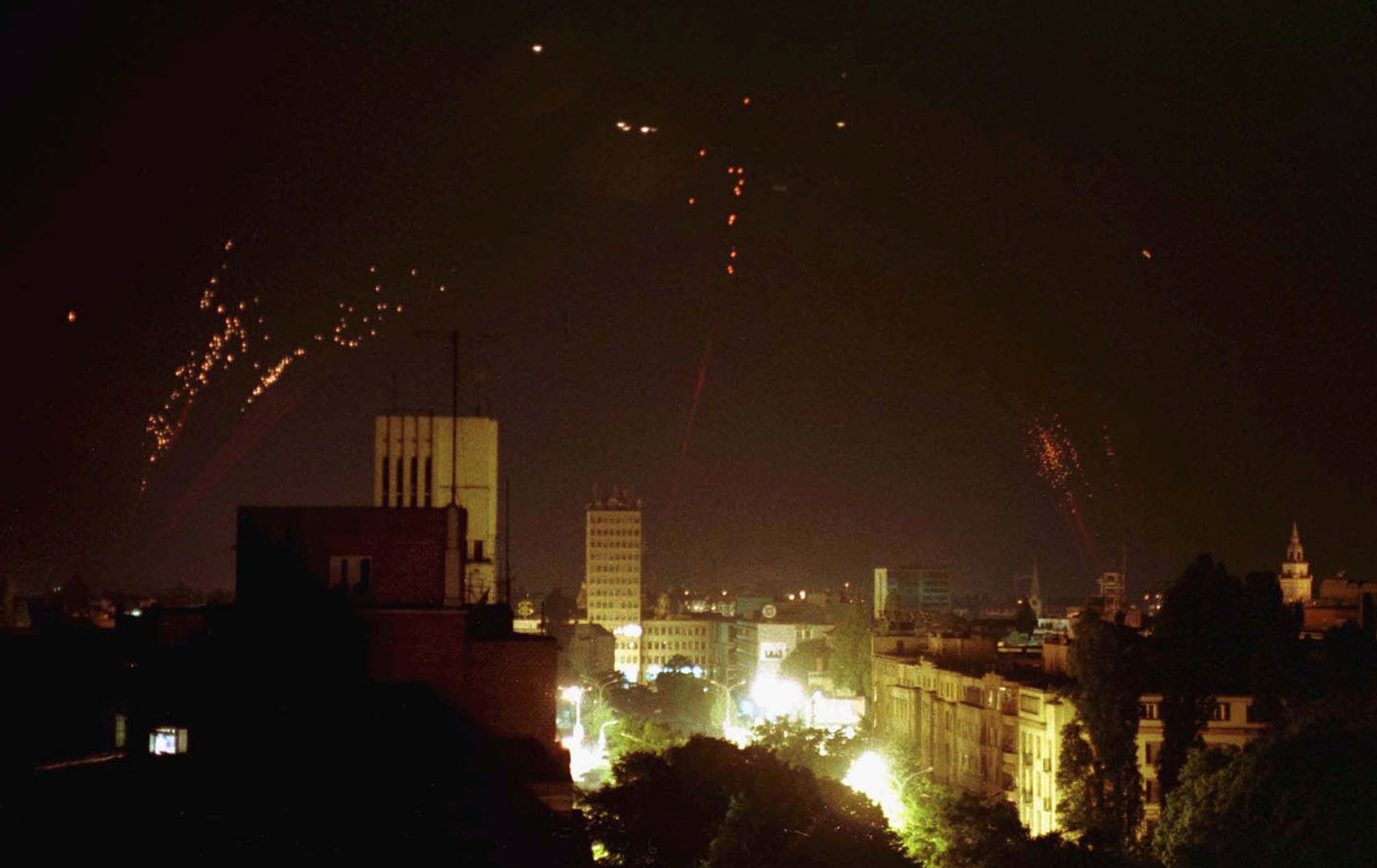
Ukraine Invasion Balkans Putin ExplainerAir defense in Novi Sad / Photo: AP Photo
After this announcement, the Yugoslav side stood by its claim that it shot down two planes and several missiles, and on Thursday before noon, the air defense was praised from the highest place. The President of the FR Yugoslavia, Slobodan Milošević, as the supreme commander of the armed forces, issued an order praising the units and command of the Air Force and Air Defense (RV and Air Defense) of the Yugoslav Army, the command of the Third Army and the Priština Corps of the VJ. Milošević praised those VJ units "for the successful execution of combat tasks in resisting the aggression of NATO forces on Yugoslavia."
ATTACK ON SOVEREIGN COUNTRY: Yugoslav Prime Minister Momir Bulatović announced on Wednesday that the Federal Government has declared a state of war. "An attack was carried out on a sovereign country, against all principles and norms of international law." Therefore, due to the immediate threat of war, the Federal Government has decided to declare a state of war."
The Ministry of the Interior (MUP) of Serbia announced that "despite the criminal and ferocious aggression of NATO forces against our country, stable public order and peace were preserved throughout the territory of Serbia" and that all services of the MUP (public order and peace, criminal, fire, traffic and border police) function normally, with a high level of self-sacrifice, self-discipline and discipline. The MUP also announced that "the life of citizens on the territory of Serbia is proceeding normally, with a high level of awareness and discipline of our citizens." Schools were closed and students were sent off early for spring break. The previous day, on Tuesday, President Bulatović announced that, due to NATO's threats to our country, the government declared a state of imminent war, which comes into effect immediately.
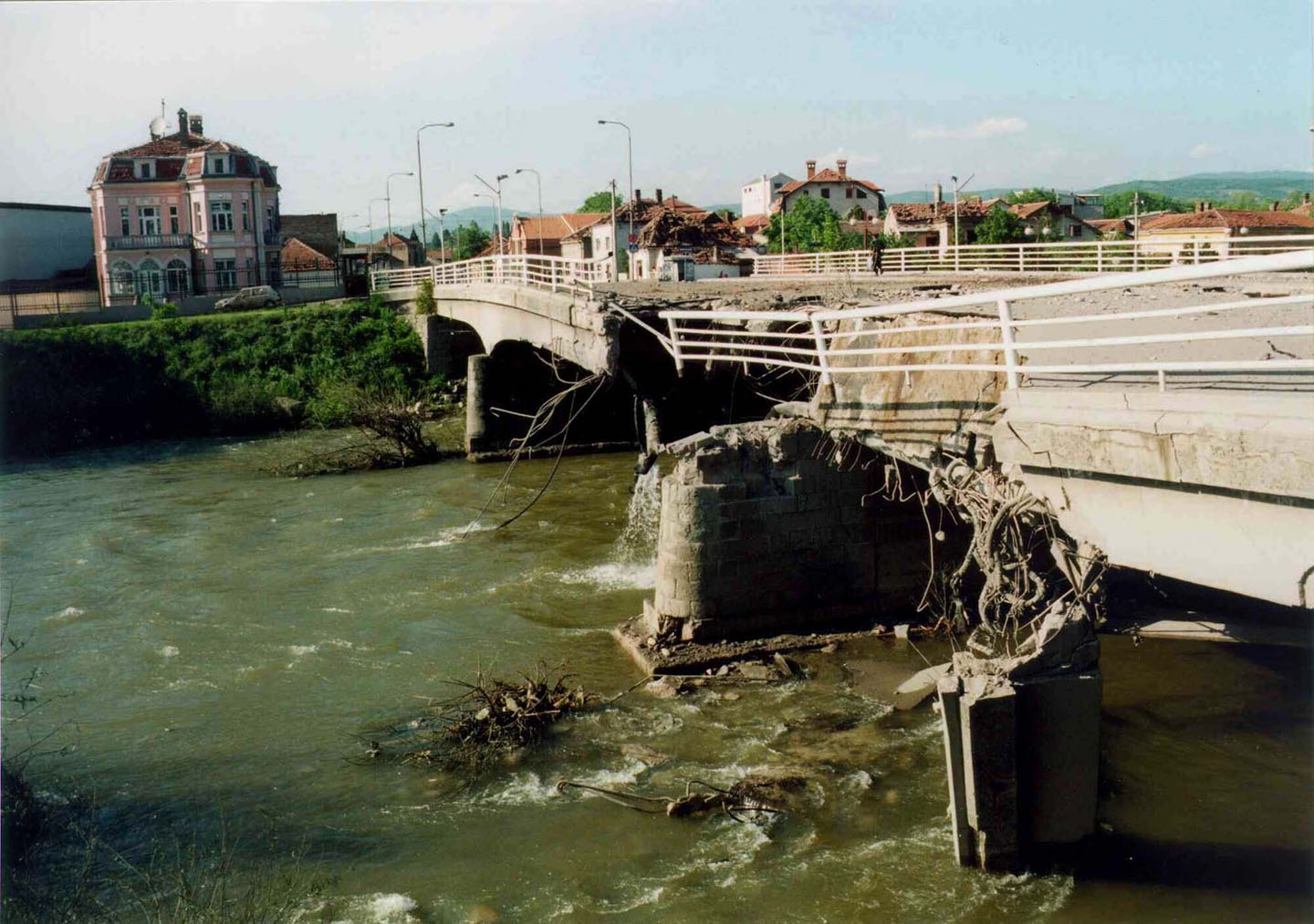
Ukraine Invasion Balkans Putin ExplainerBridge in Nis / Photo: AP Photo
It was problematic whether that act would be recognized in Montenegro, given that the Montenegrin government does not recognize any act of the federal government. When the aggression began, that dilemma seems to have been resolved when the President of Montenegro, Milo Đukanović, addressed the citizens: "I am addressing you as the president of all citizens in these difficult moments of trial for Montenegro and the Federal Republic of Yugoslavia, and I call for restraint, for peace and harmony, to overcome all the quarrels and divisions that have cost Montenegro dearly throughout history. In the interest of the most sacred goal - the preservation of Montenegro and the lives of its citizens. In the name of the future of today and the generations to come."
LAST FALL: Formally and legally, the Federal Government made the decision to introduce a state of imminent war on the basis of the decision of the Federal Assembly held on October 5, 1998, during the previous crisis. Then the danger of war was avoided by the agreement between President Milosevic and the American mediator Richard Holbrooke on the limitation of military and police forces in Kosovo, on the introduction of an unarmed international verification mission and on the establishment of aerial surveillance in Kosovo.
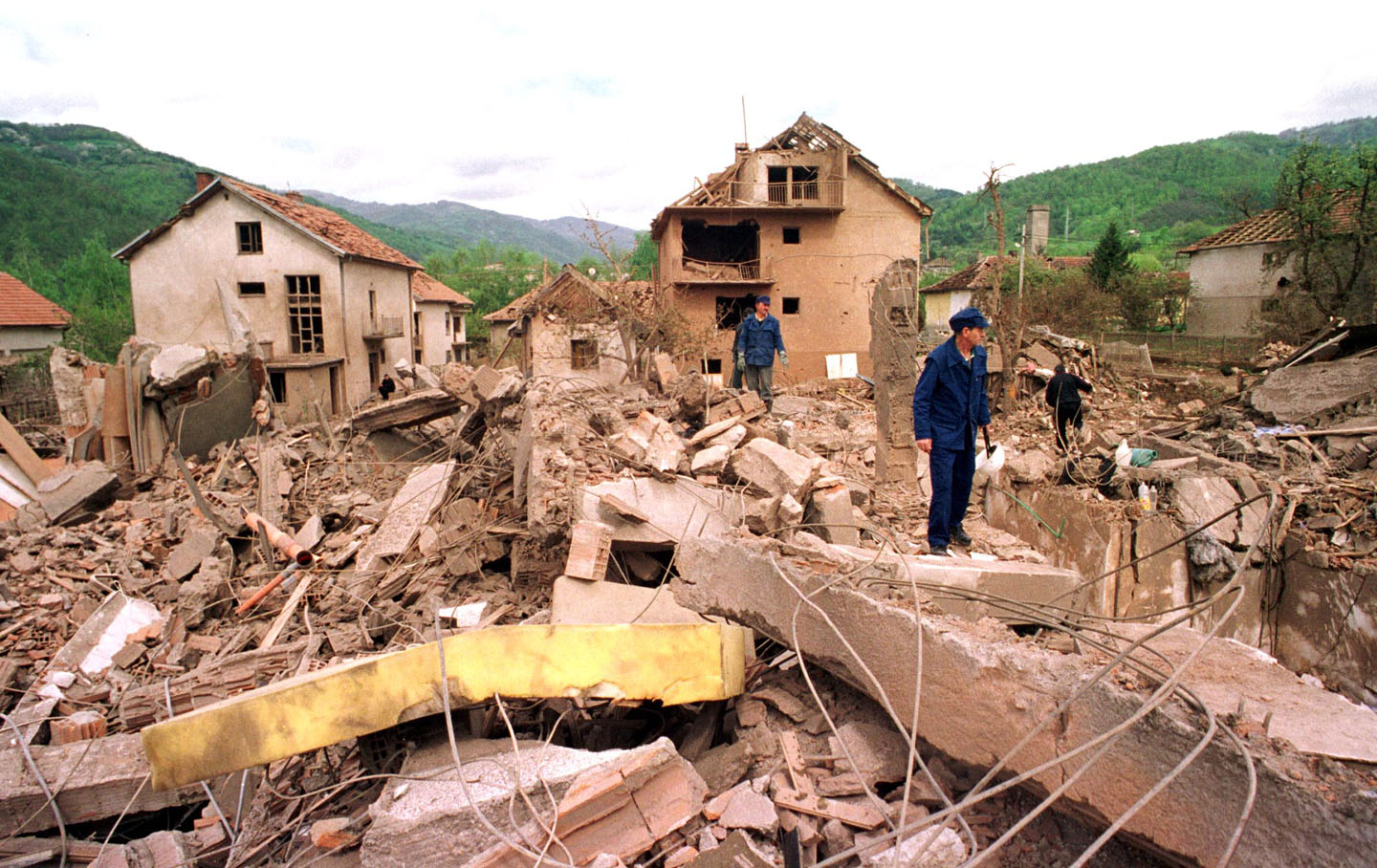
Photo: Tanjug / Archive / Rade PrelićSurdulica / Photo: Tanjug/Archive/Rade Prelić
Unlike the October '98 hepiend. March drama '99. had a different course. Two hours after Bulatović's address to the nation, Javier Solana, Secretary General of NATO, (who once, as a "convinced socialist" was an opponent of NATO, which some chroniclers call "juvenile delinquency") announced that he had ordered the NATO commander for Europe American General Wesley Clark to undertake air operations against Yugoslavia. Federal Minister of Defense Pavle Bulatović estimated that military and police targets will be exposed to those strikes, that America and NATO are standing in the defense of terrorists in that way, which is literally vandalism, and that, bearing in mind the danger, VJ units are deployed in the area in order to avoid and reduce possible damages and losses.
THE NEGOTIATIONS OF MILOSEVIC AND HOLBROOK: The negotiations between Slobodan Milošević and Richard Holbrooke ended in failure on Tuesday afternoon, March 23, as the Yugoslav side did not accept two key American demands - to stop operations in Kosovo and reduce military and police effectiveness in this province, and to accept the text of the agreement in the form in which it was signed in Paris by the Kosovar Albanians with the co-signature of American Ambassador Hill and EU representative Wolfgang Petrich.
As for that first demand of a military nature, in some news of the Reuters agency and in the broadcasts of the London BBC in English, there were speculations that last week the Yugoslav forces broke two or three of the total of seven so-called war zones of the illegal and terrorist KLA. It was even mentioned that some unnamed NATO official, when asked if this is how NATO becomes the aviation of the KLA, answered that it is a moral obligation now that the representatives of the KLA have signed. In Belgrade, in that context, Holbrook's request was understood as an American attempt to save the KLA, which would lose the motive for the occupation of Kosovo by NATO for the pacification of the area, disarmament and transformation of the KLA.
THE BRIDGE OF VARADIN WAS DESTROYEDVaradinski most / Photo: Tanjug/Archive/Jaroslav Pap
News of some vague military activities in Kosovo came from various quarters almost a week before the culmination of the crisis.
The General Staff of the Yugoslav Army announced that such information was fabricated and undoubtedly originated from the so-called Kosovo Liberation Army and some foreign factors, and that the Yugoslav Army in Kosovo and Metohija, as part of the territory of its sovereign state, is only performing regular tasks and that due to threats to our country and the accumulation of foreign troops at the borders, the army is only taking certain measures of preparedness and that they will return to their barracks after the end of the danger and that they will comply with all international obligations.
From the very synchronous speech of Yugoslav officials and political functionaries, which has not changed in recent weeks, it is clear that the focus of Belgrade's "no" was on rejecting the arrival of foreign troops on the soil of the sovereign country. The Yugoslav public was frequently informed about the impending danger of war, and discreetly about what people should do in the situation. In Belgrade, alerting and reporting headquarters were activated, in addition to fleeting searches for sour water, on the first critical night, no reactions were observed that would indicate panic or a consumer stampede. Later, as the war came to this country, people quickly got used to preparing for wartime scarcity from the state of long-term starvation.
Tanjug / Archive / Jaroslav PapRefinery in Novi Sad / Photo: Tanjug/Archive/Jaroslav Pap
The state of mind was relatively accurately reflected by a foreign correspondent who coined the term "gloomy inevitability". A more accurate picture before the start of the attack was given by the slang sentence: "Let them shoot, I'll shoot them once!" In official programs, the words "Kosovo is Serbia" are repeated. Radio B92, which during the first hours tried to calm the citizens by broadcasting a lot of information about the course of the crisis, shelters and the efforts of authorities to work in a state of war, was closed under a transparent excuse, and its editor-in-chief Veran Matić was detained for an informative interview. We believe that shutting down that radio is a shame, let's just remember how that team dedicatedly worked in 1995 to take care of refugees from Krajina.
THE SHADOW OF THE THREAT: US officials told Reuters on Wednesday morning that the attack could be scheduled for Wednesday night when the clouds over Yugoslavia are expected to clear. It was reported that eight B-52H bombers, which were based in Britain, were heading for Yugoslavia; that a certain number of warships left the port of Trieste; that they headed to the vicinity of the Yugoslav coast. On Thursday morning, the agencies and television stations of the interventionist countries announced that the first attack had passed, that NATO was analyzing the effects and that the attacks would probably continue on Thursday night. Solana said the bombing would continue for days, not months. Around nine in the morning on Thursday, the aggression continued. Alerts were announced in several cities in Serbia. The use of "Tomahawk" cruise missiles was announced. Witnesses reported that 12 "A117" aircraft took off from the Aviano base, as well as "A10", "EA6B", "C130", "CF18", "F16", "F15" and F18 aircraft of the US, British, Spain, Portugal and Canada. On the first night, NATO planes took off from the bases in Vicenza, Istrano, Gioia del Cola and other bases in Italy.
Millions of articles have been written about the precision of those killing machines since the Iraq war in 1991, and along with that came a mythologizing of the so-called. "clean war" that depicts destruction and dismembered bodies in the air as a dot approaching a square in a video game. In parallel with that, a kind of "amorality of pilots" was cultivated, which must impress Western small townspeople. Many peacemakers were also caught in that trap, so the aggression against Yugoslavia was justified by "moral imperative". For now, the "moral imperative" has resulted in the fact that this war has dug a very deep hole between Serbia and its European environment. Political scientist Ranko Petković declares in a TV program that he feels like in 1943, when the allies bombed occupied Belgrade and never explained later what the purpose of that bombing was. Many, however, bring back the memory of another bombing - the one in 1941. A lot of water will flow through the Danube to soften the feeling that these bombs instilled in people.
Ukraine Invasion Balkans Putin ExplainerResidential district in Niš / Photo: AP Photo
The former Vietnam involvement of the Western press in the 1960s, which revealed the bloody grand plan, was reserved for "dirty little wars" and for "bad guys" who needed to be brought to justice. In that folder, the greater part of the Western media holds the Serbs (who until recently were called "Milošević") with less and less reserve. It seems that the English "Daily Telegraph" led the war fever this week, which writes that before they start complaining about the Serbs, its readers should remember what the Serbs have done and demands that Kosovo be given independence immediately and that the Serbs be heavily bombed.
DOUBT ABOUT THE JUSTIFICATION OF THE "INTERVENTION": In several Western newspapers, it seems, reservations appeared regarding the legality and justification of the intervention, as well as the uncertainty of the further outcome. Be that as it may, the course of events was on Wednesday in the hands of General Wesley Clark, who, as noted by Reuters, was wounded in Vietnam for which he was decorated. In this way, Clark is different from the American president, who refused to go to that Vietnam war and now used that argument in explaining the decision to intervene ("Americans know I don't like war, but...").
Clinton therefore expressed an unfettered intention to use NATO against "Milosevic", for which he also received the approval of Congress (58:41), and Clark is said to have been a great advocate of bombing for a long time. Either way, Western militarism had an adrenaline rush on Wednesday. The mention of Vietnamese biographical details here is somewhat in the function of recalling the warnings (sometimes uttered here in the "language of deterrence", and sometimes by more cautious analysts) that after the intervention the chain of events could take such a course that it could cause a new Vietnam, a very bloody war on the field.
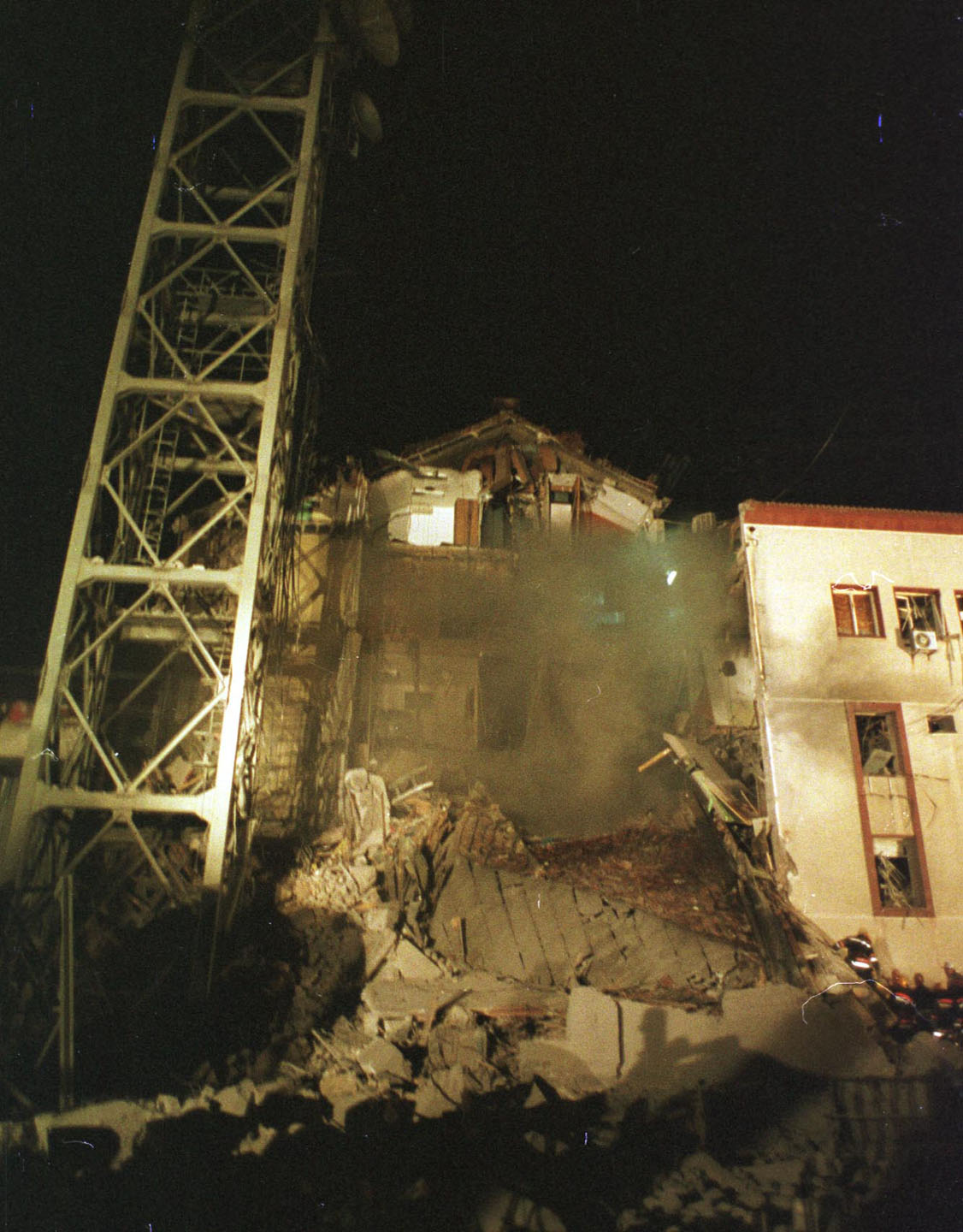
Ukraine Invasion Balkans Putin ExplainerGeneral Staff in Belgrade: AP Photo/Darko Vojinović
"Militaristic pacifists" simply did not publicly consider such a possibility and "bet" on the effect of the threat. It seems that the majority of those who make decisions in the West stuck to the assessment that "Milošević" would give in under the threat at the last moment, and when that result failed, an eruption of anger broke out, the exact nature of which cannot be assumed at the time this text was written. the havoc it can wreak. The assumption that the bombed Serbs will, after all, very quickly sign that problematic agreement with blood from their knees on Thursday afternoon, when this text was written, seems unfounded. Apart from the collective punishment of the Serbs, for now, one cannot see any visible purpose of that new war, which came to the central Balkans on the swift wings of "Decided Action" on Wednesday, March 23.
RED LINES: While the war was approaching, the Serbs repeated that they would not move away from the thin red line and that they would defend the country against aggression. He sometimes warned about the damage that can be caused by excessive heroism and the need to accept compromises. They were few in number, and even those who advised leniency at the last moment pledged to defend the country.
Incorrigible optimists "read" some signals that a miracle might happen in the statement of the German-held secretary in the Ministry of Foreign Affairs, Wolfgang Ischinger, who said on Wednesday that "any concession by Yugoslav President Slobodan Milošević would encourage the international community to renew the dialogue". The question is whether it was anticipation of turnover or simply a justification for the intervention. The question is what, after all, is considered "any concession". The Yugoslav ambassador in Moscow, Borislav Milošević, said on Wednesday that Belgrade is ready to continue negotiations on a political agreement (for Kosovo) with the American envoy Richard Holbrooke.
The country's leadership is ready "to resolve problems peacefully and to continue talks on a political agreement that would take into account the national and state interests of Serbia and Yugoslavia," said Milošević, repeating that if NATO attacks, "development will take place in a different scenario." and adding that Belgrade "counts on Russian solidarity and help" in that case.
TEXT OF THE RAMBUYE AGREEMENT: The text of the Rambouillet Agreement was discussed at the first regular spring session of the National Assembly of Serbia, which was urgently scheduled a few days earlier. After a patriotically intoned discussion, the Assembly made two crucial decisions: a) that it does not accept the presence of foreign military troops in Kosovo and Metohija and b) that it is ready immediately after the signing of the political agreement on self-governance, which is agreed upon by the representatives of all national communities living in Kosovo, to consider the scope and character of the international presence in Kosmet (Serbian official terminology uses the names "Kosovo and Metohija" and "Kosmet", while the Albanians and international mediators use the name "Kosovo" - a difference that turns out to be very dramatic, so reflected in the name as well). From the course of the assembly discussion, it can be reliably concluded that this meant the negotiation of the version of the agreement that the members of the state delegation signed in Paris and delivered to the Contact Group.
That proposal was openly rejected by the American-European side, and the Russian side, until the very culmination of the crisis, did so indirectly, judging at least by the statement of the Minister of Foreign Affairs, Ivanov, who called on the Yugoslav side to sign the Rambouillet agreement, which the Yugoslav side, as we know , considers non-existent. That Russian persuasion of Belgrade to compromise in the West was hailed as a "step in the right direction", while the tension was growing and the clock was ticking.
The Russians repeated their opposition to military intervention, but until the last moment it was uncertain what their reaction to the American determination to bomb the Serbs would look like in practice.
A MORE DRAMATIC STEP: The Americans seem to have shown an excess of arrogance towards the Russians in this story as well, and even a statement was published by Sandy Berger, the security advisor to the American president, that Mr. Russian Prime Minister, if he is uncomfortable being in Washington during the bombing of the Serbs, can to postpone the visit. It must have been very humiliating for the Russians, who are negotiating some 11 billion (in some news, 15) dollars in new loans, but Russian Prime Minister Yevgeny Primakov, repeating his opposition to the intervention, still left for Washington.
After a conversation with US Vice President Al Gore halfway, on the plane over the Atlantic, Primakov decided to return to Moscow. According to reports, the plane immediately changed its course by 180 degrees over the Atlantic and returned to Moscow. Dmitry Yakushkin announced that Primakov postponed his visit to Washington by order of the head of state. Before that, Russian President Yeltsin received a letter from US President Bill Clinton about US war goals in the Balkans, but he did not immediately respond to it and an explanation came from the Kremlin - "President Yeltsin is studying the letter".
On Wednesday morning, there were claims that Yeltsin was preparing a response to Clinton, and from other sources it was announced that the Russian response could be very strong, whatever that means. The Russians demanded an emergency meeting of the Security Council in case the attack began and said they would challenge the embargo on arms imports to Yugoslavia to allow it to defend itself in the event of an attack. Later came news (Reuters analysis on Wednesday) that the Russians might threaten to raise the level of combat readiness of their military and redeploy atomic bombs in Belarus near the Polish border.
Our correspondent from Moscow, Branko Stošić, writes that before Primakov's visit to Washington, all the old bilateral problems in the relations between Russia and the USA are not one iota smaller than they were. Unratified (in Moscow) Strategic Nuclear Arms Limitation Treaty (START-2), US intention to unilaterally cancel an even older missile defense treaty and return to a new version of the "star wars" program, Iran - as a source of foreign currency for the Russian treasury and the danger of Russian nuclear technology falling into unwanted hands.
Upon his return to Moscow, Primakov declared: "We do not trade on our principles, as you will see..."
On Wednesday, Belgrade was waiting for what Russian President Yeltsin would finally say. In a letter to Clinton, Yeltsin assessed the use of force as unacceptable. That didn't clear things up much in the short term. President Milošević spoke by phone with Prime Minister Primakov and in the Belgrade announcements after the conversation the principled attitude of Russia and its President Yeltsin was welcomed and it was said that contacts would be continued, but in those dramatic moments it was not clear what the practical significance of that conversation was. The Serbian side may think and in this it seems to be looking for a chance that the latest war crisis may dramatize the question of whether NATO will take the right to intervene where it wants and whether Russia will continue to be ignored in such matters in the future.
WHAT BORIS YELTSIN SAID: “I just talked to (French President) Jacques Chirac and Bill Clinton. The conversation with Clinton was very long," Yeltsin said and added that the two presidents had informed him about the start of airstrikes on targets in Yugoslavia. "It is an attack on the entire international community," said the Russian president and assessed that it is a matter of "European security, a war in Europe, and perhaps beyond. It is a very serious step, and to take it, without the consent of the UN Security Council, is more than incomprehensible". He called on those who survived the war, and their children, and those who make decisions to stop Clinton from taking that dramatic step (dramatic step, in deep bass). Clinton ignored that appeal, risking a more serious cooling-off with Russia. Russian President Boris Yeltsin then decided to recall Russia's representative to NATO and to freeze Russia's participation in the Partnership for Peace, of which it has been a member since 1997. He announced that his response could include some military) or military-diplomatic measures. Some news reports said, and were not repeated later, that the Russian contingent in Bosnia would not listen to the NATO command, but only to Yeltsin's orders. About 80 Russian representatives in the Kosovo verification mission, as reported by Itar-tas, are leaving Macedonia and returning to Moscow on an Aeroflot flight. The session of the Security Council did not produce any result.
DO YOUR DUTY: On Wednesday afternoon, President Milošević addressed the Yugoslav public, supporting the decisions of the Assembly of Serbia and the engagement of Serbian President Milan Milutinović, he emphasized that this is not just about Kosovo but about the whole country, that the Yugoslav government is determined to continue with political negotiations; that the country will defend itself to the extent that it is necessary and that everyone will contribute to it best if they do their job. It was not a redefinition of the state of immediate danger of war into a state of war, but a call for work, order and peace. We remain, therefore, on a thin red line.
The "last word" of Yugoslav President Slobodan Milošević was published on Monday, March 22, by Serbian Radio and Television in the form of a written reply to Kuk and Vedra to the foreign ministers of Britain and France:
"Mr. Ministers...
The talks in Paris that you say you finished didn't even take place...
Therefore, my answer to your sentence "an agreement is on the table" is this: There can only be a proposal for an agreement on the table, and an empty table does not bring an agreement, nor does only one side of the table being filled. Those affected by the agreement must be at the table.
As for your threats of military intervention by NATO, your nations should be ashamed of them, because you are preparing to use force against a small European nation because it is protecting its territory from separatism and its citizens from terrorism and its historical dignity from scoundrels who do not know neither what is history nor what is dignity.
You say that the large movements of our security forces are very worrying. If you think they are worrisome for separatists who want to secede part of the territory of Serbia and Yugoslavia, they should be. If you think of possible aggressors outside of Yugoslavia, they should also be of concern.
Can a normal person really think that the one who is threatened will not show the intention to defend himself.
You, gentlemen, are the ministers of foreign affairs of two European countries and as such you are distinguished diplomats and in that capacity you have the right to mediate, negotiate, represent goodwill, advocate for peace in Europe and the world and better relations between nations, but you have no right to you threaten other countries and their citizens or regulate life in them.
We remain firmly committed that the problems in Kosovo and Metohija should be resolved by peaceful means, through negotiations. The fact that those negotiations were not held either in Rambouillet or in Paris does not mean that they should be abandoned, at least from our peaceful and democratic point of view. Slobodan Milosevic"
EMPTY ROOM: Although everything was clear on the Serbian side, the discussion in the Serbian Parliament on Tuesday the 22nd was correlated with the news from the White House. When the President of Serbia, Milan Milutinović, took the podium and asked that the conflict not spread because "they" (the Americans) want troops and only troops, it was clear that Richard Holbrooke, the "bulldozer diplomat" whom historian Milan St. Protić says that it is dangerous and "unencumbered by book knowledge" to take a very inconvenient letter to Brussels. Somehow, after Milutinović's speech, the news spread among the parliamentary reporters that Holbrook canceled the room at the Hyatt. They say that some of the Yugoslav footballers made a disappointing statement. "The same way they canceled the room when the match with Ireland was cancelled!" Somehow mixed with this news was the news that UEFA is considering whether to postpone the Yugoslavia-Croatia match. On Wednesday, news came that UEFA postponed the match to August 18, and the Macedonia-Ireland match to September 4. Paradoxically, in such a situation, we began to laugh at the statement that UEFA knows something that we don't, and that most of the actors don't seem to know either.
The Assembly of Serbia made two decisions and five conclusions, which can be summed up in one sentence: "The National Assembly expresses unanimity in our readiness to defend Serbia and FR Yugoslavia against any aggressor, no matter what his name is and no matter how he motivates his crime."
Regardless of what its prehistory may be, that sentence will perhaps determine the future very dramatic course of events and many individual destinies. On Wednesday around three in the afternoon, near Slavija (there is a monument to Dimitri Tucović, a socialist and pacifist who died on Cer in 1914, stands alone), like a lahor hinted at by storms under that calm surface, an old man rejoices that he found salt in a store. Experience teaches him that in times like these, it was once the most difficult thing to do without salt. The ordinary world is preparing for a long survival. After many attempts, one of your reporters manages to get a telephone connection with his mother in a village in Šumadija. He asks her if she heard the news, and then briefly tells her that "martial law has been declared." From the receiver comes a short: "Ouch..." and a long silence. In an excited way: "Hello, are you there? Can you hear me?” She softly replies, “I can hear…”
Real journalism costs money, and we will not be bought by tycoons and corporations. Support us with a one-time or monthly donation. The time for it is now!