photo: duje klaric...
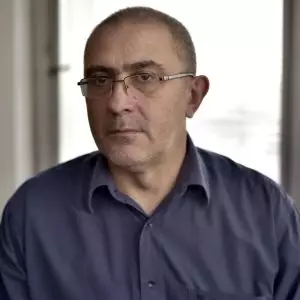
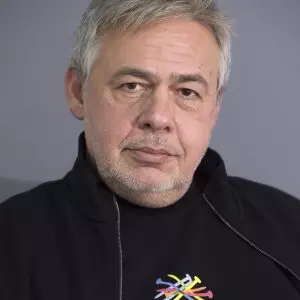
We are already used to Jurica Pavičić delivering an exciting crime story every now and then. The writer of Women from the Second Floor i Red waters in the new novel A mouth full of sea (Laguna), brings an unusual plot and a lucid, characteristic dissection of the social climate in which he lives. This time we follow the journalist Goran Najev, who after retirement finds meaning in the sudden role of a private detective. "The search for the killer opens up the world of silenced war traumas and the corrupt present, a novel in which the waves not only throw out bodies but also the darkest truths buried for decades," says the description on the book's cover. For a crime novel Red water In 2021, Jurica Pavičić won the prestigious French award "Le Point du Polar européen", and for the same book he received the "Prix Mystère de la critique" critic's award in 2022, along with a number of other awards. Besides being a writer, Pavičić is one of the most respected Croatian journalists, columnists and film critics.
"WEATHER" We have another plot of yours ahead of us, and the resolution, until the very end, we can't even guess. The corpse of an unknown man in the sea near Trogir triggers a series of discoveries and moral dilemmas. How the idea for the novel came about and how much it changed during the writing?
......
JURICA PAVIČIĆ: Since the book begins with the sea throwing up a corpse without documents and identity, it is somehow logical that the idea was born when the sea threw up - precisely - a corpse without documents and identity. This really happened in Split in 2012. The body of a person who was not registered as missing washed up on a beach, and the police published a picture and asked if anyone recognized her, but no one came forward. I remembered that situation and filed it away in some warehouse in my brain where I store possible plots for books. I returned to him after ten or more years, when I roughly knew what I wanted with that motive: that I wanted to bring in a woman who recognized the dead man, but has her own reasons why she is afraid to tell the police. From that point on, the elements came together. I started writing the book last year and finished it before the summer. It was released in Croatia and Serbia at the very beginning of September, and then an incredible coincidence happened. Practically within a week of the book's release, the police announced that they had identified the dead man from 2012. It turned out that his own son had covered up his death to continue receiving his pension and to extend his protected tenant status, because he lived in a repossessed apartment. The craziest thing is that father and son lived 200 meters from me. Some are the path of coincidences that write life crazier than a single book.
A fictional crime defender from the time "Storms" It is an important part of your book.. It seems that such things are still taboo in Croatia, and you face it bravely. Don't be afraid.?
These topics are more taboo in Croatia than they were 10 years ago, and 10 years ago they were more taboo than, say, 2005. In the meantime, the war of the nineties in Croatia ceased to be a real event and passed into the realm of myth. Today, it is for Croatia a place of theogony, the Big Bang, the starting point and central part of history, just as the NOB was in Tito's Yugoslavia. To some extent, this is understandable, because the generation that participated in that war is now in its mature years, in which it dominates socially. Furthermore, it is perhaps the only war in which the Croats were all on one side, it united them, they were not opposed to each other as in 1941 or 1945. That is why the talk about that war is pleasantly conformist. In a way, I think that in your country in Serbia there is a similar thing with the First World War. For all these reasons, the war of the nineties in Croatia has become the subject of enormous commemoration, ceremonies, masses, processions, TV shows, documentaries, documentation centers and museums. As a result, that war gradually becomes untouchable, beyond the reach of problematization. As for fear - I'm not afraid. I know that some people do not like me politically because of my journalism, so that will certainly not change with this book, neither for the better nor for the worse. Last week, an extreme right-wing weekly published a cover with pictures of the seven of us and the headline: "Seven beat journalists". Somehow I don't believe that one book can change that much. But - I have my audience, both newspaper and book. The book is selling well in Croatia, which means that some people have a need for this kind of complicating things.
The main character of the novel, Goran Najev, not someone who should be a role model he is followed by the past of a corrupt journalist but we still cheer for him. Is it even possible to live cleanly and honestly in today's brutal world and stay afloat?
I think "corrupt" is too heavy a word. Najev is simply a man who understands the conflict of interests a little too relaxed. He is inclined to bend some principles, if it suits his convenience. He lives a little above his standard, and that requires money that doesn't exist in journalism today. I conceived Najev as a kind of photo-robot of a generation of journalists that is a little older than me, and is very similar in Croatia and Serbia. These are people who were lucky enough to have the best of both worlds. They entered journalism in the late SFRY, when the journalistic limits of freedom were already relaxed, and there was a proto-capitalist market, so they could earn solid money, travel, be stars, and still have socialist security. They came of age in the nineties when - whatever we think of that era - journalists were important and famous. In their old age, a completely different landscape greeted them: journalists are less and less important, and especially they are not famous, there is no more security or money because the salaries in journalism are low, and journalistic freedoms are perhaps even narrower than in the late eighties. Whereas in Serbia the media is pressured by the government, and in Croatia by capital, advertisers and clients. The tragedy of the generation to which Najev belongs is that they are used to better things, not only financially.
photo: duje klaric...
In the novel A mouth full of sea there is also indirect criticism of the Church through the character of defender Jakov Sopić. Today, it seems that both in Croatia and in Serbia, the Churches support the nationalist and conservative ideas of the ruling elites. How did we get to the point where religion is most normally used as a tool of political power?
Well, the Churches fought for it. From the beginning, they wanted to overthrow communism so that they could become a politburo instead of a politburo, and in Croatia they succeeded to some extent. I just think they screwed up there. In our country, the phenomenon that Poland, and earlier Ireland, is going through is happening somewhat more slowly. When the Church embraces too much social power and influence on politics, it then begins to reject a significant part of the citizens.
It will cease to be a social transgression, a forbidden fruit, which was the case in Croatia until 1990. A creeping secularization is taking place in Croatia: fewer people go to church, there are fewer church marriages, baptisms, fewer young people enroll in seminaries. On the other hand, those who remain attached to the Church are, according to sociological research, increasingly extreme. The Church in Croatia managed to drive away people like, for example, my late mother: bourgeois, moderate believers who shy away from narrow-mindedness and nationalism.
You are also known as a columnist.. Does writing a novel allow you to escape the politics of the day?, or for you, literature and journalism are still two faces of the same view of society and reality?
I often write about the same things in my columns and novels: for example, real estate speculation in Žigice and Prometheus' son, the effect of tourism in Red water, the struggle to control speech about the past in With a mouth full of sea. But one must be careful to write about it differently. The column is dominated by my voice, my attitude. In the novel, he must not jump out, I must not be heard. In the novel, on the contrary, I try to give voice and dramatically articulate the ideas I oppose, I test my own ideology as the devil's advocate. In general, the novel must not be thematic or preachy. If we want to pass some social commentary through the novel, then I use the perspective of an intelligent, reflective character.
In the book, you write that the majority was at the beginning of the war "kept quiet, how the majority is always silent anyway". Are they them? "ordinary people" about which Krleža wrote - "numb extras, cannon fodder"? Today in Serbia we call them "neutral".
If someone is neutral in Serbia today, then it means that they are for Vučić, but there is no sense in saying that.
Who influenced you as a crime writer from Yugoslavian authors?? Is there room for Pavle Pavličić?, which dominated the genre?
Pavličić had a great influence on me, but not so much as a writer but as a professor. I listened to his lectures in 1985, in the first year of comparative literature in Zagreb. He taught us something that had a great impact on me: that writing literature is work, that it is an engineering mastery of problems, solving tasks and obstacles, that when one writes a sonnet, one must sit, bite the pen and look for a rhyme. I was influenced by his work ethic, the fact that, although he was also a productive literary historian, he would release a novel once a year - reliably and predictably, as if on a conveyor belt. Respect for that.
As a long-time film critic, but also as a writer, you certainly follow film and literary trends in the crime genre. What is the most exciting thing for you today in that world, both in literature and in film?
As for genre literature, I like Gillian Flynn, Tara French, Kerstin Ekman among the things I've read in recent years. I liked it Jellyfish field Ota Oltvanji. Unlike some other Croatian and Serbian crime stories, it's a Serbian crime story, not an American crime story just transplanted to Serbia, where people are called Stevo and Jovo, but they could be Jeff and Steve. As for the movie, I really don't know where to start. At the moment, there is no single most exciting scene like Romania around 2010 or Denmark in the late nineties. But I'm always happy when I come across a small, clever genre film that is neither Hollywood nor festival art house, such as they were Emily Criminal Patton Ford, Love Lies Bleeding Rose Glass or Order Justin Kurtzel.
This October, "Vreme" celebrates and honors - as much as 35 percent discount for our 35th birthday! Valid for semi-annual and annual subscriptions. Subscribe now!