News
Real estate identity card freely available on the Internet
"Identity card of your real estate" has the same legal force as the document issued at the counter and is valid before all competent institutions

Free public transport is neither really free, nor has it increased the number of Belgraders who use it, it has not reduced traffic jams, and the government has received an "argument" that gifts should not be ignored.
A year has passed since it was introduced in Belgrade free public transport, and according to what experts say, and citizens feel on their own skin every day, that measure did not improve the quality of services in any way, nor did it, which was its main goal, reduce traffic jams.
It is not necessary to specifically describe the frustration when the number of waiting vehicles does not appear on info totems, which should help citizens plan their journey by public transport, because some reckless driver forgot to log into the system.
What can we say about the increasing number of info totems that do not work at all, or the regular appearance of "caravan" transport, that is, the phenomenon when after several tens of minutes no vehicles appear at all on the lines that citizens are waiting for until exhaustion, and then three or more vehicles from the same line appear in a row in just a minute or two.
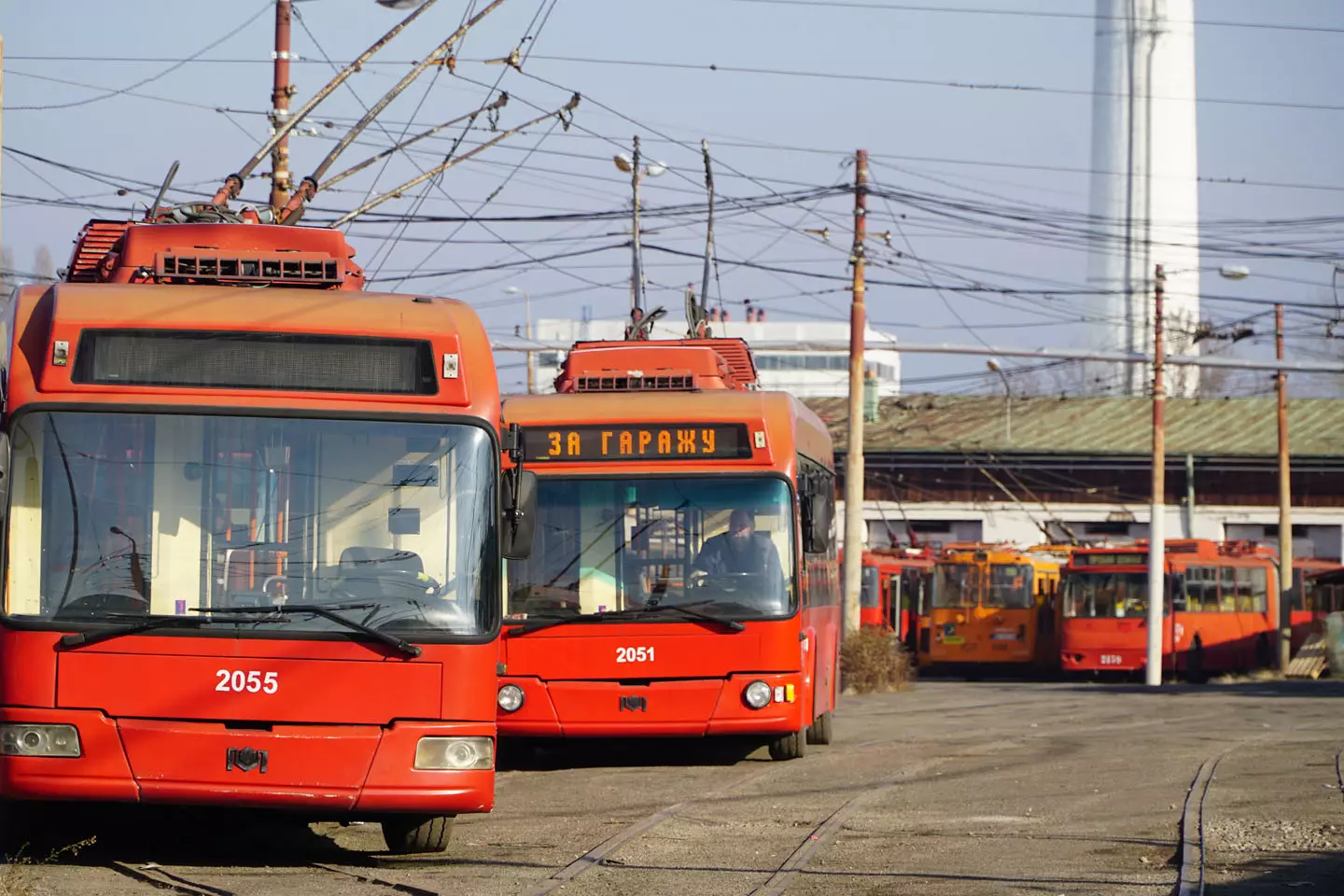
The interlocutors of "Vremen" agree that the introduction free public transport in Belgrade was and remains only a populist measure, and that the problems remained, and in some cases even increased, because now the city government has an "argument" against those who criticize, embodied in an openly brazen narrative that there can be no complaints about what is free.
President unions "Centar - GSP Belgrade" Ivan Banković explains to "Vreme" that free transport is neither really free nor has the introduction of that measure met its goal.
"The introduction of free public transport did not attract new service users, which should have been the goal. It also brought some new costs. I do not agree that these costs are abnormal if savings were made on some other things, primarily on dubious tenders and public procurement for the purchase of vehicles and on the conclusion of contracts with private carriers. The negative side of free transport is that citizens know even less where their money goes," says Banković.
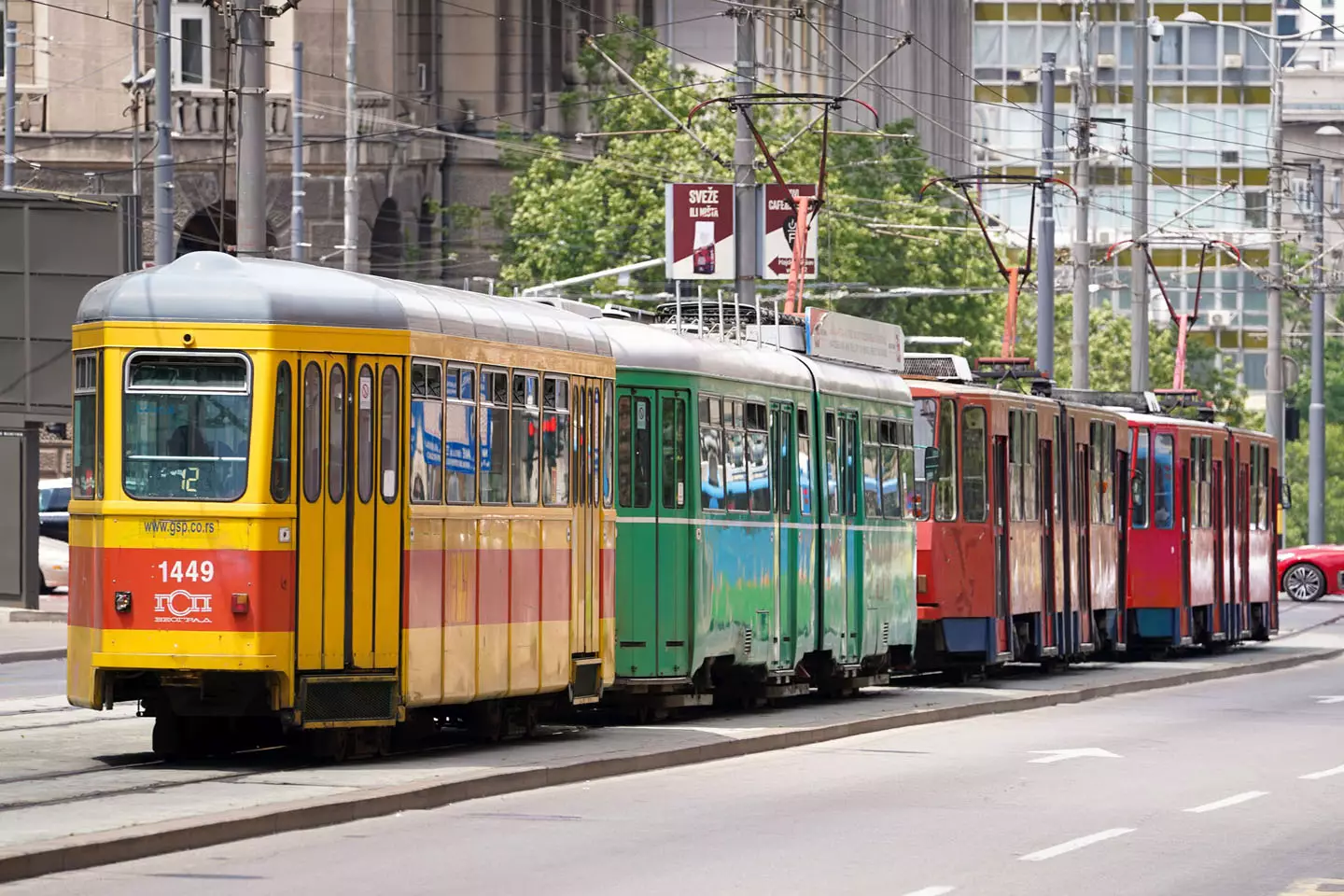
He reminds that part of Belgrade's budget for public transport in 2026 is 48 billion dinars, but that this money is intended only for current functioning, i.e. costs, and that any future purchase of new vehicles will be paid for either from a loan or as a lease.
He points out that most of the money from Belgrade's public transport budget goes to "extremely profitable" contracts with private carriers that are paid per kilometer traveled.
"The introduction of free city transport is a personal decision of the mayor." Aleksandar Šapić, made without any prior analysis or study. That decision was an attempt to hide the disastrous results of the previous system of charging tickets for city transport, which for a year and a half we were convinced was never better and that citizens' trust in public transport and the city government had returned. However, when at the end of 2024 it was time to present the results of that charging system, it suddenly became irrelevant how many tickets were sold, so it was concluded that public transport should be free because no one pays for it anyway," says Banković.
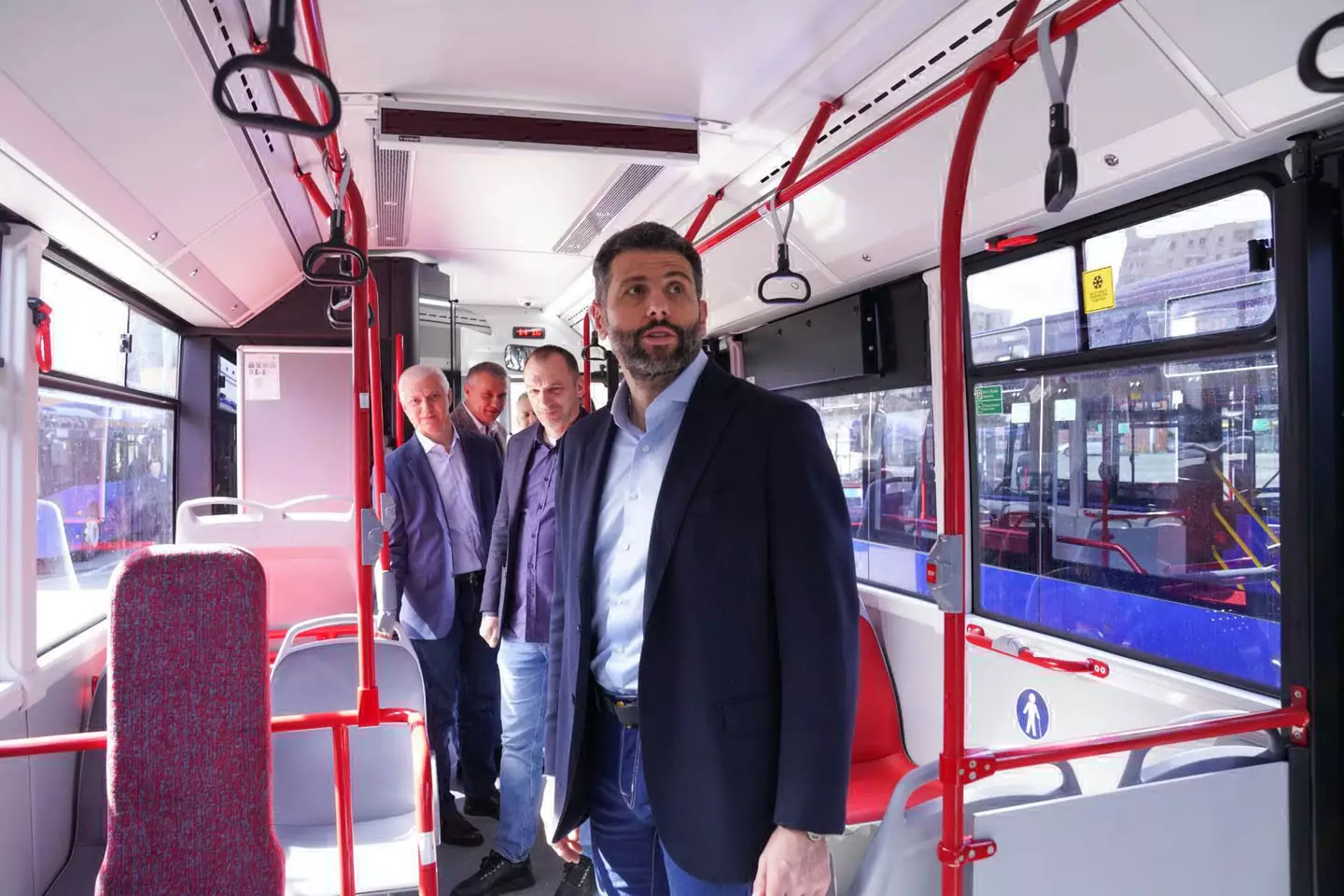
He assesses that the household budget of employees whose employers paid for public transport was not relieved by the introduction of free transport.
"Free transportation is an absolutely populist measure that allows each employer to arbitrarily decide how much the compensation for employees will be for transportation. With this, the Belgrade budget has taken over most of the obligations for transportation payments from employers," Banković says.
Instead, the ticket collection system should have been seriously reformed, so that those who really have the least, such as social assistance beneficiaries, pensioners with the lowest incomes, and the like, would have a 100 percent subsidized ticket for transportation.
"A public contract should have been made with the citizens, according to which they would pay 25 percent of the ticket price, and the City of Belgrade 75 percent, and which would guarantee that the citizens would receive a certain number of new vehicles for their 25 percent every year. In this way, free transportation is misused as an alibi when citizens complain about the quality of transportation. Even some of my colleagues, traffic engineers, often say that citizens protest baselessly because their transportation is free, but transportation is not really free, but is only paid for in a different way," he says. Bankovic.
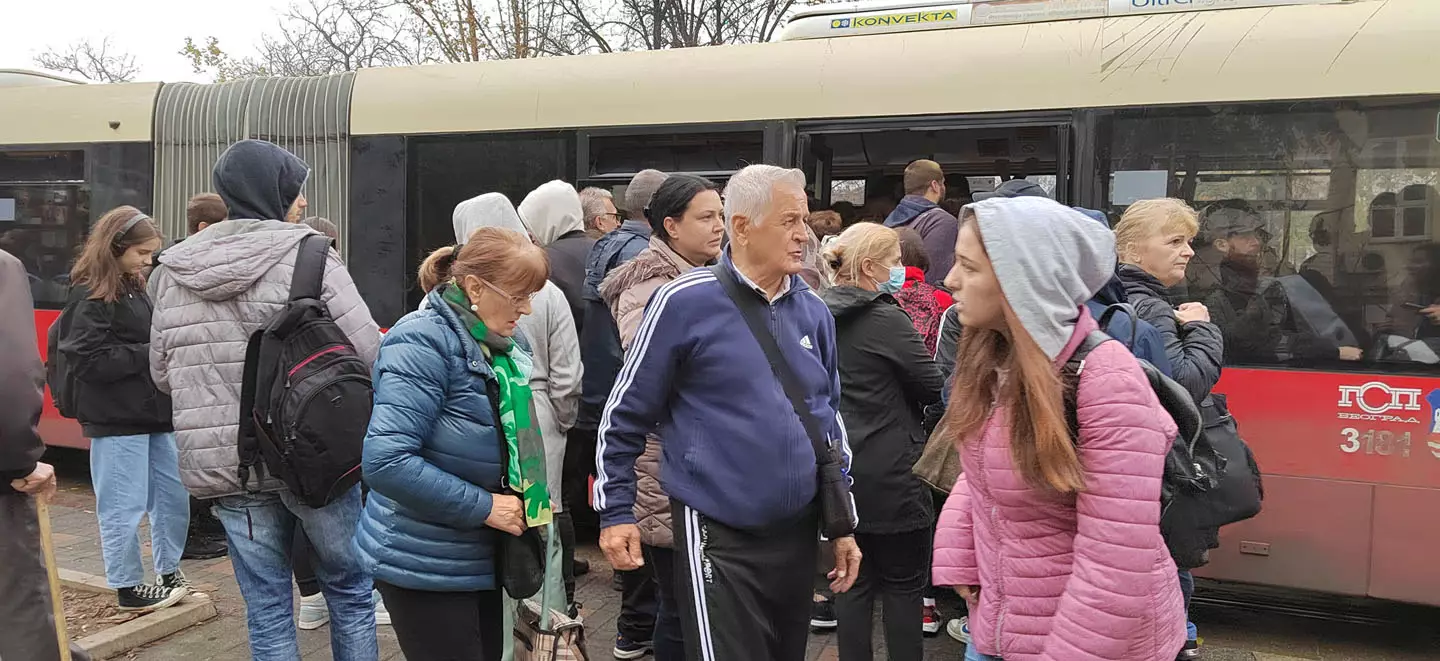
He adds that even those things that are well thought out don't work, because there are two real-time vehicle monitoring systems, but neither is reliable.
"For software and electronic info totems at bus stops, 30 million euros were paid. In addition, every year we pay more than 700 million dinars for the maintenance of that software, but it all only works to some extent, and it does not work to some extent. From the aspect of user experience, which is ultimately the most important, no improvement was achieved by the introduction of free transportation, because the timetable is not reliable," says Banković.
He points out that time is the most important resource and that public transport can match the comfort of people in cars only if it is faster than private transport.
"On the one hand, there is a long journey to work and looking for a place to park, if there is one at all. The alternative to that is public transport, which can be used to get to work in the same time or faster. For that, it is necessary to have a timetable that works, and not for citizens to think about whether the vehicle will show up at the stop, for there to be no constant crowds, and what is most important, to monitor the progress of public traffic in real time. So, with the introduction of supposedly free transport, everything else fell into the water and there is always a cover that Belgrade is the only a city in Europe with such a large number of inhabitants that has free public transport," says Banković.
He also states that free public transport has essentially neither brought nor taken anything away from GSP, because since 2017 this public company does not depend at all on how many tickets it sold, but exclusively on how many departures it made and how many kilometers were traveled with passengers.
"GSP has been turned into just one of the carriers that has no role in ticket sales," concludes Banković.
Traffic engineer Marina Tanasković Lipovac tells "Vreme" that free public transport, which exists in Belgrade and is not available anywhere in Europe, is not a financially efficient approach.
"Free public transport is good for users who use it less often, while for those who use public transport every day, free transport means absolutely nothing. There is very little or no chance that those who have never used public transport will start using it just because it is free, because these people are used to the comfort provided by cars," says Tanasković Lipovac.
He considers that the introduction of free public transport is a "pure political measure".
"When it is introduced in such a way, such a measure does not have an effect, but it could be effective if it were connected to some other factors such as charging for entering the city center for cars or much more expensive parking, although there are not enough places for parking in Belgrade anyway. In order for the free transport system to be effective, vehicles must be available to citizens, the transport must be comfortable, without much crowding, and ideally the vehicles would also have wi-fi. Only if these prerequisites are met by those who do not use public transport transport would start to do that," says Tanasković Lipovac.
And Belgrade has public transportation where you don't know when the vehicle will arrive, "because Mayor Šapić determined that there is no schedule, that is, there is a 'dynamic' schedule."
"That's why citizens can't plan their journey. Info totems at bus stops are mostly useful, but they also know how to make an appointment. All this together results in free public transport being just a populist measure with the aim of making Belgraders happy that Belgrade is the only big city in Europe with free transport", says Tanasković Lipovac.
He reminds that there are many opposition-minded citizens in Belgrade, which is why they are "given" things such as free textbooks or vouchers for sports equipment for schoolchildren, in order to reduce the difference between the number of those who are for the government and those who are against it, because it is thought that "as soon as the others come, we will not have it".
"City transport is not economically profitable anywhere in the world, and the city always has to contribute certain funds. By making transport free, the city budget is greatly reduced," Tanasković Lipovac points out.
Speaking about the info totem system, he points out that it is at an acceptable level and that it improves the quality of the public transport service, but that it happens that the system breaks down or is turned off, and that it should be linked with the vehicle monitoring center.
He emphasizes that it is necessary to maintain that system in order to function, which requires money, which apparently is not allocated for that.
"It seems that with the introduction of free transport, the situation in public transport is the same as before the adoption of that measure, but in the long run the situation will worsen, because there will be a collapse of the public transport system that is not maintained. That is why a lot of money will be needed to rebuild the public transport system after the collapse," concludes Tanasković Lipovac.
"Identity card of your real estate" has the same legal force as the document issued at the counter and is valid before all competent institutions

Aleksandar Vučić commented on bot attacks on social networks and the case of an attack on the account of the weekly "Vreme" in the Albatros news podcast. And lied

Andrej Premović, a student at the Faculty of Computing from Raška, had his house searched by the police because of the website ocisti.net, which records more than 32.000 accounts of alleged SNS bots. Who is the young man who is suspected of exposing the illegal activities of the progressives

KRIK reveals that SNS official Uglješa Mrdić bought two apartments with a total value of around 170.000 euros in the middle of the year. Previously, he did not own any real estate. He did not take out a loan
CINS announced that in the construction of the residential complex for Expo 2027 in Surčin, failures were observed which, according to experts, could have led to a collapse. The building directorate claims that the changes were approved by an independent inspection and the construction professors claim that the slab is still unsafe

There is, literally, no difference between the one who claims it is day in the middle of the night, or the one who claims to be a giraffe, from the claims we read on billboards: that Vučić is working to unify Serbs and that Serbia is doing better and better day by day.

The pre-election arrests due to the alleged "overthrow of the state" testify to the regime's panic. The bad news for them is - they can't arrest the whole people who decided to defend themselves from progressive beatings and election theft

The ring that tightens around Ćaciland Student list is getting narrower. Because there are more and more spoiled people who see the false prophet for what he is: a street obscener who is fighting Serbia

The archive of the weekly Vreme includes all our digital editions, since the very beginning of our work. All issues can be downloaded in PDF format, by purchasing the digital edition, or you can read all available texts from the selected issue.
See all