"Mrkšić calls me to his place in the morning and says: 'Mali (that's what he called me), are you ready to do a serious task?' Because I trusted him as a father, I say I did. And he says: 'A decision has been made to replace the military leadership.' He did not tell me, nor did I ask him who made that decision. He stated that Kadijević (Serb), Brovet (Slovene), RViPVO commander General Zdravko Jurjević (Croat), First Army commander General Aleksandar Spirkovski (Macedonian) and Chief of Staff General Andrija Silić (Croat) should be arrested. I stand up, kiss him, say 'finally' and ask 'when'. He answers 'tonight'”
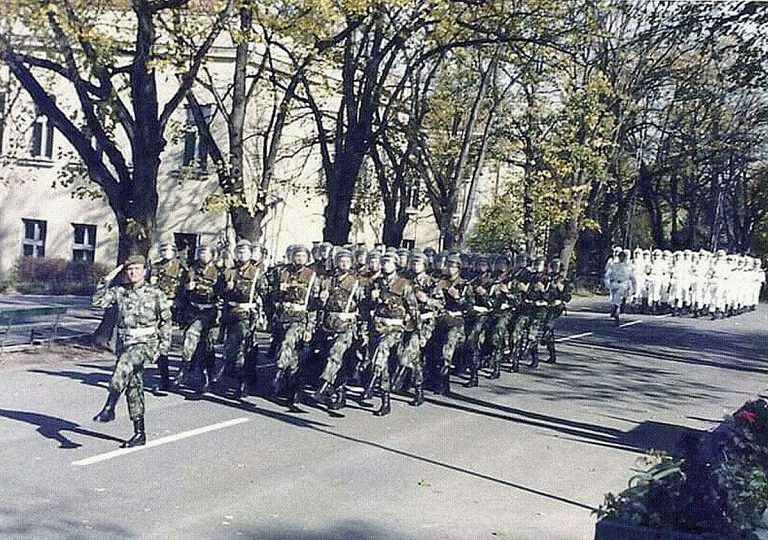
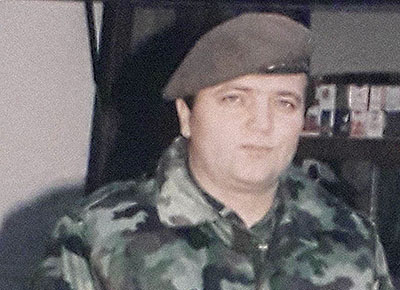
"We tried a military coup, and it would have succeeded if those who organized it hadn't betrayed us, and my elders and I felt cheated, manipulated, humiliated, played and deceived after everything," Branislav Kavalić begins his confession for "Vreme". operational leader of the "coup" and then commander of the elite unit of the JNA, the First Battalion of the Military Police of the Guards Brigade, which also included an anti-terrorist squad; the "Cobra" unit was later created from that platoon.
WEATHER: Who betrayed you??
BRANISLAV KAVALIĆ: Commander of the Guards Brigade, then Colonel Mile Mrkšić, Head of the Administration for Moral Education of the General Staff of the JNA General Vuk Obradović and Chief of the General Staff Blagoje Adžić. And who knows who else.
What was the reason for the dissatisfaction in your unit?
With the outbreak of war in Slovenia at the end of June 1991, we saw how soldiers were killed like clay pigeons, and the Guard, as an elite unit, watched silently. Non-commissioned officers from the anti-terrorist platoon - an elite one, in which there were only highly trained non-commissioned officers - ask me what is happening and what will be done. General dissatisfaction started. We met Commander Mrkšić with the team and then we went to the Chief of General Staff Blagoj Adzić - Mrkšić, the company commander for anti-terrorist activities Captain Mladen Marić, the commander of the anti-terrorist platoon Muris Zjajo and myself.
How did you get to the Chief of the General Staff unannounced??
Easy. The people of whom I am the commander provide all the military officials on the application form and are their personal companions. We asked Adžić to send us to Slovenia to prevent the JNA from being disgraced and disgraced. Obradović was with us, who formulated the demands, but, without our knowledge, he added another wording - that the JNA withdraw from Slovenia to the borders where the Serbian people are, he turned it all upside down and watered it down.
We also demanded the dismissal of the Federal Secretary for National Defense Veljko Kadijević and the assistant for morale of Admiral Stanet Brovet, as well as an Air Force strike on Slovenian military targets and infrastructure facilities, as a sign of retaliation for the fallen soldiers.
What did Adzic say??
That all our demands are justified and that he will come to the meeting in Garda in the afternoon. And he came, all the elders were present. And he repeated in front of them that the demands are justified and that we will retaliate most energetically in Slovenia and destroy their Territorial Defense, including massive air strikes. All of us in that great hall of the Guard applauded those words. Then Obradović approached him, whispered something in his ear, Adžić said that he had to go urgently, but that the results would be visible soon. And we really believed him then, among other things, because of the fact that the Ustashas killed 45 members of his family during the Second World War. However, nothing came of the promise, the dissatisfaction among the members of my battalion was growing, culminating in the second half of September because nothing happened, and the fighting in Croatia started.
We started mobilization on September 15, the battalion was one hundred percent full by September 27. We knew that we were going to Vukovar to unblock the barracks, the order came on September 20, so there is no question that that was the reason for the coup. At that time, the riots of parents of soldiers and reservists started in front of the Guard barracks, Mrkšić sent me to calm the situation. I explained to the parents that we have to unblock someone's children in the barracks in Vukovar who have no electricity, water, or food and asked them what they would do if their sons were there, to which I received applause, and the protest was over.
What happened next??
The mobilization is over, and on September 27th we are waiting for the order to go to Vukovar. Mrksic calls me to his place in the morning and says: 'Mali (that's what he called me), are you ready to do a serious task?' Because I trusted him as a father, I say I did. And he says: 'A decision has been made to replace the military leadership.' He did not tell me, nor did I ask him who made that decision. He stated that Kadijević (Serb), Brovet (Slovene), RViPVO commander General Zdravko Jurjević (Croat), First Army commander General Aleksandar Spirkovski (Macedonian) and Chief of Staff General Andrija Silić (Croat) should be arrested. I stand up, kiss him, say "finally" and ask "when". He answers "tonight". By the way, we received information and reports from the field that JNA pilots were dropping bombs into the Danube instead of Croatian positions in Slavonia, as well as that Silić ordered a division of our NORA howitzers to be fired at Tovarnik.
What exactly was the purpose of that task?
At no time was the task to kill them, but to arrest them and bring them to the command post of the Guard in Dedinje. I didn't know what would happen after that. I told Mrkšić that the then Chief of Security of the Guard, Lt. Col. Veselin Šljivančanin, would be against it. He agreed with that and passed on the order: 'If he resists, arrest him. If he resists, let him be killed.'
By the way, Šljivančanin spent more time in Kadijević's office than in the Guard command. He inherited this habit from colonel Milan Damjanović, who was the head of security in the office of former federal secretary Branko Mamula. Mostly, Šljivančanin goes to Kadijević all the time, without Mrkšić even knowing about it, and he didn't pay any attention to him either. Unlike him, I did not want or want to take orders from anyone except Mrkšić, because I respected the system of subordination. With Mrkšić's permission, Šljivančanin took one section of the anti-terrorist squad, eight to nine people, to secure Kadijević and Adžić. As the battalion commander, I had no insight into what they were doing. And that afternoon when we went into action, they were mostly at home, only the attendants on duty were there.
22-12...
When did the action start??
After returning from Mrkšić, I called my deputy Captain Jovan Šušić and assistants for the military police service Captain Adem Bećirević and for morale Mile Božić, and explained what it was all about. All three said "let's go". We made a plan that I and the anti-terrorist operations company would go to SSNO to pick up Kadijević and Brovet, Šušić with the armored personnel carrier company, nine units, to the command of the First Army to pick up Spirkovski and Silić, and Božić the same with the armored personnel carrier company to pick up Jurjević at the RViPVO Command in Zemun . They were supposed to go into action when I arrested Kadijević and Brovet. The rest of the battalion was a reserve, which remained in the barracks under the command of Bećirević and was ready to be involved if needed. The movements of the units of my battalion did not cause any suspicion, because we practiced various actions every day, embarking, disembarking, going to the field, both day and night. Others from the Guard said: "Here Kavalić is harassing people again." And that "bullying" saved many lives during the war.
Basically, at 22 p.m. I left with about 100 people from the Counter-Terrorist Company in about twenty jeeps. These were people trained for short-term, lightning-fast actions. We enter the courtyard of the building in Knez Miloš without any problems, occupy, or rather take over, guard posts from the security battalion and station ourselves in the courtyard between the buildings of the old General Staff and the A1 tower. A few minutes later, Mrkšić comes and says that he is going to the office, he did not tell me where, Kadijević's or Adžić's. I offered him a platoon of NCOs to escort and secure him, and he said he didn't need an escort. He stayed there for a while, in the meantime he came down and said that the Military Medical Academy is with us, they support us, which made us whole. At no point were we in a dilemma as to whether we were doing the right thing.
And then Sljivančanin suddenly appears. How?
Someone called him, probably from Kadijević's office. He arrived when we had already finished the job, he could not prevent anything. First he asked for me - I took over from him as battalion commander on November 4, 1989 - and when I came, he asked me if I wanted to kill Kadijević? I said "no", but if Mrksic orders, I will. "Then you will have to do it through me", he retorted, and received the answer: "If I have to, also through you." Don't, Šljiva, you and I clash unnecessarily, we are fighting for the same thing. Don't let me go with the battalion to Vukovar tomorrow, and have our aviation set fire to me from above, and then have someone say crazy major, missed the mark." The argument lasts about ten minutes, he orders the commander of the anti-terrorist company Marić to withdraw the men, he says "only if ordered by Kavalić", Šljivančanin then orders Zjaja to withdraw his platoon, he also says that he can only do so if ordered by Marić or me.
When it was seen that things were not going as planned?
The moment when the head of the JNA Security Administration Aleksandar Vasiljević and the head of Kadijević's cabinet Vuleta Vuletić came and started convincing us to give up, that we are not doing a good thing and that we do not understand some things - the state of the world, Europe and the environment, and that we will cause damage to the country . We were not interested in that. But then I realize that there is no coordination, that something is creaking - Mrkšić does one thing, they say another. Senior sergeant Nenad Pajić asks Vasiljević: "What if I go to Vukovar tomorrow and get killed, who will take care of my family?" He answers: "There is someone who will care." Unfortunately, Pajić was shot in the spine in Vukovar and remained motionless.
When Mrkšić comes to tell you the result?
Around midnight, two hours after the start of the action, Mrkšić comes down and says: "We made a mistake, they are patriots, Yugoslavs, Serbia and Slobodan Milošević betrayed us. Issue the command 'Sun' (to terminate the action) and return to the command post." I tell him: "The coup is either carried out or it is not carried out." A woman is pregnant or not, she cannot be slightly pregnant. We're all going to get screwed over this if we stop.” He replies that we won't, gets into the "pooh" and leaves. It was a shock for us, people who listen to it ask me what we are going to do now. A senior sergeant says: "Let's kill them all." I ask him what we will do then, who will lead the army, he answers "you". I tell him back that this is not Africa. I radio the command "Sun" to the units that were waiting to start arresting Jurjević, Spirkovski and Silić, and I get the answer: "Why 'Sun', fuck the sun?"
When we returned to the barracks, Mrkšić told me to gather the department and platoon commanders from the Anti-Terrorist Company and that they would come to the meeting. There were ten of us. He explained to us that a mistake had been made and that the next day he was going to unblock the Vukovar barracks, and that we would be back by Guard Day on November 4. For the most part, we didn't comment on anything. We did not ask him who issued the order to stop the action.
I saw him on May 13, 1995, when he was the commander of the Serbian Army of the Krajina, at the celebration of the Security Day - I was invited as a pensioner - and asked why we didn't finish it. He answered me: "You didn't understand then, and you won't understand now either." If we did that, it would mean that we are fighting for Yugoslavia. Do you understand now?" "It's not", I say, and he continues: "Well, did I tell you that you won't understand?"
Now, after more than 30 years, the Memoirs of Borisav Jović and Veljko Kadijević show how we fared and why. The Guard was not sent to Slovenia because Mrkšić said "Serbia betrayed us, Milošević betrayed us", and then he advocated for Serbia.
When are you going to Vukovar??
We left on September 30, and stayed until 19-20. November. I wouldn't want to talk about the details, that's a different and long story, it needs time to tell. We go in order of battle to unblock the barracks. However, as the battalion commander, I formally remained in command, but in reality it was not. Probably the result of the "coup". Here's an example: On October 2nd, the Counter-Terrorist Company was detached from the battalion and assigned to the Guard Infantry Battalion to protect their flanks. Those two units never had points of contact, nor joint exercises or training for cooperation. Then they took my company in Negoslavci, so the battalion never did what it was trained for, it didn't work as a whole, they scattered us. Not even radios were attached.
What is your career after Vukovar??
I'm being made a Special Forces Officer in the Special Forces Corps, a colonel's rank, a better pay grade, and that's a job that a corporal can do. I completed all security and military police courses, went to command and staff training before the war, and was suddenly reduced to the rank of corporal. No one tells you openly, but you feel that you are unwanted. I myself requested in December 1993 the termination of professional military service and I retired in 1994. My face is perfectly clean, both as far as the army and the elders are concerned.
The forerunner of the “Cobra”
Branislav Kavalić was born in 1956 in Melenci near Zrenjanin, where he still lives today on the estate of his ancestors. He graduated from the Army High School in Sarajevo in 1975 with an average of 5.00, which immediately enabled him to enroll in the Military Academy, without a non-commissioned officer's training. He graduated from the infantry academy in 1979 with an average of 9,54 and, thanks to that and the fact that he was a versatile athlete, he was assigned to the Guard as a platoon commander of the Military Police, for which he completed the specialist course in Pancevo.
During an exercise in 1980, due to his abilities, the authorities noticed him and transferred him to the platoon for anti-terrorist operations, the forerunner of today's "Cobras". . In 1978, Jevđović left for another duty as a captain, and Kavalić took command and remained at the head of the unit until 1982, when he left to become the commander of the guard company of the Military Police in Avala, where he remained until 1984, from where he went to the security department of the Guard, as a captain. In this capacity, he was until 1987 the "adjutant" and head of security for numerous foreign statesmen who came to Belgrade, as well as military delegations, a "man from the shadows".
In 1989, he became the commander of the First Battalion of the Guard Military Police, which included the anti-terrorist platoon.
"The existence of that platoon, and before that the department, was a closely guarded secret, people neither from the army nor from the Guard, except for certain elders, did not know about it, especially family members," says Kavalić.
National composition of the First Battalion
"There were many falsehoods and misinformation about our coup, and one of them is that it was aimed at creating a 'Greater Serbia'. When you look at the national composition, you will see that it is a lie. On September 29, 1991, my battalion had a total of 389 people, of which 299 (77 percent) were in combat, and 90 (33 percent) in non-combat. In the total number, 31,87 percent (124) were Serbs, 23,65 percent (92) Croats, 21,59 percent (84) Muslims, 9,25 percent (36) Macedonians, 7,71 percent (30 ), Montenegrins 3,34 percent (13), Slovenes 2,31 percent (9) and one Hungarian.
As for the combat part, the majority were Croats - 86, Serbs 81, Muslims 73, Macedonians 26, Yugoslavs 20, Slovenians 8 and Montenegrins 5. In the elite company for counter-terrorist operations, which numbered 76 people, there were the most Muslims - 17 , followed by 16 Croats, 13 Serbs, 7 Macedonians, 5 Slovenians, 3 Montenegrins and 1 Yugoslav.
About Šešelj and March 9th
Kavalić and his battalion participated in the security of the General Staff and SSNO on March 9, 1991, but also in the security of the House of Flowers when Vojislav Šešelj performed a "performance" with a hawthorn stake, allegedly wanting to exhume Tito.
"It was a joke and a joke, we knew that Seselj was doing it just for the sake of the show, as he did all the time later. But we had to provide a guarded facility. I deploy a platoon of non-commissioned officers inside the House of Flowers, and then put a platoon of soldiers in a truck and drive around. He left the barracks through one entrance and returned through another. And so several times. Then I change the plates, so that it is not seen that it is the same truck, and then again. And Seselj then tells how hundreds of military special forces and commandos came to prevent him from trying to dig up Tito."
With the demonstration on March 9, it was already more serious.
"The purpose of the Guard is to secure the buildings of the General Staff and SSNO. We set up positions in the courtyards with armored combat vehicles (BOVs), machine guns loaded with live ammunition, soldiers in bulletproof vests, live ammunition in their rifles, there is also tear gas, I told them to be calm, not to show nervousness, to listen only to my command, especially if the use of firearms is involved. I was in constant contact with Mrkšić. The participants of the demonstration said: 'Don't touch the army', and 99 percent of them behaved like that, maybe an oyster flew. At one point, lieutenant colonel Nebojša Pavković, who worked in the office of the federal secretary, bursts out of the SSNO building and shouted to me, 'open the gate, let the BOVs move, trample them'. I replied that I only receive orders from Mrkšić. He roars: 'I give orders here!' I curse him, and we've been at war ever since.
In the evening, around 22.00:XNUMX p.m., the demonstrations have already ended, the police are walking alongside Knez Miloš and caning the lagging participants, I hear some noise, as if it were thunder. I ask over the link what is happening, they say: 'Tanks have left from Voždovac'. There was no need for that, I thought so then and I still think so now. I stayed with the unit for another two days to secure the buildings and then we retreated to the barracks."
What is happening in the country and the world, what is in the newspapers and how to pass the time?
Every Wednesday at noon In between arrives by email. It's a pretty solid newsletter, so sign up!
How were the cases kept out of control, the investigations directed towards the citizens who sought protection, and the prosecutors were left without answers from the police? Branko Stamenković talks about the findings of the commission of the Supreme Public Prosecutor's Office, the responsibility of his colleagues and what is needed for the institutions to work according to the law again
Who now decides on the Government and the program, the plenum or the deputy? There are different views on this in the Student Movement and among the people on the list, but a middle solution is being sought, "Vreme" learns. Be that as it may, the program of over a thousand pages already exists
The outgoing government treats the state like an apartment from which it moves out after losing a dispute. And all the time she shouts loudly that her neighbors are demolishing the building
"The main priority of the new government should be the preservation of employment and the growth of the standard of the population. And this will not be easy to achieve at all, because we will have a decline in employment in clientelistic companies that cooperated with the former regime. Some will close, but the important thing is that many people will lose their jobs. In the case of large private companies that are experiencing difficulties, the government should commit to better owners taking over these companies in order to save thousands of jobs. We will already have this case with Davora Macure's companies, among which is "Idea"
How much money from the Growth Plan has been irretrievably lost for us, how much has been frozen and how much is still waiting for us? What should Serbia do in order to receive these European funds and what will the citizens get from it? Is a new chapter in Brussels-Belgrade relations beginning?
At the moment when the institutions of the Republic are destroyed, when Vučić's octopus is still alive, when people are disgusted by the injustice and the stench left behind by the Essenes regime, we have, as Machiavelli said, only civic virtue as the fuel with which we can return to the beginning
The four independent members of REM are an example of perseverance and civic responsibility. Rodoljub Šabić even, upon leaving the premises of REM, after the sentencing of the Informer, experienced that the Essenes insulted him, hit him with their hands and feet. But that too will soon be over
Vučić pardoned the batterers and Dijana Hrkalović. The election winners should abolish the sultan's power that allows one man to run afoul of the entire judicial system
The archive of the weekly Vreme includes all our digital editions, since the very beginning of our work. All issues can be downloaded in PDF format, by purchasing the digital edition, or you can read all available texts from the selected issue.