The Zmajevac picnic area, at 453 m above sea level, is one of the most beautiful parts of Fruška Gora. "It is a real medicine for all those who seek peace in silence and nature," says the prospectus of the National Park. "It is only there that one feels the greatness and strength of nature and at the same time the beauty of life." Ivan Stambolić, the former president of Serbia, could hardly feel any of that while unknown officials led him along a forest path that diverges from the asphalt road towards Vrdnik. The walk did not last long, and ended in front of a prepared shallow grave with quicklime. They killed Stambolić with two bullets, one of which was fired directly into the back of the head, and then they buried him.

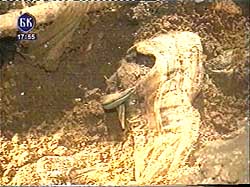
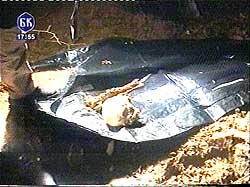
PIT WITH LIME: Bones of Ivan Stambolić
Based on what has been revealed so far from the investigation, this is what the last minutes of Stambolic's life looked like on August 25, 2000. It was one month and one day before the voters of Serbia voted against Slobodan Milosevic for the first and last time. That day, before ten o'clock in the morning, Stambolić left his apartment on Banovo Brdo for his usual morning jog; at the age of sixty-four he was in excellent condition. Lawyer Rade Paunović, Stambolic's neighbor and regular partner, could not go that time, so the former president ran alone. Sticking to his usual schedule, he sat down on a bench near the Golf restaurant to rest and wipe off his sweat. The guard of a nearby shack later said that he saw a white van stop next to Stambolic and two young men got out: one showed Stambolic some kind of identification or a badge, and the other pointed a gun at his head. The next thing the guard saw was that the van was leaving, and Stambolic was gone.
Since Stambolić did not return from jogging, the worried family started looking for him. After they made sure that he was not in Kosutnjak, and checked the hospitals, they contacted the police. Around half past two, Stambolic's son Veljko tried to report his father's disappearance at the Čukarica police station. He was told that they could not receive an application before twenty-four hours had passed. Veljko Stambolić received the same answer in SUP Belgrade. Only at six in the afternoon, a policeman was dispatched to Košutnjak, where many of Stambolic's friends had already gathered, but he did not investigate either because the mentioned twenty-four hours had not yet passed. Only the next day, the police rushed to Kosutnjak in larger numbers to search heaven and earth in the familiar style, without results, of course. This is important, because Slobodan Milošević later lied to Kir Gligorov that "the family waited a long time before informing the police, and during that time the kidnappers could have taken him across the border."
In the meantime, the family and neighbors began to recall how in the weeks before Stambolic's disappearance, they often saw young men with short haircuts near the apartment, some of whom they recognized as employees of the State Security Department, and a white van similar to the one seen by the guard. At that time, they explained their presence by the fact that many government officials live in the same area, for example Mihalj Kertes, but they became worried when they realized that the guys from DB stopped showing up after Stambolic's disappearance. When the lawyer Nikola Barović pointed out this fact to Branko Đurić, the head of the Belgrade SUP at the time, he was told that the police had checked it and that those guys were not from the RDB but telephone exchange workers (although no one had ever seen them climb on poles or laying cables). This only strengthened the suspicions of the family and the lawyer that the disappearance of Stambolic was organized by the state.
PRESSURE I WEAKNESS: Even worse suspicions were caused by the considerable silence of state media such as Tanjug, RTS and leading daily newspapers, which for days did not want or were not allowed to publish information about Stambolic's disappearance. Some SPS and JUL officials pretended to be crazy, while others were openly mocking. The then spokesman of JUL and the federal minister for telecommunications, Ivan Marković, who was recently arrested and placed in one-month detention, said at a press conference on August 31, 2000 that "the state media did not record the disappearance of Ivan Stambolic for several days, because they probably insignificant information". "You assume," continued Marković, "that the federal minister for telecommunications needs to know if someone went for a walk somewhere and did not return home." You have to ask the one who walked away where he walked away." Only five days later, Marković completed his contribution to the investigation with another statement. When asked by the viewers of Užice local television TV5 "where is Ivan Stambolić", Marković replied: "We will hear when they find him." His remark is also remembered that "the missing person will have to explain to his wife where he has been for so long, if he returns home." "
By then, Milosevic himself was beginning to feel the pressure regarding Stambolic's disappearance. Katarina Stambolić's attempts to get in touch with her husband about her disappearance failed ("he is not here, leave a message"), and the questioning of Jirža Dinstbir, the UN rapporteur for human rights whom the authorities were happy to receive in Belgrade, ended similarly. Milošević nevertheless received a phone call from Kira Gligorov, to whom he told that "he would never allow anything to happen to Ivan" and flatly agreed that the family had reported his disappearance too late.
When Milošević was finally ousted from power a few days later, family and friends, who in the meantime founded the Committee for the Release of Ivan Stambolic (OZOIS), hoped that the case would finally be clarified. It turned out that this hope was premature: Radomir Marković, one of the main organizers of the murder, enjoyed the protection of Vojislav Koštunica, while the rest of the DOS led by Zoran Đinđić wholeheartedly supported the other, Milorad Luković Legija. Radomir Marković was cheeky enough to react to an interview with Nikola Barović on October 27, in which it was written that "RDB knows where Stambolić is." "For professional and moral reasons, I have decided to wait a few days for your eventual correction of the text full of gross insinuations against the Department," says the letter with RDB letterhead that Marković sent to Živorad Kovačević, president of OZOIS. "I was hoping that these kinds of 'discoveries' were not behind your social reputation." The disappearance of Mr. Ivan Stambolic will, I am sure, be shed light on. And I am especially sure that in that 'case' there will be neither the Department of State Security, nor me as its manager."
WALL SILENCE: Radomir Marković, of course, lied, thereby confirming Chesterton's thesis that it is only one step from murder to lying. When, after a long delay, Marković was finally dismissed, the new head of the Service, Goran Petrović, moved the investigation from a standstill and disclosed that Stambolić, just like Slavko Ćuruvija, was under intensive surveillance of the Ninth Department of the RDB (monitoring and observation) until the last moment and that the guys with the van were not from PTT after all. Even this small progress was thwarted because Petrović was dismissed shortly after, at the request of Milorad Luković and Dušan Spasojević, and replaced by Andrija Savić, a proven associate of JUL.
However, long before the investigation returned to the beginning, the RDB, using its own methods, started a campaign of disinformation with the aim of directing truth seekers in the wrong direction, and preferably outside the borders of Serbia. The service persistently released "verified information" through its channels that the reasons for Stambolic's disappearance should be sought in his allegedly murky affairs in Montenegro and Republika Srpska. No amount of persuasion from Stambolić's family and friends that the deceased was engaged in any business worth mentioning did not help: even former president Vojislav Koštunica bought into the lie. When Živorad Kovačević, on behalf of OZOIS, asked for help from Koštunica, he was told to contact the Prime Minister of the RS, Milorad Dodik, and Vukašin Maraš, the Minister of Police of Montenegro. Kostunica, by the way, was inclined to think that Stambolić was a victim of an internal showdown among the communists, and as a staunch anti-communist, he was uncomfortable getting involved in it.
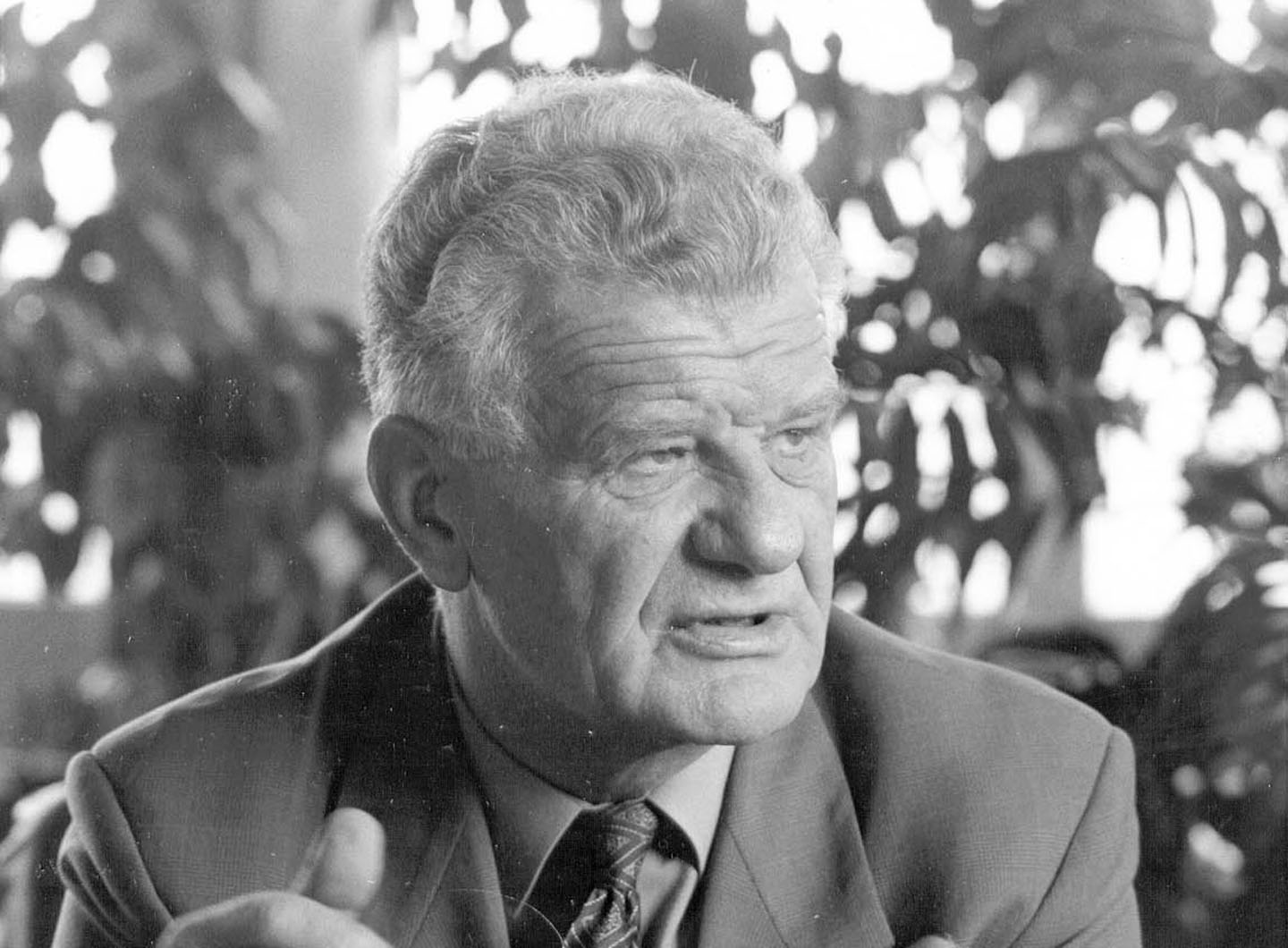
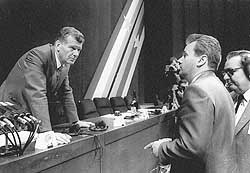
10 SKS CONGRESS: Ivan Stambolić and Slobodan Milošević
Thus, the wall of silence continued to stand until March 28 of this year, when the Minister of the Interior, Dušan Mihajlović, suddenly addressed the public and announced that the body of Ivan Stambolić had been found during the night. "His remains were excavated from a pit on Fruška Gora," said Mihajlovic. "Now we know that he was kidnapped by four members of the Special Operations Unit in Košutnjak, in New Belgrade they changed the vehicle, drove him to Fruška Gora, killed him with two bullets and buried him in a pre-prepared pit with quicklime," said Mihajlović. Mihajlović announced that the investigation established that the motive for the murder was political, in order to remove Stambolić as a possible candidate in the 2000 presidential elections. A few days later, the removal of Stambolic's bones from a shallow grave in Zmajevac was shown on television, and it was said that a fifth member of the JSO involved in the murder had also been arrested. Apart from the information that one of the suspects is Dušan Maričić Gumar, the last commander of the Unit, we also learned that Legija personally paid a fee of 20.000 marks to his subordinates for the murder, while in accordance with his status and customs he kept a part of the money for himself.
These discoveries definitely put an end to the myth of "Serbian giant heroes" who, as the national anthem tells them, walk "through blood and fire with their heads held high/on the path of victory, honor and glory." What honor and what heroism was necessary for those five strong and armed men to pick up a man well into his seventh decade from a park bench, take him to the forest and blow his head off? What kind of country is it in whose interest an order for such an action was issued?
SIZE CRIME: There is no doubt that at the trial we will hear from the accused perpetrators that they were manipulated, that they didn't even know who Ivan Stambolić was, that they, like the two who drove the truck towards Vuk Drašković, were told to liquidate an Albanian terrorist, a drug dealer, CIA agent or something. And then they were astounded when they read in the newspaper who they had executed... It is time for this society and what is left of the state to face an unpleasant truth: this is not a group of criminals who happened to have official IDs, so not even about the wild faction of the Service: in the murder of Ivan Stambolić, just as in the murder of Ćuruvija, the assassination of Drašković and Đinđić, large parts of the RDB participated, from the heads of certain departments to those infiltrated into the judiciary, media and politics. The preparation and organization of these crimes, and especially their persistent cover-up and prevention of investigation, were simply too complex to be attributed to a small conspiratorial group.
When it comes to the principals, the truth was all too visible and all too unbelievable from the very beginning: many reasonable people simply could not believe that Milosevic and his wife were really afraid that Ivan Stambolić might seize power from them. Stambolić himself did not believe in it: as a shrewd man and a former professional politician, he was aware that he belonged to an irrevocably past era. Finally, he was arrested and killed after Koštunica had already largely accepted his candidacy, when his liquidation made no sense. Was the arrow fired earlier, so it only hit the target on August 25? Was the motive for the murder ideological, or was it simply personal hatred and pathological vindictiveness to which the former first lady of Serbia was prone?
It is unlikely that we will ever get a real answer to that question, even if Marković is arrested somewhere in the depths of the former Soviet Union and extradited to Belgrade. She will lie, just as her husband and her accomplice and surname Radomir lied. It may even happen that a psychiatric examination shows that she was not responsible for her actions, in which case she will spend the rest of her life in a mental hospital. But there should be no mercy for all those many "screwdrivers" who knew very well what they were doing and who did it for fun, profit and a better position in the Service.
("Time", No. 531)
Fact je da je Ivan Stambolic Your home friend, a later political opponent. How you experience insinuations media da his disappearance ima toys sa Yours by the house? You consider da su za Ćuruvijina destiny guilty his jobs u Black Gori, dok je something similarly after disappearance Stambolić posted "Politics" samo what je guilt found u "business sa Republic Serbian". Yes li se personally interested ko bi Could da organizes tu kidnapping ie liquidation?
Ivan Stambolić was a friend of my husband. But we did not have particularly developed friendly family relations. Ivan Stambolić left politics after the Eighth Session and my husband, at his request, made it possible for him to be the director of Jubmes Bank. He no longer maintained personal contact with him. He did not have a political one because Stambolić was no longer involved in politics. In my family, there was no particular animosity towards the family of Ivan Stambolić, and we did not even mention him. New and stormy times have come. Ivan Stambolić remained in the past.
When my husband was informed about the disappearance of Ivan Stambolić a few months ago, he gave an order to the Minister of Internal Affairs of Serbia to do everything to find Ivan Stambolić or at least find out where he is and what he is doing. While he was in office as the president of the state, he did not receive this information. Furthermore, he no longer had any influence on that matter, it was transferred to the jurisdiction of other persons.
You can li however biti more concrete u see sa fate Ivana Stambolić?
I can. In 2000, Ivan Stambolić was no opponent of my husband. And as for my husband's political opponents, he communicated politically with them. He did not threaten anyone with hanging or deportation, did not set fire to their children's property, did not kick their family members out of their jobs and apartments, did not steal their accounts either in the country or abroad, did not count the companies they registered in the names of their aunts and grandchildren, did not cut their minor children's hair in elementary schools, did not ban opposition media, did not beat political dissidents in the streets, did not threaten prisons and political processes to all those who think differently from him, did not organize waiting for women - of political dissidents - according to the housekeepers of the houses where they lived, so that they would be beaten to death, he did not sue anyone who slandered him, he did not even arrest those who threatened him with hanging, kidnapping and killing.
The experience with him, as everyone knows, is not like that when it comes to his ongoing political dissenters. Why would he, after a thousand years, deal with someone whom he had completely erased from his memory and that in a way that he never "corresponded" even with current and often aggressive and cruel political opponents.
Svetlana Vasovic Makina, Igor Makina
"Everything that has been revealed now fully confirms what we have persistently claimed during these two and a half years: that it is a political crime; that the executors and organizers should be sought in the State Security Service, and the principals at the very top of the state and politics," says the Chairman of the Committee, Živorad Kovačević
The committee for the release of Ivan Stambolic has lost, at least as far as the name is concerned, the basis of its existence. The one who was searched for two and a half years with the question - "Where is this man", is no longer among the living, and that devastating fact inexorably hung over the meeting that was announced as the last gathering of this group of citizens. It didn't help that they organized dozens of protest rallies, collected thousands of signatures to establish the truth, engaged non-governmental organizations, media, international organizations and published books about the case; numerous appeals, petitions, posters, open letters, pleas, warnings and similar gestures that tried to warn the people of Serbia that something terrible happened in their vicinity did not help either; neither the questions addressed to the former rulers who defended themselves with morbid cynicism ("we'll hear when they find him", Ivan Marković, JUL spokesman), nor the pressures on the new state leaders who showed similar indifference, until they felt the force of suffering on own skin. All those actions could not even help because Ivan Stambolić was killed before the Liberation Committee was formed. Those who participated in his work eventually received an unshakable confirmation of what they feared the most. This was seen in the Center for Cultural Decontamination based on the presentation of Živorad Kovačević, the President of the Committee: "Everything that has been revealed now fully confirms what we have persistently claimed during these two and a half years: that it is a political crime; that the perpetrators and organizers should be sought in the State Security Service, and the principals at the very top of the state and politics; that our claim about the planned obstruction of the investigation in the police, prosecutor's office and judiciary was justified; that the investigation was most hindered by the detention of Rade Marković during the entire four months at the head of state security and that those who made it possible should bear the responsibility for that; that our reasoned initiative for establishing the institution of a special prosecutor should have been immediately accepted (which was primarily an expression of our total distrust in the prosecution), which was done much later. All of this delayed the clarification of this case." The other messages of the members of the Board were not much different: Veran Matić, president of ANEM, about how "it is necessary for Serbia to learn very serious lessons from the Stambolić case and all the murders committed in the last fifteen years." , and historian Branka Prpa, that "we should contribute to dismantling the system that was based on political, national and religious crime, and that this case must be followed to the end, until the trial of those who ordered and committed the crime." The lawyer of the Stambolić family, Nikola Barović, went a step further: "The same people with first and last name, the same police of the Republic of Serbia, killed the former president of Serbia and the prime minister of Serbia; they are the perpetrators of the crime against journalist Slavko Ćuruvija and the massacre on Ibarska magistrala. It has been shown that, as long as one of those who were something during the rule of the radicals, socialists and 'Julyers', is holding a public or state office, none of us will be safe and secure."
In such an atmosphere, the words of the vice president of the republican government, Žarko Korac, sounded like a kind of apology: "The problem of this government is that it inherited not only institutions that were criminal, but also a symbiosis of the state, criminals, the State Security and the police." Obviously we weren't able to break it up for a very long time. When we first tried to do that, you had an armed rebellion, eight months after the Government of Serbia was elected. Today, when you look in retrospect, that rebellion had the broad support of those who politically supported the former regime, but, unfortunately, also some parties from the new government. We were threatened with murder and overthrow from power. It turned out that the core of Milosevic's regime was very powerful in institutions that we could not reform. The shadow of danger lay over every man of democratic determination. Symbolically, they killed Zoran Djindjic. What they couldn't do on the 5th or 6th of October, they did two weeks ago, at the moment when we finally had the strength to enter that confrontation."
However, it was too late by then. The political murder of Zoran Đinđić was supposed to happen, notes Živorad Kovačević, "in order to open the gates of hell, the ball began to unravel and finally solved the second political murder - Ivan Stambolic."
That's how the answer to the question that was bothering Serbia arrived. In contrast to Stambolic's disappearance, with which they tried to deceive the rest of their own conscience, his death complicitly joined the hands of a married couple, scattered around the world.
Slobodan Kostic