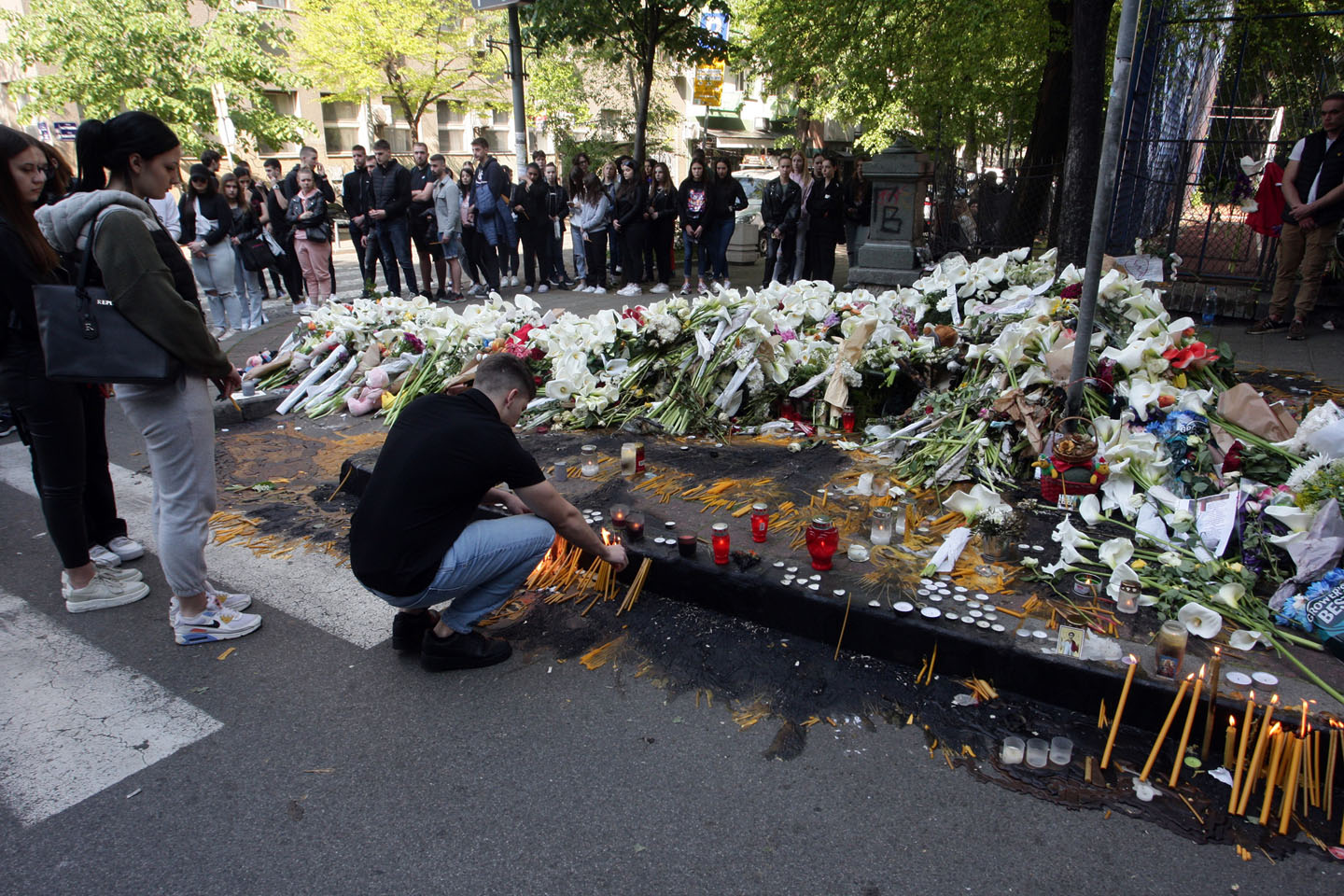
Almost four months after the tragedy, the experts of the Working Group for the Support of Mental Health and Safety of Youth are re-entering the "Vladislav Ribrnikar" Elementary School on August 21, where they will present a plan for further support to the teachers and parents of the school's students.
Psychologist Hana Korać he says for RTS that the plan includes discussions on the topics of what trauma is, how teachers can recognize it in themselves or in students, but also how to restore safety in the school environment.
Norwegian Questionnaire
The member of the Working Group stated that from September 1, children will be offered the questionnaire that was used in Norway after the mass murders of Andres Breivik, through teachers and parents, at the Children's Cultural Center.
The questionnaire measures and evaluates the child's sensitivity and psychological strength, and only the parents will receive feedback on whether there is a need to organize an individual support plan for the child.
Koraceva states that for children who will have results in the green zone, it will mean that they do not need additional help.
However, the orange and red zones indicate that it is necessary to create an individual plan of help, which requires the consent of the parents.
"If he finds himself in the orange zone, the child will be able to talk to a pedagogue and psychologist at school or someone in a professional counseling center, while the red zone will mean referral to some other instance of mental health treatment," Koraceva says.
It indicates that colleagues from Norway brought to their attention that they regretted not immediately giving the questionnaire to their children after the tragedy in 2012, given that certain changes in behavior began to appear over time.
"This is a form of prevention, in order to timely identify potential problems before they become visible to everyone," she stated.
The questionnaire will be distributed only in schools that have lost students, which are directly affected.
He points out that in parallel with that through education work on strengthening the socio-emotional competence of children, which includes caring for themselves and others, building a healthy relationship, self-regulation of emotions and behavior, but also pro-social behavior, such as sharing, achieving healthy contact.