Maybe wars are out of the question today, maybe not, to paraphrase Slobodan Milošević, but in some things the radicals/progressives went one step further and surpassed their teachers from the nineties: regardless of the fierce machinery at his disposal, Milošević did not succeed in what he today, Vučić succeeded - to abolish even the appearance of free and fair elections. Milosevic, unlike Vučić, no matter how hard he tried, failed to destroy the opposition, nor to kill the notion of that part of the citizens who believed in democracy. Three decades after the first multi-party elections, Serbia is back at the beginning
In 1990, Slobodan Milošević was faced with the challenge of the phenomenon of multi-party elections, just when he had achieved absolute power in the entire territory of Serbia, at the moment when his intra-party opponents - both by institutional and non-institutional means - were systematically beaten to the ground, intimidated and marginalized. Until then, he had gained and consolidated power by trampling over yesterday's friends and associates, playing the safe card of populism and nationalism, riding on the axiom repeated a million times about the danger of the Serbian people in the SFRY.
One of the key elements of that axiom was the autonomous provinces of Kosovo and Vojvodina, which were presented as a stone around the neck of the Serbian people and whose competences, as it was claimed, were oversized by the "anti-Serb" Constitution of 1974. Milošević skilfully brought the provinces under firm control with a kind of coup in cooperation with the secret services, winning the sympathy of many who believed that Serbia would thus strengthen and "dominate" in the federation. On the other hand - there is a lot in the memoirs of politicians - the western republics of the SFRY viewed the informal and unconstitutional abolition of autonomy almost indifferently - they were not powerful enough to oppose it, they could use Milosevic's aggressive moves for their own political agendas, believed that the heated appetites of the Serbian regime would be satisfied with Kosovo and Vojvodina. In the latter, it will turn out later, they were mistaken. Milošević gained sympathy in Serbia because of his uncompromising and paternalistic attitude towards the other republics of the federation.
photo: Draško GagovićSlobodan Milosevic…
Milošević did not want to go on a multi-party adventure, which is quite understandable for a communist apparatchik who got hold of an extremely comfortable position. In the existing circumstances, everything was arranged for him to rule for a long time, without any alternative, to be some kind of new Tito, if not in the entire SFRY, then at least in the territories of Serbia and those parts of the SFRY that nationalist Belgrade considered its own and that needed to be rounded up, politically or by other means.
Let's remember that the government in Serbia responded to requests for a multi-party system in one period with, from this point of view, a very comical proposal: there may be different parties, but let them act and fight for their ideas within the Socialist League of Working People, and the Communist League will continue to play a leading role in society. However, this idea, no matter how ridiculous it is today, did not contradict the mood of the citizens of Serbia. At the time, public opinion surveys said that in Serbia (and Montenegro) the one-party, socialist system had strong support even in the period after the fall of the Berlin Wall and the global collapse of "real socialism". While the whole world was looking forward to a new era without the Iron Curtain, state-building intellectuals and humorists in Serbia mocked liberal democracy and political pluralism. Some analysts say that the multi-party system in Serbia was actually introduced against the will of the majority population.
FORCED MULTIPARTIALITY: The thesis that Belgrade actually slept through the fall of the Berlin Wall will persist in Serbia for a long time among civic intellectuals. But still, it was impossible to go against the global inertia, against what was happening in all the countries of the Eastern Bloc - in all the former socialist countries, including the other republics of the SFRY, multi-party elections were extensively prepared or held. It was necessary to reluctantly swallow that frog, and at the same time do everything so that the introduction of multi-party system does not actually change anything, except a little cosmetically. Previously, the idea of multi-party elections in the SFRY was buried, primarily thanks to Serbia and Slovenia. At that moment, the first was against multi-partyism as such, and the second already had a planned path that excluded the joint state.
In 1990, under external pressure, Serbia passed the Law on Political Organizations, which enabled multi-partyism, and then in July of the same year, unexpectedly for many, the news echoed on the front pages: the Union of Communists of Serbia and the mentioned SSRN are uniting and creating a new organization that will be called Socialist party of Serbia, whose leader, as it was already expected, will be Slobodan Milosevic. He remained at the head of this party until his death in the custody of the Hague Tribunal in March 2006, with a small break (from May 1991 to October 1992) when he temporarily left this position to Borisav Jović because he did not want to accumulate positions. to be both party president and state president. Soon, however, he realized that in the partocratic society whose foundations he established, regardless of the state function, you must also be the first man of the ruling party if you want (all) power. Otherwise, what happened to Tomislav Nikolić many years later can happen to you. With the unification of SKS and SSRN, the Socialist Party of Serbia also inherited the property of these powerful and wealthy organizations, thus laying the foundations for its decades-long sustainability. The property was estimated at around 160 million US dollars at the time, and with it came control over almost all the media.
Although Serbia was preparing for multi-party elections, state propaganda sent the message that it was actually a forced stage in the history of society. Maybe temporary, if the USSR recovers. In the book Elections in FRY Vladimir Goati points out that in the 1990 SPS Program Basics. found the provision that "social property is the foundation of socialist economic progress". Unlike the ex-communist parties of the Eastern Bloc and other republics of the SFRY, the SPS and the Union of Communists of Montenegro did not distance themselves from the authoritarian legacy. Liberal democracy and political pluralism are not perceived here as a civilizational achievement, but rather as a faller that can weaken the state, its power and unity. Three decades later, things don't seem to be much different. What will we do if the fact that Vučić's regime introduced autocracy, abolished democracy, occupied institutions and captured society does not actually have a negative sign for a significant number of residents? If democracy in Serbia never really came into fashion?
WITH US, THERE IS NO UNCERTAINTY: Many have forgotten that a referendum was also held in Serbia in 1990, and the question was roughly whether a new constitution should be adopted first, then go for multi-party elections, or vice versa. Milošević's government advocated that it pass the new constitution on its own, that is, other parties do not ask about it. The opposition, of course, had a different opinion. Some claimed that this referendum was a kind of attempt by Milošević to examine the general mood of the citizens. Therefore, the referendum campaign was fierce, and the main message was: Who votes for YES, votes for Serbia! And so people waited in line to vote for Serbia.
Milošević realized when the results of the vote arrived that actions in the popular masses suit him very well, especially if they are supported by "patriotic" propaganda. As many as 97,25 percent of citizens voted to go to the multi-party elections with a constitution that will be adopted by one party. It sounds crazy, but that's how it was. And maybe it won't be any different even if Vučić calls a referendum "for Serbia".
photo: Draško Gagović...Z. Anđelković and A. Vučić in the parliamentary bench in the nineties
There was certainly mudslinging at the referendum, but Milosevic was still able to go to the next parliamentary and presidential elections with a calm soul, without the risk of any surprises and uncertainties. All the more so because the new Constitution adopted in September strengthened the national capacity of the SPS. Adopted in a one-party assembly, it led to the provinces losing increasingly important autonomous functions, and the president of the republic received extremely powerful powers: he commands the armed forces, establishes the existence of a war threat and declares a state of war, he can also dissolve the Assembly when it "is not able to meet" and "according to the obtained opinion of the Prime Minister". The rating of the SPS is de facto high, but it costs nothing to demonize political opponents, declare them enemies of society, intimidate them, and even beat them if necessary (case from June 1990). Something similar to today.
"With us there is no uncertainty" was the political slogan of the Socialist Party of Serbia in the elections held in December 1990. And there really was no uncertainty, everything that happened was certain. First came a convincing victory in the elections, and then disaster after disaster: the disintegration of Yugoslavia, wars and war crimes, criminalization of society, hyperinflation, economic crisis, queues in front of empty shops, sanctions, ruthless looting of state and social property...
After all, there was no uncertainty about what would happen when the Serbian Progressive Party came to power. Maybe wars are excluded today, maybe not - to paraphrase Milošević - but in some things the radicals/progressives went a step further and surpassed their teachers from the nineties: regardless of the fierce machinery at his disposal, Milošević did not manage what he has today Vučić succeeded in ending the appearance of free and fair elections. Milosevic, unlike Vučić, failed to destroy the opposition no matter how hard he tried, nor to kill the notion of that part of the citizens who believed in democracy.
PARLIAMENTARY ELECTIONS: The 1990 elections were characterized, among other things, by the decision of the Kosovo Albanians to boycott them, which would be the constant of their majority political activity until the declaration of Kosovo's independence. In 1990, "Vreme" wrote: "The biggest stain on the elections is the abstinence of nearly 776.000 adult Albanians in Kosovo. This means that the basic conflict in Serbia remains even after these elections, outside the parliament. It is wormwood in the celebratory glass of every winner in the Serbian elections". It was calculated that, if Albanians had participated in the elections, members of this ethnic community would have won about thirty deputies. But all those mandates went to the SPS.
The SPS established election rules that suited it. At that moment, the majority, two-circuit system suited only the SPS. Although this party won "only" 46,1 percent of the votes, it had 194 out of 250 deputies in the parliament. The majority system implied that Serbia was divided into 250 constituencies where one MP was elected each. If none of the candidates won more than half of the votes cast, the winner would be decided in the second round. The majority electoral system was applied only in the 1990 parliamentary elections, only to be replaced two years later by a proportional electoral system with nine constituencies.
In the elections held on December 9 and 23, 1990, Vuk Drašković's Serbian Renewal Movement (15,79 percent of votes, 19 seats), Dragoljub Mićunović's Democratic Party (7,45 percent, 7), and the Democratic Community of Vojvodina entered the assembly. Hungarians (2,64 percent, 8), as well as some smaller parties that had strong candidates in one or two electoral places. "Vreme" from December 17, 1990 wrote that the opposition was "in shock" when the election results arrived. Vuk Drašković said that "citizens voted for restraints, for Bolshevism, for the past, for darkness and for shame"; Nebojša Popov from UJDI that voting was done out of fear, making an association with the pre-war German elections; Zoran Đinđić spoke about those who did not hear that the Berlin Wall fell.
Even though the SPS had complete dominance in it, even though it was a pre-war period and nationalism and hatred were rampant from all sides, analysts of that time say that the first multi-party parliament of Serbia compared to today's progressive parliament resembled the House of Lords. And by the fact that there was opposition in it, and by the quality of MPs and parliamentary discussions.
Empirical research at the time showed that SPS voters were inclined to nationalism, authoritarianism and nostalgia for socialism. However, those who voted for SPO and DS were also inclined to nationalism. Again a similar situation as today, three decades and change later.
PRESIDENTIAL ELECTIONS: The results of the presidential elections were even more devastating for the opposition. Already widely framed as the father of the nation, an unwavering patriot who drives "the south" and stands up for the interests of Serbs around the world, Milosevic won a convincing victory in the first round, winning almost 3.300.000 or 65,34 percent of the vote. Behind him was Vuk Drašković, who at that moment was strongly nationalist, who earned slightly less than 825.000 or 5,52 percent of the votes, while the moderate, liberal and pro-European-oriented politician, candidate of Civic Serbia, historian Ivan Đurić - had only slightly more than 270.000 votes or 2,18 percent. Vojislav Šešelj, who was proposed by a group of citizens, won 96.277 or 1,91 percent, less than the leader of the Sandžak Muslims Sulejman Ugljanin with 109.456 or 2,18 percent.
Characteristic of these elections was the large number of candidates in the presidential race, as many as thirty-two (one woman), many of whom had the task of confusing and entertaining voters. They are mostly people who won a symbolic number of votes, less than they needed for candidacy. The vast majority of them soon disappeared from the public scene. Only Nikola Šećeroski remained, but more as a symbol of a time, mocking and making sense of the democratic process, a kind of White Preletacevic long before White Preletacevic. It is interesting that the fewest votes were won by Hercen Radonjić (only 847) from Crvenka, who did not fade into anonymity forever. Better connoisseurs of political situations remember him as a long-time councilor in the Kula Municipality Assembly, who was known for his eccentric performances and ultra-nationalist views all these years, until his death. Analysts say that the SPS and Milošević managed to achieve convincing election results primarily because, much before others, they more convincingly and fiercely got hold of nationalism, which was a characteristic of almost all post-socialist societies in that period. They practically occupied the space that should have been occupied by the opposition. An important factor was that they successfully combined nationalism - which is a winning combination all these years - with social demagoguery. Of course, we should not neglect the extremely strong public-state apparatus that stood behind them and the control of the media, which is also a constant of the elites in power, and which weakened only in the period from 2000 to 2012. While Milošević relied on the control and instrumentalization of state media, Vučić bases his propaganda on private media, which are more unscrupulous, and which are also in different ways at the state's manger, generating enormous revenues.
As for the public-state apparatus, it must be said that in this respect Serbia (and Montenegro) is the worst of all children. In other countries too, this apparatus was extremely powerful, but almost everywhere there was a change of government. It is very possible that this question is relevant even today. And perhaps the answer to both questions is identical: how is it possible that Milošević and the SPS won full electoral dominance during the nineties in addition to all the problems faced by society at that time (which still could not accept the NATO bombing) and how is it possible that Aleksandar Vučić and his SNS today the absolute master of our lives? There really is no uncertainty with them.
ELECTION IRREGULARITIES AND WEAK OPPOSITION: According to the testimony of the political actors of the time, the opposition in Serbia in 1990 was very weak. In question were mostly political enthusiasts who started from scratch, without a large party membership and branched party network, and on the other hand they had an opponent with the entire state infrastructure. Something similar to today. Just like today, the characteristic were fights and various shenanigans between opposition members, which the regime media were very happy to broadcast. The government kept the media under control, and the opposition concentrated its strength in order to be represented on RTS. This was understandable at the time, as the television media scene was scarce and state television had a huge influence. It is less understandable that even today, when the opposition demands regular media election conditions, it concentrates on RTS, despite all the media explosion that happened in the meantime. In the aforementioned book, Goati mentions that at the beginning of multi-party election programs on RTS, unlike today, the opposition was relatively well represented, but that the problem was in the overall information program, which was dominated by what is now called " official campaign".
Of course, even then there were numerous election irregularities that the opposition pointed out, even threatening to boycott the elections. In contrast to today's uncompromising government, in 1990 the socialists yielded to the opposition in some matters and accepted some of its proposals for improving election conditions. Due to this concession, but also due to the prevailing opinion that the first multi-party elections represent only a stage in the democratization of society, the opposition still made the decision to participate in them. Regardless of the powerful public and secret state, it seems that the pressures on voters were less than today. Multiple voting, manipulation during the counting of votes and abuse of written voting were pointed out even then. At the same time, the opposition could not effectively control all election places, especially not the one in Kosovo. However, the very fact that the opposition participated in the elections reduced the credibility of its remarks, so international organizations and observers declared these elections "free".
PEKIĆ CASE: As an example of how Serbia always chooses wrongly, and catastrophically wrongly, the case of repeated elections in the Belgrade municipality of Rakovica is often cited. In 1991, when SPS deputy, writer Miodrag Bulatović died, war criminal Vojislav Šešelj, car mechanic Radoš Karaklajić from SPS, writer Borislav Pekić on behalf of DS and professor Jovan Marjanović from SPO. On Milosevic's orders, the SPS handed over its infrastructure to Šešelj, and in order to make it easier for him to pass, he nominated a weak candidate who was convicted of theft. Sešelj and Karaklajić made it to the second round. Šešelj then got hold of the assembly and we have not gotten rid of him to this day, and in the meantime his disciples devoured the state and the opposition, including the SPS.
Veliki Pekić said that he did not regret participating in the elections. He said that he didn't even believe that he had a chance, although he did everything he could, and spent the day and night in Rakovica talking to the citizens. "The main thing is not to look at the clock. Victories are not won in a second, or in a day, or in a year," he said. And he was wrong. In Serbia, victories are not won even for decades. And now, as far as democracy is concerned, we are where we were in the early nineties, and maybe the situation is even worse. In any case, in the meantime we are left without any hope.
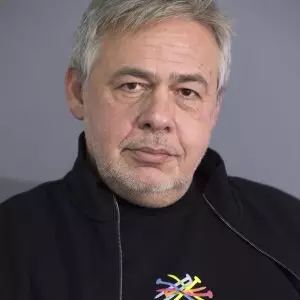
Miklos Biro - Election theft is more certain today
Professor of psychology and long-time researcher of public opinion, Miklos Biro, says that the key reason for the victory of the communists in Serbia in 1990 was "their dressing up as nationalists." Under the maxim of "protection of Serbian interests" fear of "external enemies" was pumped up and national homogenization was created. "Such homogenization creates a gap between 'us' and 'them', whereby we are good, brave and honest, and they are corrupt, dirty and genocidal - therefore, dangerous for us, so they should be destroyed." That rhetoric dominated the media space and defined the political discourse," Biro recalls.
He says that this was not the only advantage of the SPS in relation to the opposition. "Financial resources were immeasurably on the side of SPS." When you don't have media and you don't have money, you don't have political marketing either. The rare opposition posters looked ridiculous compared to the duplex posters and billboards of the SPS. Those 'doubles' (the image of the candidate next to the image of Milošević) were a powerful means of indicating the ideological context of the candidate and a skillful use of the popularity of the current Leader. It must be admitted that their marketing was really professional. When their slogan 'With us there is no uncertainty' appeared, we all laughed sweetly. For even a thinking voter, the SPS was a party that clings violently to the retrograde communist tradition and is clearly leading us all into a civil war, in order not to stay in power at all costs. But the reality was different. The majority of voters, especially those who were on some form of state manger, were afraid of the changes because they did not know what they would bring. For them, that message was a real hit," says Biro.
The Bureau reminds that in addition to finances, the SPS also had a state apparatus. "Along with the ordinary theft of ballots and sacks with filled ballots in places where the opposition had no control (eg in Kosovo), voter lists were also a source of manipulation. The one who controls the voter lists and controls the Ministry of Internal Affairs that issues ID cards, can suddenly produce a significant number of 'dead souls', i.e. fictitious voters. After the fall of the regime in 2000, it turned out that the voter lists had an excess of as many as 500.000 people compared to the data from the population census!" he says.
"And now, when we compare the conditions in 1990 and 2022, we can only cry." The media situation is even worse, and the state apparatus is even more under the control of one party and undoubtedly more reckless, and the possibility of election theft is even more certain," the Bureau concludes.
The text is part of the project "Improving Democracy in Serbia", which the weekly "Vreme" is implementing with the support of the American National Endowment for Democracy (NED). The project "Encouraging Public Debate on Democracy Ahead of Elections" is funded by the National Endowment for Democracy. This text, the entire content and the views expressed are the sole responsibility of the weekly "Vreme" and in no way reflect the views and opinions of NED.
What is happening in the country and the world, what is in the newspapers and how to pass the time?
Every Wednesday at noon In between arrives by email. It's a pretty solid newsletter, so sign up!
How were the cases kept out of control, the investigations directed towards the citizens who sought protection, and the prosecutors were left without answers from the police? Branko Stamenković talks about the findings of the commission of the Supreme Public Prosecutor's Office, the responsibility of his colleagues and what is needed for the institutions to work according to the law again
Who now decides on the Government and the program, the plenum or the deputy? There are different views on this in the Student Movement and among the people on the list, but a middle solution is being sought, "Vreme" learns. Be that as it may, the program of over a thousand pages already exists
The outgoing government treats the state like an apartment from which it moves out after losing a dispute. And all the time she shouts loudly that her neighbors are demolishing the building
"The main priority of the new government should be the preservation of employment and the growth of the standard of the population. And this will not be easy to achieve at all, because we will have a decline in employment in clientelistic companies that cooperated with the former regime. Some will close, but the important thing is that many people will lose their jobs. In the case of large private companies that are experiencing difficulties, the government should commit to better owners taking over these companies in order to save thousands of jobs. We will already have this case with Davora Macure's companies, among which is "Idea"
How much money from the Growth Plan has been irretrievably lost for us, how much has been frozen and how much is still waiting for us? What should Serbia do in order to receive these European funds and what will the citizens get from it? Is a new chapter in Brussels-Belgrade relations beginning?
Aleksandar Vučić does not constitute reality with his language, but an illusion, the only thing is that now he will no longer be able to impose the illusion on police batons and paid beaters. He showed this at the constitutive session of the National Assembly
On Tuesday, November 17, the constitution of the National Assembly begins, in which the Student List has an absolute majority. Why is this day historic for Serbia?
Aleksandar Vučić would like Serbia to be grateful to him for not turning the election defeat into violence. Before that, he would have to explain what the preparations for election night were for, first of all in Pionirski Park
The archive of the weekly Vreme includes all our digital editions, since the very beginning of our work. All issues can be downloaded in PDF format, by purchasing the digital edition, or you can read all available texts from the selected issue.