There are movies, and there are also books in which the main character, when he finds himself behind bars, recalls his life from childhood, boyhood, youth to the one that led him to prison. Whether the same procedure will be applied when it comes to the novelization of Milorad Luković's biography of Legija - critical or apologetic, whatever - remains to be seen. Currently, the only thing that is indisputable is that he is in the Central Prison in Belgrade.
Legija was born on March 15, 1968 (although 1965 is also stated as the year of birth) in Belgrade as Milorad Ulemek. His family - father Milan, non-commissioned officer of the JNA, and mother Natalija, a housewife - originally from the village of Pecka in Kordun, Croatia.
What was Milorad like as a kid? Testimonies differ. According to some of the people who knew him at the time, he is a normal boy, with normal worries, who attends a music school and is called Misha. Others state that very early on he belonged to a group of teenagers from around the "Yugoslavia" hotel in New Belgrade where he lived, with whom it was not recommended to socialize, let alone hang out.
The only thing that is certain is that Legija, then with the nickname Cema, fell into bad company at one point: he replaces school books and music with cement weights, sit-ups and push-ups, an "important" posture and dreams of easy hunting. Participating in the robbery of Elan's store in New Belgrade and fleeing the country to avoid arrest was somehow a logical sequence of events.
According to some reports, he briefly tried his luck in London, and then, thanks to his biceps and physical strength, he found a job in Paris as a bouncer in a night club. There, in a fight, he accidentally killed a man. Acquitted of murder charges but under the threat of deportation and prison in Yugoslavia, Cema saw the only way out in the French Foreign Legion.

RAW, CRUEL, INTELLIGENT: Legion
The information about what he did in the Foreign Legion is, again, contradictory. The Foreign Legion never gives information about its active and former members over the phone, and when it comes to the written way, it is anything but up-to-date. The information that he spent seven years as a legionnaire, that he fought in Chad, in the Middle East and similar comes from the Legion itself; if he was born in 1968, he could not join the Foreign Legion before 1987.
According to one version, Cema spent four years in "6th" Regiment Foreigner de Genie (6 REG). This unit was formed on July 1, 1984, in the barracks St. Morice The Ardoise, Avignon; it consisted of two battalions - CCS & Fighting (750 engineers, specialists and builders). According to the second, Milorad Ulemek served as a sergeant in the 1988th battalion from 1992 to 4.2eme Regiment foreigner some Parachute" in Calvi in Corsica (a battalion specialized in sabotage, sabotage and sniper combat). "Vreme" received information from a reliable French source that the Legion has the status of a deserter for the Foreign Legion.
Again, the data do not agree on when he appeared in Serbia. Some claim that it was in the fall of 1991, others that at the invitation of his uncle, Mihajlo Milet Ulemek, the "colonel" of the Serbian Volunteer Guard, Željko Ražnatović Arkan joined this paramilitary formation in early 1992.
Milorad Ulemek, now called the Legion, brings training, drill and various kinds of "traditions" from the Foreign Legion to the Arkan's Tigers; it is said that in the SDG barracks in Erdut he had a stone with the inscription "Mr. Discipline", the purpose of which was for the disobedient to carry it for kilometers in a backpack and that later, after the retreat, he transferred it to the base of the Special Operations Unit in Kula. His attitude towards Arkan is described as a mixture of respect and fascination with the image and work of the Commander, which was often a mere imitation. In any case, as the operational commander of the Tigers, he is at war in Eastern Slavonia, Krajina, Bosnia and Herzegovina... The war path of Arkano's SDG is the subject of the study and indictment of the Hague Tribunal; however, many who met him during those times in the Legion do not dispute his great personal courage.
He not only fought with Arkan Legion, but also entered into various types of business, both in Eastern Slavonia and Republika Srpska, as well as in Serbia; for example, in the mid-nineties he "kept" the Zombi disco in Belgrade. For reasons known only to him, Legija changed his last name to his wife's - Luković at the wedding in 1994. That marriage will be short-lived.
After the signing of the Dayton Agreement, the wars in Bosnia and Croatia end: the Legion, unlike its Commander, does not transition to civilian life. Since 1996, he has been the deputy commander of the Special Operations Unit of Frank Simatović Frenki; The MUP of Serbia recognizes him as the colonel he held in the SDG - which somehow comes logically, because at least half of the composition of the JSO at that time was made up of "Arkanovs".
During 1997, the Legion de yure takes command of the Unit and, after Simatović's retirement, in early 1999, he becomes i de facto its commander. In that capacity, he fought in Kosovo in 1998/99. and, as it is claimed, he was the only person after the dismissal of the head of the Department of State Security, Jovica Stanišić, who remained in the collegium of the new head - Radomir Rada Marković. His experience from earlier years seems to be at a special price then: the assassination on the Ibarska magistrala, the murder of Ivan Stambolić and probably many other things that testify that he was the main "cleaner" of the Milošević-Marković married couple.
No one described Legion as a fool: he met October 2000, 4, aware that Milosevic's regime was unsustainable and that he had to change sides in time: his negotiations with Zoran Đinđić, held on the evening of October 2000, XNUMX, in an armored jeep parked in front of the building, are known in Admirala Geprat Street, from which two and a half years later the Prime Minister will be assassinated. Legija then told the late prime minister that he had orders to liquidate the leaders of DOS, but that the JSO would be on the side of the citizens if there were no attacks on it.
After the formation of Djindjic's government, the Unit and its commander enjoyed public attention and the respect of the new authorities. However, after the arrest of Rada Marković in February 2001, when it was first hinted that JSO might be disbanded, problems began for Legija. Namely, although lukewarm and limp, many investigations into various crimes and professional murders, such as the assassination on the Ibar highway, led to the Legion; in addition, the Unit was not only the long arm of the RDB but also an important money-making machine in the flourishing world of organized crime.
After the murder of Arkan in January 2000, Legija gained new friends - Dušan Spasojević Duća, Mile Luković Kum and the rest of the group from the Zemun and Surčin clans. Allegedly, the acquaintance came through Legija's second wife, the widow of an SDG "officer". In any case, using a Unit that suited only him and was practically without anyone's control, Legion became a partner in the business of drugs, kidnappings, murders...
Nevertheless, the JSO, despite the increasing suspicion of Djindjic and some others in his government, continues to perform special tasks such as crushing the rebellion in the area of Bujanovac, Medveđa and Preševo municipalities or arresting Slobodan Milošević... However, the Legija is no longer the "old" one. For several years, he has been making various outings in bars and discotheques, trying to become an urban, Mangup myth. He lined up the owners of expensive cars, put up pictures of Radovan Karadzic and threatened the bosses that if someone stronger tried to take it away from them, they would call him, and if someone weaker dared to do so, to defend them, he slapped the owners of taverns and rafts if they mistreated the waiters, left big tips to those same waiters, but also made a living from them if they didn't serve him properly (a glass of "Jack Daniels" without ice like "guard" - it is never touched; the second glass "jack" with ice from which to drink; the "red bull" can on the left - the glass for "red bull" on the right), shot at the ceilings, but also around people leaning against the wall... Fueled by alcohol and drugs, up to the neck with Spasojević in classic organized crime, Legija first sets fire to the disco in Kula, after which he is supposedly suspended, and after the shooting at Svetlana's birthday Cece Ražnatović in the club "Stupica" and three days of detention, he leaves the Service and becomes a pensioner.
All this does not mean that Legija has calmed down. His circle of friends and acquaintances from the former and current government is significant, large and influential; mediation between mafia clans, businessmen and authorities is sought day after day and night after night; his power in the police and the Service is intact, so according to his interests, he sometimes "feeds" one part of the quarreling DOS, another time another; finally, the guys from the Unit are still loyal to him to the point of imbecility, and the "businesses" of the Zemun clan do not know the limits of profit... In a BMW, accompanied by two "Puchs" and counter-escorted, with a whole company of bodyguards from the Unit, the Legion cruised through the city and seemed to be untouchable. When the representatives of the families of the victims suspected him of the murder of four SPO officials on the Ibar highway, the Prosecutor's Office did not consider that there was solid evidence. At the trial for this crime, at the moment when Legija was being questioned as a witness for the second time, an armed rebellion of the JSO took place under his direction (November 8, 2001). The Unit's participation in the arrest of the Banović brothers at the request of the Hague Tribunal was used as a reason; basically it was about the Legion's need to secure and threaten. He got everything he asked for: his security authority from the Unit, Milorad Bracanović, became the deputy head of the Service, and on November 15, 2001, the JSO was transformed into fresh unit and placed under the direct authority of the Minister of Internal Affairs, i.e. the Government of the Republic of Serbia and under the command of the head of the Department of Public Security, Colonel-General Sreten Lukić. Should it be said that no one was ever punished for this coup and that the attitude towards the rebellion, that is, Legion's interests, was the reason for one of the fiercest conflicts within the then DOS, that is, the federal and republican authorities. "It wasn't a riot at all," Legia declared. "If it had been a rebellion, I guarantee you that that evening all the government premises and organizations would have been occupied, and they would not have even noticed." How much truth there was in his words is also evidenced by the fact that almost all members of the government's security of Serbia left the building in those critical days.
This style of life and everything it carried contained within itself the germ of destruction. Especially after the armed rebellion of the Unit, Zoran Đinđić increasingly saw in Legija and the Zemun clan someone who attacks not only every government in Serbia, but also the very substance of the state; their arrogance knew no bounds. Dragoljub Mićunović says that at one time Đinđić told him that - if the JSO wanted to kidnap them - there would be no one who would be able to defend them. After Ljubiša Buha Čumet's public accusations that Legija and Spasojević were responsible for numerous kidnappings and murders, and after his willingness to testify about it, the de facto commander of the Unit went into action again. After the attempted assassination of Chumet, his Defense Road was also blown up, and then Legija attacked the government with an open letter to the public entitled "Where are the limits of human and Serbian dignity", and ended it with the statement: "The measure of my life is the size of national dignity and patriotism that I carry within me, not the amount of subservience and condescension that I show towards others." For Legija, Đinđić became enemy number one: according to the text of the indictment, they are planning assassinations one after the other with a simultaneous political campaign and partying with everyone who wants to party, in which radical leader Vojislav Šešelj is one of the most important megaphones... And then March 12 dawned.
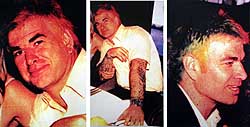
Those who knew Legia describe him as a man of unstable behavior, harsh, raw, cruel, undeniably above average intelligent and capable, a skilled liar, persuasive, charismatic in his world. Everything about him revealed extremity and a kind of pathology: colorful with tattoos like a snake, he was prone to all possible disguises; after partying in night clubs and after incidents in Belgrade, in the morning he would behave like the most normal man among his own - he would shoot a certain number of bullets at some shooting range, give reasonable and precise orders and, in general, act like a solid, calm person. One of the people who knew him says: "The Legion is a beast. And the animal does not voluntarily go into the cage if it does not think that it will get out of it quickly or if it does not think that it is its last refuge from other animals."