In order to survive the daily life of the media in today's Serbia, the average person needs a good stomach, but also an excellent memory. Otherwise, he can believe in various "exclusives" served by the regime media.
So "Informer" published the secret under the label "megaexclusive"block list" with 250 names, claiming that it is the "final" even though some names were on it twice, for example Nemanja Vidić, and even three times like lawyer Mario Reljanović. Some jokingly said that Reljanović needed two more appearances before he could form his own parliamentary club.
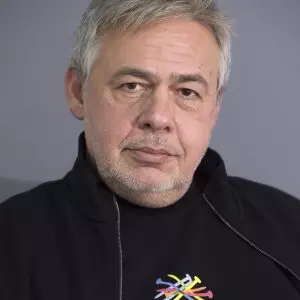
Vladan Đokić, rector of Belgrade University, is in first place on the published list. Among the most famous names there are Nemanja Vidić, Dejan Bodiroga, Milo Lompar, Jovo Bakić. There are also many local activists and professors, but most of the names are not known to the general public.
According to the knowledge of "Vremen", students in mid-July, they put together a working list of possible candidates from all universities. Then hundreds or thousands of students have an insight into it, so it's no wonder that the matter easily gets out of hand.
"Students told us that it could easily be leaked to the media and that then the name-calling could start," one person from the circle of potential candidates told us.
It will be, therefore, that "Informer" came to the first working version - full of duplication, with who knows how many in the correct order and who knows how many names that will not be on the list at all in the end. Some will certainly be stopped by the veto, others may withdraw on their own, as actress and producer Bojana Maljević did last week. The list, therefore, is not even close to the final one.
On it, even the closest to the "final" could be the number one spot for the rector of Belgrade University, Vladan Đokić, who in an interview for the last issue of "Vremena" confirmed for the first time that students asked him to be on the list and that he answered in the affirmative.
"If the students think I can help, I will accept it," Djokic said. "But I can't say that since the list hasn't been finalized yet. The students are right not to present the names of the candidates from the list before the elections have been announced."
The problem with the "Informer" special reveal is that it is not the first of its kind. On-duty media analyst Nebojša Krstić, three months ago, symbolically on April 1, on World Jokes Day, published the "currently valid complete" list on the X network, which is very different from the one published now. There will be a lot of such work for the government officials, because the version of the student list will change many more times, and the really "final" version will not be known until it goes before citizens and notaries, to collect signatures of support.
While the government and its members do their work, "Vreme" reveals how the students really chose the candidates for their list. Prime Minister Đuro Macut, who received the offer to be Prime Minister from Aleksandar Vučić when he went to register his car, would hardly believe what we learned by talking to students from the movement.
The students created a system that is quite complicated, slow, but to the horror of every autocrat - democratic. Currently, more than eighty plenums at the level of the whole of Serbia are involved in the process of forming the Student List. In the entire process, all the faculties and universities that were originally part of the student protests still participate uniquely.
DIVISION OF MANDATES
Two hundred and fifty places on the Student List are divided among a total of six university cities - Belgrade, Novi Sad, Niš, Kragujevac, Novi Pazar and Kosovska Mitrovica. Places are divided according to the number of students in each of the mentioned cities, which in practice means that Belgrade received the largest number of places on the list.
In order to avoid "Belgradeization" - a problem that almost all political options in the country suffer from - the places on the list are arranged so that each of these six cities has its own candidate at the very top of the list. All other places are then distributed according to a specific algorithm, as the students explained to "Vreme", which ensures that candidates from all faculties are evenly represented.
Each university center had complete freedom to choose candidates on a free basis, so some smaller university centers decided that all faculties choose candidates together, while Belgrade decided that the 51 plenums of faculties that were in the blockade choose their candidates individually.
HOW TO BECOME A CANDIDATE AND WHO CANNOT BE ON THE LIST
When we talk about the conditions for "entering" the list, the students seem to have decided to prevent any attempt to insert regime candidates or opposition cadres. The criteria were set before the request for the calling of extraordinary parliamentary elections was presented to the public and have not been changed since then.
First - the candidate must not be a student. Then there is a political filter that is quite rigorous - the candidate must not be a person who has ever been a member of one of the parties in the ruling coalition, from the Serbian Progressive Party, through the Socialist Party of Serbia and the Serbian Radical Party to the United Peasants' Party and the Serbian List.
As for candidates who were members of opposition parties, the condition is that the person has never been an official of one of the parliamentary opposition parties. That criterion, "Vreme" learns, was not respected strictly, but the students left room for the candidate to be someone who was a member of the opposition parties and also an official at the local level, if they estimate that this person can contribute to the common struggle.
In addition to the condition that the potential candidate must not be convicted - the law is more lenient and says that a deputy cannot be a person sentenced to a prison sentence of more than six months - the students added another elimination criterion: the potential candidate cannot be someone who was a member of the executive or legislative branch on behalf of the current ruling coalition, even if he is not in a party. In addition to these strict rules, there are also positive criteria that are a matter of argument among students about whether a potential candidate reflects the values and spirit of the movement itself.
The actual selection of candidates at all faculties in Serbia took months according to the principle of deliberative democracy. This means that decisions are not made by simple outvoting, but are discussed, sometimes to the point of exhaustion, in order to find consensus. If a full consensus is not reached, a vote is taken only at the end.
Law student Petar Živković explains for "Vreme" what that process looked like at the Faculty of Law in Belgrade: "At our plenum, every student who had a vision of who could be a candidate could propose it, explain why and present his biography. After that, several hours of discussions about potential candidates were held."
After this process, law students voted on the proposed candidates and those with the most votes were chosen to be on the student list.
Provided they agree, of course. Several "Vremena" sources confirmed in early spring that they were contacted by students from one or another faculty and asked if they wanted to be candidates for the list. Some accepted it, others did not. Some plenums, on the other hand, made decisions about who to run for later.

photo: lenka pavlović...
SISTEM "VENTILATIONS"
As the student movement, colorful by political convictions as well as the entire citizenry, held together from the beginning, it was clear to them that the list of candidates cannot be a patchwork carpet to which everyone adds what they want, without the consent of the others. That is why the famous "vetering" was introduced. When the preliminary student list is made, all candidates on it are subject to the process of "state confirmation", i.e. vetting. This is currently underway at the level of the entire country.
Petar Živković explains that this implies a process of candidate verification, where each faculty can veto and explain why a candidate should not be on the list - whether it believes that he does not meet some of the criteria or that he does not share the values that the students stand for.
A plenum that objects to a candidate being on the list sends arguments to all other faculties, and other plenums have the opportunity to give opposing arguments. In the end, all faculties vote for each candidate, and in order for someone to be removed from the list, more than half of the total number of plenums must agree. Nevertheless, Živković states: "Regardless of whether someone is vetted or not, it does not mean that he is not an ally in our fight. We have a lot of people who are in the role of advisors."
"Informer" and other regime newspapers published a letter that actress Bojana Maljević sent internally to the students of the University of Arts in Nis. Those media claimed that the students in Belgrade vetoed her candidacy, which the students from Nis later denied. As the public learned from Bojana Maljević's letter - which was also first leaked to Juronujz - the students decided to make "vetting" a permanent process. This means that practically until the submission of the list, one of the candidates can be replaced by another candidate.
Bojana Maljević saw it as replacing trust with control. "I have no qualms that the joint list of several universities should go through a one-time check of the candidate's integrity. I consider such a veto a legitimate and responsible mechanism for protecting the list. When suddenly (as of the other day) it becomes permanent veto, it stops checking integrity. It becomes a mechanism of political control", wrote the famous actress and professor.
The students, on the other hand, wanted to protect themselves in this way from possible fly-bys or people who would discredit themselves and thus the list by some action of theirs in the public. Namely, there are maybe two or three months until the election, and maybe even more than a year.
When asked if they consider it legitimate for a candidate to withdraw from the list, Živković answers: "Absolutely. We really appreciate anyone who honestly says that for any reason they do not see themselves in that role, because the pressure and expectations are high." He adds that they definitely need the written consent of the candidate and that they do not want to target anyone, and that they always have a number of reserve candidates in case a person drops out.
IDEOLOGY, LUSTRATION AND D-DAY
The part of the bazaar that is critical of the government did not clarify the list published by "Informer" because it was more or less expected - people of different profiles and beliefs, as the students announced. How to gather all those people on catch all leaves?
Živković does not hide that there are different ideologies among candidates and students, but he emphasizes that the most important thing is to stick to the initial student demands - that the institutions do their job.
Students also respect the autonomy of the university, so they did not conduct interviews with the candidates themselves at the faculty. Potential candidates are also expected to sign a declaration of respect for the Constitution and the program of the future Student List. The latter is legally null and void. At least from the moment the list is submitted. Because whoever becomes a deputy will be the holder and owner of his mandate, and the student movement, that is, the group of citizens that submits the list, can no longer take that mandate away from him.
When asked if the candidates are asked to support the student movement in a blank form, considering that the official program of the student list is still being developed, Živković says: "Both the candidates and the citizens of Serbia are familiar with the 'social agreement' that we announced last year, which concerns the fulfillment of all student demands, independent judiciary, environmental protection, education, agriculture, labor rights, culture, national interest..."
Živković emphasizes that the candidates are familiar with other program documents, but also with the students' vision for Serbia, which, he says, is no different from how students perform in public.
Students have already presented several program points at meetings in Novi Sad and Belgrade, concerning lustration, the law on the origin of property, labor rights, health and justice, and as the interlocutor from the Faculty of Law reminds, the determination of criminal responsibility must not be forgotten.
FINAL STUDENT LIST
While the government officials publish "mega-exclusive" allegedly final lists of Student List candidates in the regime tabloids, Živković says that it will be completed soon, but adds that the citizens will only be able to see the official version when the elections are announced.
And who knows how many of "Informer's" student lists will be seen by the day when it is officially published on the day of the parliamentary elections. Until then, the authorities of Aleksandar Vučić and his media have to fight with windmills and the fear of losing the election, and the regime is doing badly in this business. According to the latest survey by Crta (see text on the survey), support for the Serbian Progressive Party is currently at 35,7 percent, and the student list at 44,9 percent. That may change, but it is unlikely that citizens who have decided to support the Student List will change their minds when they see who will actually be on it.
Real journalism costs money, and we will not be bought by tycoons and corporations. Support us with a one-time or monthly donation. The time for it is now!