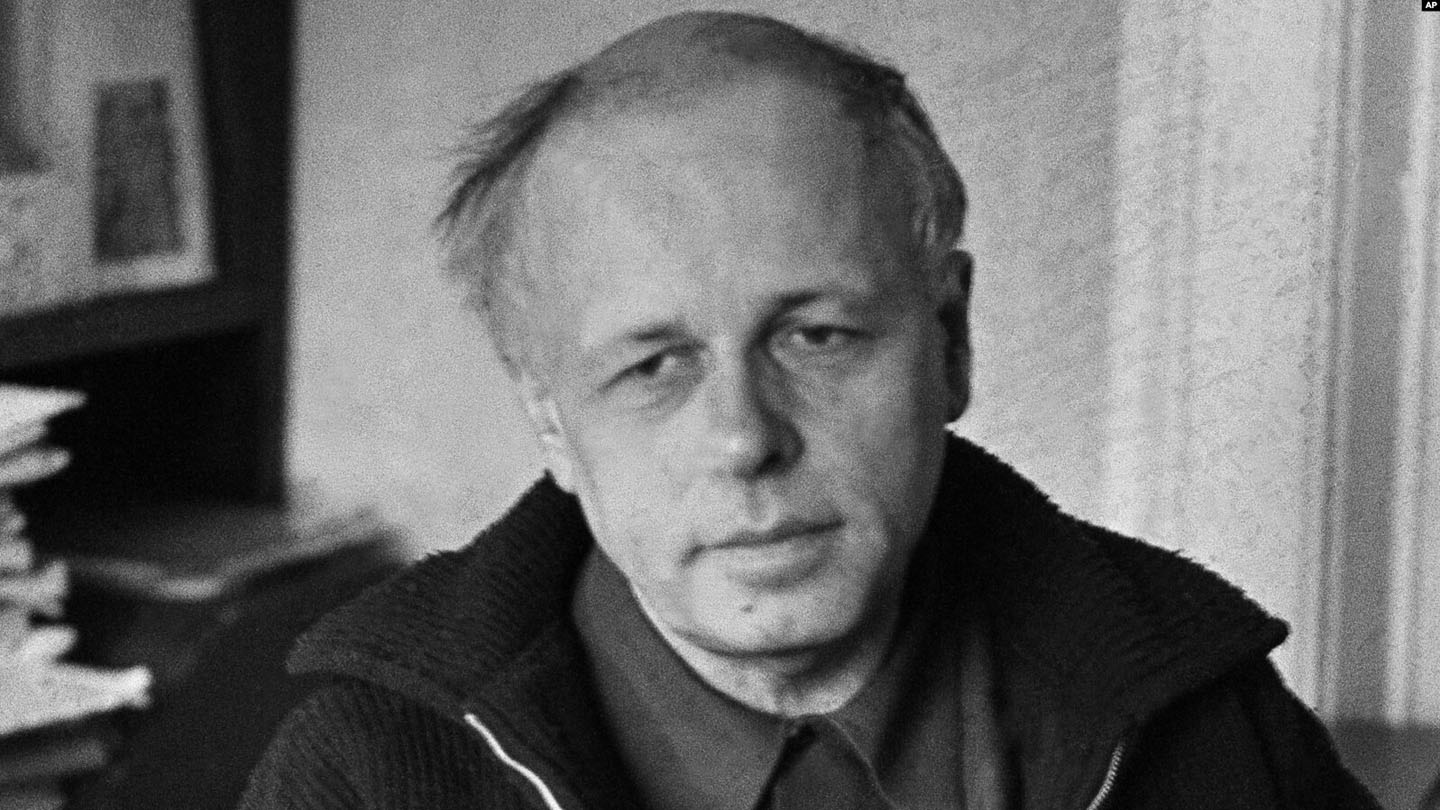
The Supreme Court of Russia accepted the lawsuit of the General Prosecutor's Office and on December 28 decided to liquidate the international organization Memorial, officially founded in 1992 in Moscow, which began its work in 1987. One of the organizers and the first honorary president of the Memorial was academician Andrey Sakharov. The first president of Russia It's Boris Yeltsin was on the Memorial council.
The main task of the Memorial International Historical, Educational, Charitable and Humanitarian Society was the study of political repression in the USSR. Since 1989, over 1.500 monuments to victims of political repression have been erected in Russia, 210 of which are in Moscow.
In Russia, about 300 public figures opposed the shutdown of this organization, including 62 academics and corresponding members of the Russian Academy of Sciences. In an open letter, they described the liquidation of the Memorial as "an attempt to deprive the nation of its memory."
The Yeltsin Center also spoke out in defense of the Memorial, just like the winners of the Nobel Peace Prize Mikhail Gorbachev and Dmitriy Muratov, who called on the prosecution to settle the case out of court and drop the lawsuit.
The memorial was liquidated by a court decision due to "systematic violation of the law on foreign agents", which, as Russian officials repeat, was adopted in imitation of the law of the same name that has been in force in the USA since the 1930s. According to that law, NGOs that are financed from abroad must state in every published material that it was written by an "organization that has been declared a foreign agent."
The pro-government "Izvestia", citing "informed sources", writes that the Memorial received 2021 million rubles from foreign sources in the first half of 189, 2019 million in 131,2, and 2020 million rubles in 147,8. According to "Izvestia", the foreign sponsors of the Memorial are the Friedrich Naumann Foundation, the Heinrich Bell Foundation, the Kerber Foundation and a number of others. At the hearing, information on monetary income from the USA, Germany, and Luxembourg was announced.
The memorial was entered in the "register of foreign agents" in 2016. Organizations declared as foreign agents according to the aforementioned law can continue their work, but some of them, such as the Anti-Corruption Fund of Alexei Navalny, have been declared extremist and therefore banned.
During the hearing before the Supreme Court on December 28, the prosecutor accused the Memorial of "creating a false image of the USSR as a "terrorist state" in recent years and of "rehabilitating Nazi criminals whose hands are the blood of Soviet citizens."
Prosecutor's Office spokesman Alexey Zaffyarov said that the Memorial speculates on the subject of repression and that it is involved in the rehabilitation of "traitors of the homeland", that it complains that instead of the state it is working on the rehabilitation of victims of repression, although the Prosecutor's Office alone has allegedly rehabilitated 1991 people since 500.000, and the Ministry internal affairs three million. Žafrjov claims that in the past two years, Memorial International has never approached those institutions with a request to declare anyone a victim of repression.
"Why are we now, the descendants of the victors, forced to watch the attempts to rehabilitate traitors to the fatherland and Nazi accomplices... Probably because someone is paying for it," emphasized Zhafyarov.
The Veterans of Russia demanded that the Memorial for the Rehabilitation of Nazism be brought to justice, and the Russian Ministry of Justice and the Russian Federal Service for Supervision in the Field of Communications, Information Technologies and Mass Media Roskomnadzor advocated for the liquidation of that organization. President Vladimir Putin had expressed hope that the trial for the liquidation of the Memorial would be objective.
The defense of the Memorial called the lawsuit unfounded and announced that it intends to appeal the decision by all legal means, that it is an international organization with branches in several countries that deals with research and educational work and human rights, and that it cannot be liquidated in the way that's what the Prosecution is trying to do.
The head of the Commission for Human Rights of the Council of Europe, Dunja Mijatović, gave support to the Memorial, and the presidents of Estonia, Latvia, Lithuania and Poland expressed concern about the "ending of Russian history".
Given the heated historical disputes about the character of the Second World War, the resolution of the European Parliament on equating Nazism and Communism and historical revisionism and the boredom of the Russian reaction to all this, the latter can hardly be of help to the Memorial.
MM/Novaya gazeta/Vyborča/Komersant/Rusija sevodnja/RBK/RIAN/Interfax/Izvestia
Read daily news, analysis, commentary and interviews at www.vreme.com