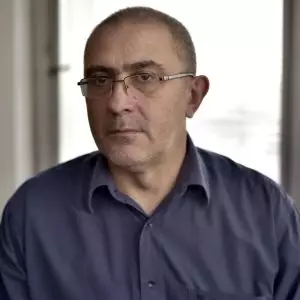
We asked him about the lex specialis, the unusually high cost of organizing the exhibition and suspicions of abuses due to insufficient transparency. Despite everything, Patterson predicts that the Expo exhibition will bring new energy and accelerated development to Belgrade.
Time: Mr. Patterson, you were one of the leading experts in the organization of the so-called "big" EXPO 2020 in Dubai. In 2027, Belgrade will host a specialized EXPO exhibition, which has caused numerous questions in the public about the real importance of the "small exhibition" and its potential to bring significant benefits to Serbia as the host. What do you think about it?
Jamie Patterson: As someone who worked at the world exhibition EXPO 2020 in Dubai, I can say that its scale is not the only indicator of its impact. It is true that specialized exhibitions, such as the one being prepared in Belgrade, do not necessarily have the same importance as world EXPO exhibitions, because they deal with very specific topics.
On the one hand, this is a limiting circumstance, but at the same time it is also an opportunity, because specialized exhibitions attract a targeted audience, and Belgrade very wisely chose a specific topic that opens up countless possibilities. The great interest in their organization shows that such events are not only a matter of prestige, but also that their organizers have in mind that they can be very useful for the country. First of all, in terms of development, because they contribute to the activation of some hitherto unused potentials.
After all, Lisbon was visited by about 1998 million people during the specialized exhibition "Oceans, a legacy for the future" in 10, and that exhibition was actually a springboard for the Portuguese capital to break into the global scene and become one of the favorite destinations of many world tourists. One decade later, in 2008, the specialized exhibition "Water and Sustainable Development" in Zaragoza was visited by more than 5,6 million people. Therefore, Lisbon and Zaragoza took advantage of the opportunity, and I see no reason why, with good organization, Belgrade could not do the same. The fact that Belgrade defeated many extremely strong competitors from around the world shows that most countries believe in its potential.
In Dubai, we saw EXPO as a platform for innovation, attracting new investment and promoting tourism, in line with the city's vision as a hub for trade and travel between continents. Belgrade can position itself as a leader in this part of the world, where foreigners will want to come not only during, but also after the exhibition, due to its rich history, culture, diverse tourist offer, traditional hospitality and a number of other reasons.
Time: According to the information published by the organizer, the costs for the organization of the EXPO 2027 exhibition in Belgrade will amount to around 1,3 billion euros. At the same time, officials have repeatedly announced that the accompanying infrastructure costs will reach between 17 and 18 billion euros. Is this disproportion common and how could it affect the financial return of the project?
Jamie Patterson:In Dubai, we faced similar criticism during the organization of EXPO 2020, with infrastructure investments ultimately exceeding initial projections, as long-term investments in Dubai's future infrastructure had to be accelerated and completed before the start of EXPO. However, no one protested, because most of those costs were not directly related to the exhibition.
Dubai used EXPO to accelerate the expansion of the Red Metro Line, a project alone costing 2,9 billion dollars, to upgrade the Al Maktoum International Airport and to complete numerous other infrastructure projects of public importance, which significantly facilitated and improved the quality of life of both Dubai residents and its growing number of visitors from around the world.
As far as I am informed, of those 17 or 18 billion euros, which you mention, only seven percent will be spent on preparations for EXPO 2027 itself, and as much as 93 percent for the construction of road and railway infrastructure and other public facilities, which will remain available to the citizens of Serbia even after the exhibition. Therefore, everything that has been built will remain with you, the participants of the exhibition cannot take it with them.
From personal experience, I can say that a similar approach to the organization of the EXPO has completely changed Dubai. The subway expanded, the infrastructure was improved, and EXPO City became a permanent part of the city after the exhibition.
In the same way, the "small" EXPO in Belgrade can be the initiator of major changes and modernization of the whole of Serbia. At the same time, such large international projects, as a rule, bring with them new investments, generate new jobs - in Dubai, their number increases by 45.000 every year after the exhibition - and accelerates economic growth. EXPO, therefore, is not just a passing spectacle, which will end after three months, but can be a good foundation for a better future.
Time: However, part of the opposition claims that the financial effects are exaggerated and that the citizens will pay off the debt for at least 27 years. How do you comment on that?
Jamie Patterson: Big projects always cause arguments. In Dubai as well, critics questioned the projections of the economic impact, and then EXPO 2020 attracted 24 million visitors while the restrictions due to the Covid pandemic were still in place, new deals were concluded, and tourism revenues increased so much that Dubai consolidated its position in seventh place in the ranking of the most visited cities in the world. The benefits of the organization were, of course, not visible immediately, but grew gradually, with the opening of new and expansion of existing jobs, the growth of employment, and the significantly improved infrastructure attracted a large number of new foreign investments.
Projections that EXPO 2027 will attract four million visitors seem ambitious, but they are also realistic. If we start from the assumption that only three million people will visit the exhibition and that each of them will stay in Belgrade and Serbia for an average of three days, that they will spend 200 euros per day on overnight stays in hotels, food and other services, we arrive at an income of 1,8 billion euros, which is half a billion euros more than the estimated costs of preparing the specialized exhibition.
Viewed in this way, Serbia will make money at that event and cannot possibly be in the red. Not to mention other incomes, which will certainly be there. It is difficult to evaluate them at the moment, but I know from experience that such exhibitions have significantly influenced the decisions of many investors to start business in the countries that host such events. In order for someone to decide to stay, they must first come, and without the exhibition, some might never have set foot in Serbia and would not have found out what your country, on the edge of the European Union, can offer them. And above all, a qualified and educated workforce and numerous free trade agreements with a large number of countries, China, Turkey, Russia...
Time: The Serbian government also passed the Lex Specialis, i.e. law speeding up procedures for EXPO. By passing such laws, it is directly possible to circumvent legal regulations, to operate facilities without a use permit, without assessing the impact on the environment, and in general there is an open space for abuses. Have these or similar laws been passed in Dubai, and do they generally represent any standard when it comes to the organization of EXPO exhibitions?
Jamie Patterson: Large projects like EXPO require speed and efficiency. That's the main lesson I learned in Dubai. For EXPO 2020, a number of special regulations were passed, which allowed us to speed up construction on the site, which extends over 438 hectares. Standard processes are not designed to handle a six-month event involving 192 countries. The key to our success, if I may say so, was transparency and following the long-term development vision we had. Everything was public and careful attention was paid to complying with the strict standards of Dubai - 123 buildings received LEED certificates, and the infrastructure was rated "Excellent" according to BREEAM standards.
Although I am not well versed in the law you mention, I would say that the Lex Specialis you mentioned follows a similar logic and aims to speed up the process but not at the expense of quality. The risk of abuse exists everywhere, but Dubai has shown that with increased public oversight and clearly defined and set goals, things can be kept under control. Such an approach will ensure that EXPO 2027 reaches world standards, and I would recommend that to officials from Serbia. EXPO is a project of public importance, in everyone's interest, and the state should win over the public to be its ally, not its opponent.
Time: The Republic of Serbia plans to allocate around 12 million euros, i.e. half a million euros per hectare, for the expropriation of land intended for the construction of the EXPO exhibition, while, for example, it sold some of those plots in 2018 at a price of 4.700 euros per hectare. How would you interpret these criticisms from the perspective of someone who watched the rise in real estate values during the Dubai EXPO?
Jamie Patterson: Before EXPO 2020 in Dubai, Dubai South was relatively undeveloped land, and of course this was reflected in the prices. However, when the urban plans were clearly defined and published, the value of the plots next to the new metro line, roads and near the Al Maktoum airport rose sharply. Investors recognized the potential, and when infrastructure began to be built, prices soared. It is common practice around the world for infrastructure projects to raise the value of land in their vicinity. In Dubai, the locals are not always enthusiastic about the changes, but they can see the long-term potential of the locations. Thanks to EXPO and the development of the surrounding area, the Expo City area has grown from a desert into a dynamic settlement. Today, EXPO City is the center where companies such as Siemens, Engie, Nestlé and Emirates are headquartered, and in the long run it has justified all investments.
The same could happen with Surčina, if EXPO 2027 lives up to expectations. That part and its surroundings with modern infrastructure and better traffic connections with Belgrade and "Nikola Tesla" Airport will be much more attractive for investors, so it is to be expected that the value of real estate in that part of the city will also increase. It is simply a consequence of urban development and any other development. The key is in balancing, to harmonize the needs of the state and Belgrade and the local community and to explain through better communication that all residents will ultimately benefit from long-term growth and improvement in the quality of life in that part of Belgrade.
Time: A large part of the public fears that the facilities that will host the EXPO are being massively built, and that after the event these facilities will become a "ghost town". What is the practice there, from your experience with EXPO City Dubai?
Jamie Patterson: This concern often arises when large projects are involved and is quite understandable, because no one wants empty buildings. In Dubai, we solved it effectively, and I believe that, in this sense, we showed a good example. After the exhibition, over 80 percent of the infrastructure developed for the Expo was retained and transformed into EXPO City Dubai, a fully integrated neighborhood where people live, work and enjoy. Terra, which was the Sustainability Pavilion, is now a science center, the spaces that were intended for exhibition for certain topics are now offices, will soon become residential spaces, and Al Wasl Square hosts a large number of international and national events, all as part of the Dubai Urban Master Plan 2040. Therefore, not one of the buildings was abandoned, and the city continued to progress and develop further.
It seems to me that Belgrade has similar ideas, planning to turn the pavilions for EXPO 2027 into a new fairground, in the vicinity of which there will be 1.500 apartments and a marina on the Sava. Dubai avoided that space becoming a "ghost town" because we planned in advance and knew what we would do with those objects when the exhibition ended. If Belgrade also successfully realizes its vision and connects that complex with a new railway and highway to the airport, those areas will live on and will certainly not turn into a "ghost town". Rather, it can become a place that will bring a new energy to the city. Especially since, in my opinion, in the coming period, Belgrade should develop not only in height, but also in width, in order to provide its residents with an even better quality of life and housing.