An important topic for NATO is to start the process of rearming Ukrainian tank units. The issue is complex and has great depth and breadth.
On the one hand, it is a confirmation of political support and faith in the Ukrainian armed forces. On the other hand, the donor countries will have to give up a significant part of their potential because most NATO members have few tanks.
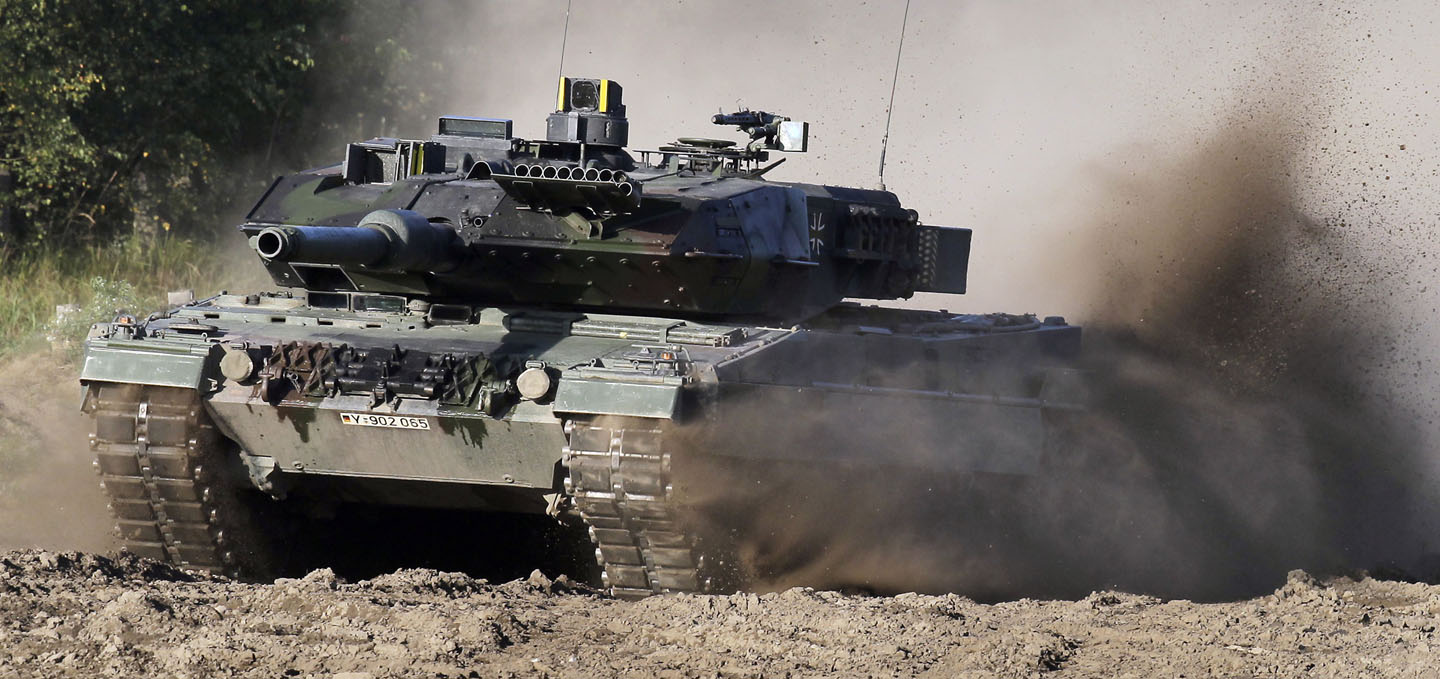
At the moment, there are only 284 Leopard 2 tanks in the German tank park and 55 in war reserve, the British 227 Challenger 2, and the French 222 Leclercs. These three major NATO members now need to show that they are determined to sacrifice their prestigious equipment for the war in the east. In practice, however, it turned into a hard-to-digest story of questioning and hesitation.
Last fall, the Germans launched a circular exchange program and offered NATO members some funds in exchange for tanks and infantry fighting vehicles that they will send to Ukraine. The Slovenians thus pulled out 28 old tanks from the warehouse, and in return they will receive trucks. Czechs and Slovaks were assigned Leopard 2, but with a business plan in the background to pay for new tanks from the same family later. Until now, all those countries were ready to put only Soviet tanks at Ukraine's disposal.
Fierce political discussion
A very heated political discussion during this month led to a turning point: the British decided to send Ukraine 14 Challenger 2, and the Poles 14 Leopard 2. In organizational terms, that's a full tank company each.
The Finns would like to send their Leopard 2, but like the Poles, they will have to wait for the attitude of the German government because without Berlin's green light, there is no sending of tanks made in the German military industry.
An opportunity to make this public is the meeting of the contact group for support of the Ukrainian army, which is being held for the eighth time in Ramstein on January 20.
American Abrams
In the background, the Americans are following what is being done with NATO partners because we appreciate that they also want to show their will and give Ukraine the few tanks they have. The USA is certainly a real war arsenal, they have given the Ukrainian army drastically more help than all the others combined.
There are 2.645 Abrams in stock in the US Army, and another 3.450 or so pieces are carefully conserved in the war reserve. From there, the long-term replenishment of Ukrainian tank units can be maintained, and now they urgently need replenishment.
The life of a tank in wartime conditions
The life of a tank in the harsh reality of war is short. Of what the Ukrainians had and received from NATO, some tanks were destroyed, some damaged, some worn out. The Ukrainian offensive carried out in the last weeks of last summer and then the positional war in Donbas turned tank battalions almost into platoons.
The survival of the Ukrainian army now urgently requires tanks - and hundreds of them. Critics say he won't have time to train, but there is no choice. They will have to rely on a technique that they have not had the opportunity to use so far and to increase the crews from three members, as many as the T-72 and T-64 tank families have, to the four-member crew of NATO tanks.
NATO against Russian technology
In a collision with Russian tanks - the new T-90M Proriv and the modernized T-72B3 - the tanks from the announced donations will have a chance because the tactical and technical characteristics are approximately similar.
Fans of technology would have a discussion about the details of the characteristics of various tanks, but basically there is no dramatic difference, except in night operations and reduced visibility, because in such conditions Russian technology is no match for NATO.
As always in war, victory is won by those who are better motivated, organized and led. That's why the real performance on the battlefield will quickly show who is better in his tank, although it is necessary to take into account the luck of the war.
For now, it is certain that, like eight decades ago, on the eastern front, a clash of tanks named after wild cats with the T-series is waiting - once the Tigers and Panthers fought against the T-34, and now the Leopards will clash with the T-90 and T- 72.
Read daily news, analysis, commentary and interviews at www.vreme.com