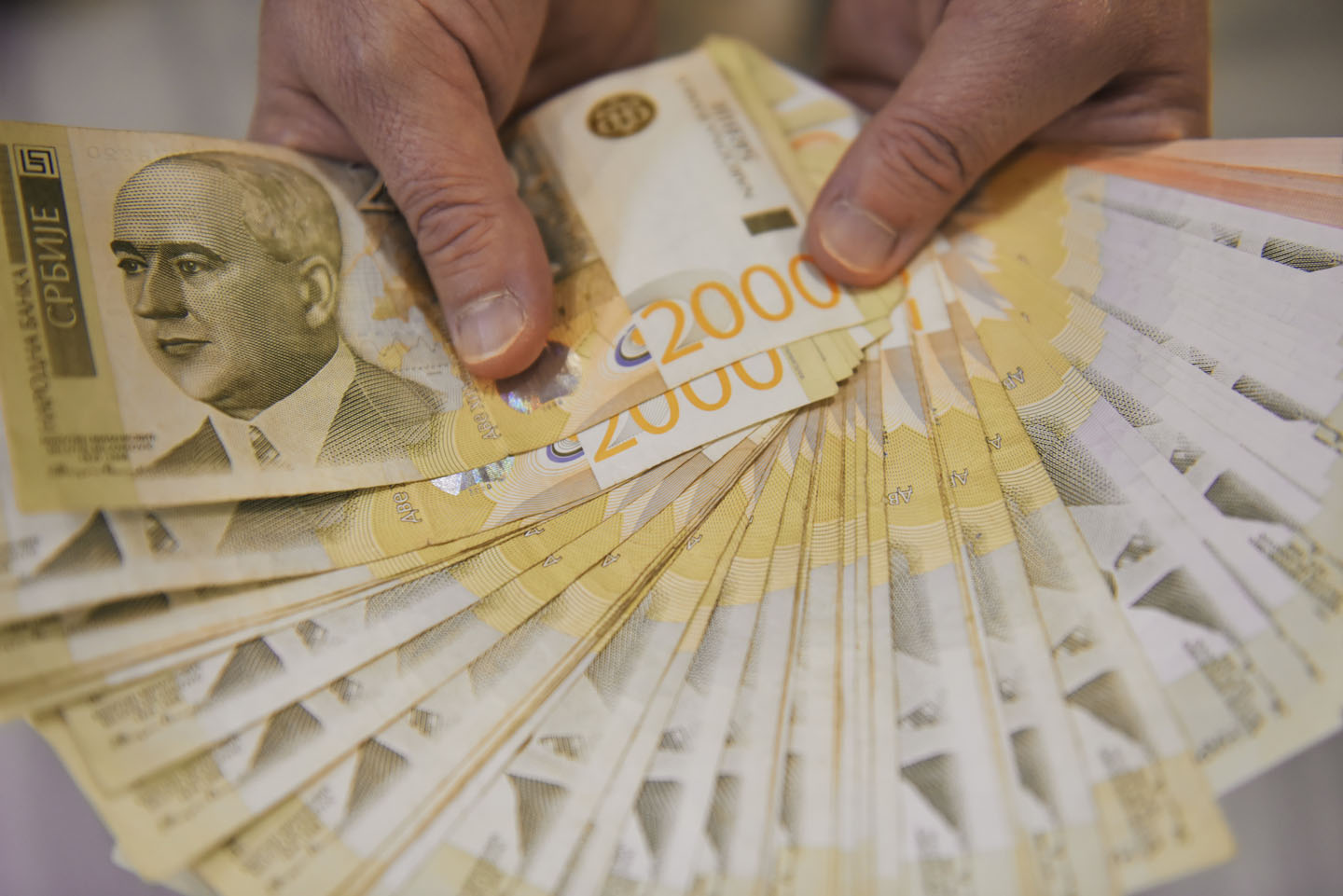
The average salary in February in Serbia was 81.359 dinars, half of the employees worked for less than 62.239 dinars, which was the average salary in this month, according to the data of the Republic Institute of Statistics.
This is the second month in a row that a drop in the average salary was recorded, which in January without taxes and contributions was 82.769 dinars, and in December 2022 it was 84.227 dinars.
The average salary is once again the highest in Belgrade, after the highest average salary was paid in Bor in January.
Earnings in the public sector (85.633 dinars) are still higher than salaries in the private sector (79.623), on average by 6.010. dinars.
Compared to February last year, the average wages for February this year are nominally higher by 15,2 percent, but in real terms they are lower by 0,8 percent.
Inflation higher only in S. Macedonia
Inflation in Serbia last year amounted to almost 12 percent, which is the highest level in the past 15 years, while it is estimated that in 2023 it will be slightly higher than eight percent, that is, among the countries of the region, it will be lower only in comparison to North Macedonia, she announced. The World Bank.
Director of the World Bank in Serbia, Nikola Pontara, stated that Belgrade is making good moves regarding economic macro stability, but that it is necessary to speed up domestic investments, reform state-owned enterprises, make better use of human capital, improve regional integration, and attract innovations to the information sector. technology.
During the presentation of the regular report of the World Bank on the Western Balkans, he stated that in 2022 the economic growth of the countries of the region slowed down, which continues this year as well, although progress has been made in reducing the fiscal deficit and maintaining financial stability.
In most countries of the Western Balkans, double-digit inflation was registered last year, but its rate is decreasing. Inflation is a tax on the poor and affects low-income households the most, because they spend most of their money on food and energy, Pontara stated.
65.000 new jobs were created
According to him, Serbia has achieved better results in terms of employment, since the level of employment in 2022 reached a record 50,3 percent, while unemployment was reduced to 9,4 percent.
It was stated that the labor market in the region is recovering after the corona virus pandemic, but that around 900.000 people are still looking for work, which is a high level compared to developed European economies.
Almost 65.000 new jobs were created in Serbia last year.
BG/FoNet
Read daily news, analysis, commentary and interviews at www.vreme.com