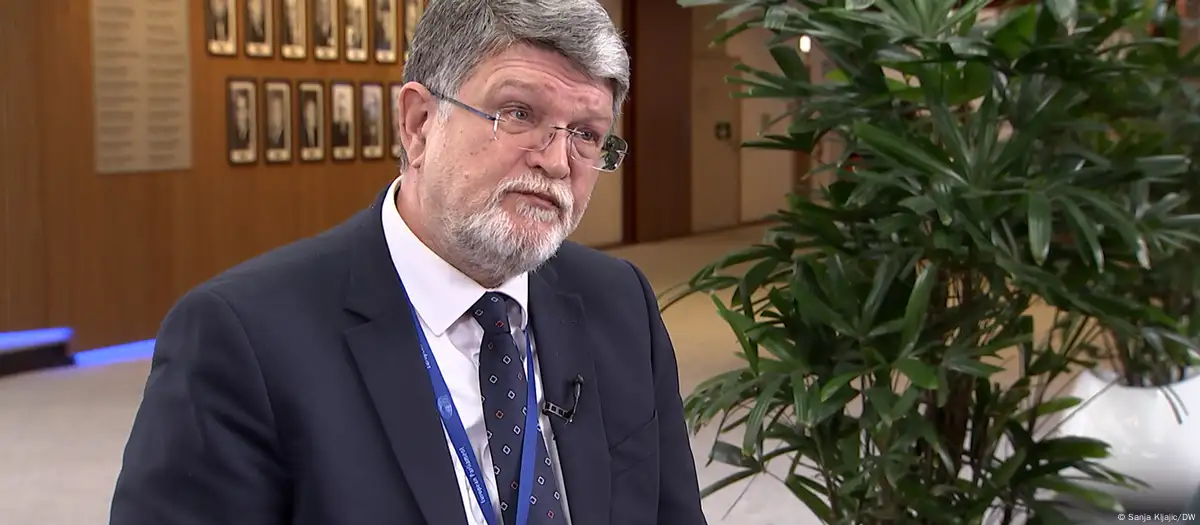
The draft report, which was prepared by the EP rapporteur for Serbia, and which the portal on European integration EWB had access to, will be presented on February 20 in the Foreign Affairs Committee of the European Parliament.
According to Nikola Burazer, director of the Center for Contemporary Politics and executive editor of the European Western Balkans, the first version submitted by Tonino Picula was significantly harsher than the one submitted by his predecessor, Vladimir Bilčik.
"Now we see why Picula's arrival as a rapporteur for Serbia raised so much noise among members of the government in the country," says Burazer for "Vreme".
"The reason for so many attacks was not that he is a Croat, but that he obviously knows the Serbian political scene very well." For the first time, we have a situation where the report is so harsh, regarding the state of democracy and the rule of law, primarily corruption, but also media freedom and the general tone towards Serbia's move towards European integration."
In previous years, he adds, the rapporteur sent a report that was milder in tone, but it would become harsher after the debate on it in the European Parliament. Then MEPs would send numerous amendments and those from parties critical of Serbia's progress, such as the Greens, Liberals or Social Democrats contributed to making the final version more serious.
"The question is how the MEPs will now react when they have such a serious approach in their hands, especially since we see that in recent days even the MEPs, who normally react mildly when evaluating the government in Serbia, have now expressed concern", claims Burazer.
What is written in the draft
The Serbian authorities should improve the election conditions, it was stated in the draft of the European Parliament's regular report on Serbia, which expressed deep concern about the systemic problems highlighted by the student protests in Serbia.
In the draft of Picula's report on Serbia, it is stated that the European Parliament views with concern the final report of the OSCE observation mission on the December 2023 elections and believes that it is necessary to reform the electoral framework and resolve the shortcomings.
As stated, it is crucial to ensure the independence of institutions, including the Regulatory Body for Electronic Media (REM).
It was noted that limited progress has been made in the fight against corruption, despite the adoption of the new Strategy for the fight against corruption for the period 2024-2028, and concerns were expressed that corruption is still present in many areas.
The draft also notes continuing challenges in ensuring judicial independence, including impacts on the judiciary.
No progress towards the EU
It is also noted with concern that there has been limited or no overall progress in meeting EU membership criteria within the negotiation chapters, with particular gaps in key areas such as the rule of law, public administration reform and alignment with EU policies.
The European Parliament regrets the fact that no progress has been made in Chapter 31, given that the pattern of Serbia's alignment with the EU's foreign policy positions has remained mostly unchanged. It is called for Serbia to comply with the restrictive measures and general policy of the EU towards Russia without delay and consistently, it was stated in the draft report.
About Novi Sad
Several points in the draft report refer to the tragedy in Novi Sad and the protests that followed, so in the text it is written that the EP "expresses its sincere condolences to the families of the 15 victims who lost their lives after the collapse of the canopy of the railway station in Novi Sad on November 1, 2024".
Parliament calls for the opening of a full and transparent legal procedure following an investigation by the authorities. Picula's draft report expressed deep concern over the systemic problems highlighted by the student protests in Serbia, such as problems related to civil liberties, institutional and financial transparency and accountability.
The importance of freedom of speech and assembly was emphasized, and violent attacks on peaceful demonstrators were condemned in the strongest terms, and concern was expressed over the fact that some of the demonstrators were arrested and court proceedings were initiated against them.
Diplomatic missions of the EU and member states have been urged to continue monitoring the ongoing legal cases related to the protests.
The document states that the EP strongly condemns "the unsubstantiated allegations of the Serbian authorities that the EU member states were involved in organizing student protests" in order to start a "color revolution", as well as that it strongly condemns, in this context, "illegal arrests and expulsions of EU citizens and the public disclosure of personal data of EU citizens by convicted war criminals".
Plus for economy and batteries
In the section on the economy, "partial progress towards the development of a functional market economy with positive GDP growth" was welcomed and it was reiterated that more substantial reforms are needed in the labor market, in education and in public administration.
"The European Parliament notes the memorandum of understanding between the EU and Serbia, which initiates a strategic partnership on sustainable raw materials, battery value chains and electric vehicles, and considers that the promotion of the highest environmental standards and dialogue with the population affected by this, the scientific community and civil society, should be at the center of any such strategic partnership," the draft text of the report states.
Source: EWB/Vreme