

Election 2026.
REC determined the final number of voters in the elections
The Republic Election Commission (REC) made a decision today on determining the final number of voters in Serbia
 Photo: Ukrainian Defense Ministry Press Service via AP
Kiev gave up its nuclear arsenal after the collapse of the USSR. The USA, the Russian Federation, Great Britain and Ukraine signed the "Budapest Memorandum" in 1994, which included the obligations that the great powers will have towards Ukraine after it gets rid of its bombs, primarily the protection of Ukrainian sovereignty. When Russia annexed Crimea in 2014, Washington announced that the Budapest Memorandum was not actually legally binding.
Immediately after the collapse of the Soviet Union in 1991, Ukraine was the third country in the world in terms of the number of nuclear warheads after the USA and Russia. A huge apocalyptic arsenal was found on its territory. After long negotiations, certain financial compensation, security guarantees and the not-so-simple organization of transport, with the mutual and wholehearted support of the USA and Russia, Ukraine renounced its status as a nuclear power. The last convoy with nuclear bombs left Ukraine in May 1996.
According to data from the work "Soviet Nuclear Archipelago" by Robert Norris published in 1992, a third of the USSR's nuclear capacity with about 1700 nuclear warheads, including 130 intercontinental ballistic missiles (ICBN) of the UR-100N type with six nuclear warheads, which were then fourth-generation missiles that are launched from special silos and have a range of 10.000 kilometers. There were also 33 strategic bombers, as well as 46 more modern versions of RT-23 ballistic missiles with greater stability, range and the ability to be launched both from underground silos and from trains, which were produced at a facility located in Ukraine.
Renunciation of the nuclear arsenal
In debt and without the ability to maintain, safely store and ultimately use such an arsenal militarily, there has been much debate about the danger that strategic, and especially smaller, tactical nuclear weapons from Ukraine could easily find their way onto the international black market, which was a favorite motif in Hollywood action films for a whole decade. Thus, in April 1992, the Parliament of Ukraine made a decision to renounce its nuclear status and start negotiations with the great powers on dismantling and alienating this arsenal. The process itself was simple in terms of disarming and decommissioning the smaller weapons, but the large ICBMs, their silos, and the associated infrastructure required time and significant money.
In 1993, the American analyst John Mearsheimer attracted more attention by publicly presenting the thesis that Ukraine is making a huge mistake because "nothing but nuclear weapons can protect it from Russia", and this opinion was also expressed by some ultra-right politicians in Ukraine. Bearing in mind the past tensions between the Russians and the Little Russians that go back to the time when Catherine the Great took over the land of the Cossacks, through the abolition of the Ukrainian language in the 19th century and the great famine under Stalin, to the genocidal Ukrainian detachments during the Nazi occupation of the USSR and finally, Moscow's responsibility for Chernobyl, many Western analysts half-heartedly said that Ukraine was acting naively.
However, at that time Russians and Ukrainians, "two separate nations in friendship", today's level of conflict was hard to imagine. In a country with a gruesome experience Chernobyl, that question had a symbolic significance for the establishment of a new identity of a free and independent state.
Budapest Agreement
The negotiation process on the fate of the Ukrainian arsenal was formally concluded in Budapest on December 5, 1994, on the sidelines of the current OSCE conference. The USA, the Russian Federation, Great Britain and Ukraine then signed the "Budapest Memorandum" which included the obligations that the great powers will have towards Ukraine after it gets rid of its bombs. These obligations are clearly stated in six theses: to respect the sovereignty of Ukraine, not to use nuclear weapons against it, not to carry out military aggression, not to exert economic pressure, to convene the Security Council in case of any violation of the agreement and that the signatories mutually agree on other issues.
The same agreement was signed with Belarus and Kazakhstan, which, according to the same model, renounced the nuclear weapons left over from the USSR, and two more nuclear powers, China and France, later joined the agreement in separate documents. Despite so many signatures, the Budapest Memorandum will turn out to have nowhere near the persuasive power of nuclear silos.
Pity about the nuclear arsenal
Twenty years after the memorandum was signed, the Russian Federation annexed Crimea in 2014, and conflicts broke out in the Luhansk and Donetsk regions. Faced with this threat, Ukraine pulled out an agreement weighing 1700 warheads from a drawer and demanded that it be respected. The US then explained that the Budapest Memorandum was not actually "legally binding" and did not have the force of an international agreement.
With the outbreak of the Crimean crisis in Ukraine, regret for the nuclear arsenal that it had given up appeared. A deeper analysis, however, shows that it mainly consisted of long-range missiles, which could be used to target Texas and Virginia from the vicinity of Kiev, and could not be effectively used for targets in nearby Moscow or St. Petersburg. Parts of former empires may snarl at each other, but their power was built to look to the other side of the world.
Read daily news, analysis, commentary and interviews at www.vreme.com
The Republic Election Commission (REC) made a decision today on determining the final number of voters in Serbia

A citizen of Belgrade whose polling station in Banja Luka was changed in the voter list without his knowledge claims that the Ministry did not correct his data and that the deadlines have expired. The elections are on October 25 and he still doesn't know where he will vote.

The pardon procedure implies the appropriate role of the Minister of Justice, who should initiate the procedure or submit an opinion on the pardon, says prosecutor Radovan Lazić.
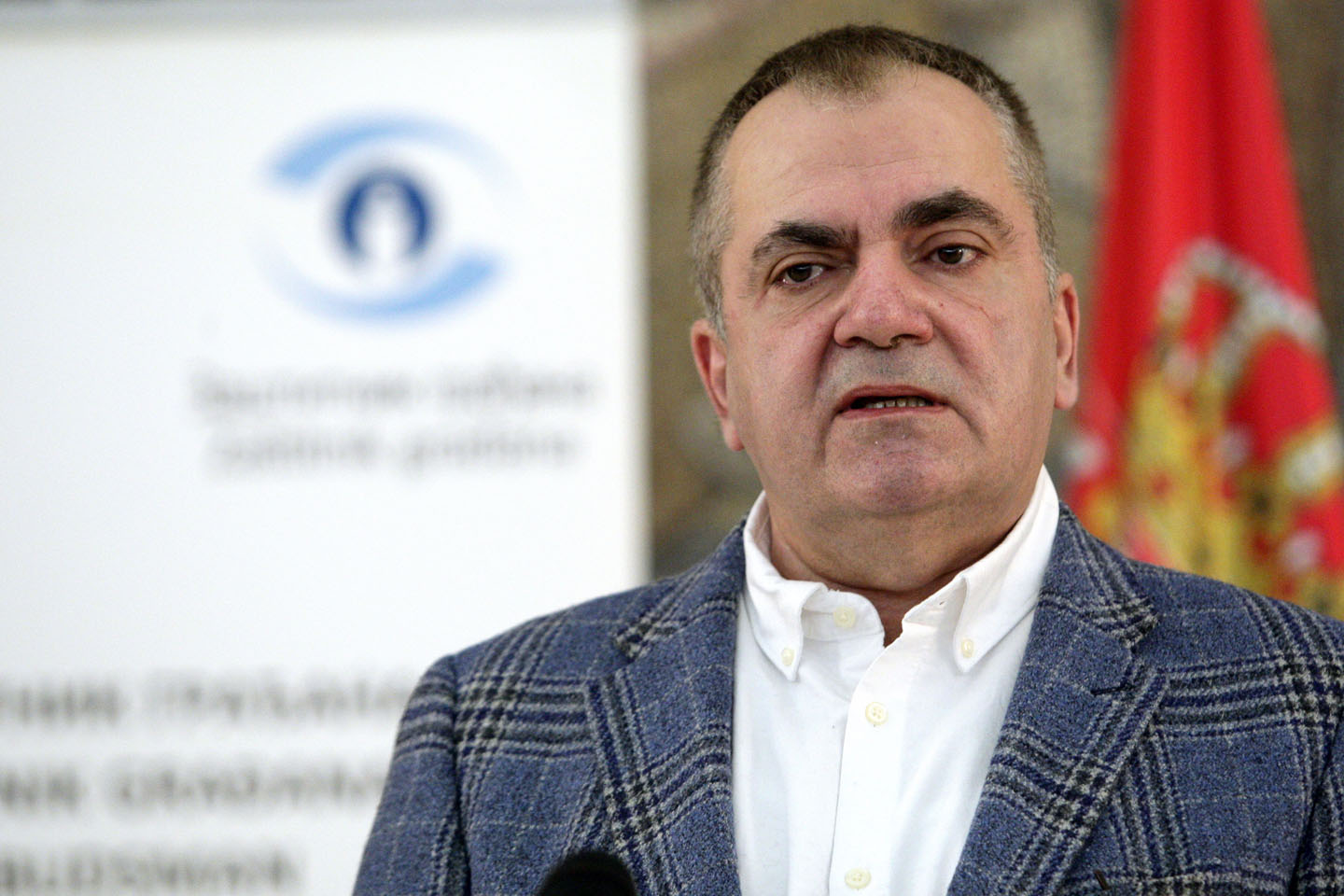
Phone numbers 064 876 85 05 and 011 2068 100 will be available 24/7 for reports and addresses to citizens, and the possibility of direct addresses at the premises of the Protector of Citizens is also provided.

NUNS demands an urgent investigation due to the threats sent to two Radar journalists who wrote about the Sky correspondence in which Aleksandar Vučić is mentioned. The association states that the threats also mention violence against children of journalists and warns of impunity

There is, literally, no difference between the one who claims it is day in the middle of the night, or the one who claims to be a giraffe, from the claims we read on billboards: that Vučić is working to unify Serbs and that Serbia is doing better and better day by day.

The pre-election arrests due to the alleged "overthrow of the state" testify to the regime's panic. The bad news for them is - they can't arrest the whole people who decided to defend themselves from progressive beatings and election theft

The ring that tightens around Ćaciland Student list is getting narrower. Because there are more and more spoiled people who see the false prophet for what he is: a street obscener who is fighting Serbia

The archive of the weekly Vreme includes all our digital editions, since the very beginning of our work. All issues can be downloaded in PDF format, by purchasing the digital edition, or you can read all available texts from the selected issue.
See all




