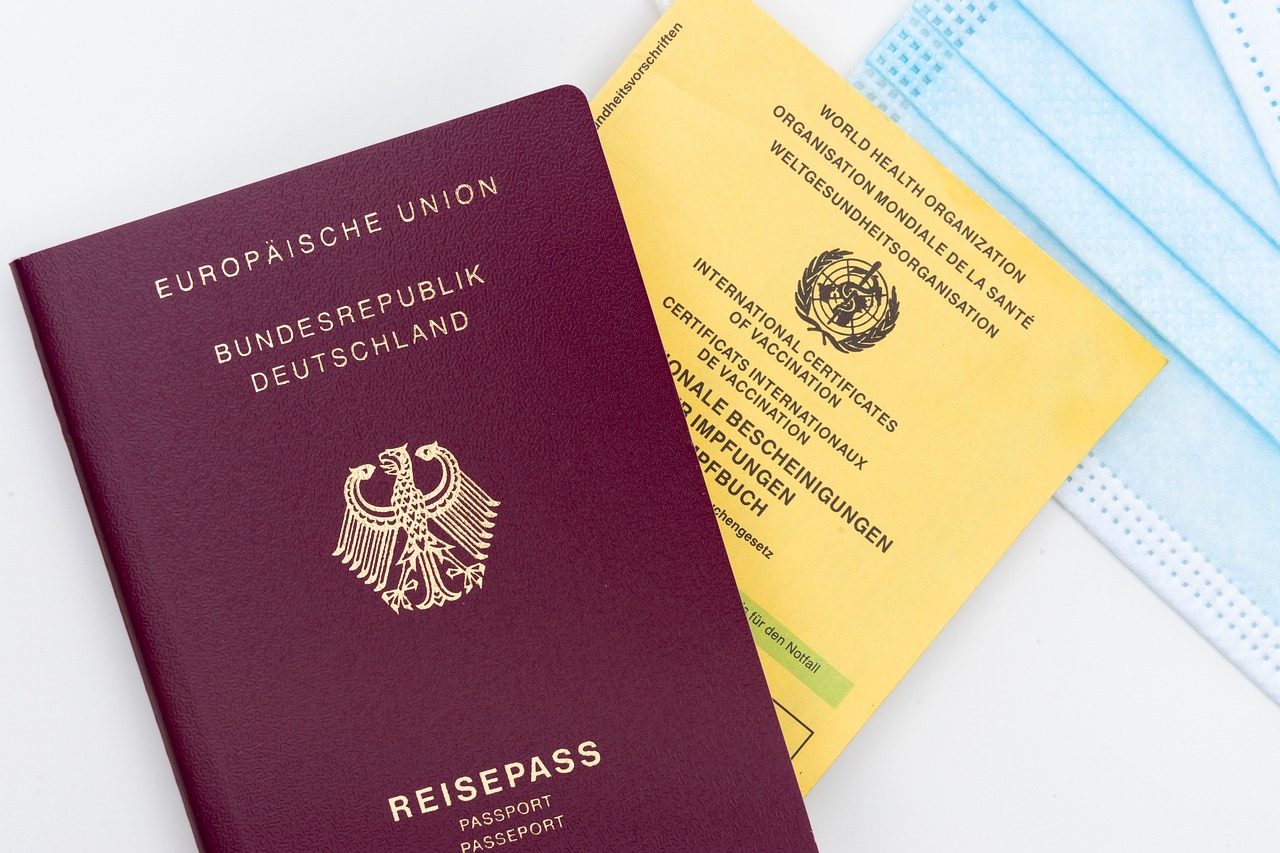
The planned reform of the Citizenship Law, which the ruling German coalition has already agreed to in the coalition agreement, should enable faster naturalization. But, in one segment, some might have a problem, he writes Deutsche says.
The German government has adopted a bill, which the public broadcaster ARD in Berlin had access to. According to that draft, in the future, naturalization should generally be possible after five years - instead of the current eight. With "special integration achievements" and good language skills, even after three years.
Security of existence
However, there is a catch: the prerequisite that you provide your own means of living was and should remain the main prerequisite for acquiring German citizenship. As a rule, anyone who receives money from the state should not be granted citizenship. In this sense, the Law on Citizenship could become stricter than before.
This could be a problem for Inas Sharif, who came to Germany with her son six years ago. Today, that Syrian woman lives separately from her husband. She is a single mother.
Currently, as part of her retraining, she attends a school for a social-pedagogical assistant and depends on state aid. It might stay that way in the future, because her son is autistic and needs a lot of care. A full-time job is not possible for her at the moment.
Until now, there has been an exception for all those whose circumstances are such that they are "not themselves responsible" for using state aid. This means, for example, that someone cannot find a job because of a disability. In the past, however, authorities and courts have interpreted the regulation differently.
Specific exceptions
Now that paragraph is completely deleted and specific exceptions are listed instead: for example for so-called guest workers who came to work in the Federal Republic of Germany from the 1950s to the 1970s, and for so-called contract workers who came to the GDR until 1990. There should also be an exception for people who do not earn their own living but work full-time and have done so for at least 20 months in the last 24 months - and for parents who they live with their child and another parent who works full time.
Such wording was not foreseen in the first draft of the law of the Ministry of the Interior of Germany. It was only added in the second version, which Minister Nancy Feser (SPD) presented in May together with her colleague, Federal Minister of Justice Mark Buschmann (FDP). This means that anyone who receives German citizenship must be "economically integrated".
The planned list of exceptions does not include, for example, single parents who cannot work or can only work part-time because they care for their children or family members who need care, people with disabilities and, last but not least , young people in vocational training and students.
Many strongly criticize it, for example the "Deacons" or "For Asylum" organizations. The draft law, which was adopted by the government, explicitly names the problem and points out that these persons can be naturalized through the regulation on so-called difficult cases "if they have done everything that is objectively possible and subjectively reasonable to permanently provide themselves with means of existence".
This is the so-called naturalization by assessment in accordance with Article 8 of the Law on Citizenship. According to that provision, there is no right to citizenship, but it is a matter of how the competent services assess it. In practice, for example, professional athletes who should be included in the national team, currently benefit from it.
More citizenships, fewer language certificates
There is another change in a very fundamental point: the requirement that you have to renounce your previous citizenship should be removed. In practice, it is already the case today that dual or multiple citizenship is the rule and not the exception for naturalized persons. The rate has been increasing for years, and in 2022 it was 74 percent.
This is due to numerous exceptions, for example for all EU and Swiss citizens - or if renouncing the previous citizenship is not possible or is only possible under particularly difficult conditions. According to the Federal Bureau of Statistics, last year 99,9 percent of Syrians retained their Syrian citizenship.
There should also be simplifications in proving language skills. For members of the guest worker generation, it should be enough to be able to communicate without problems in everyday life.
With the reform, the federal government wants to make a "significantly more attractive offer" for the acquisition of German citizenship to foreigners living permanently in Germany than before. She hopes this will provide an impetus for "rapid integration". Citizenship comes with rights and obligations. In particular, full political participation such as participation in federal elections is only possible with a German passport.
According to the data of the Federal Statistical Office, the naturalization rate last year was 3,1 percent of the foreign population who lived in Germany for at least ten years - slightly more than in previous years. A particularly large number of Syrians who came since 2015 have been naturalized.
And Inas Sharif would like to be one of them soon: "To be honest, I think five years is enough." If we do our best, if we integrate and if we learn the German language..."
The Federal Ministry of the Interior wants to check by 2028 whether the changes have led to a higher naturalization rate. After the government passes the law, it must be debated and approved by the Bundestag, which could ideally be in January 2024.
BG/Deutsch vele
Read daily news, analysis, commentary and interviews at www.vreme.com