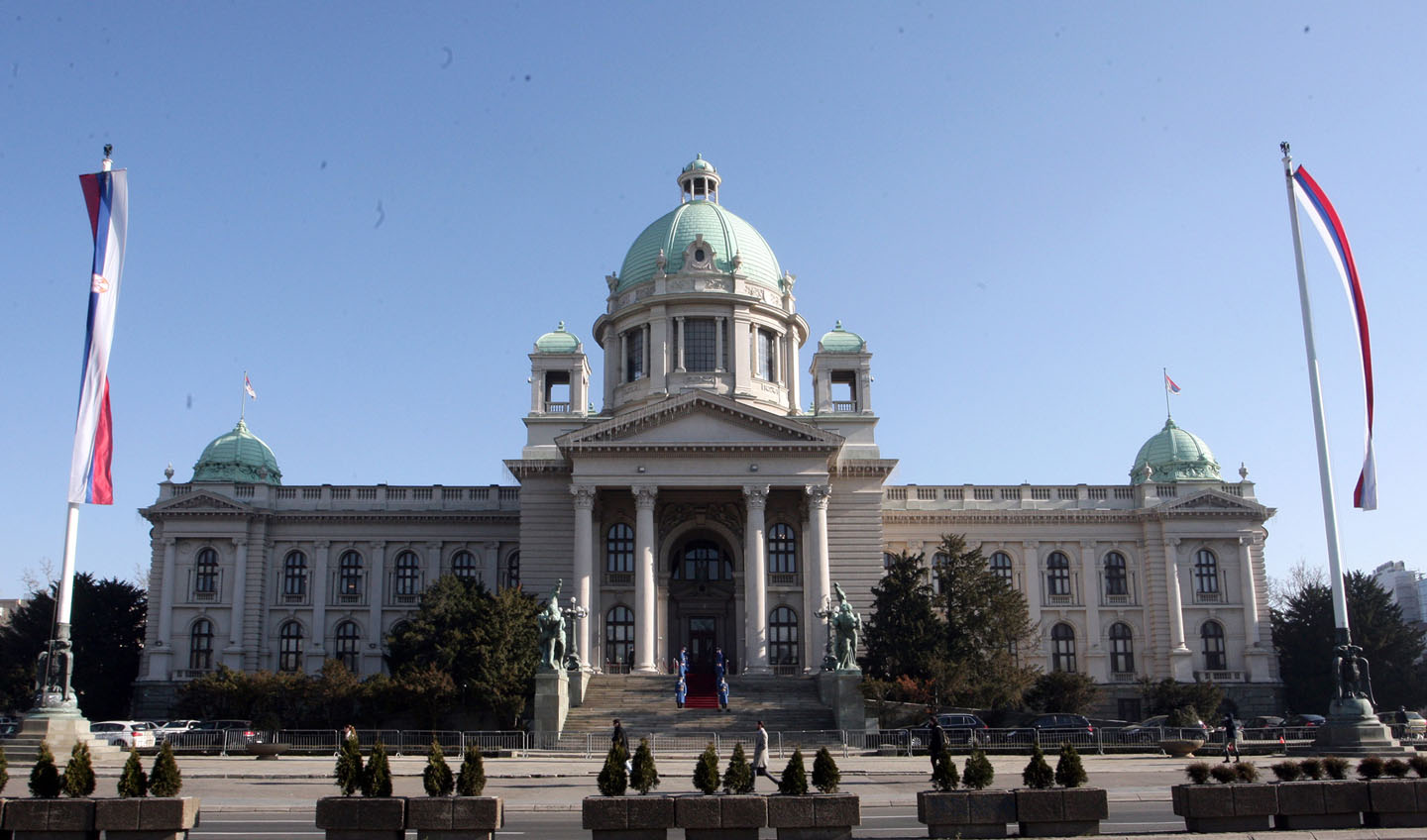
Why did Serbia not ask for help in putting out the fire from the European Union, but did it from Russia? Especially if it is known that the EU is the biggest donor in the country, and Moscow only jumps in in such situations, even though it does not give any money. Bulgaria is also concerned about security
The Russian rescue plane "Ilyushin" landed in Serbia to help extinguish the fire fire, because obviously the state fails to fight for by fire in Deliblatska peščara, but also to other parts of the country. That is why the Russians are portrayed as saviors who solve the problem.
"On the order of the President of the Russian Federation, Vladimir Putin, an Il-76 plane with a crew and an operational group of the Ministry of Internal Affairs of Russia was sent to the Republic of Serbia to extinguish forest fires", it was stated on social networks from the account of the Russian Embassy in Serbia. "The request for support came directly from the Serbian side: the partners turned to Russia with a request for help due to the critical worsening of the situation with fires and the endangerment of populated areas."
From this it can be seen that Serbia turned to Russia, but not to its own biggest donor - the European Union, which causes suspicion among some members, but also security fears.
Why didn't they call the EU, but did the Russians
Serbia did not activate the Civil Protection Mechanism of the European Union in order to receive help in extinguishing forest fires, the European Commission told N1 Serbia.
"If Serbia activates the Mechanism in the coming hours or days in response to forest fires, we will immediately coordinate with European partners to mobilize aid in accordance with real needs and the situation on the ground," said the spokesperson of the European Commission.
N1 asked the Commission whether Serbia had formally requested assistance through the EU Civil Protection Mechanism in relation to the fires in Deliblatska peščara, including the deployment of firefighting aircraft, and whether European aircraft and other capacities would have been available had such a request been made.
The EC also replied that Serbia requested another type of assistance from the EU.
"The European Commission has already provided satellite images of the Copernicus program in support of local firefighters, following Serbia's request," the EC told N1.
They added that "when it comes to the aid received from Russia, we repeat that the EU wants to count on Serbia as a reliable partner."
"As we have repeatedly said, relations with Russia and the Putin regime cannot be normal, while Russia is waging an unprovoked and unjustified war of aggression on European soil in Ukraine," the EC noted.
According to the latest information, in the fires that have been burning for weeks in Deliblatska Peščara, a total of 3.500 hectares of forest have burned. Fortunately, no one has been hurt so far.
Fears from Bulgaria
Photo: AP Photo/Darko VojinovicRussian Ilyushin fire-fighting aircraft over Deliblatsky Sandstone
The Russian state plane flew over Bulgaria on its way to Serbia to help put out the fire, and in this country they are very worried because Belgrade turned to Moscow and not the EU for help, writes the Brussels portal EUalive.
The headquarters of the Russian-Serbian humanitarian center, established in 2012, is in Niš, where the plane landed, and for years no one knows what exactly is being done. The Bulgarian Ministry of Foreign Affairs explained that the overflight was approved at the official requests of Serbia and Russia, with the submitted technical specifications of the aircraft and information about its crew.
The Il-76 aircraft, equipped for firefighting, can simultaneously drop a "bomb" of up to 42 tons of water on an area up to 700 by 65 meters. Because of the aircraft's ability to extinguish large fires, it was named "fire bomber".
Former Bulgarian Defense Minister Velizar Shalamanov described the situation as a precedent because the flight took place under extraordinary conditions. He said the flight also raised questions about the wider security implications of allowing Russian aircraft to fly over Bulgaria.
He also pointed to the military strengthening in Serbia in recent years and its negotiations on joining the EU, claiming that Belgrade's decision to seek help from Russia, not the EU, "creates additional tensions and sends a signal that the situation carries risks."
"There are still people who fall for this: 'Good Putin is sending us a fire-fighting plane to save us,'" Mirchev said, adding that this narrative was used in countries like Syria, Venezuela, Iran, and their alliances with Russia ultimately did not end well for their former dictators.
How much does the EU and how much does Russia help Serbia?
The European Union is the largest donor and provider of financial assistance to Serbia. Since 2000, Serbia has received over 8,5 billion euros through non-refundable grants and pre-accession funds, while hundreds of millions of euros are available in the form of favorable loans and grants through the new Growth Plan for the Western Balkans.
During that time, Serbia did not receive significant financial or grant aid from Russia. According to official research and data on donors, Russia is not among Serbia's biggest donors.
Economic relations are based entirely on commercial investments by Russian companies, and not on classical aid, although Dušan Bajatović claims that Serbia has the cheapest gas in Europe, thanks to the friendship between the two countries.
In the past, there were donations of military equipment, such as used MIG-29 aircraft, although the costs of their modernization, overhaul and transport often came from the Serbian budget.
Exclusive in August: Save three thousand dinars on the annual subscription to the digital edition of "Vremena"!Take advantage of the discount hereand support independent journalism.
What is happening in the country and the world, what is in the newspapers and how to pass the time?
Every Wednesday at noon In between arrives by email. It's a pretty solid newsletter, so sign up!
Only the court can determine who caused injuries to whom, said lawyer Edvin S. Prelić, reacting to the claims of the Kreni-promeni movement that Aelksandar Šapić caused serious physical injuries to councilor Tatjana Mićić
The student plan calls for six months of voluntary military service, better conditions for members of the military, investment in equipment and the defense industry, an investigation into early deaths and numerous other changes.
The student list is asking for an investigation into the origin of the fake document, which threatens with the confiscation of pensions and prison sentences. The Ministry of Finance confirmed that the statements in the document are false
The students in the blockade of DUNP reported to the disciplinary prosecutor two Novi Pazar judges for attending the SNS pre-election rally. They say that such behavior undermines the independence of the judiciary
At the moment when the institutions of the Republic are destroyed, when Vučić's octopus is still alive, when people are disgusted by the injustice and the stench left behind by the Essenes regime, we have, as Machiavelli said, only civic virtue as the fuel with which we can return to the beginning
The four independent members of REM are an example of perseverance and civic responsibility. Rodoljub Šabić even, upon leaving the premises of REM, after the sentencing of the Informer, experienced that the Essenes insulted him, hit him with their hands and feet. But that too will soon be over
Vučić pardoned the batterers and Dijana Hrkalović. The election winners should abolish the sultan's power that allows one man to run afoul of the entire judicial system
The archive of the weekly Vreme includes all our digital editions, since the very beginning of our work. All issues can be downloaded in PDF format, by purchasing the digital edition, or you can read all available texts from the selected issue.