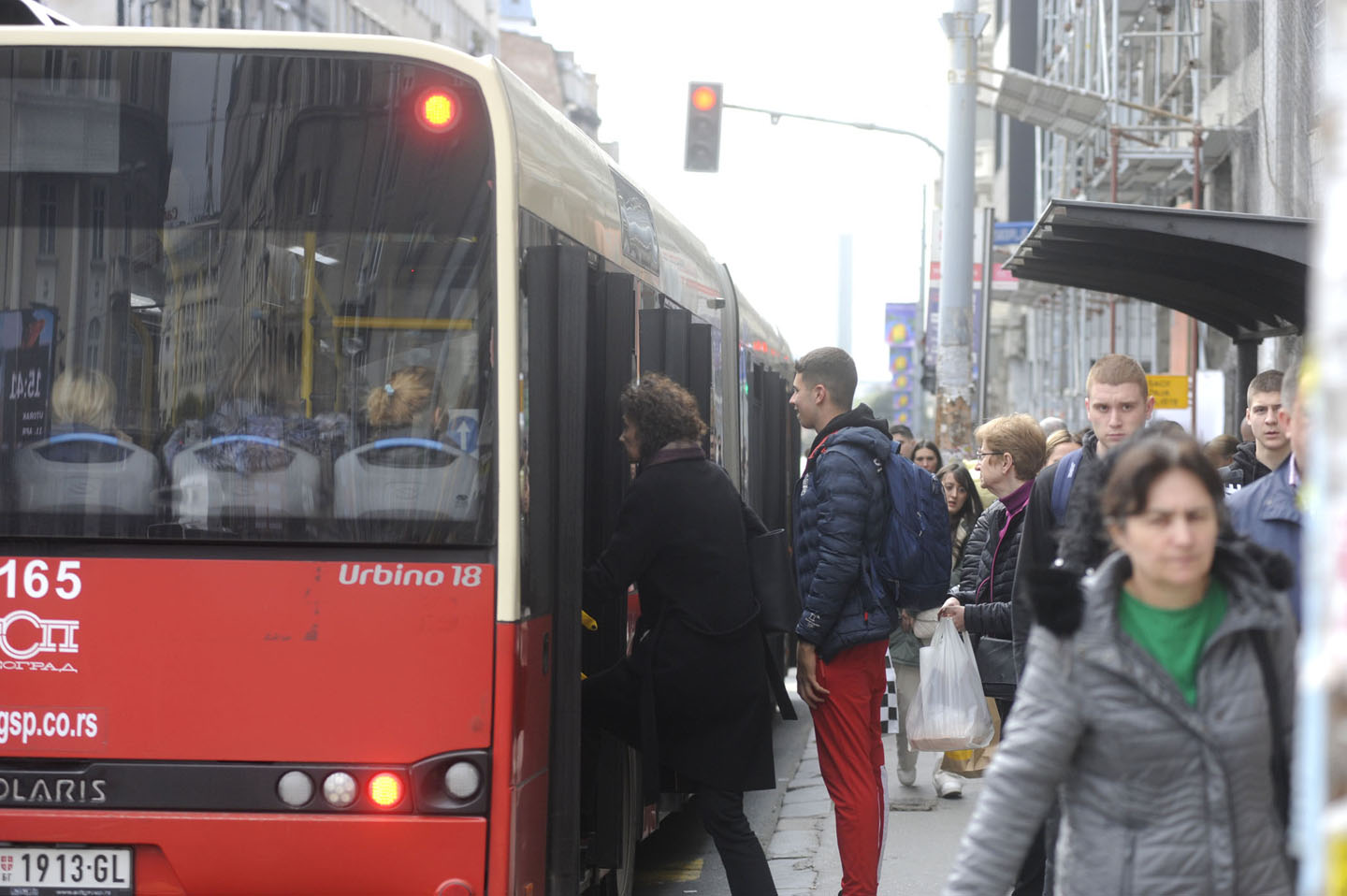
After a week of implementation of the new ticket collection system in the city transport in Belgrade, it seems that the citizens are still confused, and the number of those who buy tickets via SMS does not seem to be very large.
The director of the Center for Local Self-Government, Nikola Jovanović, has the impression that the citizens could understand all this as a signal that the city government basically does not even care about the collection of tickets, as a kind of invitation not to pay anything more.
Public transportation is one of the most important services in the city, but the problem of how it functions has been going on for decades. The question is often asked whether it would be more expedient for Belgrade, as in some other European cities, to introduce free public transport.
Jovanović says for the "Vremena" portal that he understands why citizens would choose to have everything financed from the budget.
"First, they have no confidence in the city government that they will invest anything wisely from their payments. Second, they think that Infostan and taxes will spread it no matter what. And they're probably right."
Nothing is free
However, Jovanović adds, nothing is free, and that it is only a matter of political decision whether part of the costs of city transport will be borne by passengers or all Belgrade citizens through the budget, or through some other levies such as property tax or information station. He adds that more than two-thirds of city transport is already financed from the city budget.
A survey on public transport in Belgrade, conducted last year by the Center for Local Self-Government, showed that most citizens, 25,9 percent of them, see the poor quality of vehicles in public transport as the biggest problem.
Jovanović points out that the survey showed that the price does not influence the fact that citizens do not use public transport, but that they consider public transport to be unreliable and slow.
He is of the opinion that by completely switching to financing public transport from the budget, we would lose the ability to influence traffic through pricing policy.
Practice in other countries
Luxembourg has introduced free public transport since February 29, 2020. Public transport is also free in the capital of Estonia, Tallinn. However, our interlocutor says that these are figures in the budget that are unimaginable for Serbia.
"In little Tallinn, there is 'free' transportation for its residents, but they pay for it through taxes. And tourists and visitors regularly pay for transport tickets. And there are validators and cards for everyone, in order to follow trends and possibly change the system on the fly", says Jovanović.
According to his opinion, the system of financing from the budget is possible only where the vast majority of citizens are able and willing to fill the budget and where there is the strictest control over the implementation of that budget.
Finally, he states that the previous system, which he himself criticized on several grounds, brought in around seven billion dinars annually to the city coffers, and that we will have the first figures on the collection of tickets in city transport under the new system in about a month. days, and the number of paid tickets will be one of the main indicators of success.
Read daily news, analysis, commentary and interviews at www.vreme.com