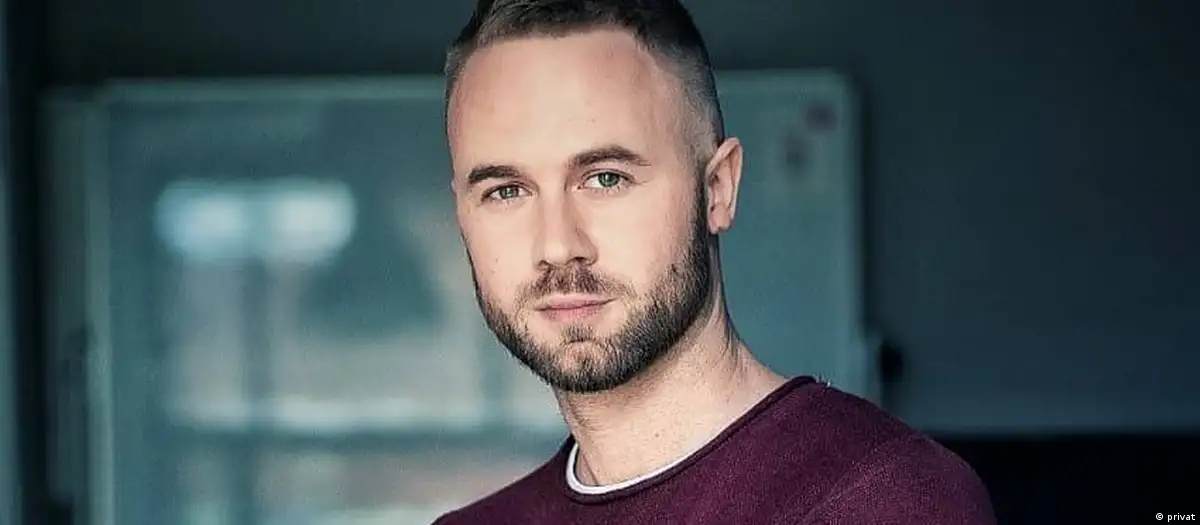
Andrej Gnjot has been waiting for four months in the District Prison in Belgrade for the decision of the Serbian courts on whether he will be extradited to Belarus due to, as stated in the Interpol warrant, tax evasion in Belarus.
Gnyot is an opponent of the Belarusian regime and is one of the founders of the Free Association of Athletes of Belarus.
This initiative of Belarusian athletes was founded after the disputed presidential elections in Belarus in 2020, and they were labeled as an "extremist formation" by the KGB.
Although he initially did not publicly declare himself a part of the organization due to possible retaliation by the Belarusian authorities, Gnjot admitted for the first time that he is one of the three founders of the organization in his testimony on Monday (February 19) before the Court of Appeal in Belgrade.
"I created the logo, I started the Instagram page, I am the idea leader of the organization," said Gnjot.
This organization led to the fact that Belarus was deprived of hosting the World Hockey Championship and that the International Olympic Committee suspended the funding of the Belarusian National Olympic Committee, which was headed by the President of Belarus, Alexander Lukashenko.
"We managed what even the politicians failed to do - we took one armchair from the dictator," said Gnjot. As a result, their lawyer Aleksandar Danilevich was sentenced to ten years in prison, and retaliation followed against other members of the organization.
A political, not an economic criminal
After receiving a signal in June 2021 that the state had learned about his participation in opposition activities, he realized that it was time to flee Belarus. He went first to Russia, and then to Thailand.
Not knowing that an international warrant had been issued for him, Gnjot arrived in Serbia in October last year on an official trip.
Immediately after landing at the Belgrade airport, he was detained by the Serbian authorities. A higher court ruled that conditions were met for him to be extradited to Belarus, but Gnjot's legal team appealed.
"Our request is based on formal reasons, namely that the High Court in Belgrade did not hear Andrej Gnjot when it should have done so." We also believe that there is evidence that he will not receive humane treatment there," said Gnjot's lawyer Filip Sofijanić.
Thus, Gnjot spoke for the first time only at the hearing before the Court of Appeal. He presented his defense for almost an hour, describing in detail the attitude of the Belarusian authorities towards political opponents.
"There are more than 1.600 political prisoners in Belarusian prisons. "We don't know their condition," Gnjot said.
He also mentioned other athletes who were arrested for political activities and read quotes in which they describe in detail the torture they undergo in a Belarusian prison. Gnjot is sure that the same fate awaits him as his comrades.
"A martyr's death awaits me in Belarus." There is no law, no protection and no independent judiciary in Belarus. Anyone who is against the government has to be locked up, tortured and humiliated," Gnjot expressed his fears.
He also compared himself to Alexei Navalny, the Russian opposition figure who recently died in a Russian prison, and said that he "wouldn't want to have the same fate as him."
"The dictatorship in Belarus is up to the elbows in blood and my life is in your hands. "Serbia should not have bloody hands because of the Belarusian authorities," added Gnjot.
What is Gnjot charged with?
Gnjot is charged in Belarus with tax evasion worth around 300.000 euros, but he claims that he never received a summons for that procedure and that tax evasion is "a wafer for political processes", and that this is not the first case that the authorities use the same member of the tax of the law for dealing with dissidents.
According to Gnjot's lawyers, this law has no basis, because it is applied retroactively. Namely, Gnjot is being charged for an act he allegedly committed between 2012 and 2018, and the tax law on the basis of which he is being prosecuted entered into force only in 2019.
"Since civilized countries or international organizations do not cooperate with Belarus in finding and extraditing the opposition activists who have fled, the Belarusian authorities have started to initiate false criminal proceedings on charges of alleged non-payment of taxes and other economic crimes," explains lawyer Vladimir Drozdov, Gnyot's representative before international institutions.
That is why Drozdov has already asked to delete Gnjot's data from the Interpol register. "The data does not comply with the Interpol Charter, because in case of extradition and trial in Belarus, Mr. Gnyot, as an opposition activist, has a real risk of being subjected to torture or other cruel, inhuman or degrading treatment, as well as a clear denial of justice," Drozdov explains. .
Drozdov also informed the European Court of Human Rights in Strasbourg about this case, which sent a clear message to the Serbian prosecution that it expects the state of Serbia to give the court in Strasbourg time to make its decision, before extraditing Gnjota to Belarus.
The decision of the Court of Appeal is awaited
The Court of Appeal is now on the move, whose decision, according to the lawyer, is expected in twenty to thirty days.
"We hope that the Appellate Court will cancel the first-instance decision and that we will then start the proceedings again, that he will have the opportunity to make his statement before the High Court in Belgrade and that we will then present the other facts," says Sofijanić.
And while the courts are deliberating, Andrej Gnjot was returned to prison with handcuffs by the police. Gnjot spoke extensively about his days in prison before the judges, complaining that he was surrounded by murderers and drug cartel leaders, that he did not receive adequate medical support, nor did he have access to the prison library.
He told the court that his eyesight was failing, his hair was falling out and graying and he was suffering from "intellectual hunger". Therefore, in a separate procedure, he requested that the decision on detention in the District Prison be changed to a measure of house arrest.
But that decision is not even in sight yet.