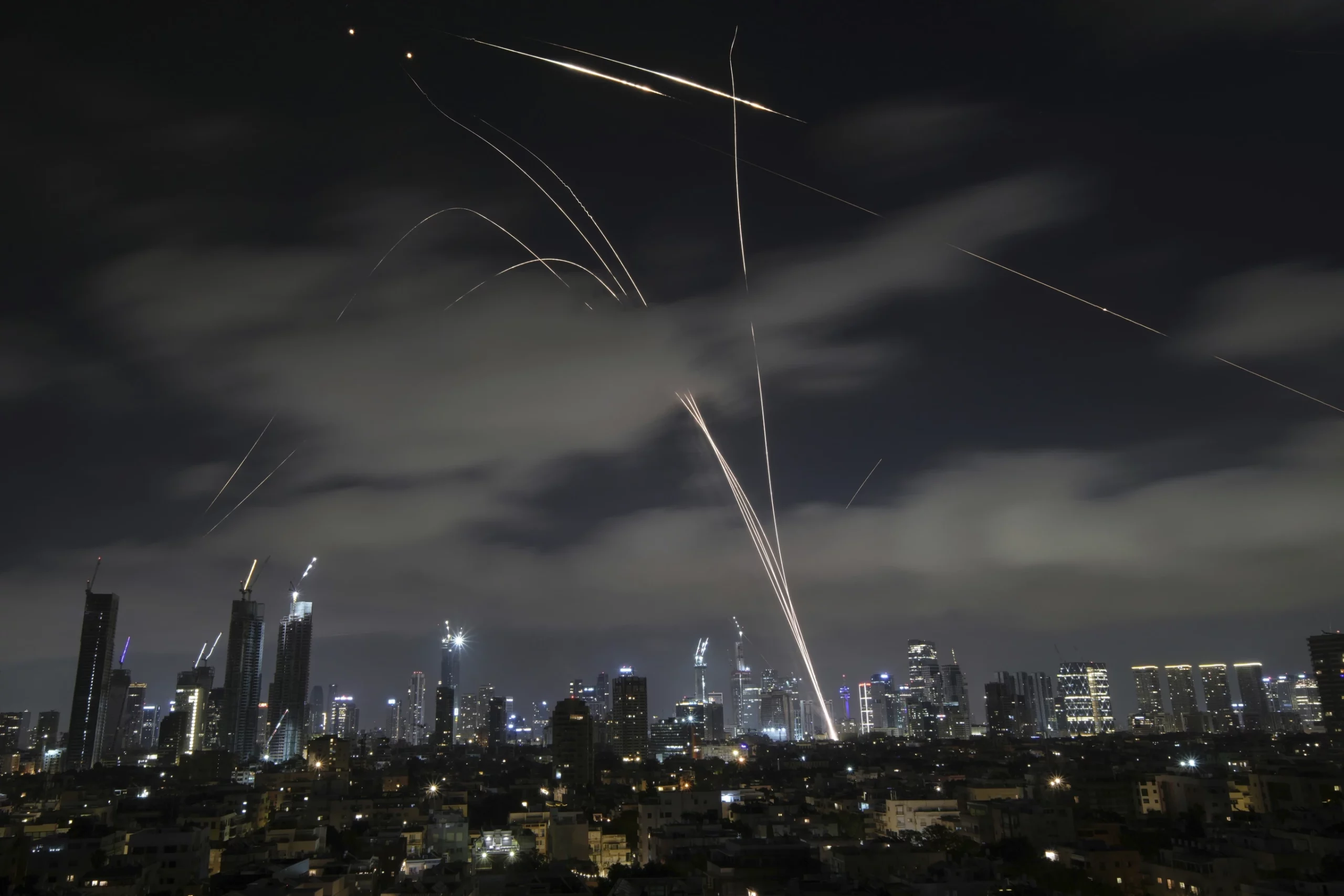
After the attack Israel, Iran launched retaliatory attacks. Tel Aviv was hit with several missiles. So far, no one has been reported dead, but dozens of people have been injured.
The projectiles, therefore, penetrate here and there Iron Dome, the Israeli air defense system that is considered the best in the world, writes Deutsche Welle (DW).
What can he do and why is he still being considered for replacement?
What does the Israeli air defense system look like?
Although the "Iron Dome" is most often written about - because it does the most work - Israel bases its air defense on two other systems.
"David's slingshot" is supposed to shoot down medium-range missiles, drones and cruise missiles. The "Strela" system tracks the puck of long-range missiles.
The Iron Dome is the most active, shooting down short-range rockets and artillery shells, which are most often used against Israel. A laser-based defensive weapon is also in preparation.
How does the Dome work?
The system has three parts - radar, control center and missile launcher. Everything happens in a few seconds, because, for example, when rockets are fired from the Gaza Strip, the missiles fly between 15 and 90 seconds, depending on the part of Israel that is targeted.
The turret launches a defensive missile only when the radar and control center – both located on the trucks – calculate that the missile is heading towards a city or village. Near the mobile radar are four launch units equipped with twenty missiles each with a range of four to seventeen kilometers.
It is calculated that one such system can protect an area of 150 square kilometers, which corresponds to a medium-sized city. It can record six enemy missiles at the same time.
The defensive missile chases it across the sky and explodes nearby, destroying the attacker's missile as well. Then there is still the danger of debris falling from the air, though intelligent missiles tend to destroy a missile outside a populated area.
There are a total of ten such systems in Israel. Some experts say that it would be better if there were thirteen, because that way the whole territory could be covered.
How successful is the system?
Manufacturer, state-owned Rafael Advanced Defense Systems, claims that the success rate is around 90 percent.
When Hamas fired rockets at Israel – say, in October 2023, with an estimated three thousand rockets – the idea was simple: overload the Dome. Hamas has rudimentary missiles, often inaccurate, but if there are too many of them, even the Iron Dome can't catch them all.
How much is that?
Besides the limited capacity, there is another reason that the Iron Dome only shoots down those missiles that fly towards populated areas or important infrastructure.
Because each anti-aircraft missile fired allegedly costs about 50.000 dollars. The price of one battery of the Dome is between 40 and 70 million dollars.
Since when has it been in use?
The idea for such an anti-missile system first appeared in the mid-1990s. At that time, the Islamist paramilitary Hezbollah, then stationed exclusively in Lebanon, began shooting at Israel.
But the Iron Dome concept was not really launched until 2004, when Brigadier General Danny Gold took over leadership of Israel's military defense research and development. Then in 2007 came the order to develop a defense shield. It has been in operation since 2011.
The first Iron Dome was installed in March 2011 near the town of Bersheva, about 40 kilometers from the Gaza Strip. Since then, the lives of many Israelis have changed.
However, even Gold, who came up with the Dome, once said that many Israelis had become complacent and were relying too much on air defense.
"Defense is a combination of Iron domes, sirens and extensive intelligence operations. All three levels are mutually supportive. But people shouldn't sit at home and do nothing, thinking that a defensive shield over their heads will fix everything without fail," he said.
Are lasers coming?
The same state-owned company that makes the Dome these days introduced a new anti-aircraft marvel called "Iron Ray". An American concern also worked on it Lockheed Martin.
The principle of operation is similar, except that it is a laser weapon. It should be particularly effective against swarms of drones, which did not exist when Iron Dome was developed.
A huge advantage of lasers is that they are significantly cheaper. One shot reportedly costs a maximum of two thousand dollars. Ammo is theoretically unlimited.
It is not yet known when the Iron Ray batteries will be ready for use.