Everything is like a spy movie, but with a very complicated scenario. The only thing is that the actors who appear on the screen for the time being do not look like James Bond, but have been trained and instructed, just cogs in a big game that they do not understand, but which extends over the whole of Europe.
So now German investigators and services are very interested in what the two know Serbs who are in remand prison in Serbia. Because their case connects Ukrainian airplanes in Leipzig, two rucksacks with explosives near Kanjiza and scratches into a much deeper story, writes DW.
In that story, Serbia is a crossroads for Russian services in Europe. For what is in Germany openly calls it hybrid war.
What are "disposable agents"
The vicissitudes put Russian "disposable agents" back in the spotlight - often small-time criminals or unremarkable citizens who are allegedly recruited by Russian services to carry out some diversion for money.
U Moscow they calculate in advance that these trained saboteurs will fall into the hands of the police, but it is difficult to prove who recruited them and how.
DW has repeatedly reported on the phenomenon, for example about Ukrainian boys in Kharkiv who wrote graffiti against the authorities in Kyiv for 20 euros, and then set fires on transformers connected to the railway infrastructure.
Or about the destruction of at least 270 cars in Germany, in which one citizen of Serbia and Bosnia and Herzegovina allegedly participated, again at the expense of Russia. They injected pur-foam into the exhausts, which can destroy the engine, and left stickers on the cars suggesting that everything was the work of radical green-leftist youth. So the Russians allegedly wanted to arouse public anger against the Greens and help the radical right in the elections in Germany.
The weekly Spiegel described it as Russia's "shadow war" against Germany. "Hacker attacks on energy suppliers, disinformation campaigns before elections, fly-overs drones over barracks and industrial plants: Moscow has a rich selection of tools to destabilize Germany and unsettle the population."
Things became more serious, according to the German authorities, recently at the airport in Leipzig.
"They will pay for it," Chancellor Friedrich Mertz said last week. He did not mention Russia, but in general the "authors of hybrid attacks" on Germany. After that, it was heard several times from the top of the government that they hold Russia responsible for the attempted attack in Leipzig.

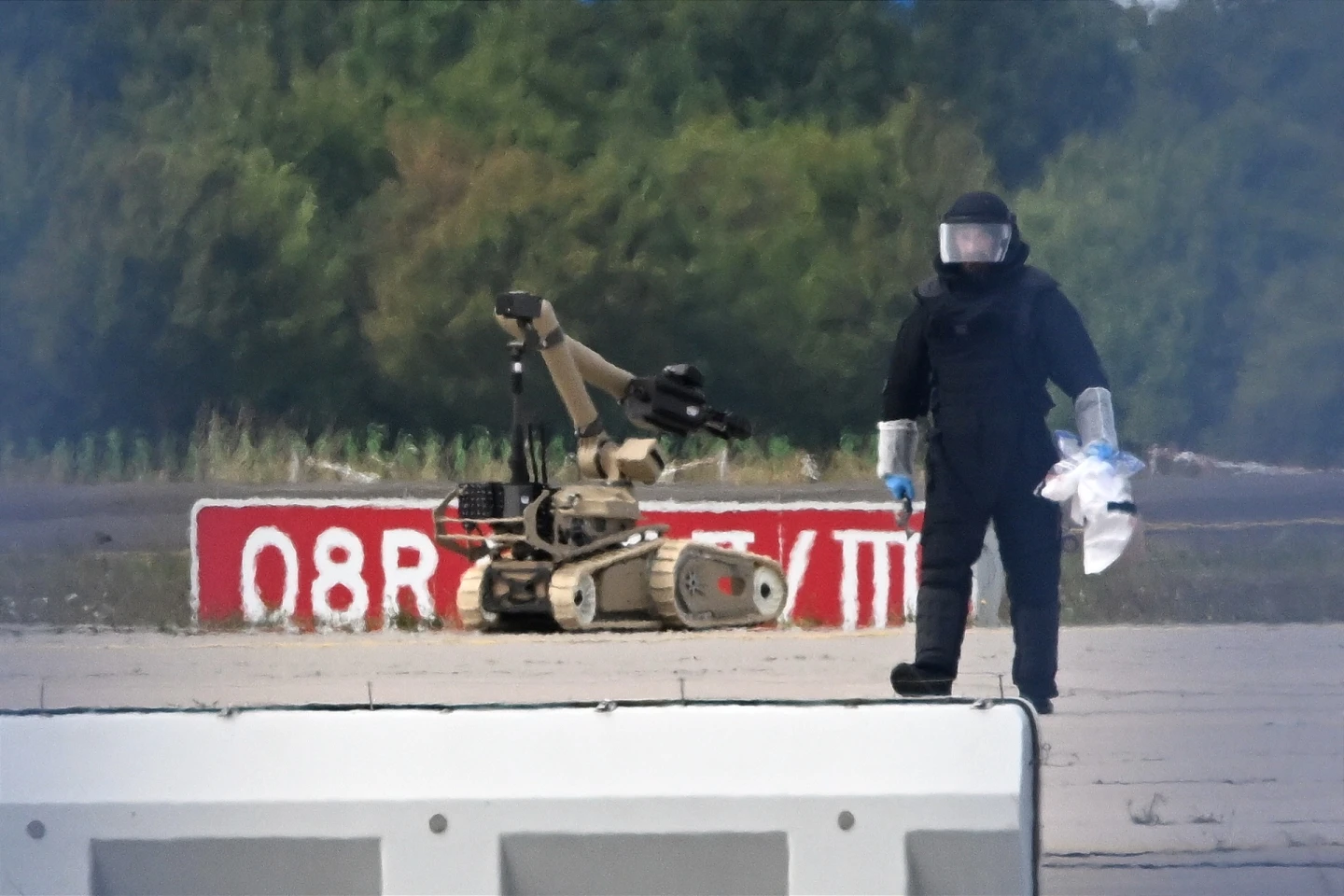
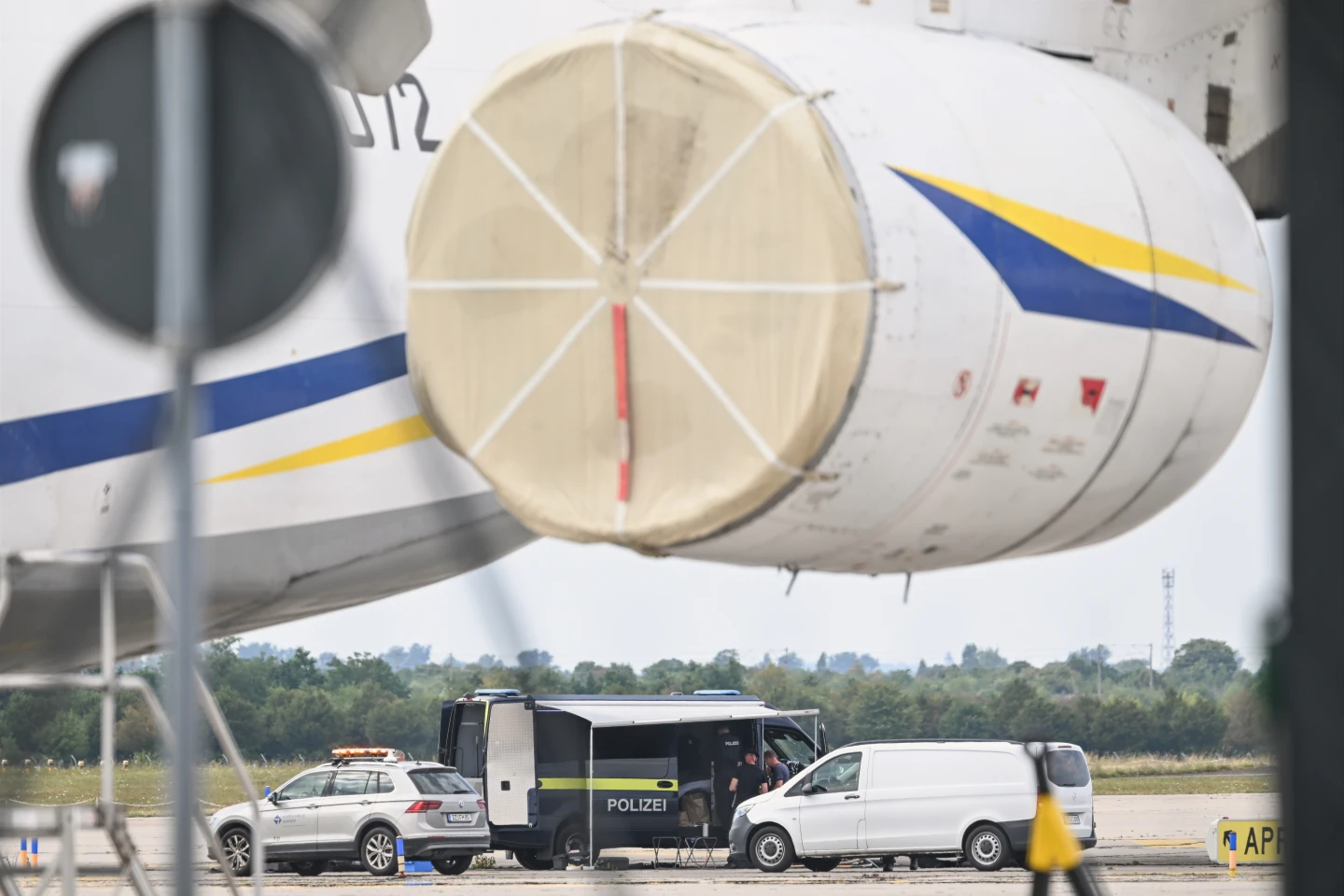
Photo: Hendrik Schmidt/dpa via APInvestigation of attempted attacks on Ukrainian planes in Leipzig
Trail to Serbia
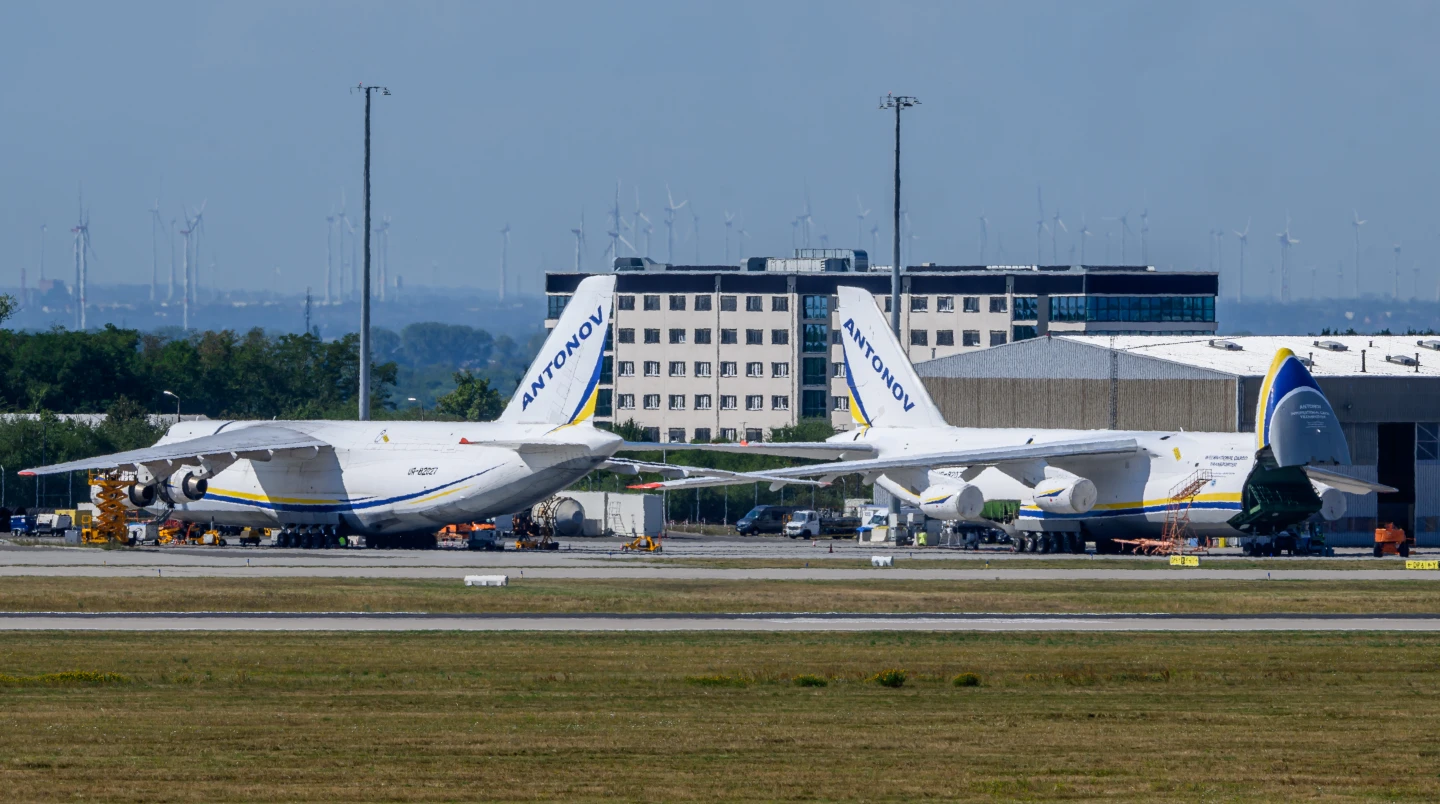
At that airport in the east of Germany, a drone was found at the beginning of August, right next to the Ukrainian Antonov transport plane, in the part of the airport that the Ukrainian army also uses for logistics. Not far from the drone - a can with plastic explosives.
The footage and the investigation indicate, as reported, that the drone with explosives was supposed to crash into the plane's tank and cause the kerosene explosion. But the explosive was poorly connected to the lighter, so it didn't work.
Ten days later, a similar drone was found about five kilometers from the airport. Both drones were equipped with a router and could be controlled via the mobile network - from any corner of the world.
Traces of DNA were found. Investigators have at least two suspects - one allegedly in contact with Russian intelligence and linked to the 2024 explosion in Lodz, Poland. Another allegedly traveled to Germany from Istanbul before the attempted attack in Leipzig, and then went to Serbia.
"According to the knowledge of Western intelligence services, that Balkan country is a focal point for Russian sabotage operations in Europe. Russian secret services allegedly recruit and train personnel there," Spiegel writes now.
That weekly brings new information from the investigation, where the clues again lead to Serbia and connect Leipzig and Kanjiza.
What do B. and Đ. know?
German investigators are very interested in what Danilo B. and Slobodan Đ know. who have been in custody in Serbia since June 11. They are believed to have information on a "colleague", a one-time agent involved in the Leipzig case.
B. is a Russian-Serbian citizen, and Đ. only Serbian. They were stopped when, in two separate cars, they tried to cross the border into Hungary. One was carrying drone components in the trunk, and the other was carrying cans of explosives.
In Serbia, they are being investigated for illegal possession and carrying of weapons, ammunition and explosive materials, and BD is also under investigation for document forgery. For now, there is no official word about planning an attack, terrorism or the like.
By the way, there is not much to say about this in Belgrade. While the tabloid Bild in Germany widely wrote that they were Russian one-time agents, and the Minister of the Interior, Aleksandar Dobrint, said that the services prevented an attack attempt in Germany by tipping off their Serbian colleagues, almost nothing is heard from Serbian institutions.
However, the Higher Public Prosecutor's Office in Subotica announced this Wednesday (September 2) that it has expanded the investigation against those two to include four more people, two of whom are also in custody, one has a restraining order against leaving the apartment, and one is not available to the Serbian authorities.
In answers to Radio Free Europe (RSE), the prosecution did not comment on any allegations from Germany referring to the secrecy of the investigation. But it did confirm that the expansion of the investigation is related to the Kanjiž case.
It is about the discovery of two backpacks with explosives near that town on the Serbian-Hungarian border, near the gas pipeline. It was in April, just a few days before the decisive elections in Hungary, which Viktor Orbán, who was still prime minister at the time, then lost.
Orban used the incident to directly accuse Ukraine of diversion and attempt to cut off Russian gas, in a similar tone in which he conducted the entire campaign. Serbian President Aleksandar Vučić did not point fingers, but said that "it is obvious that geopolitical games will not leave us alone."
Photo: Hendrik Schmidt/dpa via APUkrainian planes at Leipzig airport
Serbia in the crosshairs
Since the beginning of the full Russian invasion of Ukraine, the authorities in Serbia have prided themselves on not imposing sanctions against Russia.
However, it soon became an open secret that Serbia, through intermediaries from the Czech Republic and Poland, was simultaneously equipping the Ukrainian army with grenades for American money. That string was crowned recently, during the visit of Ukrainian President Volodymyr Zelensky to Belgrade, when there was conspicuously no mention of military cooperation at the press conference.
Previously, there were incidents that indicate that Serbia is networked with Russian services.
Only last September, two people were arrested on suspicion of training about 150 Moldovan and Romanian citizens in a camp near Loznica to cause chaos after the elections in Moldova. Seventy people were arrested in that country before the elections.
A few days later, eleven more people were arrested in Serbia. They are suspected of espionage and religious and national discrimination, because last year they threw green paint on Jewish buildings in Paris and left pig heads in front of mosques in an attempt to cause chaos. In addition, they wrote discriminatory messages in front of the Brandenburg Gate in Berlin.
Although it was not said in Serbia again, it was widely reported in the European media that it was all done for money and at the expense of Russia.
"It is hard to believe that the Serbian security services did not know that this was happening, because this is not a single case, but a whole series of the same or similar cases, that we have foreign nationals training for various security or para-security operations in other countries," Predrag Petrović from the Belgrade Center for Security Policy told RSE at the time.
What is being done?
While the authorities of Aleksandar Vučić have clearly decided not to make public waves - and there is every chance that they won't before the elections - many commentators estimate that Serbia smoothed things over with Western countries through quiet cooperation. And by arming Ukraine, but also by arresting alleged Russian agents.
In Germany, on the other hand, in the midst of the investigation into the attempted attack in Leipzig, it was announced that the Russian House in Berlin and the consulate of that country in Bonn will be closed, as well as that the border control of Russian citizens coming to Germany will be tightened.
Russia has always denied all accusations. These days, the head of diplomacy, Sergei Lavrov, called the allegations about Moscow's involvement in the Leipzig case completely fabricated provocations. As a countermeasure, Russia will now close the Goethe Institute in several locations.
Real journalism costs money, and we will not be bought by tycoons and corporations. Support us with a one-time or monthly donation. The time for it is now!