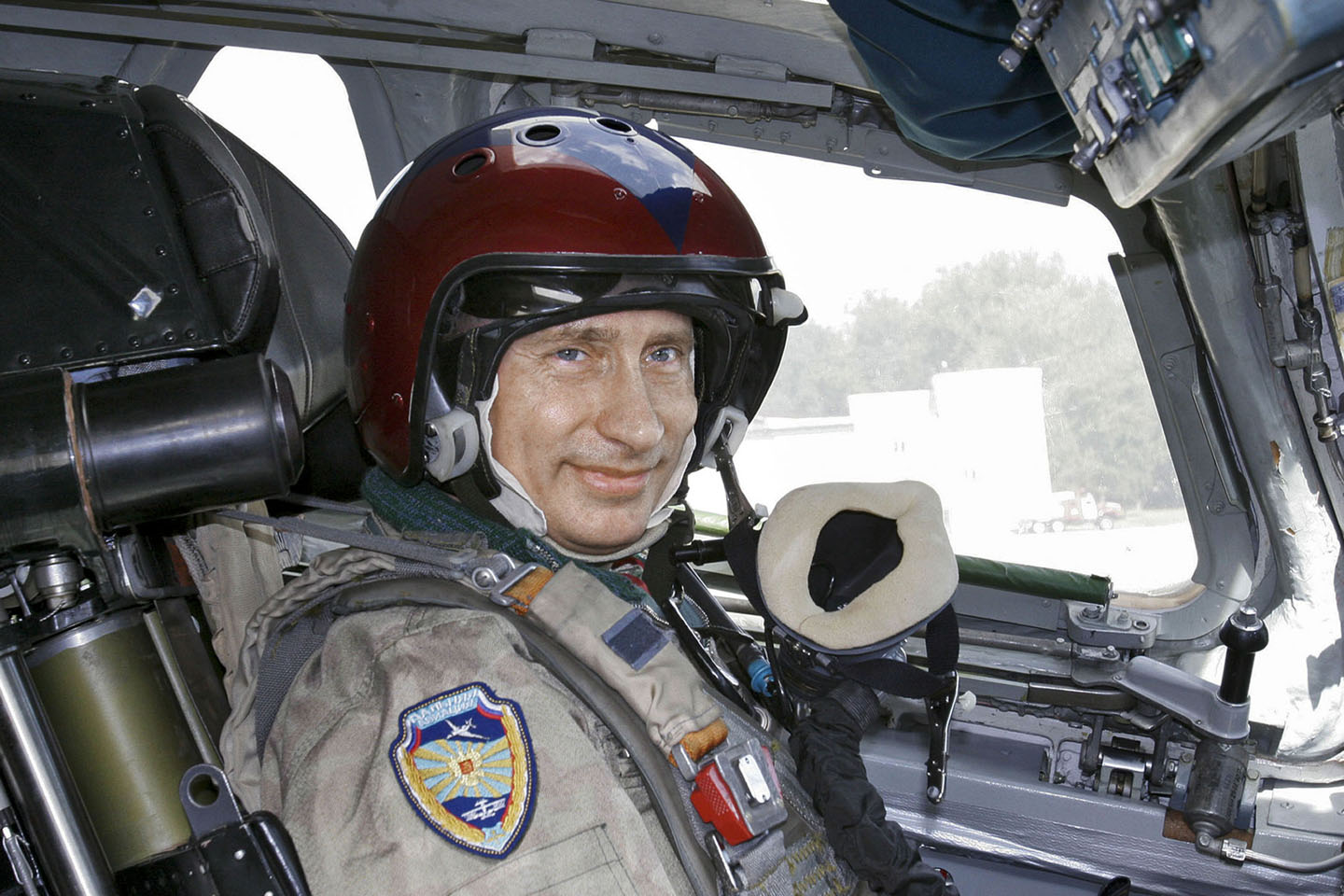
After five hours of negotiations between Trump's special envoys and Vladimir Putin in Moscow on the peace agreement for Ukraine, there was no significant progress. The USA was represented by two New York businessmen
Consultations on peace agreement u Moscow they lasted more than five hours. The talks ended after midnight Moscow time, and the participants had little to say to the public. But one thing was immediately clear: no significant progress had been made. Despite all American efforts, no peace agreement was reached. And maybe the two sides haven't even come close.
"There is no 'compromise version' of the Ukrainian plan," former Russian ambassador to Washington and Putin's foreign policy adviser Yuri Ushakov told Russian media after the talks. He was entrusted by the President of Russia to lead the negotiations on the peace agreement for Ukraine.
Ušakov negotiated with Americans described as "useful", but added that "there is still a lot of work to be done". Some of the American proposals were acceptable to the Russians, while others were not. According to him, in addition to Trump's draft peace plan, the Russians received four other documents.
What do these documents contain? What common points and differences did the negotiations open up? According to Ushakov, both sides agreed not to disclose details.
Trump sent his son-in-law Jared Kushner and special envoy Steve Witkoff to Moscow for the talks.
Earlier in the day, Putin said that the changes proposed by Kiev and Europe to Donald Trump's original 28-point peace plan were unacceptable, German "Spiegel" reports.
His country "did not plan to go to war with Europe", he said, "but if Europe suddenly wants a war and starts it, we are ready immediately".
On Wednesday (December 3), the NATO foreign ministers are also meeting. At the round table, they should discuss the ongoing peace negotiations as well as defense issues.
After the talks, Witkoff flew from Moscow on the night between Tuesday and Wednesday, reports Reuters, referring to the Tass news agency.
Photo: Alexander Kazakov, Sputnik, Kremlin Pool Photo via APNo agreement reached.
Who are Trump's negotiators?
Exactly what proposals Witkoff and Kushner presented in Moscow, they kept to themselves. The negotiators chosen by Trump are certainly unusual.
Normally, the talks in Moscow would have been led by the US Secretary of State or a delegation from the State Department. Instead, Trump's favorite golfing partner and his son-in-law are coming: two New York businessmen who normally negotiate multimillion-dollar real estate deals, not peace in Europe, "Spiegel" writes.
Trump's renewed reliance on Witkoff and Kushner is tied to the Gaza deal that the two successfully brought to a close. This, if only temporary, success in the Middle East instilled optimism that their methods could end Putin's war as well.
"If we manage to resolve the Russian-Ukrainian conflict, everyone will be jumping for joy," Witkoff said a few weeks ago in a phone call with Moscow's negotiating partner Ushakov.
Behind the scenes of peace negotiations, American experts explored new business opportunities with Moscow. Can negotiation tactics from the business world solve the conflict more easily than traditional diplomacy? That's certainly what Trump and his team hope for.
While Witkoff negotiated the Ukrainian "deal" for months, American businessmen discreetly explored possible business arrangements in Russia, the Wall Street Journal reported. Among other things, contacts were made between the American company Exxon and the Russian state corporation Rosneft.
Photo: Alexander Kazakov, Sputnik, Kremlin Pool Photo via APNegotiations in Moscow
Even before Trump's inauguration, the Kremlin developed a strategy to present Russia "not as a military threat, but as a country with numerous business opportunities," according to the Wall Street Journal. The key figure in that strategy is Kirill Dmitriev, who escorted Vitkoff and Kushner through Moscow before they met with Putin.
"Spiegel" writes that Dmitriev is the right counterpart for Vitkoff. He studied and worked in the USA, and as the head of the Russian Direct Investment Fund, he is also a businessman.
Vitkoff and Dmitriyev maintain close ties that, from the Russian perspective, prove to be fruitful. "Russia has so many resources, so much land," said this real estate investor. According to Witkoff, Russia, Ukraine and the USA should become business partners, instead of parties in a war conflict. "If everyone enjoys their own well-being, that will naturally be a barrier to future conflicts there."
Suspicion of Europe
European leaders followed the negotiations with appropriate concern. "We know it's not about peace," Polish Prime Minister Donald Tusk told the Wall Street Journal about Trump's peace plan. "It's about business."
The European Union views the collusion between Trump and Putin with great suspicion. America's 28-point plan essentially calls for Kiev to come to terms with the loss of territories occupied by Russian troops. For the Ukrainians, but also for the EU, signing such an agreement would actually be capitulation.
Trump's original proposal asked Ukraine to relinquish not only territory currently held by Russia, but also parts of the Donbass held by the Ukrainian armed forces, at a huge cost. The proposal demanded that Ukraine limit the number of soldiers to 600.000 and permanently renounce NATO membership, writes Deutsche Welle (DW).
Dutch Defense Minister Ruben Brekelmans told reporters that the territorial integrity of Ukraine and a strong Ukrainian army are not topics that Europe wants to negotiate on. "A powerful Ukrainian military is a strong deterrent to Russia and makes the entire European security system stronger," Breckelmans said ahead of a meeting with his European counterparts in Brussels on Monday.
Experts say Trump's proposal broke a number of European red lines, including demands that imply the withdrawal of US military forces.
"The agreement to have European fighters stationed in Poland, as stated in the Trump plan, suggests that there will be no US aircraft there - deployed under this or future administrations," wrote ECFR's Jana Kobzova.
Other parts of the proposal supported "Moscow's demands that the NATO infrastructure be moved as far as possible from Russia's western borders, which would practically eliminate the deterrence capability on the eastern flank," Kobzova added. "All this creates dangerous precedents for all of Europe."
This year, Witkoff has already met with Putin five times for hours-long talks in Moscow and St. Petersburg. So far, no success.
What is happening in the country and the world, what is in the newspapers and how to pass the time?
Every Wednesday at noon In between arrives by email. It's a pretty solid newsletter, so sign up!
"Now they are talking about the threat from Russia and the beginning of preparations for war with Russia, which, in my opinion, is a kind of political schizophrenia," said Russian President Vladimir Putin
For the first time in almost two years, the opposition in Venezuela took to the streets across the country to demand elections by July 2027. The government organized its own march in the same square on the same day
France is preparing for Saturday's protests with a series of bans on gatherings and an increased police and military presence. The courts have already overturned one ban in Paris, and unions and students are calling for peaceful demonstrations
The richest man in the world responded with a threat to the news that Democrats are preparing investigations against him if they win the congressional elections. Musk said that whoever initiates a conflict with him should know that "they will find out who is actually pulling the strings."
A New Mexico court ordered Meta to pay $25 billion for misleading Facebook users about their privacy. State Prosecutor Raul Torres said that the verdict is a signal to the entire Silicon Valley.
There is, literally, no difference between the one who claims it is day in the middle of the night, or the one who claims to be a giraffe, from the claims we read on billboards: that Vučić is working to unify Serbs and that Serbia is doing better and better day by day.
The pre-election arrests due to the alleged "overthrow of the state" testify to the regime's panic. The bad news for them is - they can't arrest the whole people who decided to defend themselves from progressive beatings and election theft
The ring that tightens around Ćaciland Student list is getting narrower. Because there are more and more spoiled people who see the false prophet for what he is: a street obscener who is fighting Serbia
The archive of the weekly Vreme includes all our digital editions, since the very beginning of our work. All issues can be downloaded in PDF format, by purchasing the digital edition, or you can read all available texts from the selected issue.