
The World
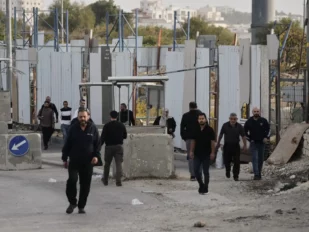
Israel begins demolitions in the West Bank
The Israeli human rights organization "Bethlehem" has condemned the plan for the "forced displacement of Palestinian residents" from a settlement in Hebron.

A group of 18 donkey firefighters are credited with nearly a decade without forest fires in Spain's Doñana National Park
Although it may seem unusual at first glance, this one fire brigade is also unusually effective. In the heart of Andalusia, in the protection of some of the most important natural resources in Spain no less than - the donkey brigade participates in the fire.
Their "engagement" in the Donjanja National Park and the surrounding areas involves helping to prevent fires. How successful the donkey-firefighters, in Spanish burros bomberos, are in their work is confirmed by their many years of "work experience", he writes. Jelena Kozbašić for the Klima 101 portal.
Since 2014, a total of 18 animals from the El Burrito Feliz association patrol the perimeters of the national park. The donkeys that were rescued after being abandoned became, according to the president of the association, Luis Manuel Béharan, "herbivorous firefighters".
Mortadello, Magellanes and Leonor are members of a team of donkey-firemen, employed from March to November. Together with the rest of the brigade, they go to "work" around 7 in the morning, and their "working day" lasts approximately seven hours.
Donkeys are distributed in zones where they clear vegetation and dry vegetation, reducing the availability of fuel for forest animals. fires. These zones - mostly 40 meters long and 20 meters wide - are defined by fences that are removed to ensure the safety of the animals during grazing.
The areas they focus on are carefully selected for their ecological and strategic importance and form a network of natural fire prevention lines across the landscape.
The health and well-being of the animals are under the constant supervision of the women's environmental initiative Mujeres por Donjaana, whose volunteers give each donkey 20-30 liters of water a day to keep them healthy and quench their thirst.
The results of the donkey brigade speak for themselves.
Despite the fact that the frequency and severity of fires are increasing in warmer Spain, the areas cared for by the donkey-firefighters are an exception to the rule: in the Donjana National Park, the past nine years have passed without a single forest fire, that is, the last one occurred at the end of June 2017.
The area of Arroyo Algarve, which is an important habitat of the endangered Iberian lynx, is covered by the competence and success of the donkey fire brigade in fire prevention.
The heroic feat does not go unnoticed: due to its effectiveness in preventing forest fires, the method was also recognized by the Spanish Military Emergency Situations Unit (UME). Last year, their staff visited their colleagues from Donjanje, symbolically "adopting" one of the donkeys.
Over the decades, the mechanization of agriculture led to the gradual disappearance of these animals. Their absence - hand in hand with the depopulation of rural areas and the abandonment of traditional grazing - has contributed to the accumulation of natural fuel for fires in the hills.
And it is donkeys that have particularly useful characteristics for preventing the elements of fire: unlike cows or sheep, they can feed on much drier, coarser vegetation, constantly eating bushes that help spread fires.
This way of fighting fire has an added advantage: it's free. The work of the animals is coordinated by volunteers, demonstrating a sustainable approach to environmental protection through joint action.
The model has spread to other regions of Spain. In Tivisa (Tarragona), the "Donkeys-Firefighters" project was launched in 2020 with only three animals, and their brigade today numbers about 40 heads that clean nearly 400 hectares of terrain. As the initiators of the initiative point out, there have been no fires in this area since the beginning of the project.
In Aljariz (Ourense), the Andrea association uses donkeys to maintain almost 1.000 hectares within a biosphere reserve. Equipped with GPS devices, the animals travel up to 19 kilometers a day, feeding on low vegetation.
Similar initiatives have appeared in Catalonia, Galicia and the Basque Country, combining environmental protection, rural renewal and fire prevention.
Although incredibly useful, fire-fighting donkeys are only part of a wider solution: the leaders of these projects stress that forest planning, land management and reducing areas under flammable species remain crucial.
Regardless, the return of these animals has proven to be a highly effective fire prevention tool. Given climate change, which makes wildfires more frequent and more severe, the answer to today's challenges may lie in part in turning back the past and reviving centuries-old agricultural practices.
Real journalism costs money, and we will not be bought by tycoons and corporations. Support us with a one-time or monthly donation. The time for it is now!
The Israeli human rights organization "Bethlehem" has condemned the plan for the "forced displacement of Palestinian residents" from a settlement in Hebron.

The Ministry of the Interior has announced that it will hire 70.000 police officers, which will increase the security presence in French cities.

"Now they are talking about the threat from Russia and the beginning of preparations for war with Russia, which, in my opinion, is a kind of political schizophrenia," said Russian President Vladimir Putin

For the first time in almost two years, the opposition in Venezuela took to the streets across the country to demand elections by July 2027. The government organized its own march in the same square on the same day

France is preparing for Saturday's protests with a series of bans on gatherings and an increased police and military presence. The courts have already overturned one ban in Paris, and unions and students are calling for peaceful demonstrations

There is, literally, no difference between the one who claims it is day in the middle of the night, or the one who claims to be a giraffe, from the claims we read on billboards: that Vučić is working to unify Serbs and that Serbia is doing better and better day by day.

The pre-election arrests due to the alleged "overthrow of the state" testify to the regime's panic. The bad news for them is - they can't arrest the whole people who decided to defend themselves from progressive beatings and election theft

The ring that tightens around Ćaciland Student list is getting narrower. Because there are more and more spoiled people who see the false prophet for what he is: a street obscener who is fighting Serbia

The archive of the weekly Vreme includes all our digital editions, since the very beginning of our work. All issues can be downloaded in PDF format, by purchasing the digital edition, or you can read all available texts from the selected issue.
See all




