She was "Kola's girl" from the east. The Germans saw her as a mother. After sixteen years at the head of Germany, Angela Merkel could be the story of a wise and measured ruler. Or about a virtuoso player of dirty political poker. As anyone likes it
The most expensive picture of Angela Merkel, which has never been taken, could have been created one Thursday in East Berlin. Merkel is in the sauna with her friend, wrapped in a towel. He does this every Thursday, and then they go for a beer in the nearby tavern "At the Old Gas Lantern".
That same evening, four kilometers away, the unofficial spokesman for the government of the People's Republic of Germany, Günter Schabowski, announces the news. The note spells out that freedom of travel to West Germany will be enabled. A journalist asks when it will take effect. "As far as I know," Šabovski says confusedly, "immediately, without delay."
It was happening live. People rushed to the border. The wall fell as the future chancellor sweated blissfully. That Thursday, she skipped the beer, joined the crowd and ended up in the apartment of a West Berlin family. But she quickly returned home to get some sleep. Because after Thursday comes Friday, a working day. On Saturdays, during the sixteen years of her mandate, Merkel could be seen leaving the local store with bags of greens. Small appetizers, potato soup that must be mashed, but must not be put in a blender. A short break around Christmas when she bakes cookies, a summer in ankle boots in which she walks in South Tyrol.
All this while dealing with crises and managing the most powerful country in Europe. While "Time" magazine declares her "the chancellor of the free world", she wants to be simple mom – always the same, a bit boring, but reliable. That image of the chancellor threatens to remain.
But that would not be fair to Angela Dorothea Merkel, who played politics virtuosoly as if she were the main actress in the series "House of Cards". It wouldn't even be fair to the graveyard of political opponents that she chewed up and spat out.
WE CAN DO IT
Merkel was a rock in German and world politics, but not like her political father Helmut Kohl. He was a real man of the people, always ready to be sculpted in life size. She wasn't even like Willy Brandt. Who could imagine Merkel falling to her knees in the Warsaw Ghetto or anywhere else?
She spent sixteen years in a small room on the seventh floor of the Chancellery where, they say, she received at a small writing desk. One reporter noted that there was also a couch there, which could sell well as a used item because the chancellor had never sat on it. In those sixteen years, Merkel grew into a white canvas on which everyone projects what they want.
It is the last day of August 2015, the sun is scorching at the railway station in Pest, where an endless sea of refugees is waiting. The Germans heard about the toponyms of the Balkan route, about the village of Idomeni between Greece and Macedonia, about Preševo, about the abandoned brick factory near Subotica where migrants spend a few nights.
On that day, Merkel's act was the only one, of course planned, but the generals after the battle would call it a reckless gesture in life. He says on camera that Germany will not close its borders to people fleeing war and poverty. "Wir schaffen das", says the chancellor ("We can do it"). That sentence will hang over her head for the rest of her life.
DARK AND LIGHT GERMANY
These are the days when Germany is proud of itself. Refugees are welcomed with open arms. The percussive pens of the press glistened in the corner of the eye with a proud tear - we, the Germans, are good. The ten-year cycle is closed, since the 2006 FIFA World Cup, which the Germans still call Sommermärchen ("summer fairy tale"), although they subsidized to be the organizers. Clear, bright Germany.
True, there is also a "dark Germany", as the President of the Federal Republic Joachim Gauck said at the time. These are those who rebel against refugees, Nazis who draw swastikas on migrant accommodation or set them on fire. There are also "concerned citizens" protesting the arrival of a million people from Syria, Iraq and Afghanistan.
Both the good people who would receive all the world's refugees, and the right-wingers who would shoot them, project their goodness or reason for anger onto Angela Merkel. Can we do that? We can, some say. We won't, say others.
photo: ap photoTHE MOST POWERFUL WOMAN IN THE WORLD: With refugees, a photo that will follow her for the rest of her political career;...
A REFUGEE MOTHER
But Angela Merkel's path to the cover of "Tajma" was not a straight line. "Welt" journalist Robin Alexander wrote a book about the refugee crisis and supported with evidence that Merkel and her government actually wanted to close the borders. They are deliberating about it on the night between September 12 and 13, 2015, and basically everyone is in favor of it.
"But at the critical moment, there is no one to take responsibility for closing the borders," writes Alexander. The fear of the reaction of the German courts is too great among politicians. Pursued, that is the name of this journalist's book. He claims that the crisis is actually chasing the chancellor and members of her government, that it is carrying them, that they are not deciding but swimming downstream.
But a good crisis should not be wasted. Merkel is visiting a refugee home in Berlin. Immigrants from Syria would like to take pictures with her. The reporter of the "Bild" tabloid records the bodyguard's blunt answer: "No taking pictures!" But Merkel says: "It's okay." The chancellor's court photographers know very well that they must never take pictures of her from the side or from below. And now she, who takes care of such details, ends up taking selfies with Syrians.
The "refugee mother" was born at that time. The fact that Maltene made a dirty deal with the Turkish sultan Erdogan the next day - he to keep refugees, the European Union to send him billions of euros - does not change the image of the chancellor as "The One Who Opened the Border".
FIRST HEIR OF HELMUT SCHMITT
Merkel leaves the political scene as a maestro without a masterpiece. Kohl united Germany and completed the EU project. Gerhard Schroeder liberalized the labor market and abandoned German pacifism by attacking Yugoslavia. There is hardly one big thing for which Merkel will be remembered.
"The New Statesman" brings to mind two German verbs that can be used to describe her reign: together (create) i manage (manage). Merkel does the latter, she is a housewife who does not create anything new but makes do with what she has in the pantry.
In a fresh biography Chancellora portrait of an era, journalist Ursula Weidenfeld mercilessly describes Merkel as a woman without ideals. First of all, she is the successor of the social democratic chancellor Helmut Schmidt, known for saying that politics requires "will and cigarettes" instead of vision. "Whoever has visions should go to the doctor," said Schmidt.
"People expect certain services from politicians in order to solve some problem. Any problem solving is subject to mistakes and you have to live with that," said Merkel in a television interview in 1991.
MIDDLE-EARTH DISTRICT
If Angela Merkel were a city, writes Weidenfeld, she would be Hasloh. That town of 20.000 souls is famous for accurately representing the German average - according to the number of inhabitants, demographics, and pocket depth. That's why new products are tested in Hasloh before they are released to the entire market.
In a negative reading, this makes Merkel a woman without qualities. In a positive way, it makes her a statesman who understands the people and, above all, does not want to surprise them. Changes are best when they are moderate, like when the new ketchup is just a little sweeter or more sour.
Psychologist and market researcher Stefan Greenewald described Germany during the Chancellor's era as a hobbit-like District of Middle-earth. In Tolkien's capital, the hobbits are holed up in holes, eating, drinking and sleeping well. They consider changes in the daily routine rude. And Merkel, like mom, she mostly knew how to keep Orcs away from the District.
"MERKELOVATE"
In 2015, the verb "Merkelovati" ranked highly in the selection for the slang word of the year. Dictionaries define it as "doing nothing, not making a decision".
Merkel raised hesitation to the level of political skill. She has never been the rooster that crows first and ends up in the soup. Only a few years ago, she agreed to a vote on the introduction of homosexual marriages - and reaped the laurels. She barely agreed to the introduction of the minimum wage - but was praised for the measure. When the accident in Fukushima happened, she used the panic to order the shutdown of the German nuclear reactors - and along the way dampened the then strengthening of the Greens.
Well-known philosopher Peter Sloterdijk accused Merkel of anesthetizing the nation. "Fierce moments from Mrs. Merkel's behavior support the assumption that Berlin is ruled decisively. (...) During the boring moments, I get the impression that no one should worry, because the unwillingness of the population to endure fundamental changes is reflected in the alleged sluggishness of the Government", he wrote in an essay for "Noye zircher Zeitung".
She herself would call it the patience she learned in the GDR. "Perhaps I belong to the type of people who first observe the environment for a while and try to evaluate it. Hence sometimes a certain restraint, and then I start saying what is important to me. I wouldn't call it thoughtfulness, but I would say that for me it is a life necessity", she said in 1991, then already as a minister, to the famous journalist Günter Gauss.
photo: ap photo…with Trump and Macron;…
A WOMAN FROM THE EAST
She sat in the studio unsure, aware that she was performing in front of a suspicious audience. The distrust is mutual. She, a woman from the East, needs to prove herself in the pool of sharks that swim around Bonn. He has a black turtleneck and a red button-up sweater, his hair is still a Sherpa, but the fingers are already joined, a gesture that signals calmness, today popularly known as "Merkel's rhomboid".
The young politician holds her own even when the overwhelmed Gauss is faced with the fact that she got to the ministerial position because it suited Cole to make the government a little more feminine, Eastern and Protestant. Do Westerners really want to hear, asks the journalist, what it was like in communist East Germany? Or are they just looking for confirmation of their prejudices?
"They knew about the system that has now disappeared, but they are not interested in the real life in that system, and it was also beautiful. We walked, celebrated family celebrations, went on vacation, had good friends. It was real life and in that part it did not differ from the one in the west. I lack the curiosity to hear about that part of our existence, maybe we would understand each other better", answered Merkel.
It is known that she was born under the maiden name Kasner because her grandfather, an ethnic Pole and a Prussian policeman, decided to Germanize the surname Kazmirczak after starting a family in Berlin.
She was born in Hamburg in 1954, the day after the evangelical church ordered her father to the East. Angela grows up on a farm in Templin near the Polish border, where she will later win a direct mandate in the Bundestag elections seven times in a row.
photo: ap photo...with Putin
CHAMPION OF THE RUSSIAN LANGUAGE
Her first political memory was her mother's tears shed on a summer morning in 1961 when the family learned about the construction of the Wall that would physically separate the two German states. As the daughter of a theologian in a country that does not look kindly on God, Merkel is taught mimicry.
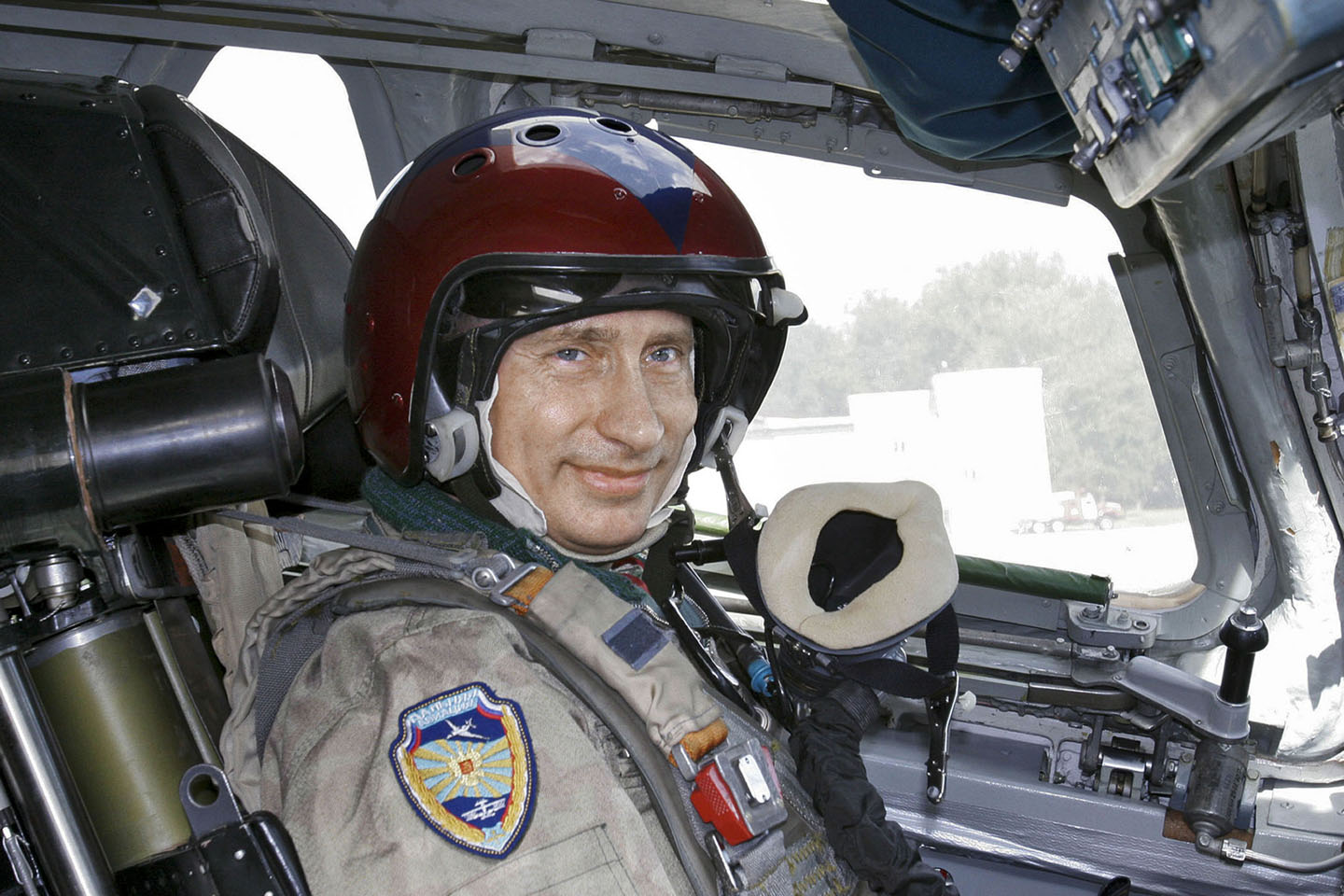
She wins the Russian language Olympiad, which will later help her reach an agreement with Vladimir Putin. They say that the old KGB agent still speaks better German than Merkel speaks Russian.
Angela Kasner spent her childhood with a blue pioneer scarf around her neck, followed by physics studies at the "Karl Marx" University in Leipzig. Why physics? "Because I wanted to understand Einstein's theory of relativity. Because not even the GDR could disable basic calculation operations and natural laws", he will say to "Zidejche Zeitung" after many years. She added that she still didn't like physics so much that she would dedicate her whole life to it.
She was a member of the Free German Youth (FDJ – Freie Deutsche Jugend). "I had a good time in the FDJ," said Angela Merkel. "Mainly because of content in free time. Many social activities took place exclusively through this organization." Later, he will say that 70 percent of it was opportunism, a way to somehow lives in the system.
THE ROAD TO KOLO MINISTERKA
Her relationship with the GDR remains a mystery. Some point out as significant that the only copy of her work on Marxism-Leninism - mandatory for all students - in which she wrote "What is a socialist way of life" on 50 pages, was stolen.
But Merkel was never in the Party of Socialist Unity of Germany, which, after unification, was considered the first mortal sin by people from the east. The second sin - for which the unifying East German Prime Minister Lothar de Maizière also fell - was cooperation with the infamous Stasi state security service.
After a job interview at the University of Technology in Ilmenau, Merkel was allegedly approached by agents to recruit her. She rejected them by saying that she could not be trusted, because she would blurt out everything to her husband. This is how today's chancellor avoided becoming part of the network of 190.000 "unofficial collaborators" of the Stasi. She didn't get a job in Ilmenau, but she did in the Academy of Sciences.
On a student trip to Moscow and Leningrad, she met her first husband, Ulrich Merkel, also a physicist. Love lasted until 1981. Angela took only a washing machine and her last name from the shared apartment in East Berlin.
Merkel was far from the front lines of the democratic protests in East Germany. But, bearing the title of Doctor of Science from East Germany and suspicion towards everyone, she managed to become a minister in Kohl's government in barely a year. It came to him when the small eastern party Democratic Progress merged into the powerful Christian Democratic Union (CDU).
"I harbored a deep mistrust of civic movements, I didn't feel comfortable there," she said later, "because I believe that in political work we must reach the achievable, and not fall in love with our own endless discussions." Maybe that's where I carry the authoritarian in me."
For the first time, her name ended up in the margins of West German newspapers when her words were reported by Reuters in June 1990. It says that the "Deputy Spokesperson of the GDR Government" Angela Merkel announced the abolition of regular controls at the crossing to West Berlin.
POLITICAL PATRICIDE
Merkel describes her first year of political work as a miraculous accumulation of coincidence, luck and providence. "That's one side. Others are calm planning, focus and fearlessness", says her biographer Weidenfeld.
She needed all that in a predominantly male conservative party, where she had little to rely on. Until the end of her career, her list of trusted people will remain short, and at the top of it will be a name that few people know even in Germany - Beate Baumann, Angela Merkel's assistant and adviser who has been working for her since 1992. Correspondents from Berlin called her "the second most powerful woman in Germany ".
photo: photographer"THE GIRL" BY HELMUT KOHL: Angela Merkel with the chancellor - unifier
It took some time for Merkel to get rid of the nickname "Kola's girl". In Helmut Kohl's government in the 1990s, she was a minister in two portfolios that few people cared about - first for women and youth, then for the environment. And then, fortunately for the party, she committed parricide and started the matriarchy. Only then did some see her as a Machiavellian in multicolored blazers.
Cole did not know when enough was enough, so in 1998 he lost the election to Schroeder. The iron soldier of the party, Wolfgang Schäuble, became the head of the Christian Democratic Union. When he recovered from a severe assassination eight years earlier, which confined him to a wheelchair, he just kept pushing. Schäuble made Angela Merkel the general secretary of the CDU.
Then Christmas 1999 approached. She threatened the party to ruin the donation affair. Kol admitted that he took millions of marks for the black party coffers, but he took the secret from whom he took all the money to the grave. Without an agreement with Schäuble, Merkel writes an editorial for the "Frankfurter Allgemeine Zeitung", then urges the journalists to publish it already in tomorrow's edition.
The text was the bomb. "The future can only be built on the right foundation," Merkel wrote. She also cleaned up Schäuble, who also had some role in the donation affair. Schäuble, who would later become the chancellor's loyal finance minister, knew that Merkel was right.
In April 2000, from the CDU congress in Essen, the correspondent of "Zideutsche Zeitung" reported that Merkel could have read the phone book on stage, her party, starved in the opposition, would have celebrated her equally. She received 897 of the 935 valid delegate votes to become the first woman to lead a major party.
THE CHANCELLOR GAME
It took time for Gerhard Schröder to come to his senses when he lost to Angela Merkel in 2005 by one percentage point and four parliamentary mandates. He was a bad loser on television on election night, vowing that his Social Democrats would never vote for Merkel to become chancellor.
He was mistaken. The Social Democrats became the junior partner of the Christian Democrats in the Chancellor's first government, as well as in the third and fourth. In the second, it was liberals. Merkel arranged her victories against social democratic candidates in the letter S: Schroeder, Steinmeier, Steinbrick, Schulz.
The coalition partners landed in her arms, and that's why they call her the "Black Widow".
In 2011, journalist Niko Fried observes the little dance of the chancellor in the parliament. She previously slammed her fist on the table and said that Greece must stay in the eurozone. Schäuble grumbles, but he listens, some MPs openly oppose it, the liberal coalition partners are completely against it. In the parliamentary bench, Merkel takes out a booklet in which the biographies of all the deputies are written and notes - who from her own ranks could be against her. Does he still have a majority in the coalition?
Then he noticed that the MPs were cordially swarming around the Liberal caucus leader Jörg van Essen. Isn't there some kind of conspiracy against her?
Merkel flips through the booklet again and realizes that it is Van Essen's birthday. He approaches and congratulates. Then he takes Van Essen to his vice chancellor, the head of the Liberals, Philip Ressler. An awkward scene ensues, Ressler didn't know it was Van Essen's birthday, he congratulates himself sitting down. So Ressler was spanked for insubordination.
They say he swears sometimes behind closed doors"Scheiße". Only once did steam come out of her ears in front of the cameras. Former Serbian President Boris Tadić has the honor of bringing the chancellor to that state. In 2011, in Belgrade, he refused to abolish the parallel structures in Kosovo, although apparently Merkel was informed that it would be different. Evil tongues say that Tadić also got his share.
Entire essays have been written about the chancellor's "asymmetrical demobilization" tactic. People need to be convinced that politics is something boring, but that they are in the best hands. And the opponents' voters need to be convinced that their bullies have no chance anyway. "You know me" - that was literally written on Angela Merkel's election posters.
The famous public opinion researcher Elizabeth Noel-Neumann described the "spiral of silence" a long time ago. When they are convinced that their favorite is winning, people talk about it, while the other camp stays silent. The impression is created in advance that the winner is known, so that person really gets more votes because the world loves winners. It has been documented that Merkel spends a lot of money on public opinion polls.
TOO SMALL FOR ANGELINA'S BLAZER
Due to extreme pragmatism, she remained alienated from a large part of the party until the end. As Weidenfeld writes, she never saw Merkel's party as a "dogmatic society" or a "can for certainties", but as an "agency for reasonable management" of the country.
If she could turn back time, she certainly wouldn't have said "we can do it". That started a chain of events that even Merkel could no longer control. The right-wing Alternative for Germany grew stronger on the anti-immigrant hysteria. Merkel left the top of the party with the intention of calming it down, but her successors - first Annegret Kramp-Karrenbauer whom she personally pushed, and then the unfortunate Armin Laschet - were simply too small to fill the chancellor's blazer.
If Germans could turn back time, they would elect Merkel again. Her popularity is unprecedented, even though she was a crisis chancellor. Or, just because of that. The financial crisis, the crisis of the euro and the Greek debt, refugees, Brexit, Trump, the climate crisis and the corona were lined up, and the voters would rather entrust the helm to no one than the chancellor. Recent polls show that she would easily become president of Europe in a direct vote.
If she had said on the day of the September elections that she would like to be chancellor one more time, there is no doubt that she would have won the fifth election with the letter Š. This is how the chancellor is called Olaf Scholz today, and Merkel is a pensioner.
Maybe events pushed her towards retirement, maybe she was tired... Do politicians rule politics or is it the other way around? She gave a different answer to that sample question than the chancellors before her. "I don't want to leave as a half-dead wreck," she told a photographer at the beginning of her career. At the farewell dinner, she requested that the military band play East German punk.
The Berlin bazaar is entertaining the question of whether she will continue to live in the apartment at Am Kupfergraben 6, which has only the name of her second husband, Joachim Sauer, with whom she has been dating since the mid-1980s. Or she will spend more time in the quieter east, in the area where she grew up. A pension of fifteen thousand euros is enough for a nice life.
If the vote for the new German government had been prolonged for just a few more days, at least until December 17, Merkel would have overtaken Helmut Kohl in terms of seniority and become the longest-serving post-war chancellor. Those who know her say that Merkel doesn't care about it at all.
What is happening in the country and the world, what is in the newspapers and how to pass the time?
Every Wednesday at noon In between arrives by email. It's a pretty solid newsletter, so sign up!
"Now they are talking about the threat from Russia and the beginning of preparations for war with Russia, which, in my opinion, is a kind of political schizophrenia," said Russian President Vladimir Putin
For the first time in almost two years, the opposition in Venezuela took to the streets across the country to demand elections by July 2027. The government organized its own march in the same square on the same day
France is preparing for Saturday's protests with a series of bans on gatherings and an increased police and military presence. The courts have already overturned one ban in Paris, and unions and students are calling for peaceful demonstrations
The richest man in the world responded with a threat to the news that Democrats are preparing investigations against him if they win the congressional elections. Musk said that whoever initiates a conflict with him should know that "they will find out who is actually pulling the strings."
A New Mexico court ordered Meta to pay $25 billion for misleading Facebook users about their privacy. State Prosecutor Raul Torres said that the verdict is a signal to the entire Silicon Valley.
There is, literally, no difference between the one who claims it is day in the middle of the night, or the one who claims to be a giraffe, from the claims we read on billboards: that Vučić is working to unify Serbs and that Serbia is doing better and better day by day.
The pre-election arrests due to the alleged "overthrow of the state" testify to the regime's panic. The bad news for them is - they can't arrest the whole people who decided to defend themselves from progressive beatings and election theft
The ring that tightens around Ćaciland Student list is getting narrower. Because there are more and more spoiled people who see the false prophet for what he is: a street obscener who is fighting Serbia
The archive of the weekly Vreme includes all our digital editions, since the very beginning of our work. All issues can be downloaded in PDF format, by purchasing the digital edition, or you can read all available texts from the selected issue.