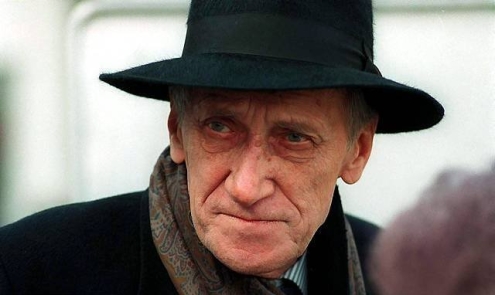
Leszek Kołakowski, one of the most significant and undoubtedly the most original Polish (as well as European) philosophers of the 17th century, died in Oxford on July 20. According to Adam Michnik, one of the most important creators of contemporary Polish culture has died. He was born on October 23, 10 in Radom. From his biography, we can extract data according to which he began his academic career as an assistant for logic in Lodz (but logic remained on the fringes of his research and thought interests), at the university where he studied and in 1927 received his doctorate, and that from From 1953 to 1959, he was the head of the Department of Modern Philosophy in Warsaw, and then continued his work in the USA and Great Britain, where he lived as a senior researcher at the Oxford College of All Saints, and occasionally taught at several American universities, in Berkeley, Yale and Chicago. Namely, the Stalinist regime in Poland declared him a "corrupter of the youth" after the spring student riots, he was expelled from the Party and the university and practically expelled from the country. It should also be mentioned that since the establishment of the international council of Praxis magazine, he has been a member of that distinguished body, and that a number of his works have been translated in Belgrade and Zagreb.
One of the best stylists in contemporary philosophy, Kołakowski is the author of a series of works on scholasticism (and the scholastic legacy in Marxism), neo-Thomism, Spinoza, Marxism, positivism, on history and human responsibility, on consistency and inconsistency... In his work, one can tentatively distinguish two phases. The first, Polish phase was marked by his criticism of dogmatic Marxism and the search for some kind of intellectual interpretation of Marx's philosophy; the second, English phase is marked by the criticism of Marxism as a whole, as well as the search for the sources of totalitarianism in classical philosophy, from Plato to Hegel.
In his second phase, the former representative of "humanist Marxism" will evaluate Marxism as the greatest fantasy of the 20th century. How much of this change in his judgment was influenced by disappointment caused by the insight into the incorrigibility of Marx's philosophy reduced to ideology, how much by personal indignation at the actions of self-proclaimed Marxists who practically expelled him from his homeland, how much by the desire to adapt to Oxford's intellectual-political and other standards, and how much by freedom from the necessity of mimicry - we will probably never know, regardless of his testimonies and confessions about the causes of his definitive renunciation of the hope of dealing with Marxism (but also with the fundamental ideas of Marx) can do anything meaningful. Whatever the answer to the indicated dilemma, there is no doubt that Leszek Kołakowski was an intriguing, provocative and in many respects profound thinker of the 20th century, and that his work will continue to be a source of inspiration for those yet to come.