The Prosecutor's Office for Organized Crime indicted eight members of the Special Operations Unit for the armed rebellion in November 2001.
Milorad Ulemek Legija, Zvezdan Jovanović, Dušan Maričić, Dragoslav Krsmanović, Dragiš Radić, Veselin Lečić, Mića Petraković and Vladimir Potić are on the list of the Prosecutor's Office.
According to the Prosecutor's Office, they organized the rebellion, which was a prelude to the murder of Zoran Đinđić, with Dušan Spasojević, the leader of the Zemun clan.
Prosecutor Miljko Radisavljević said that the criminal charges against the then President of the FRY Vojsilav Koštunica and the head of the Military Security Agency Ace Tomić were dismissed because during the investigation it was not established that anyone, except the accused, participated in that rebellion.
Prosecutor Radisavljević stated that the evidence collected during the investigation cannot prove that there was an idea to assassinate Zoran Đinđić at the time of the rebellion, and that these two events are connected by their main actors Ulemek, Spasojević and Jovanović.
Radisavljević believes that the rebellion can be described as an overture that actually preceded the assassination of Prime Minister Djindjic. "During the rebellion, the system showed all its weaknesses." It was easy a year and a half later, instead of the ministers and chiefs, to target the prime minister himself. "Unfortunately, the system was unable to protect him, and he himself was powerless to defend himself from the attack, so the tragedy was inevitable," explained Radisavljević.

"Doctors are protesting in their smocks, so they are also protesting in their uniforms," said Vojoslav Koštunica, commenting on the JSO rebellion. Citizens approached the members of this unit and supported their "rebellion".
He also pointed out that the conclusions and qualifications listed in the indictment are based solely on evidence and facts, which were reached in a legally conducted procedure, stressing that this is the specific role of the prosecutor. The defendants are charged with the crime of armed rebellion under the then-current Criminal Code of the FRY. The indictment proposed to extend the detention of the five defendants, where they have been since their arrest on September 20 last year, while three of them have already been sentenced to decades in prison: JSO commander and State Security colonel Milorad Ulemek, his successor in that position Duško Maričić and lieutenant colonel DB and the murderer of Zoran Đindjić, Zvezdan Jovanović, are currently serving the maximum prison sentence of 40 years.
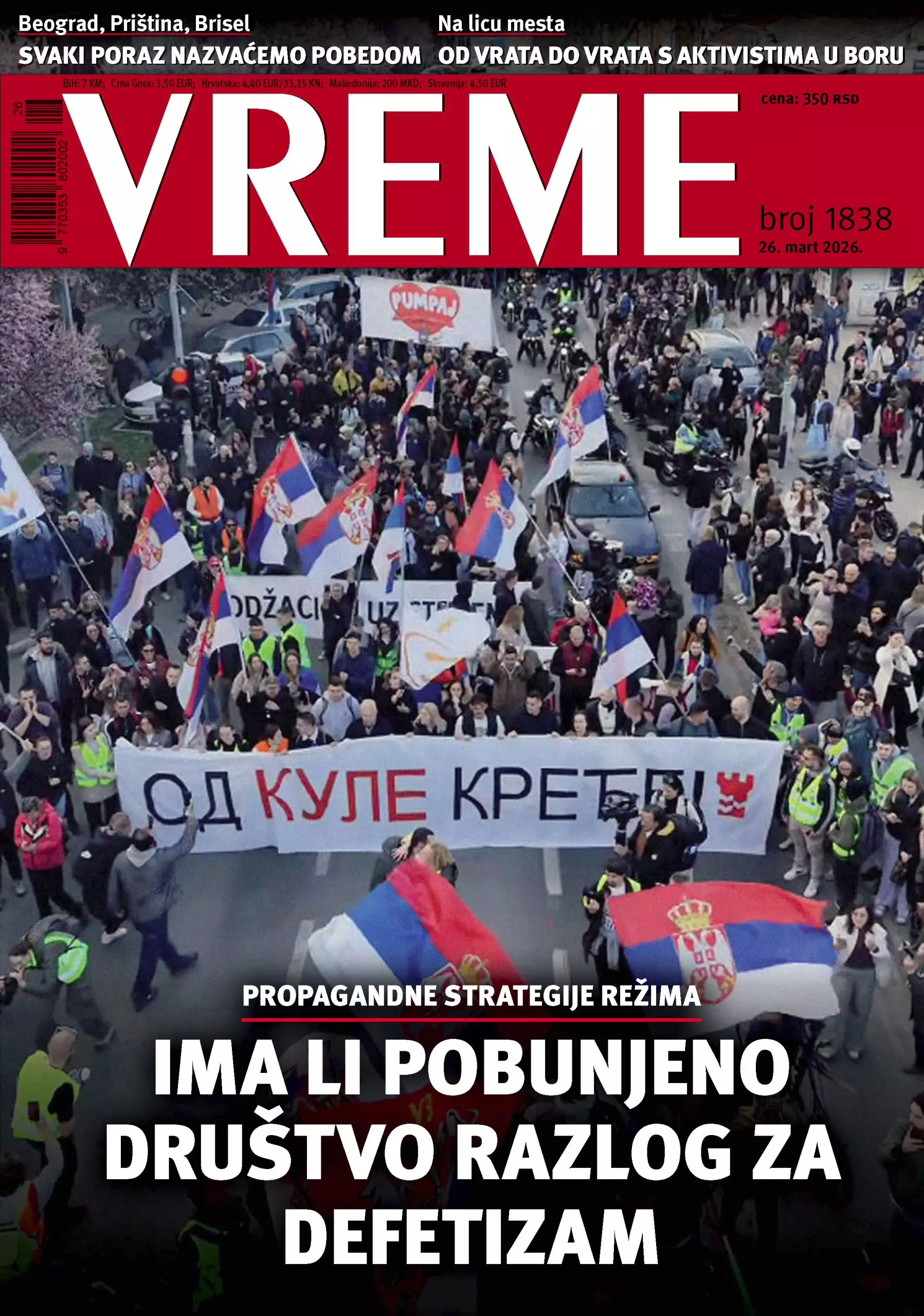
The evidence collected during the investigation confirmed that from November 9 to 17, 2001, the JSO refused to obey the command, withdrew its members to the center in Kula, cut off communications with the command, and repeatedly refused the requests of the head of department, the Minister of Internal Affairs, and Prime Minister Zoran Đindjić, to end the rebellion.
At the same time, the operational part of the Unit blocked the highway on two occasions with combat vehicles and armed personnel. The first time it was done on November 10 on the Novi Sad-Subotica highway near Vrbas, and the second time on November 12 by blocking the highway through Belgrade near the Sava center. The indictment states that in this way, the willingness of the Unit to show disobedience and use force was clearly expressed if their demands were not met, which related to the dismissal of the then Minister of Police Dušan Mihajlović, Head of Department of the DB Goran Petrović and his deputy Zoran Mijatović. The prosecutor stated that, according to this, the security and constitutional order of the country was directly threatened.
Former Deputy Prime Minister Žarko Korać said on March 8, during his testimony before the investigating judge who is leading the proceedings against Milorad Ulemek Legija and seven other suspects for organizing the armed rebellion of the JSO in November 2001: "I believe that the armed rebellion is the work of members of the Special Operations Unit was a prelude to the assassination of Prime Minister Zoran Đinđić. Even Zvezdan Jovanović, who was sentenced to 40 years in prison for murdering the prime minister, can be seen in the photos. That event was the beginning of the defeat of Zoran Djindjic's government." Korać added that he believes that the rebellion was called a protest for the purpose of compromise, as well as that he thinks Vojislav Koštunica was one of those who understood the "berets" going out on the streets.
The indictment was filed three days before the ninth anniversary of the assassination of Serbian Prime Minister Zoran Djindjic.
Minister of Justice Snežana Malović stated that she believes that it is only a matter of time when all the facts regarding the JSO rebellion will be clarified.
"The assassination of the prime minister is one of the most tragic days in our history and we must do everything to find out who is behind it." No one treats the JSO rebellion as a legal protest anymore, and it is clear to everyone that the exit of that unit was aimed at endangering the security of the entire country. "We owe the truth to the family of the murdered prime minister and to the citizens of Serbia," said Snežana Malović.
The rebellion of JSO members practically started on November 8, 2001.
i.e. immediately after the arrest of the brothers Nenad and Predrag Banović,
who were accused by the Hague Court of war crimes committed in the camp
Keraterm.
A day later, the "red berets" canceled their obedience to the Department of State
security, and most of the members of that unit retired from work
places. Later that day, JSO members held a conference for
journalists, where they presented their demands, including the request for
dismissal of the then Minister of Police Dušan Mihajlović and adoption
of the Law on Cooperation with the Hague Tribunal.
During the rebellion, the "red berets" blocked the highway near the "Sava" Center,
at the time when Milorad Ulemek Legija was supposed to appear before
District Court as a witness in the "Ibarska magistrala" case.
Dušan Mihajlović allegedly even offered to resign in writing, which he did
rejected by the government of Zoran Đinđić. Later, two resigned
of the highest RDB officials, head Goran Petrović and his deputy
Zoran Mijatović.
Prime Minister Đinđić, who learned about the rebellion during a visit to America,
immediately after his return he called a meeting which they attended
Mihajlović, Petrović, Žarko Korać and the then head of the Department of Public Affairs
security Sreten Lukić.
After the meeting, Đinđić and Čedomir Jovanović went to negotiations in
JSO headquarters in Kula. Djindjic did not agree to comply with the request to replace him
Minister of Police.
At the head of the Department of State Security, two days before the end of the rebellion,
Andreja Savić and Milorad Bracanović, whom the Special
court in Belgrade, later sentenced to two years in prison for
failure to report the preparation of the murders of Ivan Stambolić and Vuk Drašković.
Andreja Savić and Sreten Lukić are coming to Kula on November 17, which is why
put an end to the rebellion of the "red berets".
Documentation Center "Vreme"