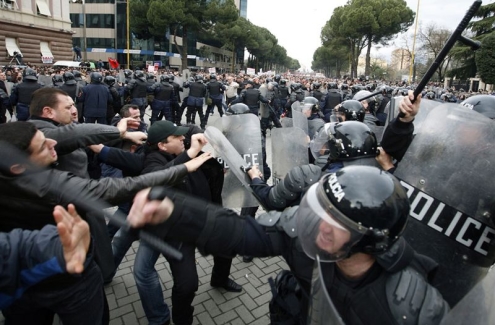
At least three people were killed and several dozen were injured in a clash between police and demonstrators on January 21, 2011 in Tirana during a demonstration in which the opposition demanded the calling of early general elections.
The government and the opposition in Albania shift the responsibility for the victims to each other.
Albanian Prime Minister Sali Berisha and the leader of the Socialist Party Edi Rama accuse each other. Berisha blamed Rama and his sympathizers for trying to seize power through violence and called the participants in the conflict "bandits, criminals and terrorists."
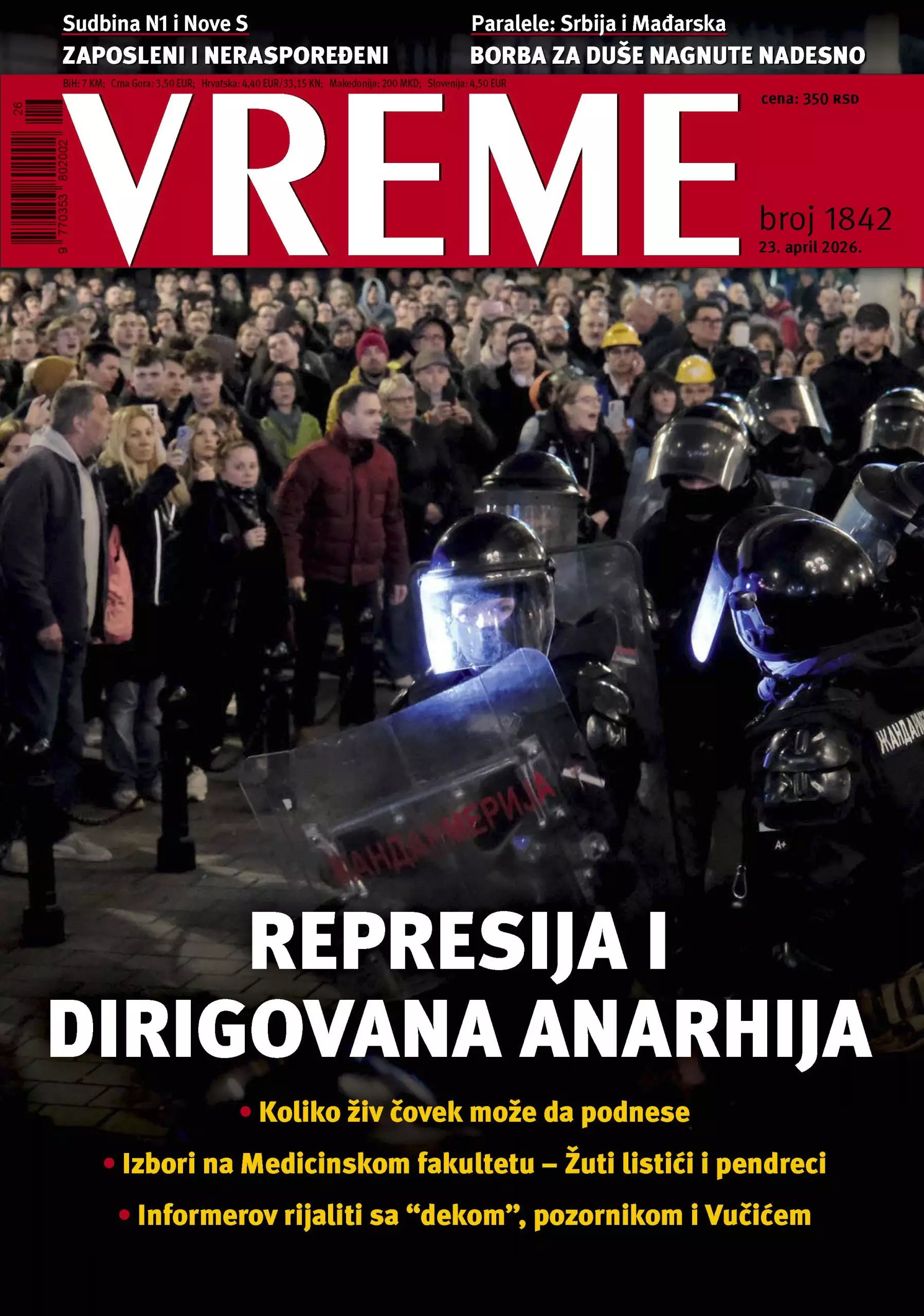
About 20.000 opposition sympathizers gathered on Friday, January 21, in front of the government building in the center of Tirana, to demand Berisha's resignation and the holding of extraordinary general elections. The peaceful protest turned into a riot, when several hundred demonstrators separated from the main group and started throwing stones at the police and setting cars on fire. Law enforcement responded with tear gas and snorts.
Demonstrators and police officers are among the wounded in that conflict. Several people are in serious condition.
Edi Rama blamed the government for provoking riots and for sending unprofessional police officers against the demonstrators. He called the situation in the country a "deep crisis", and accused the government of "political blindness".
Albanian Defense Minister Arben Imami assessed that the demonstrations in Tirana "completely failed", and that the police officers during the demonstrations showed "professionalism and humanism, defending the constitutional order and institutions".
The Socialist Party of Albania demanded the holding of extraordinary parliamentary elections after the resignation of the Vice-Prime Minister and the Minister of Economy of Albania, Ilir Meta, due to accusations of corruption presented on Albanian television with compromising materials.
Socialists blame the right-wing Democratic Party for rigging the results of the 2009 election, which it won by a narrow margin.
Berisha has been the leader of the Albanian Democratic Party since 1991. After 1992, after the fall of communism, he was the president of Albania until his government fell in 1997 after the collapse of the pyramid schemes. There are many indications that during the collapse of the government in Albania, many weapons from the barracks there were smuggled into Kosovo.
The collapse of the Ponzi scheme was at the end of 1996, in which Albanians were allegedly robbed of a billion dollars in life savings since 1994. One by one, the pyramid bank fell and in December 1996, protesters took to the streets and accused the government of being responsible for the stolen money. By March 1997, military depots in Albania had been looted, and civil war between the government and rebels looked set to break out. Berisha then refused the opposition's demands to withdraw. Multinational NATO forces were called in to bring the situation under control. After the intervention in Albania, extraordinary elections were held in June 1997.
From 1997 to 2005, Albania was ruled by the Socialist Party of Albania for two terms, while Berisha was in the opposition.
In 2005, the Democratic Party won the elections and Berisha became prime minister in the coalition government. In 2009, he was re-elected as Prime Minister after the Democratic Party claimed a narrow victory in the parliamentary elections, but was forced to form a coalition with the Socialist Movement for Integration.
Albania applied for the EU a year ago. When it joined NATO, Albania disarmed the number of soldiers from 65.000 to 14.500.
Half of the economically active population of Albania is engaged in agriculture - agricultural workers make up 58 percent of the labor force which generates about 21 percent of GDP, the GDP per capita in Albania is about 6.200 dollars. A fifth of Albanians work abroad. A large number of Albanians work in Greece and Italy, and remittances from those two countries alone account for about 15 percent of Albania's GDP. Economic growth in Albania, according to IMF estimates, was 2010 percent of GDP in 2,6, and could reach 2011 percent in 3,2. Albania's chronic problems are, among others, a high unemployment rate, corruption up to the highest levels of government, and organized crime. Albania exports little, and imports large quantities of food from Greece and Italy. The inflow of money is mainly from financial aid and from people working abroad.
The next regular elections for the 140 members of the Albanian assembly Kuvendi should be held in 2013. The elections for local authorities are scheduled for May 8, 2011.
For the last two years, Albanian democrats and socialists have been fighting a fierce political battle. During that period, there were several mass protests, but they passed without serious incidents. The clashes in Tirana have caused concern in international circles. European officials, the US and the OSCE regret the loss of human life during the demonstrations in Tirana and call on all political forces and citizens to refrain from violence.