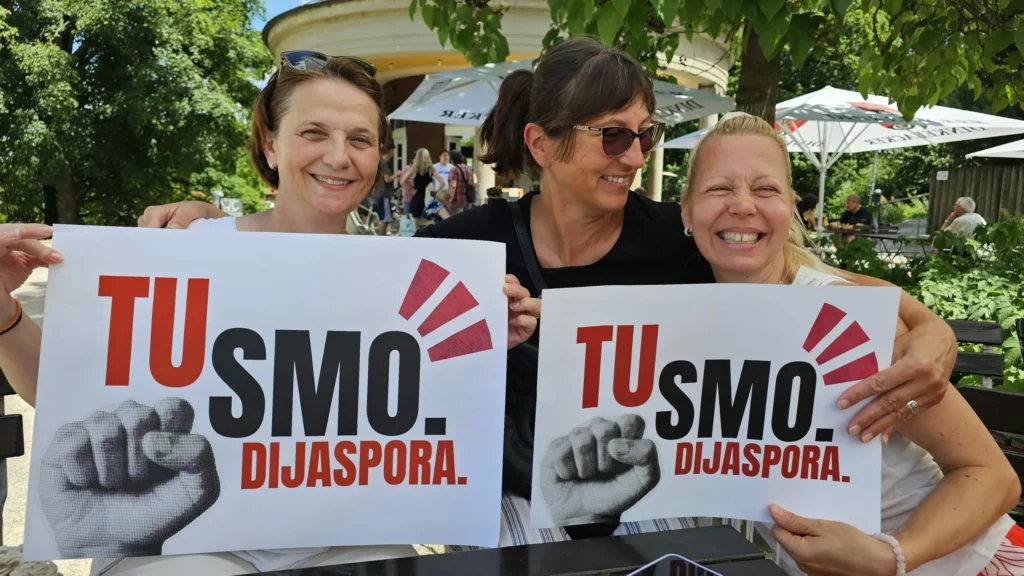
Due to the announcement of the mayor of Belgrade, Aleksandar Šapić, that the famous "dvoka" tram, after 97 years of existence, will soon be closed export your last round, activists of the initiative "Belgrade remains" invited citizens to come to the protest against the shutdown of the famous tram line and the closure of Pariska Street in the city center.
The famous "double" is a victim of the new urban plan and the introduction of new pedestrian zones, and is considered one of the symbols of Belgrade. It is the oldest line in Belgrade, introduced in 1892. The "dvojka" has been driving the current circular route since 1928.
What was the development like? tram traffic in the capital of Serbia over the decades?
Beginnings of tram traffic
As he wrote "Vremena" journalist Zoran Majdin in 2009, tram wheels clattered through Belgrade's streets at the end of the century before last, on October 14, 1892.
At that time, the newly built "horse" tram line from Kalemegdan to Slavija, owned by the concessionaire company of the Belgrade City Railway, was officially launched. The following year, the Electric Power Station was built in Dorćol, and already a year later, an electric tram was transporting passengers to Kosutnjak. In the meantime, the tracks for the horse tram from Električna Centrale to "Žagubica" (Wolf Monument) and from Terazi to Novi Groblje through Fišeklijska Street, today's Bulevar Kralja Aleksandra, were "hit".
For the next almost 10 years, the network of the Belgrade Municipal Railway was not expanded, but when, after the May Revolution of 1903, the construction and exploitation of tram traffic and electric lighting was taken over by Belgian capital - the so-called Belgian Anonymous Society, the electrification of tram lines was accelerated, so that in 1904, electric trams replaced horse-drawn trams from all lines.
As early as 1906, a total of 16 two-axle, two-motor tramcars with engines of 35 and 45 hp were operating on all tram lines. The first type was called "Terasia", because it drove through the city, had a body with comfortable "stuffed" seats and backrests covered with plaited sea reed. The second type of car was called "Topchiderski" and had wooden benches, and the trams with cart traction served for many years as trailers for electric tramcars. There were also two types of them - with a summer open body and a winter closed body. During 1909 and 1910, another 10 motor vehicles were acquired.

Photo: Marko StojanovićBELGRADE SUMMER TRAM: 1900-1910.
War after war
During the First World War, the electrical switchboard and the distribution network were damaged, and thus the city's tram traffic. In 1919, the Municipality of Belgrade took over the Electric Power Station and the entire electrical network, as well as vehicles and tram traffic facilities.
The Tram and Lighting Administration was established, poles on the tram network were successively replaced, steel trolley wires were replaced with copper ones, tracks were reconstructed, old trams were repaired and new, modern trams were purchased: two-axle Siemens, AEG, Škoda and Kolben, as well as four-axle BBC, all according to the established program of works and purchases, which was carried out in stages until 1932. At that time, Belgrade already had 13 tram lines with a total of 65,5 km of tram tracks.
By 1941, the rolling stock was reinforced with 12 four-axle and four-motor trams, and the tram network reached its historical maximum - 81,4 kilometers. Zemun, Karaburma, Zvezdara, Voždovac, Dorćol, Senjak, Dedinje, Red Cross were connected to the center of Belgrade by tram... And then the Second World War broke out.
Trolleybuses then buses
After the liberation of Belgrade in October 1944, the inventory list of the Tram and Lighting Administration included 104 trams, more or less defective, and 60 of the same trailers, depots and workshops were destroyed, and only two kilometers of track were usable. Nevertheless, in a relatively short period of time, according to the "cut your ears" system, 14 trams and six trailers were made ready for traffic and traffic was restored from Kalemegdan to Slavija (1), from Električna centrala to Railway station (2), a little later from Trg Republike to Cvetkova mehana (6) and from Slavija to Voždovac (10), then to Čukarica, Zemun...
However, shortly after being put into traffic, some lines were discontinued: on lines 1 and 14, the trams were replaced by a "tram on tires" - a trolleybus.
It wasn't just like that: trolleybuses are less infrastructurally demanding, they are more flexible in traffic, although they are more expensive to operate and quite inconvenient in winter on hills.
However, for the next decade and according to city planners, the trolleybus was in first place when the pedestal gave way to the bus, and the tram was pushed aside: until the 1953s, when the line to Čukarica was canceled and the open trailers definitively went down in history, "pre-war" trams traveled through the streets of Belgrade, with the exception of five Belgian PPC trams acquired in XNUMX and the prototype of Goša's tram, which, frankly, was not differed from the trams from the twenties, so it never went into serial production.
Tramway resurgence
By withdrawing the trolleybus in front of the bus onslaught, space was also opened for trams, because the rails existed, and the capacities of the newly built, at that time ultra-modern rectification stations were unused, only trams were missing.
In the early 1960s, fifteen PPC trams were bought, albeit second-hand - "Belgians", which were as different from the previous Belgrade trams as "Jaguar" was from "Topolina": they were very fast and amazingly quiet for that time.
At the same time, two trams of the Breda brand were purchased, based on which model ĐĐ I, known as "stojadin" among tram drivers, was developed in "Đura Đaković".
However, although this tram performed well on the streets of Zagreb and Osijek, Belgrade's ups and downs were too much of a test for it; a total of 10 were delivered, soon to be replaced by the ĐĐ II, known by the codename "bull". Unlike the "stojadin", the "bik" proved to be a solid tram, and was seen as a standard Belgrade tram. Almost, but not.
Katica and other trams
The oil crisis at the end of the seventies affected the sudden cooling of the city fathers' love for buses, so trolleybuses and trams "gained in price" again.
In support of this was the economic crisis, due to which the Belgrade metro project was left for a better future, and a self-contribution was announced in Belgrade. In order to reduce the traffic collapse to a tolerable level, new articulated trolleybuses should be bought, some abandoned trolleybus lines should be revitalized, the tram network should be expanded and new trams should be bought, which, if not ĐĐ: they are good, they are homemade.
However, the fact that it was a domestic product turned out to be more of a disadvantage than an advantage. The "Đura" trams were too expensive, much more expensive than the trams produced by the Czech "Tatra", which they opted for in Belgrade.
Photo: wikipedia/IIAleksandarIITram in Belgrade: "Katica"
That's how the "single" and articulated KT-4 trams arrived on the streets of Belgrade, which still run today - they make up the largest part of the fleet - and are known by the nickname "katica" among the drivers.
The first trams from Basel arrived in August 2001, and have been in traffic since the fall of that year. The first Spanish tram, made by Caf, arrived in Belgrade in May 2011.
Weather/Katarina StevanovićA walk around the circle of two: "Swiss"
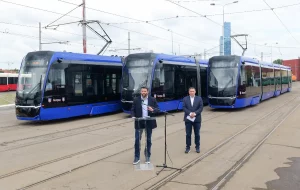
This year, Serbia ordered 25 Turkish trams manufactured by Bozankaj, three have arrived, and There is only one in traffic.However, they are spreads from other rail vehicles in Belgrade, which, as a source from GSP told eKapija at the beginning of June, will cause problems in daily traffic.
Photo: FoNet/Milica VučkovićMayor Aleksandar Šapić at the promotion of new trams
That proved to be true on August 8, when a new Turkish tram derailed at Autokomanda and blocked traffic.
Big summer discount on "Vreme"! Just click here, choose a subscription and support the editorial staff in their independent work.