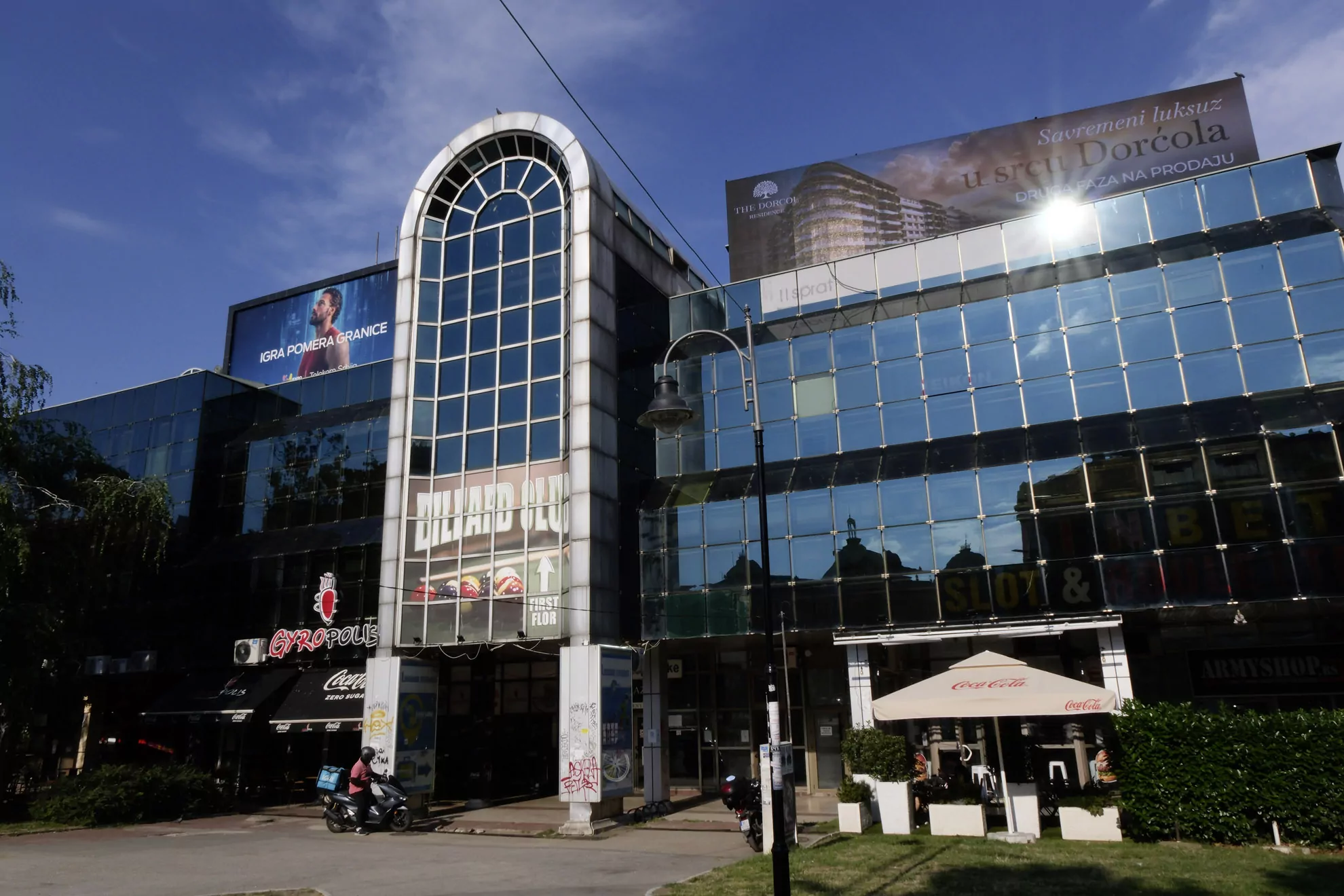
The demolition of Staklenac on Republic Square is expected to reveal valuable evidence of Belgrade's past. Thessaloniki and Turkey have incorporated archaeological discoveries into modern construction. What will Belgrade decide?
Archaeologists expect that the announced demolition of Staklenac, a popular Belgrade shopping center on Trg Republike, will enable them to find new evidence of the capital's past.
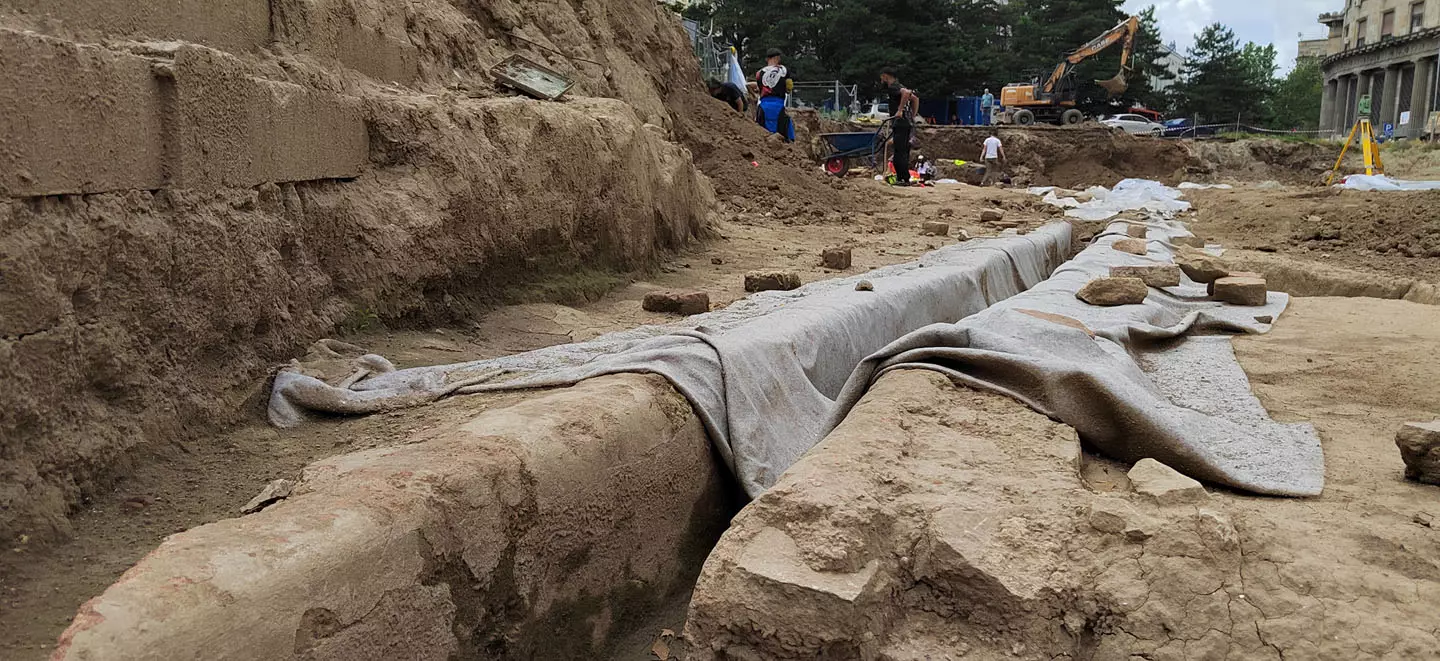
Adam Crnobrnja, the president of the Serbian Archaeological Society, previously told "Vreme" that "remains of Austrian ramparts, bastions and ravelins from the period 1717‒1739 can be expected at this location. It was there that Karl's Bastion was located, one of the massive elements of the Austrian fortification system that surrounded the town at that time".
He reminded that the law prescribes special procedures for the protection of archaeological remains, and that if they are discovered under Staklenac, their fate will have to be decided by the competent institutions, as well as the professional public and citizens.
How they did it in Turkey
The whole world, including the citizens of Belgrade, knows how Thessaloniki has preserved valuable traces of its past found during the construction of the metro there, and of course Salonika everyone points out how it should be done with Stklenec as a good example.
On the "All about archeology" portal, a text about another such good example was recently published. It is located in Turkey.
Archaeologists have discovered one of the most impressive Roman mosaics ever found in Antakya. Antakya, formerly Antioch on the Orontes, is one of the most important ancient cities on the territory of present-day Turkey.
Photo: All about archaeologyThis is how they do it in Turkey.
It was found by accident, during the construction of a luxury hotel on land owned by the Asfuroğlu family in 2010.
The most impressive find from this complex is a geometric mosaic with an area of about 1.050 square meters, which is considered to be one of the largest surviving Roman mosaics in the world. It is dated to the 4th century and was most likely part of a large public building, perhaps in connection with baths or a representative space.
Experts and investors decided to adapt the hotel project to an archaeological discovery. In cooperation with local institutions, archaeologists and conservators, the found remains were investigated, documented and preserved.
Today, the remains of the mosaics are located under the hotel building, as part of a museum exhibition that allows visitors to see them through glass floors and corridors, according to the All About Archeology portal.
What will Belgrade do?
What will Belgrade do if something valuable and important appears under Staklenac? We'll see, of course, the demolition hasn't even started yet. However, based on past experience, one cannot hope for good.
Let's remind you:
A few years ago, the city authorities started to Belgrade Fortress, a cultural monument of exceptional importance, they are mounting a gondola even though all the expert public from the country and the world were against it and judged it to be a crime against heritage. They stopped, but judging by the fact that there is an item for that purpose in the budget, they will not give up.
In 2006, across from Kalemegdan, that is, on the territory of Singidunum, the Roman aqueduct was destroyed because of a multi-story residential building. And that, of course, all according to the law.
Photo: Marija JankovićThe Istanbul Gate is under the Republic Square
When it was excavated for the first time in 2018 Trg Republike, the Württemberg or Stambol Gate, the most famous gate in the history of Belgrade, was found. It was buried, although Goran Vesić, the deputy mayor at the time, promised an archaeological site covered with glass. It was buried without any explanation. Only on the part of Trg Republika, under which the Stambol Gate remains, were placed marked cubes as a marker. However, apart from Vesić and maybe someone else, no one else knows what they mean.
Belgrade has over a thousand localities
Then: the oldest public toilet in Belgrade, from the Roman era, as well as a preserved street made of stone slabs, appeared under the asphalt in 2009 during the reconstruction of the tram tracks at the corner of Pariska and Tadeuska Košćuška, in the city center. They were listed and photographed, and then they were covered with earth again.
In the summer of 2022, on Banjica, in Paunova street in Belgrade, excavators, due to digging the foundations for a multi-story building, destroyed the Neolithic site of the Vinča culture Usek. Usek has been a cultural asset since 1964 and is one of the most important in our part of the Danube region.
Roman aqueduct with settling tank, graves and sarcophagi found in Vlajkovićeva Street in Belgrade during archaeological research in 2023 due to the construction of an underground garage, they will not be buried, but will be exposed in the space.
Photo: FoNetResearch in Vlajkovićeva
The aqueduct was cut into meter-long sections, conserved, and put away in a hangar in Krnjača to wait when it will become part of the children's playground next to the National Assembly. Due to the aqueduct, it is planned that the entire playground will be in the style of ancient Rome.
And so on. Belgrade has over 1000 archaeological sites, a small number of which can be visited. If we think only on the financial level, that is, if we ignore civilization's responsibility towards artifacts, it is impossible to see how much profit they would bring if they were protected, organized and accessible to the public.
Plus, Belgrade would become famous in the world for something other than Vučić and the rafts.
Only in August: Save three thousand dinars on the annual subscription to the digital edition of "Vremena"! _Take advantage of the discount hereand support independent journalism.
What is happening in the country and the world, what is in the newspapers and how to pass the time?
Every Wednesday at noon In between arrives by email. It's a pretty solid newsletter, so sign up!
By decision of the Ministry of Culture dated 16 On October 1, the Expo was awarded one million and 690 thousand euros to various organizations and private business entities
Part of the employees of the Museum of Yugoslavia held a warning strike protesting the business of the acting director, including the decision to move objects from Villa Mir. She answered them with a statement, only in Cyrillic
Accelerated preparations are underway for the payment of premiums at the competitions of the Ministry of Culture, warns a part of this collective. The Expo competition is one of them
Vučić pardoned the batterers and Dijana Hrkalović. The election winners should abolish the sultan's power that allows one man to run afoul of the entire judicial system
Davor Matura's ALTA empire is the transplanted heart of the corrupt regime of Aleksandar Vučić, who was defeated in the October 25 elections. From ALTA Bank, roads lead directly to the top of the progressive government.
Things are unfolding at an astonishing speed, as astonishing as the speed with which Vucic conceded a convincing defeat. Impatience is understandable, but misplaced
The archive of the weekly Vreme includes all our digital editions, since the very beginning of our work. All issues can be downloaded in PDF format, by purchasing the digital edition, or you can read all available texts from the selected issue.