"I'll probably make a terribly bad soldier.". But how can I speak to them and for them if I do not become one of them? "
Vistan Hugh Odn
Here is a fascinating biography: Baldo Valentić, born in Istria (Italy), came from France, died in Spain.
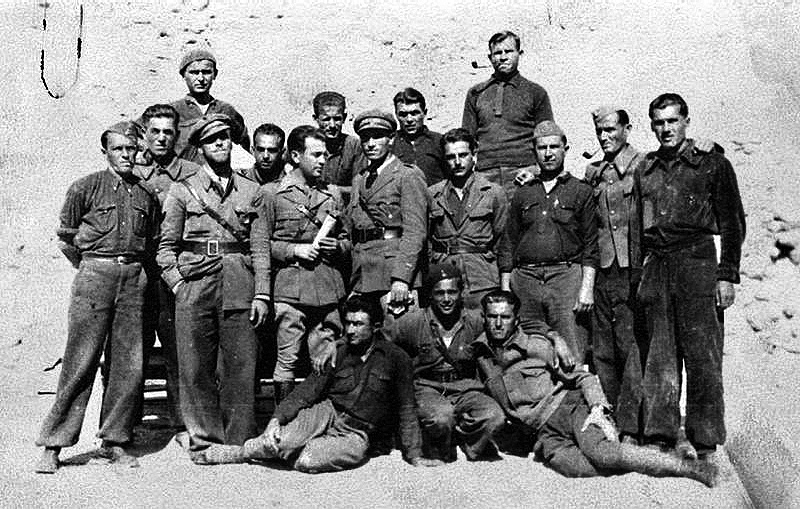
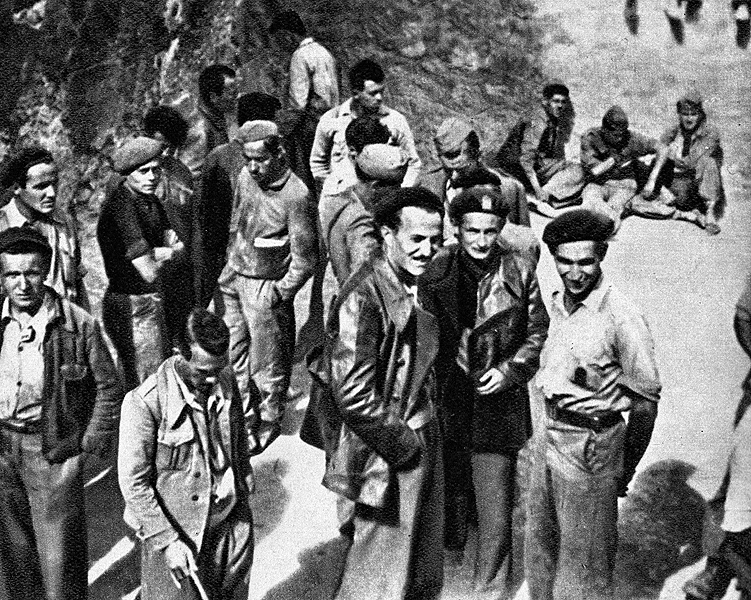
Not much more is known about a large number of other Yugoslav interbrigadists, fighters against fascism on the side of the Spanish Republic.
But here is a more complete story: Roman Filipchev (Novi Bechej, 1885 - Moscow, 1941). Participant of the October Revolution and civil war in Russia 1917–1918, Hungarian Commune 1919, one of the founders of the Communist Party of Yugoslavia 1920, official and counter-intelligence officer of the Comintern, participant of the Spanish Civil War 1936–1939. and the Great Patriotic War, died in 1941 in the defense of Moscow.
Among the biographies of our Spaniards, there are more, including the biography of Koča Popović, who was almost everything one could be, from a French student, a bourgeois and a surrealist, to a salon communist, a Spanish artilleryman and the commander of the First Proletarian Brigade/Division/Army, and Minister of Foreign Affairs of Yugoslavia, who was always persistent enough to, for example, uninvited because of the conflict with Tito, in 1973 come to the celebration of the XNUMXth anniversary of the Battle of Sutjesci, in which he commanded the First Proletarian Division, is seen with his war comrades and the same day he returns to Belgrade in his "spaček", the same one in which, according to urban legend, he drove American President Richard Nixon around the city a year earlier.
A brief history of the beginning and end of the war sounds frighteningly familiar today. In February 1936, the Spanish parliamentary elections were won by the Popular Front coalition, which was made up of republican parties, socialists, regional parties and communists, with the support of anarchists. Clashes with ultra-right and fascist parties develop into a military rebellion led by generals Mola, Sanjurho and Franco, with military aid from Nazi Germany, fascist Italy and the Salazar dictatorship in Portugal. Great Britain and France, through the League of Nations, impose a policy of non-interference, which equates the legal government with the putschists. Ordinary people all over the world support the Republic.
The Belgrade Association of Spanish Fighters and Friends has information that there were 1775 volunteers from Yugoslavia in the International Brigades in Spain and other units of the Republican Army, that 595 of them died in Spain and later, in the National Liberation War of 1941-1945 – 116. As in everything else, the data are incomplete and differ from each other, but the research of those that have been preserved to one extent or another yielded interesting data. Thus, Yugoslav volunteers came to Spain from 24 countries: Yugoslavia (421), France (420), Belgium (191), Soviet Union (84), Canada (83), USA (57), Czechoslovakia (43), Spain ( 20), Argentina (13), Algeria (11), Austria (8), Albania (6), Iran (4), Italy (3), 2 each from Switzerland and Uruguay, one each from Bulgaria, Hungary, Germany, Portugal, Romania, Turkey, Panama and Africa; data are known for 1376 fighters. According to the age structure, there were 21 (1,3 percent) in the sixth decade of life, 242 (14,5) in the fifth, 667 (40,1) in the fourth, 367 (22,1) in the third, and the youngest was born in 1922. At the beginning of the war, the majority of volunteers were 26 years old, followed by 31 and 25. Not too much attention was paid to nationality, but existing data indicate that the largest number of Croats (48 percent), followed by Slovenes (23), Serbs (18), Montenegrins (3,2) and Macedonians (1,5). Equally incomplete data say that according to political affiliation, there were communists (561), social democrats (10 percent), members of the Croatian Peasant Party (8 percent), anarchists (4 percent), and almost a third of the total number (457) were outside parties.
There were also 14 women among the volunteers: 3 doctors, 2 nurses, 4 workers, 2 students, one employee and two without occupation. Five of them came from Yugoslavia, 4 from France, 2 from Czechoslovakia and one each from Algeria, Belgium and Uruguay. They were not deployed to the front.
It is foolish to single out individual names from the list of the dead - and everyone is dead today. It is more important to understand that these are the people, all forty thousand interbrigadists from all over the world, who were the first in Europe to oppose Nazism and fascism with weapons, most often against the policies of the countries whose citizens they were. In 1939, the Spanish Republic promised them citizenship, because, in the words of Rafael Alberti, "you defend the country that buries you"; that promise was fulfilled more than half a century later - but it was fulfilled. Barely six months after the survivors had to leave Spain, World War II broke out. It is no wonder that Žikica Jovanović fired the first rifle here in 1941, nor that our Spaniards were an important part of the fight against the occupiers and domestic traitors, nor that all four army commanders of the Yugoslav army in 1945 were Spanish fighters, nor that 60 of them were declared to national heroes... They were the first to look into the enemy's face with open eyes and were not afraid to confront him.
Here is another short biography from the list of Yugoslav Spanish fighters. Milojko Teofilović, nicknamed Little Serb, born in 1914 in Vrčin near Belgrade, sailor, ended up in Spain in 1936. Our last Spaniard died on April 21, 2009 in California, USA. Every year, he sent a birthday cake to the Association of Spanish Fighters and Friends on October 22, International Brigades Day. Now sisters Lenka and Kori, daughters of Lazar Udovicki, a Spanish fighter, are baking the cake.