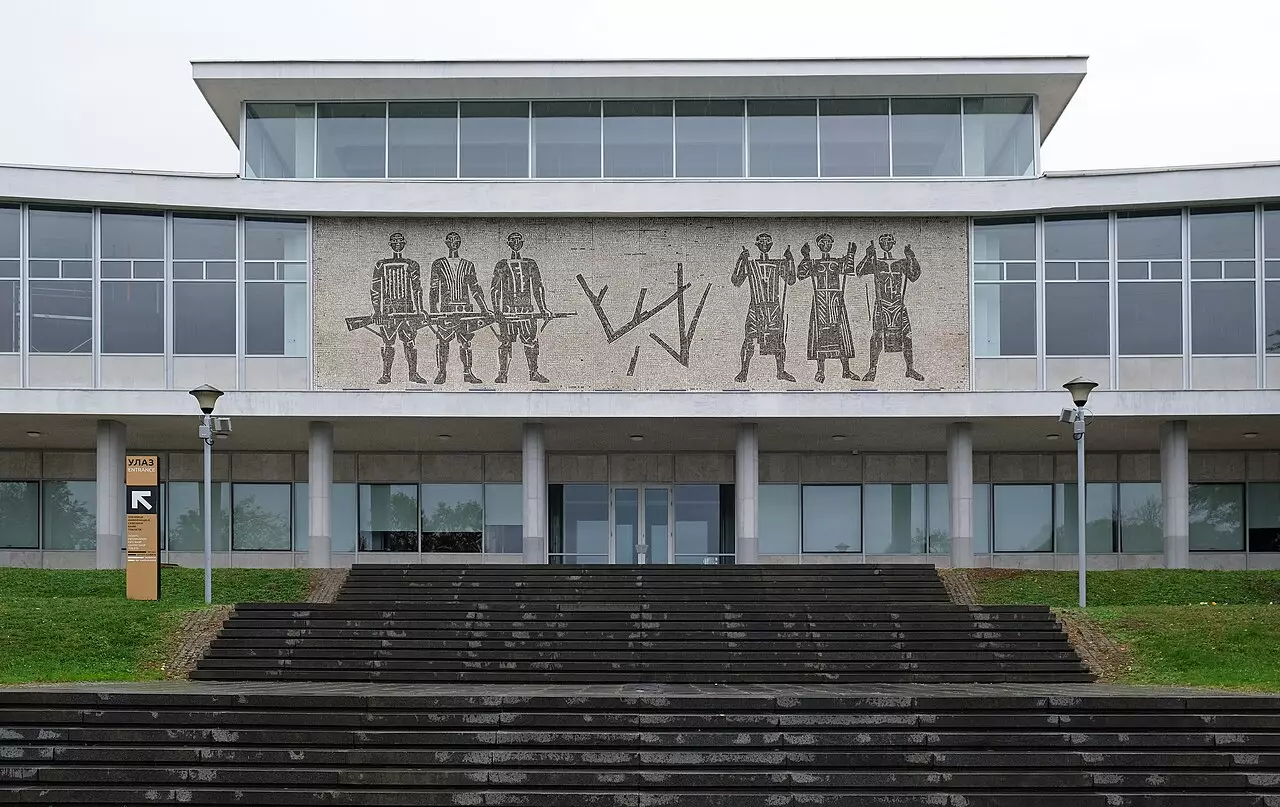
Museum of Yugoslavia is the only museum institution in Serbia that simultaneously wins the most important European awards, records record attendance and generates income. Founded in 1996 by merging the funds of the Memorial Center "Josip Broz Tito," and the Museum of the Revolution of Peoples and Nationalities Yugoslavia, the museum treasures the heritage of both Yugoslavia, with the task of reinterpreting, questioning and problematizing the phenomena of the former state and contextualizing them in accordance with the highest museological standards.
The best example of this is the "Hedgehog's House - Inventing a Better World" exhibition, which in 2025 won Grand Prix award Europa Nostra, the highest European recognition in the field of cultural heritage. The project was created in collaboration between artists, educators, curators, psychologists, children and students, and opened up the themes of home, belonging and shared memory. The exhibition was visited by more than 150.000 people. A year earlier, the Museum recorded around 200.000 visits. These are the results that speak of an institution that manages to make heritage alive and receptive to the widest audience.
Strike
The professional and professional qualities of the employees are perhaps best expressed by the fact that these successes were met in an atmosphere of open hostility shown towards them by the outgoing government, so the Museum welcomes its thirtieth anniversary in a paradoxical situation: instead of being an example of quality and reputation in the public eye, it has been in one of the biggest crises since its foundation for months. Instead of talking about results and future plans, the majority of employees went on strike.
The members of the strike committee, with whom we spoke, claim that the problems started in May, when Gordana Vujović was appointed acting director, and that they have only been piling up since then.
"I wouldn't start from the strike itself, because it's a story that has been going on since May," says one of the board members. According to her, the employees tried to get the biography of the new acting officer and the documentation on the basis of which she was appointed. As they claim, the curriculum vitae was not available even during the handover of duties, so they turned to the Ministry of Culture.
They only received the documents that were adopted in the procedure for the election of the acting director at the end of July. They saw that the documentation was incomplete and that not all the conditions prescribed by the statute of the museum were met, especially when it comes to experience in the profession and management of institutions. The members state that the Museum's union complained to the Commissioner for Information of Public Importance, but they did not receive an answer. They also point to a wider problem: the law prescribes five years of experience in culture, while more precise conditions are left to the statutes of institutions.
The naming issue is only the tip of the iceberg and stems from the fact that the Museum is a complex system and that the question of who is at its head is not a mere administrative decision. The members talk about non-transparent management, unclear orders and short deadlines, which, according to their opinion, make work difficult and endanger programs.
As an example, they cite the request to hand over access cards for depots in a short period of time, without explaining why it is being requested and whether there is a security problem. The employees responsible for the collections, they say, need to know if the items are at risk and what the change in procedure means for their preservation.
Absence of elementary communication
"We don't have any explanations why something is abandoned or why something new is introduced," explains one of the interlocutors. They claim that plans change without clear communication, and tasks arrive at the last minute for employees. They also testify to the practice of sending written orders with a warning that non-compliance could be treated as a violation of work discipline. As an example, they cite the request that the employee submit, among other orders, a detailed report on the previous ten years' work within four days.
They also warn that the management of the institution rests less and less on planning, and more and more on a series of unpredictable interventions. Plans are changed, certain programs are removed or added without explanation, and employees do not know why something is being abandoned and what is being planned instead of those programs.
The board members emphasize that the Museum has annual plans and contracts with the Ministry of Culture, as well as the obligation to implement projects for which funds have been approved. Any change can therefore have multiple consequences. Instead of devoting their time to exhibitions, research and working with the public, in recent months employees have been forced to respond to orders, ask for clarifications and involve various professional and trade union bodies. Thus, according to them, the already burdened human resources are spent on solving the problems produced by the work organization itself.
In this context, they mention the difficulty of realizing professional trips and cooperation with other institutions. Curators, they remind us, cannot work in isolation: their job involves knowledge exchange, conferences, professional development and maintenance of professional networks. For example, the group's visit to the opening of the "Hedgehog House - Inventing a Better World" exhibition at the Serbian Cultural Center in Zagreb was challenged, as well as the participation of one of the authors of the same project at the conference The Best in Heritage in Barcelona, although funds were provided for both activities.
The "Summer in the Museum" program, which has been developed for nine years with the aim of attracting the local audience and the younger generation to the Museum, was not left out of contention either. This year's edition was supposed to include a film program and a workshop with students, as a continuation of many years of cooperation.
According to the testimony of the members of the board, the project was already prepared, but in the final stage, when approving the payment, consent was denied. After that, a humanitarian concert of the pianist was held, which was attended by about thirty people, including employees. Their remark is not directed against the humanitarian action, but against the use of the name of the program which has its own editors, collaborators and editorial concept.
Program dispute
The dispute over the program started during the preparation of the work plan for 2027. The members of the board state that the Expert Council did not receive the final version of the plan before the session of the Board of Directors, while the representative of the trade union, who previously regularly attended the sessions when issues of material and social status of employees were discussed, did not receive an invitation.
As they claim, the plan was delivered to the employees only more than a month after its adoption. When they finally saw it, they found three new exhibitions in it, two of which were proposed for Expo 2027, although the collective has clearly stated that it will not participate in a project that, among other things, directly threatens Yugoslav heritage. Also, an exhibition on Yugoslav modernist architecture, conceived as a continuation of cooperation with students of architecture and applied arts, was postponed. When asked why the exhibition was removed, they said they did not receive an explanation.
Thus, this case also became one of the strike demands, but for them the more important principle is that it is inadmissible to plan a program without the participation of the people who should implement that program.
Economic position of employees and their tasks
The problem of the economic position of the employees is not negligible either. The members of the board remind that salaries in culture have been stagnant for a long time and that negotiations between umbrella unions and the Ministry of Culture did not bring the expected results. That is why they asked the management of the Museum to consider the possibility of increasing earnings from the institution's own income.
The 30th anniversary of the Museum was supposed to be an opportunity to reflect on the previous period and to open a space for discussion about the future of the institution. Instead, as they state, the employees were given the task of proposing five items for the exhibition in a very short period of time, without a previously presented concept, as well as clear and professionally based selection criteria.
The expert council asked to first define the idea of the exhibition, but according to the testimony of the members, it did not receive any answers. They believe that an exhibition worthy of the thirtieth anniversary cannot be created in a few weeks, especially if the people who are supposed to design it are simultaneously asked to respond to a series of other, unplanned requests. That is why the Expert Council of the Museum decided not to participate in the jubilee celebration in circumstances it considers unacceptable.
When asked what they consider to be the favorable outcome of their struggle, they state that it is necessary to establish adequate and appropriate management and functioning of the Museum of Yugoslavia, in accordance with the standards expected of an institution of this format.
Big discount for Black Friday! Annual subscription to "Vreme" for only 6.200 dinars. Until the end of the month only, save 3.000 by reading what's right!