The winners of four countries are included in the UNESCO list because the project they were nominated for sends a strong message of dialogue and understanding and because it built a bridge of culture in this region.
At the 40th session of the World Heritage Committee, it was decided that stećci from Bosnia and Herzegovina, Croatia, Montenegro and Serbia will become part of the UNESCO World Heritage List. And that, in many ways, is extremely good news.
The inscription of stećak on the UNESCO list is the result of the first major interstate cultural project in the Balkans in this century, which was of great importance on July 15, when representatives of the Committee discussed the proposed world cultural assets in Istanbul. Namely, the file Stećcimedieval tombstones, which was applied for, was presented in Istanbul by Mr. Alfredo Conti from Argentina, vice-president of ICOMOS (International Committee for World Heritage) and recommended that the inscription of the stećak on the World Heritage List be postponed until the points of the file related to the declaration of universal values. However, first the representative of Lebanon made an amendment to that recommendation, considering that this project shows the strength and ability of cross-border cooperation and emphasizing the intangible essence of stećak based on traditions, beliefs, and fairy tales that are still present today, and then this position of his was confirmed by other representatives of the Committee especially emphasizing the importance of interstate cooperation - for example, the representative of Azerbaijan pointed out that this project sends a strong message of dialogue and understanding and that it has built a bridge of culture in this region.
Authors of the nomination dossier Stećcimedieval tombstones are experts from Bosnia and Herzegovina, Croatia, Montenegro and Serbia. They have been cooperating since 2010 on the basis of a letter of intent signed by the ministers of four countries the previous year, at the initiative of the Ministry of Civil Affairs of Bosnia and Herzegovina. It is considered that the key person in this agreement is Dr. Dubravko Lovrenović, a historian and professor at the University of Sarajevo, because studying primarily the Bosnian stećaks, but also the stećaks of the surrounding countries, he proposed to the authorities to extend the planned nomination of stećaks to Croatia, Montenegro and Serbia.
The core of the interstate team consists of a dozen experts, about fifty people worked intensively on the file, and the file has 1400 pages, more than 500 photos and over 100 maps. "Everyone is wondering why the nomination procedure took six years," Maja Đorđević, M.Sc., coordinator of the preparation of the nomination file in the RS, from the Republic Institute for the Protection of Cultural Monuments, told Vreme, explaining that, among other things, "many demands that set by UNESCO. One of the most important is that countries that nominate one of their cultural or any other assets on the UNESCO List must submit a management plan for that asset - UNESCO requires a guarantee that management is ensured and organized. Work on drafting the nomination document began only in 2011, after all four states had chosen the locations they would nominate and submitted a tentative list. Since then, we have held 20 interstate meetings, and every year I had at least three meetings with representatives of local communities on whose territories stećci were proposed. Since January of last year, when we submitted it, the document has undergone technical evaluation twice, which is a procedural matter, and then two ICOMOS experts visited the locations where the acquisitions were made and wrote a report, evaluated our team's file, and only after that submitted a recommendation to UNESCO that the acquisitions be discussed at the 40th Assembly of the Committee. Actually, I think it couldn't have been faster, and that after 20 years of war and other traumas, we worked very well, achieved an important joint success, and set an example for others."
UNESCO protects 28 monuments: 20 in Bosnia and Herzegovina, two in Croatia and three each in Montenegro and Serbia. Before them, the Old Town of Ras and the Sopoćani Monastery, Studenica Monastery, medieval monuments in Kosovo, Gamzigrad-Romuliana, Gajeva Palace were entered on the List of World Heritage from the territory of Serbia.
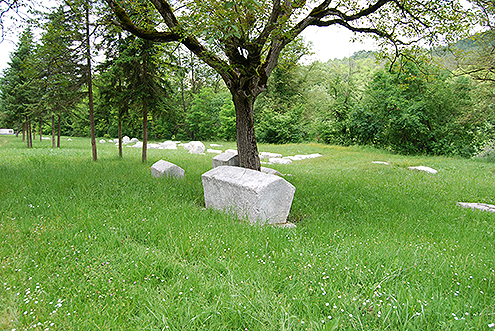
Stećci represent an authentic form of grave marker from the second half of the 12th to the end of the 15th century. There are the most of them in Bosnia and Herzegovina, approximately 2700 sites with stećaks have been preserved throughout the country, and three larger areas can be distinguished by the skill of carving and relief motifs: the area of the former Hum region, today Herzegovina, where the art of carving stećaks developed its best possibilities and where the largest number of stećaks have been preserved, then the area of eastern Bosnia, and the third is the area of the medieval "King's Land", i.e. today's central Bosnia. Within these territories, it is possible to identify several different workshops, some of which can be clearly linked to the activities of individual master-smiths whose names are preserved on inscriptions. There are about 400 stećak sites on the territory of Croatia, and they are located in the southern parts of the country, mostly in the hinterland of the Dalmatian coast, and somewhere on the coast itself, from Konavle to northern Dalmatia and the southern and central parts of Lika. They are especially common in the vicinity of Dubrovnik, around the mouth of the Neretva, in the Makarska coast and in the Vrgorac, Imot and Sinj regions. Among one hundred and seven stećak sites in Montenegro, two basic groups of stećaks can be distinguished: the smaller ones in size and with modest decorations are in the northern municipalities (Žabljak, Plužine and part of the municipality of Pljevlja), while the more monumental ones are in the area of the municipality of Nikšić, and they gravitate towards the medieval Hum (today's Herzegovina). The motifs found on the stećaks in Montenegro fit into the well-known ornamental system that exists in the wider area of Bosnia and Herzegovina, western Serbia and Croatia, but some specific variants or qualities of workmanship can be observed among them that make them authentic in the corpus of stećaks.
In Serbia, under the protection of UNESCO are Mramorje in Perućac, Mramorje in the village of Rastište in the territory of the municipality of Bajina Bašta, and the Greek cemetery in the village of Hrta in the municipality of Prijepolje. Maja Đorđević explains that in addition to those locations in Serbia, stećci were recorded at approximately two hundred locations in all areas of today's border municipalities of Serbia with Bosnia and Herzegovina and Montenegro, as well as in neighboring areas of western and southwestern Serbia, mostly in the territory of lower Podrinje and central Polimlje. . "In Polimlje, amorphous monolithic slabs are particularly characteristic, which are elongated by carving and are found in cemeteries around medieval monastery churches." During much later renovations of the monastery, these oldest stećci were built into the walls and floors of the temple. The stećci in Serbia lag behind the stećci of Hum (Herzegovina) in terms of the variety of varieties of basic shapes, dimensions and the decoration itself, the number and type of applied motifs, but in this respect they are equal to the stećci in Bosnia, while they are analogous to the stećci of eastern Bosnia in all respects. Even among the Serbian stećaks themselves, both in shape and in decoration, differences can be observed, due to which they can be categorized into monuments specific to certain areas, as is the case in Bosnia and Herzegovina."
The village of Hrta with the Grčko groblje site is located 16 km southwest of Prijepolje, and ten kilometers east of the Kamena gora mountain plateau. It was formed on two hills at a distance of 100 meters. The monuments of the lower cemetery are exclusively slabs and it is obvious that the burial took place in a prehistoric burial ground. The monuments of the lower cemetery, in addition to massive slabs that are mostly decorated with engraved motifs, also consist of several chests with arcades. The surface of the monument is roughly hewn or completely untreated, left in the natural form of the rock with minimal interventions. The monuments of the upper cemetery are also placed on the conical elevation. They have various decoration motifs, rope and border of wavy line with circles, zigzag ornament, concentric circles, circles with inscribed cross, representation of a sword and a deer. The most common motif is a small circle with an inscribed cross or a large circle with an inscribed cross whose ends end in concentric circles. "The location of the Greek cemetery has the most decorated monuments in Serbia. Those decorations are modest compared to the tradition of medieval decoration in our country, but they are almost identical to the decorations on stećaks in the other three countries, which indicates a line that connects them, which is, of course, among other things, a quality that was impossible not to notice and appreciate in Istanbul." , explains Maja Đorđević.
At the Mramorje necropolis in Perućac, on the high bank of the Drina river, there are 88 stećaks. Given that there are no data on older settlements or excavations, it is assumed that this cemetery is located in a previously untouched place. In one of the graves, on the board with which the deceased was covered, a silver coin of the Bosnian king Stefan Tomas (1443–1461) was discovered. The orientation of the tombstones is west-east with minor deviations. The tombstones are placed in regular rows. According to their form, there are slabs, gables with and without a plinth, chests with and without a plinth, and amorphous monuments.
The necropolis of Mramorje in Rastište is seven kilometers west of the necropolis in Perućac. There are two necropolises on that site, half a kilometer apart, on the stretch of Uroševina, i.e. Gajevi. Near them is Maidan Vagan, where tombstones were carved in the Middle Ages. Maja Đorđević notes that the stećci towards Uroševina are decorated with arrow and bow and sword motifs, while the stećci towards Gajevi have solar symbolism. "I chose the site because it is in a mountainous region, because two cemeteries are almost next to each other, and from different times. The one towards Gajevi is older, it mostly has slabs and low crates, while towards Uroševine there are crates with a roof, the so-called ridge-tops. "The war symbolism on the stećci of the younger locality shows that the inhabitants of that time wanted to show that they were of knightly origin," says Maja Đorđević. "They decorated the stećaks with the kola that we also play today, braids that are on our costume, tendrils, flowers, crosses of various shapes."
The inscriptions on the stećci were written exclusively in Cyrillic under the influence of the suppressed Glagolitic scribal tradition and Latin script. Maja Đorđević reminds that "of all the Cyrillic scripts, the Cyrillic script of stećak is the most similar to Glagolitic, while even individual letters are taken from the Latin system into the inscriptions of stećak, and that is why stećak are important as a monument of literacy and language in the entire territory where they were installed. In addition to a series of theological reflections, the inscriptions provide a wealth of material for the study of language and writing, and they are also inevitable within the scope of historical, sociological, prosopographical and anthropological research."
This stone lies on Vukac Petrović, and the stone was placed for him by Vukašin Bogačić - it is written on a Bosnian stećak. Or: "Here lies God's servant Radoje, son of Duke Stepan, on his estate in Batnoga", or "Here lies Mrs. Gojislava, daughter of Jurij Baošić and wife of Duke Radič." In Herzegovina, a catalog was published with 500 names mentioned on stećci, as Maja Đorđević says. "This means that here where we are now, in the 14th and 15th centuries when Serbia was at its zenith, or when the Bosnian state was struggling with problems, concrete people lived, with first and last names." These are beautiful names: Stepan, Miogošt, Vukac, Vlatko, Bunac Rušović, Bogavac, Tarah Bojunović, Vukić Vumić, Vlađ Vladislavić, Radić Dragiša, Jelena Ivkovica, Ljubica Vlatkovica, Petar Vukčić, Stana Ćurenovica... These are concrete people, who lived here, fought, mingled, respected the cross, and who left us a story about themselves to hear and to we keep it.
What is happening in the country and the world, what is in the newspapers and how to pass the time?
Every Wednesday at noon In between arrives by email. It's a pretty solid newsletter, so sign up!
In the contract that Niš concluded with the entrepreneurial shop "Čičak 2023" from Trstenik on cooperation at the International Film Festival, the price of the work was not specified, which is not the only irregularity in the organization of this festival.
Holding the Book Fair in its traditional place, reforming the book support system - these are some of the goals of the Initiative 3 platform launched by the publishers Bajac, Hamović and Božović
Three days ago, an artistic painting was reported missing from the Provincial Government building in Novi Sad, and it seems that it disappeared back in August.
The Association of Literary Translators of Serbia and the PEN Center gave the most votes to Ljubinka Milinčić in the proposal for a national pension. After that, three members resigned from the Association
At the moment when the institutions of the Republic are destroyed, when Vučić's octopus is still alive, when people are disgusted by the injustice and the stench left behind by the Essenes regime, we have, as Machiavelli said, only civic virtue as the fuel with which we can return to the beginning
The four independent members of REM are an example of perseverance and civic responsibility. Rodoljub Šabić even, upon leaving the premises of REM, after the sentencing of the Informer, experienced that the Essenes insulted him, hit him with their hands and feet. But that too will soon be over
Vučić pardoned the batterers and Dijana Hrkalović. The election winners should abolish the sultan's power that allows one man to run afoul of the entire judicial system
The archive of the weekly Vreme includes all our digital editions, since the very beginning of our work. All issues can be downloaded in PDF format, by purchasing the digital edition, or you can read all available texts from the selected issue.