

News
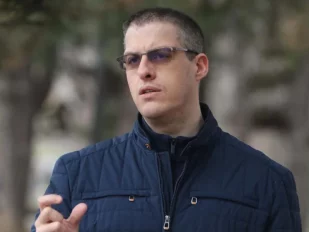
Part of the ZLF presidency distanced itself from Rastislav Dinić's statements
After agreeing with SNS deputy Milenko Jovanov in the Debate show on TV Insider, the former ZLF deputy encountered resistance from his party colleagues
 Photo: AP Photo/Markus Schreiber
The opposition in Serbia did not cope with the Ukrainian crisis. He should declare whether he is acting as a pro-European alternative to Vučić in these elections or whether he is afraid of Russophile voters. And the issue of Rio Tinto is an issue of Serbia's European path
When wars and diseases enter the world stage, they have such a destructive power that they clean everything before them. Let's remember the beginning of the pandemic two years ago. The views of the citizens of each country in global crises are focused on those who decide at that moment in the country - on the government. The opposition does not have much to hope for because it does not decide on anything, especially not in Serbia. That's why Aleksandar Vučić continued his election campaign without any difficulty and rode the Ukrainian war crisis just like he did the corona crisis two years ago. He is a proven master of manipulations in crisis situations, especially war situations, he practiced this craft from the parliamentary rostrum in the nineties and learned from the best.
In short, one should have some understanding that the opposition did not do well in the Ukrainian drama. The calculation of the opposition leaders so as not to offend the Russophile electorate is also understandable.
But those of them, who declare themselves as pro-European and pro-Western, however, missed an exceptional opportunity to run on the issue of Serbia's membership in the European Union as an important topic. And to profile themselves once and for all as a European alternative to the progressive government. And the war in Ukraine is a real demonstrative exercise for that. Because Vučić, since he came to power and until this war in Ukraine, despite his rhetorical Euro-enthusiasm, has been pushing the country further and further away from the EU.
With his crazy dance between Brussels, Washington, Moscow and Beijing, probably thinking that, as smart as he is, he is pulling them all by the nose and outmaneuvering them, he actually became a left-wing nuisance on the global geopolitical scene. As it is, it suits them perfectly, because they have no obligation towards Serbia. In that Serbia, from their perspective, there is some unstable and unstable man in power who does not work in the interest of Serbia (which they are not interested in at all) but neither in the interest of the EU, nor in the interest of Serbia's membership in the EU. Then why should the EU work in the interests of Serbia?
In this context, the farewell visit of the former German chancellor is completely understandable Angela Merkel which unequivocally supported lithium mining in Serbia, in which the entire EU is interested. EU standards are such that they do not allow mining of lithium on the territory of the Union, so it is in the interest of the Union that lithium is mined in Serbia, because Serbian standards often mutate from pro-European to pro-Chinese, from pro-American to pro-Russian. Well, if Serbia is guided by standards, if the Serbian government imports the worst Chinese technology, which was thrown out of China because of environmental pollution, then the same Serbian government can agree with Rio Tinto, right?
Vučić was warned when he signed the interstate agreement with the Chinese that it was against the interests of Europe (he should have known that it was against the interests of Serbia). During that time, his prime minister boasted that Serbia was the "main hub" of China's "Belt and Road" project. It was the same when the government supported Beijing's policy in Xinjiang, which is contrary to EU policy: of the 46 countries that signed the pro-Chinese declaration on the Uyghurs, Serbia was the only one aspiring to EU membership. And then Vučić was warned that it was against the interests of Europe. Let's not list further.
As now in the Ukrainian crisis, Vučić again used his multi-standard doctrine: we will be a little pro-European, a little pro-Russian. Thus, Serbia joined the condemnation of Russian aggression, but not the sanctions against Russia.
In short, all environmental topics that were imposed in these elections as existential, from the expulsion of Rio Tinto from Serbia, the fight for clean air and water, did not lose their importance or fall into the background because of the war in Ukraine. On the contrary, the war in Ukraine marked them even more.
Putin's aggression against Ukraine once again raises the question of where Serbia is going? As a member of the EU, Serbia would not have a Chinese tire factory on its territory, nor Rio Tinto. The issue of the environment is the issue of Serbia's European path.
That's why the opposition, civil and liberal, should declare whether it is acting as a pro-European alternative to Vučić in these elections or whether it is afraid of Russophile voters.
Read daily news, analysis, commentary and interviews on www.vreme.com
After agreeing with SNS deputy Milenko Jovanov in the Debate show on TV Insider, the former ZLF deputy encountered resistance from his party colleagues

Belgrade councilors will decide tomorrow on the dismissal of Mayor Šapić, who is supported by 41 councilors. 56 are needed

Written evidence is expected to be examined at tomorrow's hearing on the General Staff case. Although the testimony of Dubravka Đukanović points to the involvement of Aleksandar Vučić, it is not part of the indictment
The Government of Serbia, in its technical mandate, plans to allocate an additional 11 million euros through the state agency AOFI for the needs of Expo 2027, claims lawyer Ivan Ninić, who also published the documentation

Thirty years since the student protests in 1996/97, citizens gathered on the Academic Plateau in Belgrade and started a media walk under the slogan "Students have won!"

Why did an unusual group of people led by Aleksandar Vučić, at the constitutive session of the Assembly of Serbia, go berserk because of yogurt spilled on the head of a member of parliament, a "reputable artist" and, of course, a woman?

How Aleksandar Vučić convinced the public that progressives are not worthy of the position of vice-president of the National Assembly and how its president - Aleksandar Čupić - explained to him theoretically and practically what parliamentarism is in front of everyone

For years, European conservatives patronized the SNS and turned a blind eye to violence and corruption. Now, after the electoral defeat of the progressives, they are being let down the drain. Too late, but still…

Change of power in the National Assembly
Majority, minority and high expectations subscribeThe archive of the weekly Vreme includes all our digital editions, since the very beginning of our work. All issues can be downloaded in PDF format, by purchasing the digital edition, or you can read all available texts from the selected issue.
See all




